 Max 10min read
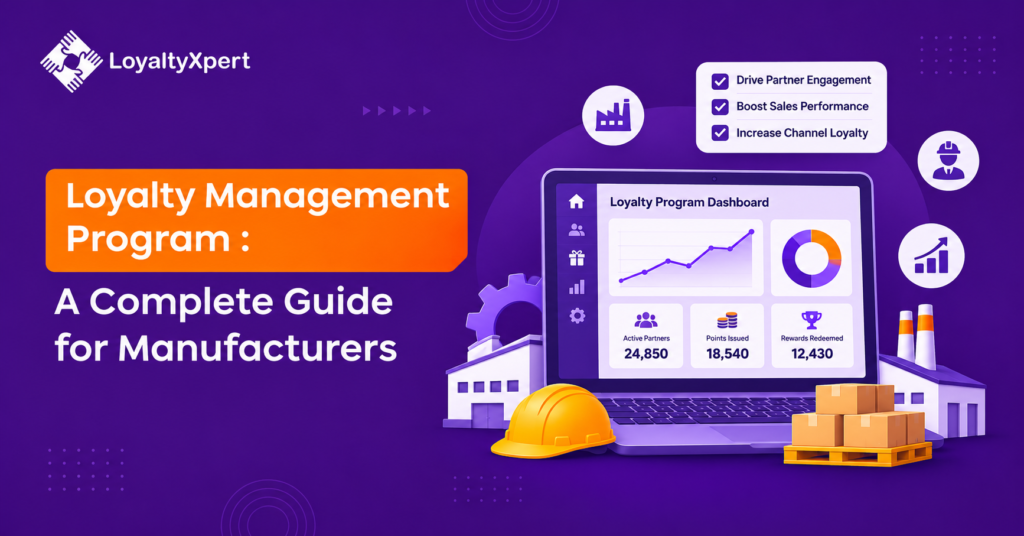
A well-structured loyalty management program helps businesses strengthen relationships, reward engagement, and drive long-term growth. For manufacturers, managing loyalty across dealers, distributors, retailers, and influencers requires a systematic approach to track purchases, automate rewards, and motivate channel partners.
A loyalty management program software simplifies this process by bringing program operations, reward management, participant activities, and performance tracking onto a single platform. Businesses can create customized reward structures, manage incentive schemes, monitor partner engagement, and gain actionable insights to improve program performance.
Modern loyalty program software enables manufacturers to move beyond traditional reward systems and build data-driven loyalty programs that improve channel engagement, encourage repeat purchases, and support business growth.
In this guide, we explore what a loyalty management program is, how its software works, its key features and benefits, and how businesses can choose the right solution for their loyalty initiatives.
What Is a Loyalty Management Program?
A loyalty management program is a structured business initiative designed to engage, motivate, and retain customers and channel partners through rewards, incentives, and personalized experiences. It encourages repeat purchases, strengthens business relationships, and creates long-term value for both businesses and program participants.
For manufacturers, a loyalty management program goes beyond rewarding customers. It helps build stronger relationships with dealers, distributors, retailers, contractors, painters, electricians, and other influencers who contribute to business growth. By offering purchase-based rewards, incentive schemes, tier-based benefits, and exclusive offers, manufacturers can motivate their channel partners and encourage consistent engagement.
LoyaltyXpert Loyalty Management Program System
A well-designed loyalty management program typically involves identifying participants, defining reward structures, tracking purchases and activities, managing reward points, and measuring program performance.
With the support of LoyaltyXpert’s loyalty management program software, businesses can automate these activities, reduce manual effort, streamline reward calculations, and gain better visibility into channel partner engagement and program performance.
Whether it is a points-based program, tier-based loyalty model, purchase-linked incentive scheme, or a channel partner rewards initiative, the right strategy and technology help businesses create meaningful engagement and sustainable growth.
How Loyalty Management Programs Work
Loyalty management programs operate by rewarding customers or partners for their interactions with a brand. These programs track engagement activities and provide incentives that encourage continued participation.
The process generally includes the following steps:
-
Customers or partners enroll in the loyalty program.
-
The system tracks activities such as purchases, referrals, or interactions.
-
Participants earn points, rewards, or incentives based on these actions.
-
Rewards can be redeemed for discounts, products, or exclusive benefits.
Through this process, businesses can encourage repeat purchases, strengthen brand engagement, and build long-term loyalty.
Types of Loyalty programs
A customer loyalty program’s ultimate objective is to facilitate customer advocacy and retention. Let us see the different types of loyalty programs:
1. Tiered Loyalty program
A tiered loyalty program is an organized approach to customer loyalty in which members of the program earn incentives and perks at different levels according to how much they spend or how engaged they are with a brand or company. Each level is known as a tier or membership level. As customers move upward from a lower to a higher tier they enjoy exclusive benefits and better perks.
These tiers are set up according to consumer participation, engagement, and spending patterns. Participants gain access to progressively alluring perks as they advance through the stages.
For example, a tiered loyalty model is provided by the Dell EMC Partner Program, which pays partners according to their engagement and sales results. Participants get access to fundamental resources like training materials beginning at the Registered Partner level. While Platinum partners receive priority support and specialized training, Gold advancing partners can access dedicated account management and co-marketing money. Titanium partners are entitled to exclusive advantages including executive sponsorship and cutting-edge technical support. This methodical strategy encourages partner commitment and collaborative growth in the technology industry, which in turn promotes mutual success.
2. Subscription-Based Loyalty Programs
Yet another loyalty scheme that’s popular is the subscription-based loyalty program. Here, the customer has to pay a subscription fee to become a member. The payment is typically made in the form of a one-time or ongoing charge, although the paid model can also be implemented without the need for cash.
A subscription loyalty program’s key feature is that, to offset the initial cost, it greatly enhances the reward experience.
For example, Microsoft Partner Network (MPN) is a B2B subscription-based loyalty program. Action Pack, Silver, and Gold are the three membership tiers available in the program; each requires an annual subscription cost. Depending on their tier, partners can access Microsoft software, technical assistance, marketing materials, and training tools. Additional advantages including co-selling opportunities and superior technical assistance are given to higher-tier partners. You can find out more about the MPN by visiting Microsoft’s website or by reading trade journals that deal with B2B loyalty schemes.
3. Points-Based Loyalty Program
Customers can earn points for their purchases or interactions with a business through a point-based loyalty program. These points can then be redeemed for benefits like free products, discounts, or special benefits. Customers earn points through predetermined behaviors or purchases, which they can then aggregate over time to unlock different perks. By providing material prizes for continued support and patronage, these programs promote long-term loyalty, boost customer involvement, and encourage repeat purchases.
The “Amazon Business Prime” program is one instance of a B2B point-based reward scheme. Businesses can earn points through this program for each purchase they make on the Amazon Business platform. These points can be exchanged for freebies, special offers and promotions, discounts on subsequent purchases, or even free goods and services. Amazon Business cultivates loyalty among its B2B customers and incentivizes continuing platform use by rewarding enterprises for their purchase activities.
4. Value-Based Loyalty Program
A value-based loyalty program aims to establish a more meaningful connection with its customers. Different organizations can offer value to their clientele by establishing a value-based loyalty program, which aims to forge deeper connections with customers. This involves allocating a portion of purchases towards welfare or charitable causes, providing a range of options for organizations to choose from that align with the values of their clientele.
Customers aren’t really rewarded in value-based loyalty programs. However, the benefits help in the upliftment and betterment of society at large, it has a special place in their hearts. Using this strategy, brands frequently develop hybrid loyalty programs. These loyalty programs combine two or more loyalty programs to get benefits from all of them. They are becoming popular in today’s market.
For instance, there is a value-based loyalty program “Trailblazer Rewards” offered by Salesforce. Instead of focusing on transactional expenditure, it pays users for their creativity, involvement in the community, and contributions to the Salesforce ecosystem. By participating in events, earning certifications, and interacting with the Trailblazer community, participants can gain access to VIP events and special content. B2B clients are encouraged to feel a sense of cooperation and enduring commitment through this program.
5. Spend-Based Loyalty Programs
Customers who spend money on buying goods or services from a business are rewarded with loyalty credits under spending programs. It’s incredibly simple to design, understand, and maintain this software. It has also been shown to be a successful strategy for raising transaction values and lowering churn rates.
“SkyBonus,” a spend-based reward program offered by Delta Air Lines, is a perfect example. Through this program, companies that spend money on travel with Delta and its partners are rewarded. Points can be used for benefits including free flights, upgrades, and discounts. Points are earned depending on qualified flight purchases. By rewarding businesses for their investment in air travel services with concrete rewards and cultivating loyalty, SkyBonus encourages enterprises to consolidate their travel spending with Delta.
6. Influencer loyalty program
Influencers who have a lot of impact on their audience are engaged and kept on board through influencer loyalty programs. These programs help brands expand their reach and reach new audiences by providing exclusive incentives in return for continued partnership and promotion.
One instance is Adobe’s “Adobe Insiders” program. Here, Adobe chooses prominent people who have a strong interest in Adobe products. Influencers advertise Adobe’s products via social media and other channels in exchange for special access to events and new product releases. Through this initiative, Adobe fosters a devoted community of opinion leaders, augmenting brand legitimacy and involvement in the creative sector.
Loyalty Management vs Loyalty Programs
- While the terms are often used interchangeably, loyalty management and loyalty programs have slightly different meanings.
- A loyalty program is the reward system offered to customers, such as points, cashback, or tier-based incentives.
- Loyalty management, on the other hand, refers to the overall strategy and technology used to design, manage, and optimize those programs.
- Businesses use loyalty management platforms to control reward structures, monitor performance, and improve engagement strategies.
Benefits of the Loyalty Program
There are several advantages to loyalty programs for various aspects of business operations:
- Marketing: By providing incentives for recurring purchases and fostering consumer interaction, loyalty programs act as a useful tool for marketing. By offering tailored offers and promotions to customers they help businesses boost conversion rates and strengthen customer loyalty.
- Development: By using data analytics, loyalty programs offer insightful information about consumer preferences, actions, and buying trends. Product development initiatives can be informed by this data, enabling companies to better customize their offers to match the demands and tastes of their customers.
- Finances: Although starting and running a loyalty program has expenses, they are frequently offset by long-term financial gains. Loyalty programs help to maintain income streams and improve profitability over time by boosting client retention rates and encouraging repeat business.
- Customer Acquisition and Retention: Loyalty programs are essential for bringing in new business and retaining existing customers. By providing incentives and benefits for enrolling in the program, they draw in new clients and encourage first purchases as well as brand engagement.
- Customer service: By offering a channel for personalized support and contact, loyalty programs help to improve customer service. Preferred treatment, such as priority customer service and specific support channels, is frequently granted to members of loyalty programs, which can enhance general consumer satisfaction and loyalty.
Tips to Choose Right Loyalty Management Platform
LoyaltyXpert offers a cutting-edge Loyalty Management Platform designed to transform customer interactions and drive business success. With a range of innovative loyalty program features, the platform enables businesses to strengthen customer relationships, enhance loyalty, and increase profitability. Here are tips and features for choosing a loyalty management platform:
- Advanced Loyalty Points Management: Enabling customers to track, manage, and redeem loyalty points effortlessly.
- Features of an Intuitive Customer App: Letting users easily scan QR codes to obtain reward points, create reports, and see current specials and deals.
- KYC Details Management: Facilitating the attachment and management of KYC documents by consumers on a safe platform, therefore expediting the verification process.
- Bank Details Management: Encouraging users to add and oversee several bank accounts to redeem loyalty points conveniently and with flexibility.
- Profile management: Expanding personalization possibilities by letting users see and change their profile information.
- Refer & Earn Program: Promoting customer acquisition and engagement by offering customers incentives to recommend friends through dynamic referral programs.
- Point Transfer Capability: Encouraging cooperation within the customer community by facilitating the transfer of loyalty points between consumers.
- Extensive Administrative Controls: Enabling administrators to manage and optimize loyalty efforts with ease by giving them complete control over program parameters, incentives, and user rights.
Signing-off
Loyalty management software has become an essential tool for businesses looking to improve customer retention, strengthen channel relationships, and drive long-term engagement. By automating rewards, tracking participant behavior, and delivering personalized experiences, businesses can create loyalty programs that generate measurable business results.
Whether your goal is to increase customer loyalty, improve dealer engagement, or build stronger channel partnerships, investing in the right loyalty management platform can help support sustainable business growth.
If you are looking to implement or scale your loyalty initiatives, contact us today or request a demo to see how our platform can support your loyalty management strategy.