 Max 7min read
📝 Summary
Points once ruled every loyalty program. That era is quietly ending now. Modern loyalty software rewards behavior, not spend. It uses data, personalization, and tiers. This blog explains the shift clearly. You will learn what replaces points. You will also learn what to evaluate.
Customer loyalty is changing fast. Points based loyalty programs no longer hold attention. Buyers now expect relevance and recognition. That is why brands rethink rewards. Customer loyalty program software leads this change. It rewards behavior, not just spend. Loyalty rewards software adds tiers and personalization. Many brands now adopt modern loyalty program software. They reward real engagement, not just receipts. This guide breaks down that shift.
What Is Behavior-Based Loyalty Software?
Behavior-based loyalty software rewards actions, not spending. It replaces flat points with richer rewards. Customer loyalty program software drives this shift. It credits referrals, repeat orders, and engagement. It adds personalization, tiers, and experiences. Points still exist, but support a strategy.
Traditional points programs reward one action: spending. Modern loyalty software rewards behavior instead. It credits referrals, reviews, and repeat orders. It also tracks scans, logins, and redemptions. Each action earns tailored recognition. This is behavior-based loyalty in practice.
The model adds three practical layers. Personalization targets each customer by intent. Tiers reward status and sustained engagement. Experiences replace generic, forgettable discounts. Data then connects all three layers. Points become one input here. They no longer define the whole program. That is what moving beyond points means.
Why Do Points-Based Loyalty Programs Fail?
Points-based loyalty programs fail because they reward spending alone. Customers forget balances and abandon unused points. The rewards feel generic and slow. Points create discounts, not loyalty. Modern buyers expect relevance and recognition. Flat point systems rarely deliver either.

The data confirms this shift. Grand View Research valued the market at USD 13.6 billion in 2025. It should reach USD 15.3 billion in 2026. By 2033, it hits USD 31.1 billion. That reflects a 10.7% CAGR. Growth now favors personalized, data-driven programs.
3 Reasons Points Programs Fall Short
- Spend-only logic. Points reward purchases, not engagement. Advocacy and referrals earn nothing. Loyal behavior goes unrecognized.
- Breakage frustration. Customers forget or lose points. That breakage quietly erodes trust. Frustration then drives them away.
- Generic rewards. One catalog fits nobody well. Impersonal perks feel forgettable and cold. Customers ignore what feels irrelevant.
These gaps add up fast. Customers drift toward brands that notice them. Points alone cannot fix that drift.
What Replaces Points In Modern Loyalty Software?
Modern loyalty rewards software replaces points with behavior-based and experiential rewards. It uses personalized rewards, tiered status, and instant recognition. Data guides every reward decision. The system rewards referrals, reviews, and repeat actions. This approach builds emotional and financial loyalty together.
Here is the shift at a glance:
| Traditional Points | Modern Loyalty Software |
|---|---|
| Rewards spend only | Rewards behavior and value |
| One reward for all | Personalized rewards per customer |
| Delayed redemption | Instant recognition and perks |
| Delayed redemption | Experience and status driven |
| Guesswork | Data-driven decisions |
The change is not about deleting points. It is about widening the toolkit. Points become one option among many. Smart brands mix several reward types.
Behavior earns the biggest rewards now. Advocacy and referrals count too. Consistency beats one-time big spends. The AI-powered loyalty platform values relationships over receipts.
How Do Personalized Rewards Improve Customer Retention?
Personalized rewards improve retention by matching offers to real behavior. Customer loyalty program software studies purchase history and preferences. It then delivers rewards each customer values. Relevant rewards feel earned, not random. Customers stay engaged and return often. Retention and lifetime value both rise.
Think about two identical offers. One is generic and untargeted. The other fits your exact needs. The second wins every time. Personalization signals genuine attention. Customers notice that attention quickly. They reward it with repeat business. Loyal customers also refer others. Retention then compounds over time.
Timing also matters a lot. Good reward program software rewards the moment. A birthday, a milestone, a return. Each moment feels personal and warm. That warmth builds durable loyalty.
How Does AI-Powered Loyalty Program Software Use Data?
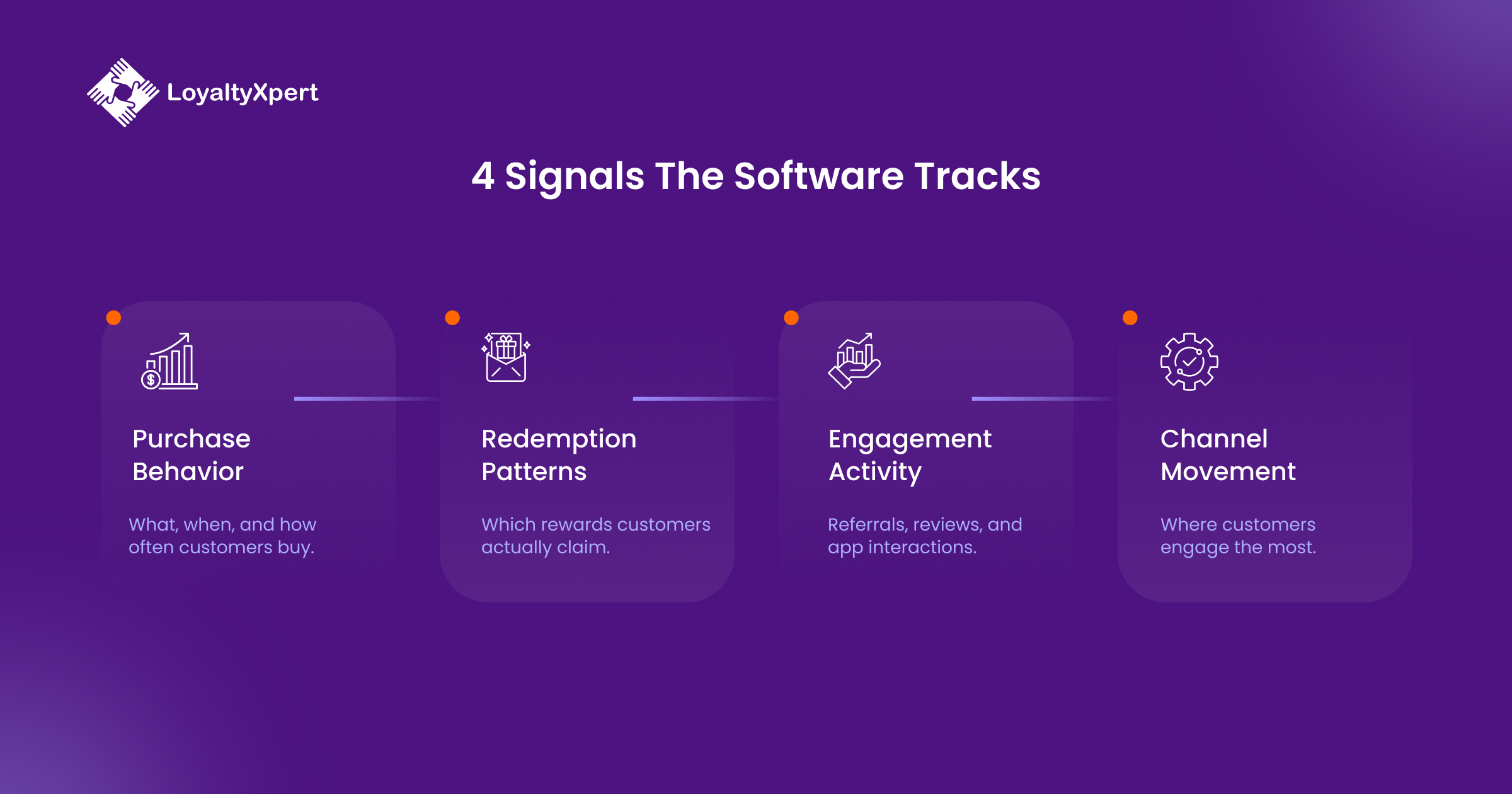
AI-powered loyalty program software uses data to predict what customers want. It collects signals across every channel. It tracks purchases, redemptions, and engagement patterns. Analytics then suggest the next best reward. Brands act on insight, not guesswork. Smarter rewards produce stronger loyalty.
Good loyalty management software turns signals into action. Mature AI loyalty programs refine rewards continuously. It spots patterns humans miss. It flags churn risk early. It also detects fraud fast. Manufacturers value that fraud control highly.
Automation removes slow manual work. Staff stop chasing spreadsheets daily. They focus on strategy instead. The software handles routine reward tasks. Speed and accuracy both improve.
4 Signals The Software Tracks
- Purchase behavior — what, when, and how often.
- Redemption patterns — which rewards get claimed.
- Engagement activity — referrals, reviews, and app usage.
- Channel movement — where each customer interacts most.
How Do Tiered And Experiential Rewards Work?
Tiered and experiential rewards work by turning loyalty into status. Customers climb tiers through repeat engagement. Each tier unlocks better perks and access. Experiences then replace plain discounts. Status feels earned and personal. This model deepens emotional connection.
Common reward formats now include several options.
- Tier status — bronze, silver, and gold levels.
- Early access — first look at new launches.
- Exclusive experiences — events, gifts, and perks.
- Instant recognition — badges and milestone rewards.
- Cashback and payouts — direct, flexible value.
Experiences stick in memory longer. A discount fades from mind quickly. A great event does not. That memory keeps customers close. Emotional loyalty outlasts transactional loyalty. A loyalty management program engineers that feeling.
Which Industries Gain Most From Modern Loyalty Software?
Modern loyalty software gains real traction in B2B channels. Manufacturers, distributors, and dealers benefit heavily. These networks depend on partner engagement. Behavior-based rewards drive partner performance. FMCG, automotive, and building brands lead adoption. Complex channels need smarter loyalty.
The fit is strongest in channel-heavy sectors. A channel loyalty program rewards dealers and distributors directly. Manufacturers track secondary sales in real time. Influencers and retailers earn on real activity. This model beats manual spreadsheets easily. It also cuts incentive leakage sharply.
Consider a building-materials manufacturer. It rewards masons and carpenters directly. Workers scan product QR codes. They earn rewards on real usage. The brand gains ground-level sales data. Trade partner relationships then deepen.
Warranty and after-sales teams benefit too. They reward genuine product registrations. They also reduce fraudulent claims. Every touchpoint becomes a loyalty moment. The channel grows stronger over time.
What Should You Look For In Loyalty Program Software?
Strong loyalty management software should support personalization, tiers, and automation. It must track behavior across channels. It should reward more than purchases. Good software integrates with existing systems. It also delivers clear analytics. These features move you beyond points.
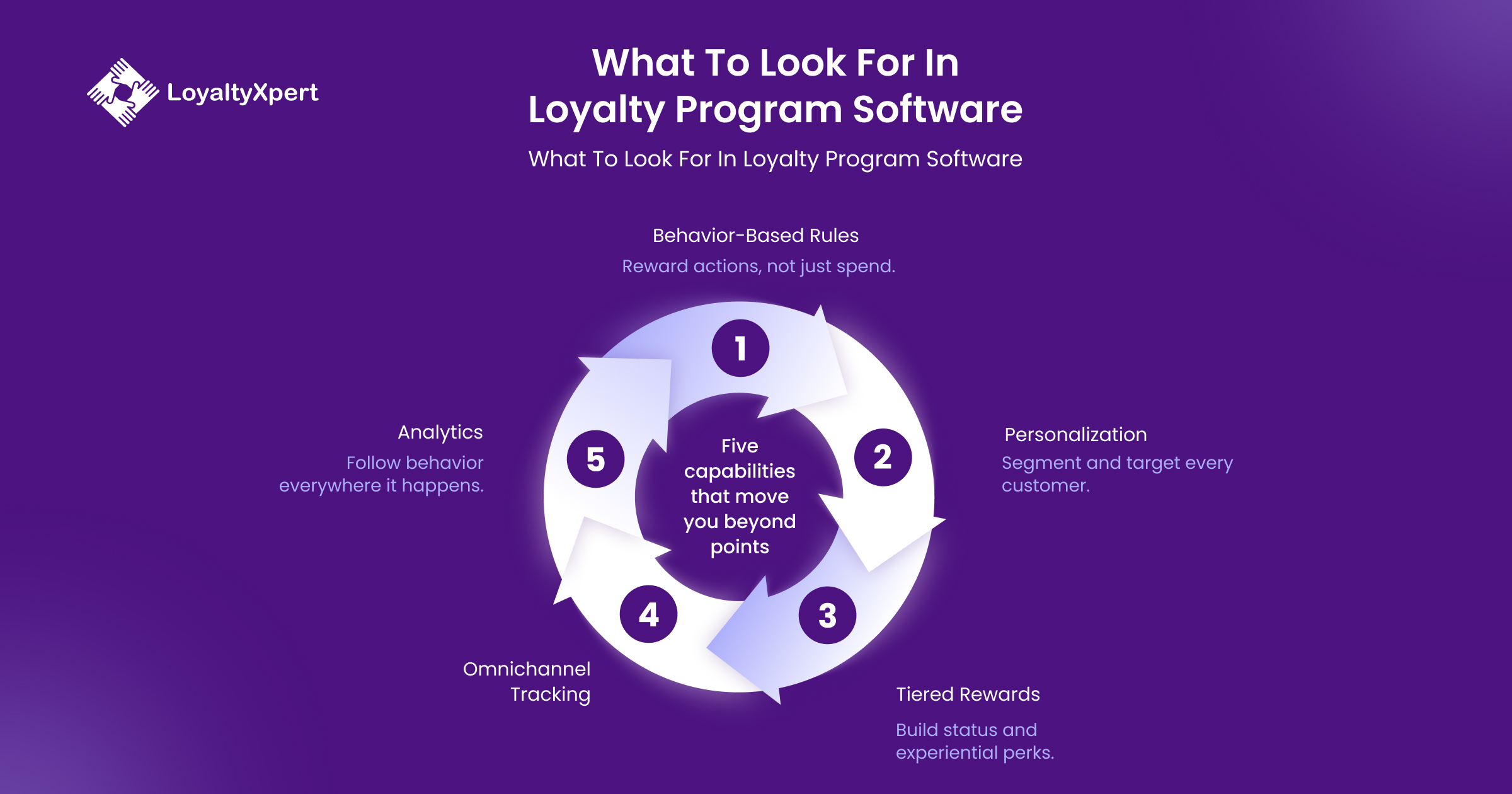
Prioritize these five capabilities.
- Behavior-based rules — reward actions, not spend.
- Personalization — segment and target every customer.
- Tiered rewards — build status and experiential perks.
- Omnichannel tracking — follow behavior everywhere.
- Analytics — measure, learn, and refine fast.
Integration deserves special attention here. The software should fit existing tools. It must connect with your ERP. Clean data flows power better rewards. Poor integration slows everything down.
The best platforms cover all five. Benchmark your shortlist against a top loyalty program software comparison.
How Do You Move From Points To Behavior-Based Loyalty?
Brands move from points by planning the shift carefully. They audit current rewards first. They define target behaviors next. Then they map rewards to those behaviors. Finally, they launch and measure closely. A phased rollout reduces risk. A loyalty program guide simplifies each step.
Follow this five-step sequence.
- Audit — review current points performance.
- Define behaviors — choose actions worth rewarding.
- Design rewards — mix tiers, perks, and payouts.
- Integrate data — connect systems and channels.
- Launch and measure — track results and refine.
Start small and scale steadily. Pilot one segment or region first. Learn from the early results. Then expand the program confidently. Momentum builds trust across teams.
Measure the right metrics closely. Track retention, repeat rate, and referrals. Watch redemption and engagement trends. Let data guide every tweak. Continuous refinement keeps programs sharp.
Conclusion
Points alone no longer build loyalty. Modern loyalty software rewards behavior and value. The shift is already underway. Choose a loyalty platform built for it. Here is where to start.
- Book Demo — See LoyaltyXpert move beyond points.
- Contact Us — Discuss your loyalty goals today.