 Max 7min read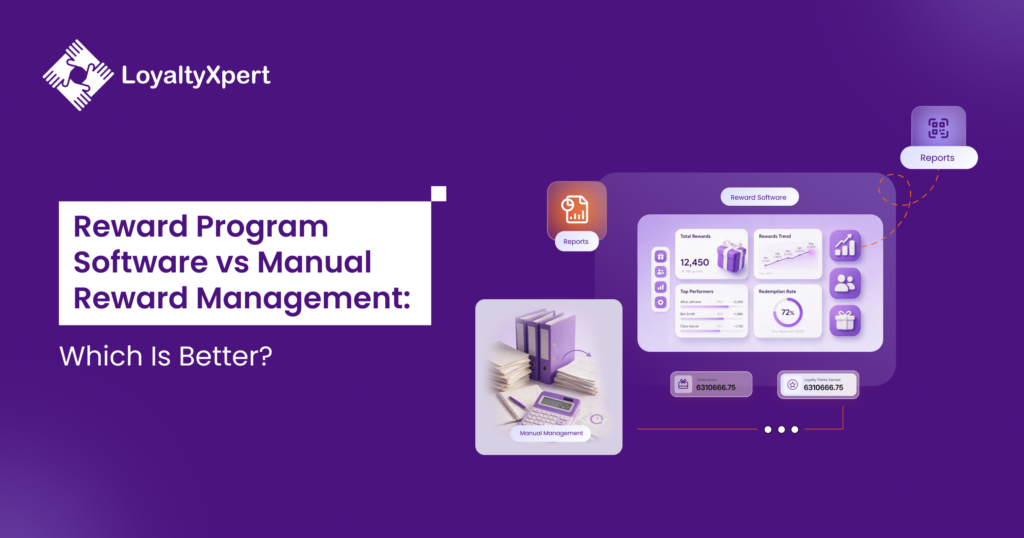
📝 Summary
Reward programs boost loyalty and repeat sales. Many teams still track them by hand. This guide compares two clear approaches. Reward program software vs manual reward management. You will learn where each model wins. You will also know when to upgrade. Reward management software changes how programs scale.
Every reward program needs accurate tracking. Manual methods handle small volumes fine. Growing programs need reward program software instead. It automates tracking, payouts, and reporting. Errors and delays then disappear. Manual reward tracking cannot keep this pace. This reward program software vs manual reward management comparison breaks down both models. Then you choose with real confidence.
What Is Manual Reward Management?
Manual reward management tracks rewards by hand. Teams use spreadsheets, emails, and paper records. Staff calculate points and approve payouts manually. This method works for small, simple programs. But it depends heavily on human effort. Every entry risks a costly error. Manual reward tracking then slows the program.
Most companies start here. Spreadsheets predate modern loyalty program software. It feels cheap and familiar. But hidden costs pile up fast. Time, errors, and disputes add up. Growth then exposes every weakness. What once felt simple becomes fragile.
Ready to leave spreadsheets behind?
What Is Reward Management Software?
Reward management software automates loyalty programs. It tracks points, tiers, and payouts automatically. Rules run without manual calculation. Dashboards show performance in real time. The software also flags fraud instantly. Setup is quick and cloud-based. Businesses scale rewards without adding headcount.
A modern reward management system replaces spreadsheets. It centralizes every reward in one place. Core capabilities usually include:
- Automated point and payout calculation
- Real-time dashboards and reporting
- Fraud detection and audit trails
- Tiered rules and member segmentation
Vendors often call it incentive management software. The label varies, but the value stays. Buyers compare the top loyalty program software.
Reward Program Software vs Manual Reward Management: A Quick Comparison
Reward management software wins at scale. Manual reward management relies on human effort. Software automates the same work instantly. Accuracy, speed, and transparency all improve. Manual methods stay cheaper at tiny volumes. The gap widens as programs grow. Then software delivers far stronger ROI. A modern loyalty program needs real automation.
| Factor | Manual Reward Management | Reward Management Software |
|---|---|---|
| Automation | None; fully manual | Full; rules run automatically |
| Accuracy | Error-prone entries | Validated, consistent data |
| Speed | Slow, batch payouts | Instant, real-time payouts |
| Scalability | Breaks at high volume | Scales with demand |
| Transparency | Limited visibility | Live dashboards |
| Fraud control | Hard to detect | Automated flags and audit trails |
| Reporting | Manual, time-consuming | On-demand, automated |
| Cost at scale | Rises with headcount | Predictable subscription |
What Problems Does Manual Reward Tracking Create?
Manual reward tracking creates errors and delays. Staff enters data by hand daily. Small mistakes distort points and payouts. Partners then question every reward statement. Fraud slips through without automated checks. Trust erodes across your channel. Admin work grows with each member. This is where reward program software vs manual reward management shows its sharpest gap.
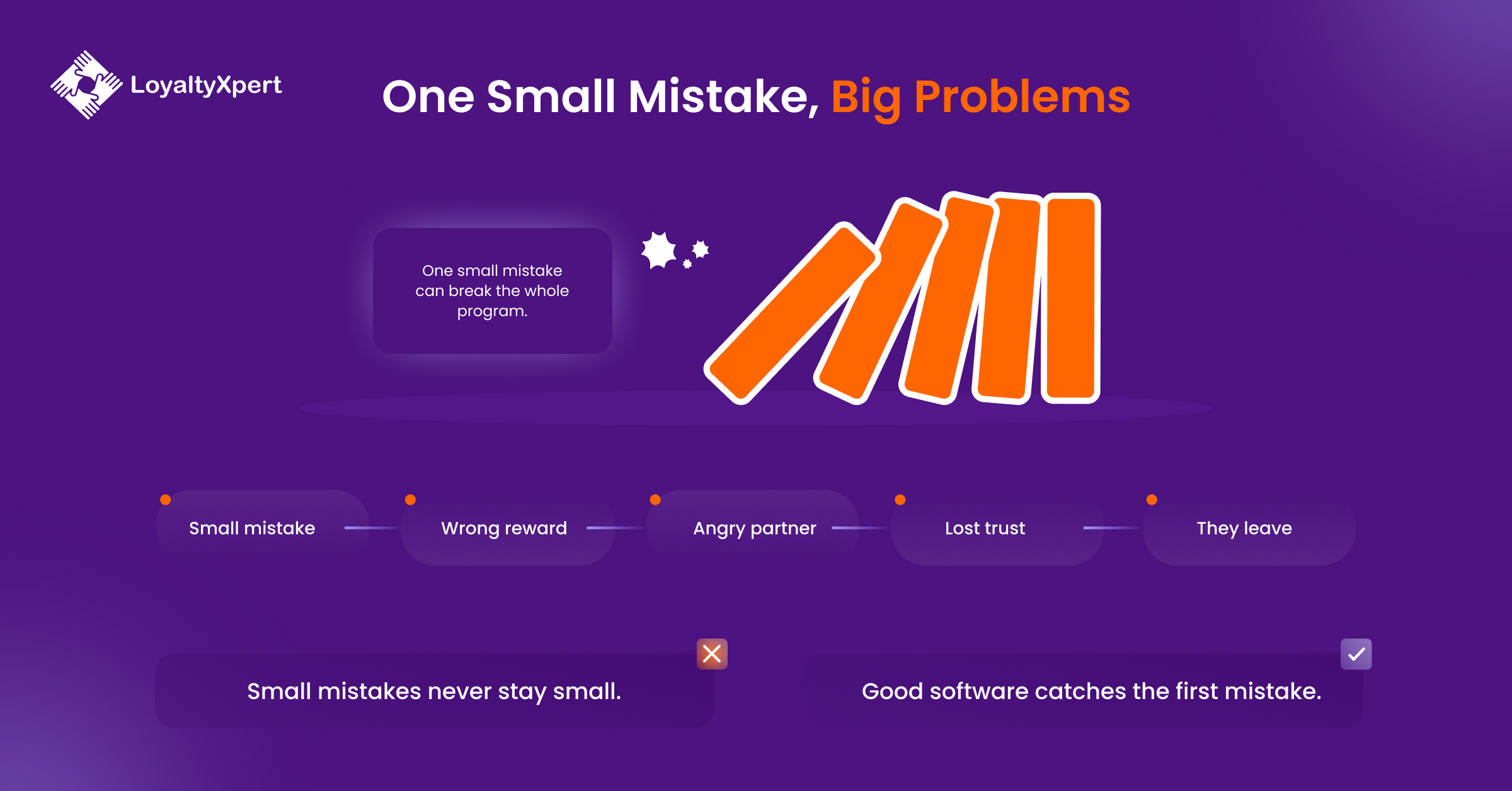
5 Costs Hidden in Manual Reward Tracking
- Human Errors — Wrong points frustrate loyal members.
- Payout Delays — Slow rewards weaken engagement fast.
- Fraud Risk — Duplicate claims go unnoticed easily.
- Poor Visibility — No live view of performance.
- Rising Admin Load — More members mean more hours.
How Does Reward Management Software Solve These Problems?
Reward management software solves this through automation. It calculates points and payouts instantly. Built-in rules remove manual data entry. Fraud checks run on every transaction. Live dashboards give full program visibility. Accuracy and trust both rise. One platform replaces hours of admin.
Here is how it fixes each cost:
- Errors → Automated, validated calculations
- Delays → Instant, rule-based payouts
- Fraud → Real-time detection and audit trails
- Visibility → Live performance dashboards
- Admin load → Centralized, self-serve management
Cut errors and payout delays today. Explore LoyaltyXpert
What Features Should Reward Tracking Software Include?
Reward tracking software needs automation and analytics. Core features cover point and payout automation. Real-time dashboards track performance clearly. Fraud detection protects your reward budget. Integrations connect your CRM and ERP. Mobile access keeps partners engaged anywhere. Strong reporting proves program ROI.
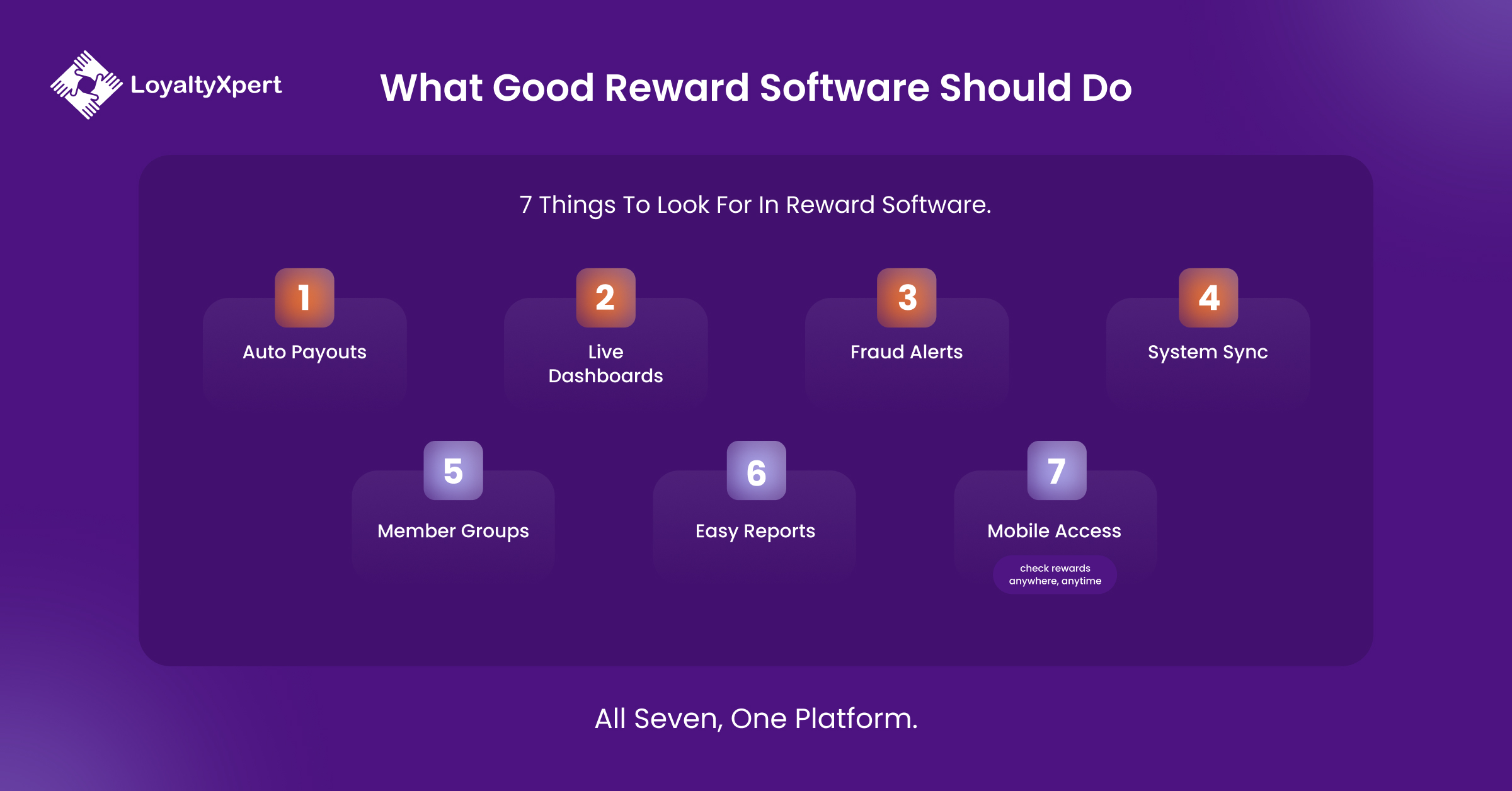
7 Features to Look For in Reward Tracking Software
- Automated Payouts — Rules trigger rewards without staff.
- Real-Time Dashboards — Track performance the moment it happens.
- Fraud Detection — Automated flags catch suspicious claims.
- CRM and ERP Integration — Data syncs across your stack.
- Member Segmentation — Target tiers with tailored rewards.
- Custom Reporting — Prove ROI with clear numbers.
- Mobile Access — Partners check rewards on phones.
Match these features to your goals.
Good incentive management software covers all seven. The best rewards program software includes these.
When Should Businesses Switch to a Reward Management System?
Businesses should switch when manual tracking fails. Growing member counts overwhelm spreadsheets quickly. Payout errors and disputes rise sharply. Staff spend hours on reward admin. Partners demand faster, transparent rewards. The upgrade quickly recovers its cost. A reward management system then pays off.
Several clear signals point toward that switch. Member counts climb past a few hundred. Payout disputes surface almost every month. Spreadsheets break, corrupt, or slow down often. Reporting drags on for days, not minutes. Partners complain about slow, unclear rewards. Larger programs add a tiered loyalty program. Any one sign justifies the move.
How Do You Move From Manual to Automated Rewards?
The switch to automated rewards is simple. First, audit your current reward data. Then pick reward management software that fits. Migrate members, points, and rules carefully. Test payouts before the full launch. Finally, train your team and partners. Most rollouts finish within a few weeks.
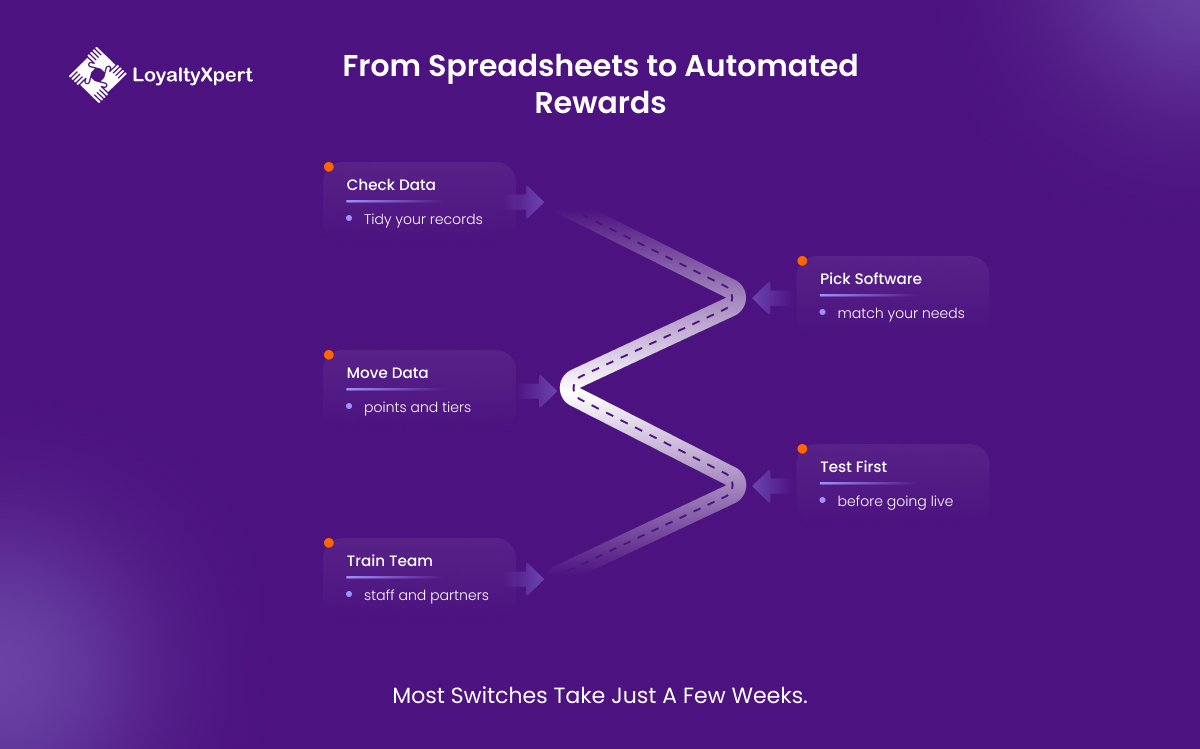
5 Steps to Automate Your Reward Program
- Audit Data — Clean up existing reward records.
- Choose Software — Match features to your goals.
- Migrate Members — Move points and tiers accurately.
- Test Payouts — Verify rules before going live.
- Train Teams — Onboard staff and channel partners.
Good reward tracking software makes migration painless. Vendors usually guide the whole process. Downtime stays minimal with proper planning.
What Does Manual Reward Management Really Cost?
Manual reward management costs more than expected. Staff hours add up every week. Errors trigger disputes and lost trust. Delayed rewards reduce partner engagement fast. Fraud drains budgets without anyone noticing. These hidden costs often exceed software fees. Automation usually pays for itself quickly.
💡What the data says:
The data backs this up clearly. One 2024 study found a stark figure. 94% of business spreadsheets contain errors. Each error can misprice a reward. Disputes and manual fixes then follow. Manual reviews miss many mistakes. Small slips quietly compound into high costs.
Compare the true cost of each model:
- Manual: salaries, errors, disputes, fraud, delays
- Software: predictable subscription, minimal admin, fewer errors
Reward tracking software turns costs into ROI. Every automated payout saves staff time. Savings compound as your program grows.
Which Option Works Better for Manufacturers and B2B?
Reward management software fits B2B and manufacturers. These programs involve many dealers and distributors. Volume and complexity break manual systems fast. Software handles tiers, regions, and channels cleanly. The loyalty management market hit $13.59 billion. Grand View Research reported that figure for 2025.
Manual reward management cannot match this scale. Every new dealer multiplies the workload. Our B2B loyalty program software scales cleanly. An incentive management software platform stays consistent. ROI grows as your channel expands.
Which Industries Gain Most From Automated Rewards?
Automated rewards help many industries scale loyalty. Manufacturing runs large dealer loyalty programs too. FMCG brands reward retailers and salespeople. Automotive networks track service and parts incentives. Construction brands engage carpenters and contractors. Each sector relies on reward tracking software.
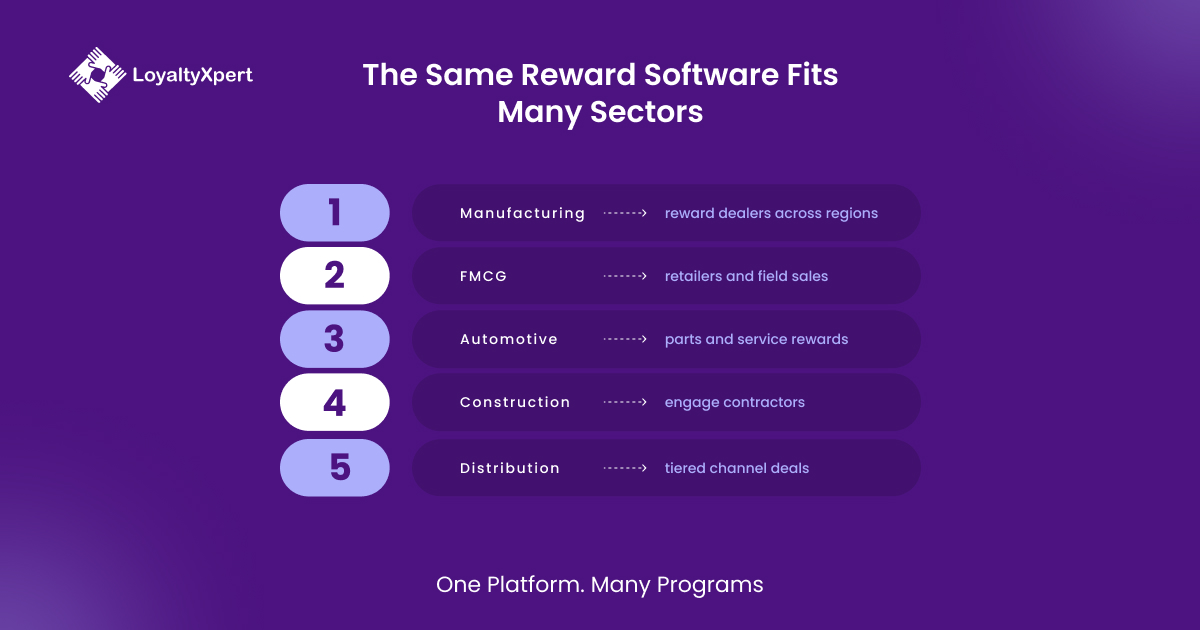
Here is where automation drives the most value:
- Manufacturing — Reward dealers across many regions.
- FMCG — Incentivize retailers and field sales.
- Automotive — Track parts and service rewards.
- Construction — Engage contractors with loyalty points.
- Distribution — Manage tiered channel incentives easily.
A reward management system supports these models. One platform runs many program types.
Reward Program Software vs Manual Reward Management: The Verdict
Reward program software wins for growing businesses. Manual reward management suits small, simple programs. Automation delivers accuracy, speed, and scale. Manual methods cost more as you grow. Your volume and goals guide the choice. For scaling channels, software wins clearly.
Reward program software vs manual reward management. The winner is clear for scaling teams. Ready to modernize your program?
Pick the next step that fits:
- Book a Demo — See the platform in action.
- Contact Us — Ask questions and plan rollout.
- Become a Partner — Grow revenue with LoyaltyXpert.
- Explore Reward Program Software — Compare features and fit.
The debate has one honest answer. Automation wins for serious growth.