 Max 9min read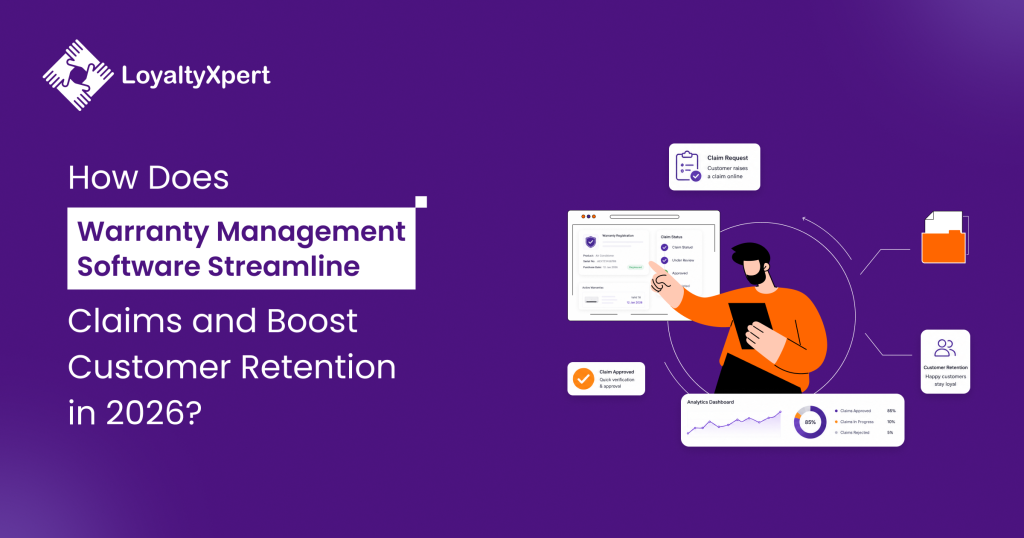
📝 Summary
This blog covers how warranty management software streamlines the claims process from initiation to resolution. It explains what the system is, the five key features to look for, and how automation improves customer retention. It also breaks down the business benefits, the AI trends reshaping warranty management in 2026, and how to choose the right platform.
Everything works perfectly until month three. Then the product fails. Customer contacts support and hears: “We’ll look into it.” A week goes by, two more calls, still no answer. By the time the claim is finally resolved, the customer has already talked to ten friends about it. Told them not to buy from the brand again. The warranty process is what really causes the trouble.
Warranty management software is made to make things easier. It turns an annoying wait into something quick and easy for your team. It makes the whole process very visible. Here is how warranty management software is actually made.
💡 Quick Fact
By 2031, the global warranty management software market is expected to surpass US$ 12.68 million in revenue, growing at a CAGR of 13.5% across the forecast period.
What Is Warranty Management Software?
Warranty management software makes it easier to handle warranty operations. This automated software tracks coverage and verifies the claims people make. The software handles spreadsheets, email threads, and memory, putting it all in one centralized place.
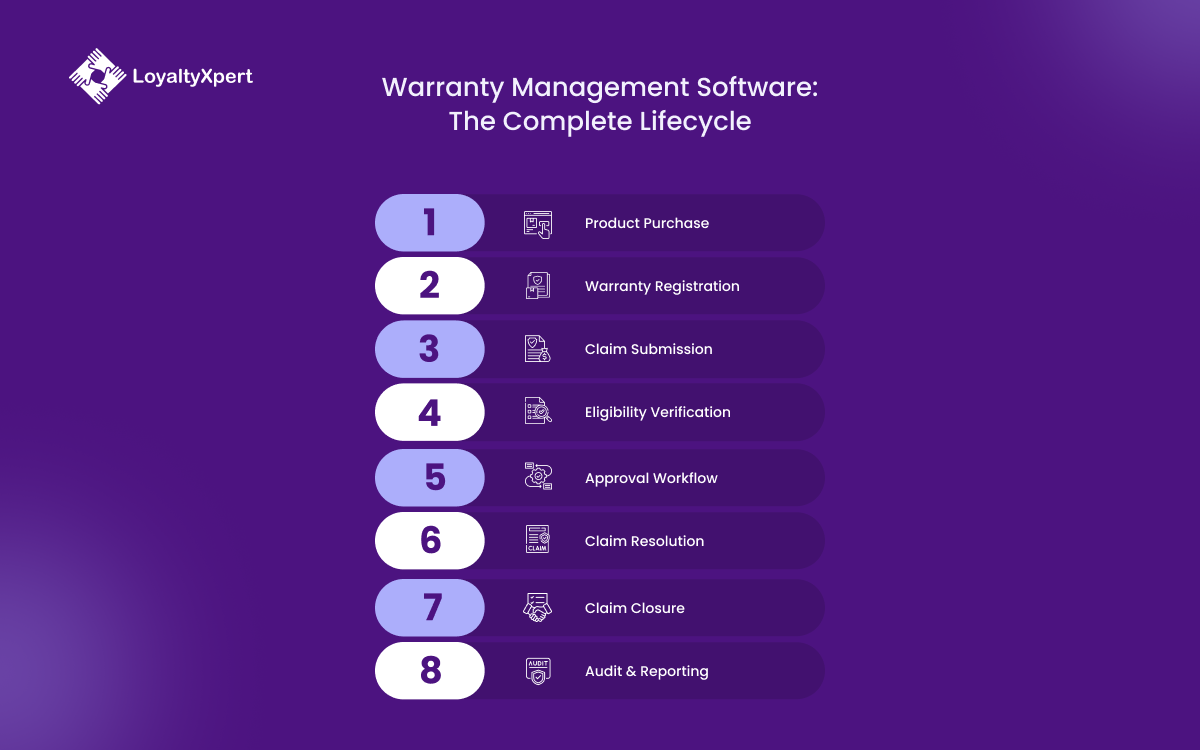
At its core, it tracks every warranty from the moment a product is sold to the day a claim is closed: who bought what, when coverage starts and ends, what’s eligible, and what’s already been claimed. Instead of teams digging through invoices to verify whether a customer is covered, the software pulls up the record in seconds. It registers warranties, validates claims against real purchase data, routes approvals, and flags anything that looks off, like duplicate claims or coverage that expired months ago.
How Does Warranty Management Software Streamline Claims?
Here’s how the automated warranty claims workflow operates from claim initiation to resolution:
- Claim Initiation – A claim is logged via QR scan, customer portal, or field-service app, with product and purchase data captured automatically.
- Eligibility Validation – The system checks the warranty terms, purchase date, and coverage. It immediately removes any claims that are invalid under your policy rules.
- Automated Routing – If a claim is valid, the system routes it to the appropriate team or service center based on the product, your location, and the urgency of the repair.
- Approval & Adjudication – The system uses rules to approve routine claims and, if a problem arises, sends the claim to a person who can provide all the information they need.
- Resolution & Fulfillment – A repair, replacement, or reimbursement is triggered, with inventory and service-partner systems updated in sync.
- Tracking & Audit – Every action is timestamped and logged, giving customers live status and your team a complete audit trail.
Most warranty claim management challenges hide in the gaps between those steps, and automation quietly closes them before anyone even notices.
💡 Did you know?
Claim management software dominated the market in 2025, holding 37.75% share, while warranty analytics solutions are among the fastest-growing segments, expanding at 15.05% annually.
How Warranty Software Improves Customer Retention?
Warranty software improves customer retention by making post-purchase support fast, transparent, and consistent. When claims are resolved quickly, and customers receive proactive status updates, frustration drops and trust grows. That positive resolution experience increases the likelihood of repeat purchases and strengthens long-term loyalty toward the brand.
Three things make the difference:
- Speed — Field professionals can’t afford to wait. Issues get resolved within a day, keeping trust in the program intact.
- Proactive Updates — The software automatically sends real-time notifications. Influencers always know where their rewards stand, without having to ask.
- Respect for Time — No lengthy forms, no repeated follow-ups, no explaining the same issue twice. The process is as frictionless as it gets.
Get those three right, and you’ve turned a complaint into customer retention.
What Are the Key Features to Look for in Warranty Management Software?
When evaluating warranty management software, focus on these five core features:
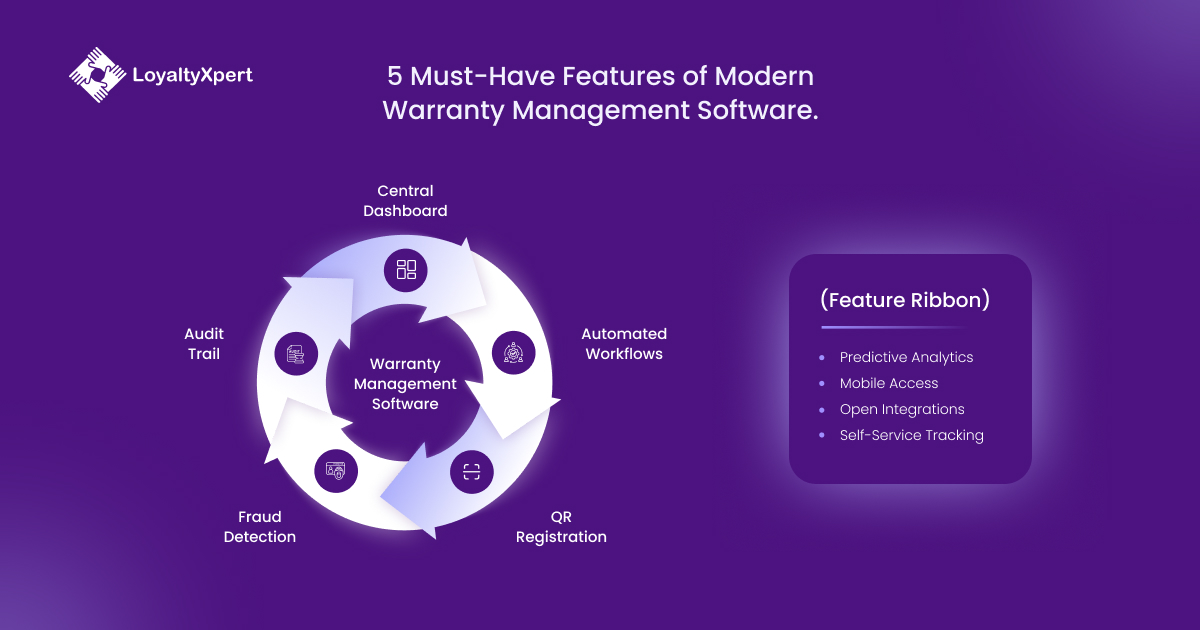
The Non-Negotiables:
- Central Dashboard – One live view of every claim, across all your regions and channels.
- Automated Workflows – Claims advance on their own, without anyone manually chasing them.
- QR-Based Registration – Products get logged in seconds at the point of delivery.
- Fraud Detection – Fake, duplicate, and backdated claims get caught before payout.
- Audit Trail – Every action is time-stamped, so accountability is never in question.
The Difference-Makers
- Predictive Analytics – Spot failing products and recurring defects before complaints pile up.
- Open Integrations – Connects with your CRM, ERP, and existing tools without a custom build.
- Mobile Access – Partners file and track claims from the field, not just a desk.
- Self-Service Tracking – Customers check status themselves, which cuts your inbound support calls.
How Does Warranty Management Software Help the Business?
Warranty management software helps businesses by automating claim handling, reducing fraud, and turning warranty data into usable insights.
It lowers operating costs, shortens resolution times, and keeps both dealers and customers satisfied. The result is a leaner post-sale operation that protects margins and strengthens long-term business relationships.
The right warranty management solutions compound across the entire business:
- Lower Operating Costs – Automation eliminates manual processing and admin hours that quietly add up around every single claim.
- Reduced Fraud Leakage – Location-verified registrations and duplicate checks prevent backdated and non-compliant claims from ever being paid out.
- Faster Resolution Cycles – Auto-verification and smart routing turn what used to be multi-week claim cycles into same-day closures.
- Cleaner Compliance – Digital workflows automatically enforce policy, so non-compliant or out-of-window claims simply don’t slip through.
- Sharper Decisions – Real-time data on claims, returns, and product failures tells you exactly what to build, stock, and fix next.
- Stronger Channel Trust – Dealers and distributors get paid on time and without disputes, keeping your entire network engaged and selling.
That last point is really important. When you handle every claim well, it helps your dealers trust you more. This trust keeps them coming back to you and placing orders every month. Your dealer loyalty program gets stronger as a result.
What AI Trends Are Shaping Warranty Management in 2026?
AI has quietly moved from pilot projects to daily operations. The easiest way to see the change is a set of “used to / now” swaps. Each one removes a step that once slowed your team down.
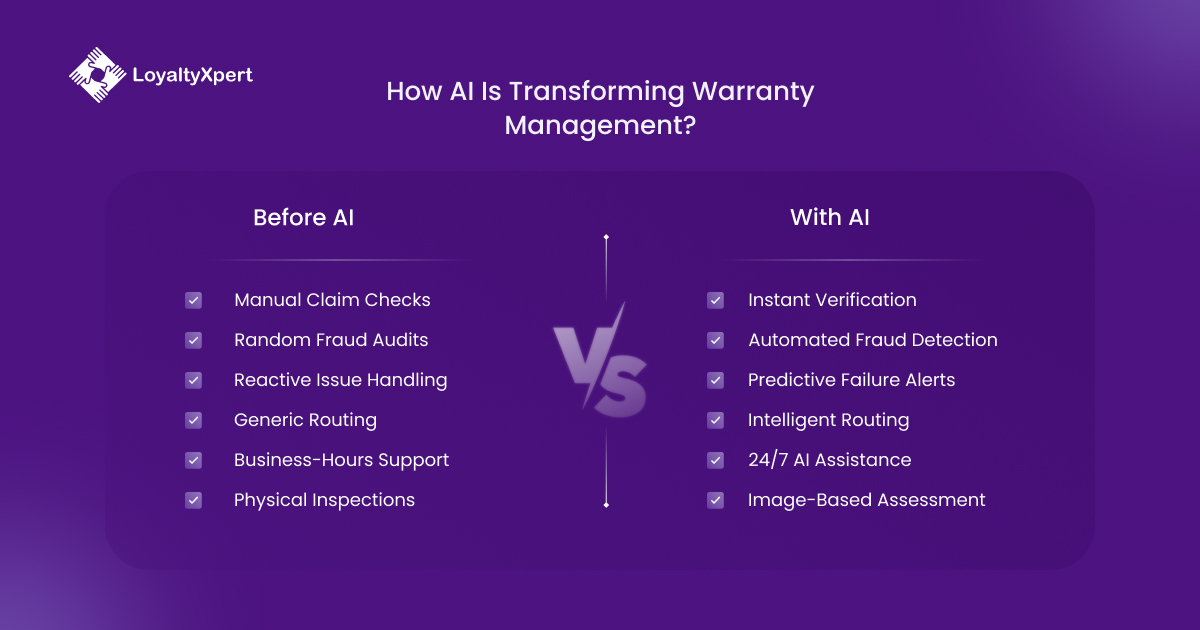
- Claim Verification – This used to be a manual job, where someone would check everything against the policy. Now the Artificial Intelligence system reads the claim. matches it to the coverage. The Artificial Intelligence system then approves the claims right away. The agents are involved only when there is an edge case with the claims.
- Fraud Detection – It used to depend on instinct and random checks. Now models check every claim for patterns. Duplicate, backdated, and suspicious requests are flagged immediately before any money is paid out.
- Failure Prediction – A spike in claims used to be a nasty surprise. Now, predictive analytics spot a failing batch early. You can warn the channel and fix the root cause before complaints flood in.
- Intelligent Routing – Claims are routed to a single queue and wait. Now each case is auto-sorted by product, region, and urgency. It reaches the right expert first, so nothing sits idle.
- Chatbot Claim Support – People used to clock off at 6 p.m. Now these chatbots answer questions like “where’s my claim” at midnight. Customers get updates away, and your team wakes up to fewer customer tickets about their claims.
- Image-Based Damage Assessment – Damage used to require someone to come and look at it, or for a person to visit. Now, a customer can just upload a picture of the damage. The computer checks it out in just a few seconds. When the damage is verified, things get done faster. When someone tries to fake the damage, the computer catches them.
Start there, and these features stop being buzzwords and start cutting real costs. Used right, they don’t just speed up claims; they elevate customer loyalty across your whole base.
Most modern warranty management solutions already include these features, and brands that don’t seem slow to their customers. One thing to keep in mind is that AI is only as good as the data it’s based on.
No CTA found.
You need records and digital workflows in place first; then you can build intelligence on top of them. If you start with that, these features stop being buzzwords and actually start saving you money.
How Do You Choose the Right Warranty Management Software?
Choose software that matches your warranty workflows, automates claim processing, integrates with your existing systems, and provides the visibility needed to improve customer service.
When you evaluate platforms, a few clear signals separate a reliable choice from a risky one:
Green flags
- It scales smoothly as your claim volume and product range grow.
- It integrates with your CRM and ERP without requiring a heavy custom project.
- Pricing is clear and upfront, no decoding required.
- The support team responds quickly when you try them out before making a purchase.
Red flags
- Every small change to the setup needs to be approved by the vendor.
- There are fees for each claim, user, or module that are not clearly shown in the pricing.
- The dashboard looks great in the demo. It makes it hard to find the everyday features you need.
- Onboarding drags on for months and leans heavily on training.
The right platform makes itself obvious: it fits how you already work, and shows you exactly what you’re paying for, whether you’re choosing warranty management or loyalty program software.
Conclusion
Remember that washing machine at the beginning? A single flaw turned a customer into a warning story. Do not let that be your story. Each slow claim in your queue now is a customer choosing to stay or leave. You can change their mind today.
The right warranty management system turns your messiest post-sale moments into your strongest reason for a second order. LoyaltyXpert makes it real, with faster approvals, transparent tracking, and fewer fraud losses, all in one place.
So stop losing customers in the post-sale silence. See it in action before your competitors do. Book a free demo with LoyaltyXpert, or talk to our team about where your warranty process is leaking customers. Fix that one moment, and watch one-time buyers turn into loyal ones. Get in touch today!