
 Max 9min read
📝Summary
A dealer management system implementation works best as a phased rollout, not a single launch day. This guide gives manufacturers a six-step plan. It covers the network audit, vendor selection, integration, data migration, dealer onboarding, and a staged launch. It closes with the challenges that stall most rollouts and how to prevent them.
Most manufacturers do not struggle to buy software. They struggle to get dealers to use it. Orders still arrive over WhatsApp and phone calls. Scheme claims sit in spreadsheets for weeks. Regional managers chase stock figures one dealer at a time. A dealer management system implementation fixes this only when you plan it in stages.
A dealer management system brings orders, inventory, schemes, claims, and dealer performance onto one platform. The rollout decides whether that value reaches every dealer in your network. This guide lays out a six-step plan your sales, finance, and IT teams can follow together.
What Should You Prepare Before a Dealer Management System Implementation?
Preparation for a dealer management system implementation covers four core decisions. You set business objectives, map current workflows, gather stakeholder requirements, and fix the project scope. Manufacturers who settle these early avoid costly rework. They also give the vendor a clear brief. That brief shortens setup and ties the rollout to sales outcomes.
4 Decisions to Settle Before Kickoff
| Decision | What to Define | Typical Owner |
|---|---|---|
| Business Objectives | Two or three measurable targets, such as faster order confirmation | Sales or channel head |
| Current Workflows | How orders, schemes, credit, and returns move today | Channel operations |
| Stakeholder Requirements | What managers, distributors, dealers, finance, and IT need | Project lead |
| Implementation Scope | Which regions, dealer tiers, and modules go live first | Steering committee |
Capture these decisions in a one-page project charter. Every later choice in the dealer management system implementation should trace back to it. A clear charter also turns dealer network management into a program with targets and owners.
Step 1: How Do You Audit Your Current Dealer Network?
A dealer network audit maps how every distributor, dealer, and retailer works with you today. It records order channels, credit terms, scheme participation, and reporting gaps. The audit shows where manual work slows sales. It also reveals which dealer segments will need the most support during your dealer management system implementation.
Start with the area sales managers who handle dealer network management daily. Ask them these five questions:
- How do dealers place orders, and how long does confirmation take?
- Where does secondary sales data live today?
- How many scheme claims reach settlement on time?
- Which reports can leadership never get quickly?
- Which dealers have gone quiet this year?
Planning a dealer platform rollout? Start with a six-step plan.
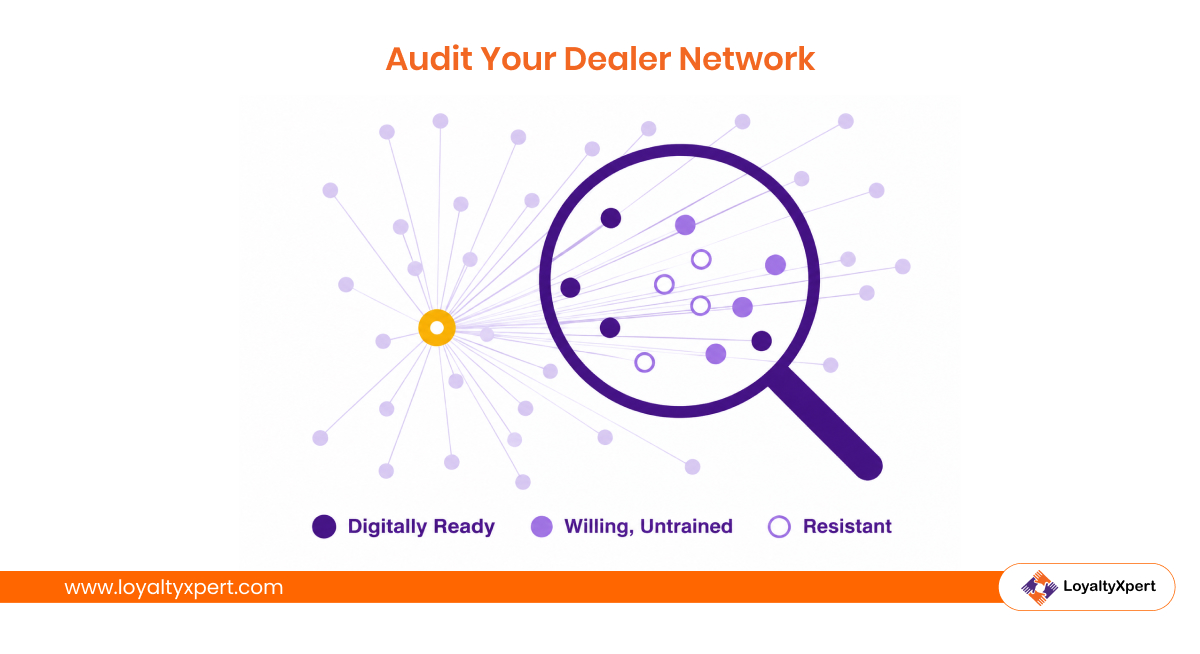
Group the answers by tier and region. Most networks split into three segments: digitally ready, willing but untrained, and resistant. That split shapes your pilot group and your dealer management system deployment sequence. It also gives dealer network management a baseline for measuring progress after launch.
Step 2: How to Choose the Right Dealer Management System for Your Network
Choosing the right dealer management system starts with your requirements, not a vendor demo. Rank each need by business impact. Then test shortlisted vendors against real scenarios from your audit. Include dealer onboarding software in the scorecard, since sign-up speed shapes adoption. The right dealer management system handles your tiers, schemes, and order volumes without heavy custom code.
| Requirement | Why It Matters | Question to Ask the Vendor |
|---|---|---|
| Multi-Tier Hierarchy | You sell through distributors, dealers, and retailers | Can one dealer map to several distributors? |
| Scheme and Claim Engine | Schemes drive most dealer disputes | Can we set slab and SKU schemes without code? |
| Partner Mobile App | Dealers work from shops, not desks | Does the app support regional languages? |
| Open APIs | The platform must talk to your ERP | Which ERPs have you integrated before? |
| Analytics | Leadership needs dealer-level visibility | Can we track secondary sales by territory? |
Many manufacturers also want dealer relationship management software features in the same platform. These include loyalty points, dealer feedback, and targeted messages. Choosing dealer relationship management software and operations tools together means one app for dealers. A single login lifts adoption more than any feature list.
Step 3: How Should You Plan Dealer Management System Integration?
Dealer management system integration connects the new platform with your ERP, CRM, accounting, and inventory tools. It keeps prices, stock, invoices, and dealer records in sync. Good integration planning defines which system owns each data type. It also sets sync frequency and error handling before development begins.
4 Systems Manufacturers Usually Connect First
| System | Data It Shares | Typical Sync |
|---|---|---|
| ERP | SKUs, price lists, invoices, credit limits | Near real time for orders |
| CRM | Dealer profiles, leads, service history | Channel Daily or on change |
| Accounting | Payments, credit notes, scheme payouts | Daily |
| Inventory or WMS | Stock by warehouse and depot | Hourly |
Agree on one source of truth for every field. Your ERP should usually own SKUs and prices. Your dealer relationship management software should own scheme data and dealer activity. When two systems edit one field, sync conflicts follow.
Clean data first. Launch second. See how it’s done.
Run dealer management system integration in phases, too. Connect order and pricing flows first, since dealers feel those immediately. Add accounting feeds once the core flow runs cleanly. Well-documented dealer management system integration also makes later upgrades far less risky.
Step 4: How Do You Configure the Platform and Migrate Dealer Data?
Dealer management system configuration sets up dealer hierarchies, territories, schemes, approval rules, and user permissions. Data migration then moves dealer records, SKUs, and open balances from older systems. Both tasks depend on clean data. A short cleanup sprint before migration prevents most launch-day errors.
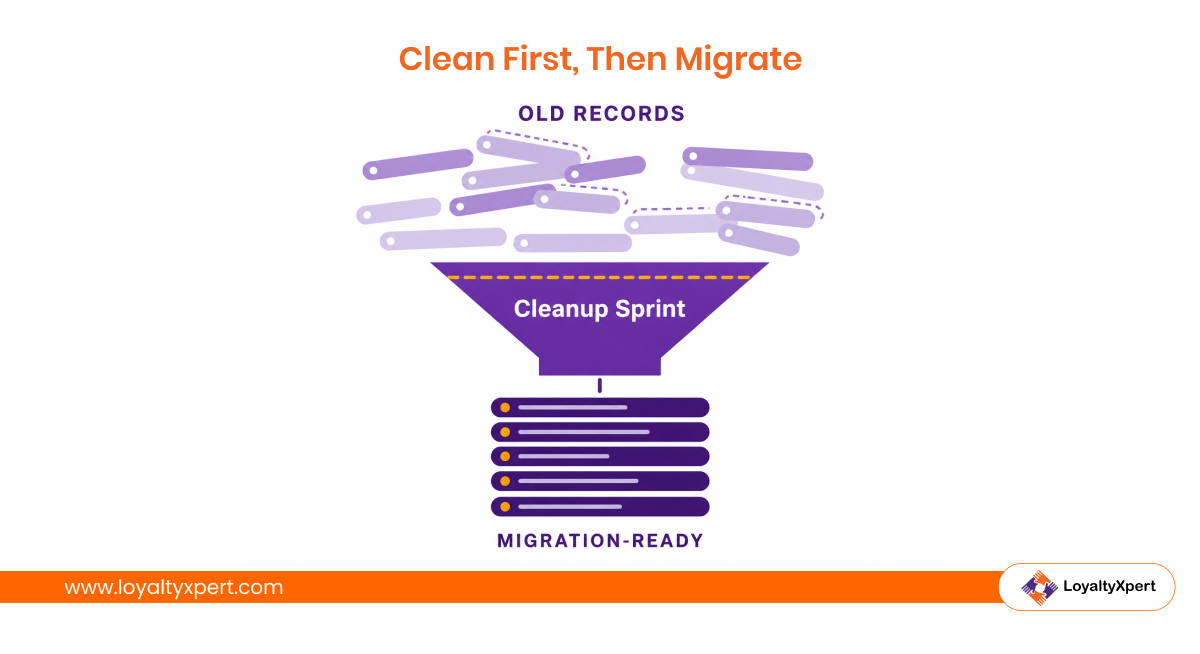
Data quality is the biggest risk at this stage. The 2025 Data Integrity Trends and Insights report from Drexel LeBow and Precisely makes this clear. 64% of organizations named data quality their top data integrity challenge. Another 77% rated their own data as average at best. Dealer master data is rarely an exception, so plan cleanup into every dealer management system implementation.
Follow this sequence before dealer management system integration goes live:
- Remove duplicate dealer records and merge branch accounts.
- Standardize names, addresses, tax IDs, and phone numbers.
- Map each dealer to a region, sales rep, and tier.
- Load a sample batch and reconcile it with your ERP.
- Get finance sign-off on opening balances.
Set access permissions during configuration. A distributor should see only linked dealers. A regional manager should see only their territory. Tight permissions protect pricing data and build dealer trust. Your dealer onboarding software should apply them automatically to each new dealer.
Step 5: How to Onboard Dealers and Train Your Teams
Dealer onboarding brings partners onto the dealer management system with verified profiles, app access, and clear instructions. Dealer onboarding software automates KYC, document checks, and welcome messages at scale. Training prepares your internal teams to support those dealers. Together, onboarding and training decide how fast dealers place their first digital order.
3 Ways to Win Dealer Adoption Early
First, make sign-up effortless. Good dealer onboarding software lets a dealer register from a phone in minutes. It pre-fills known details and accepts document photos. Every field you remove raises completion rates.
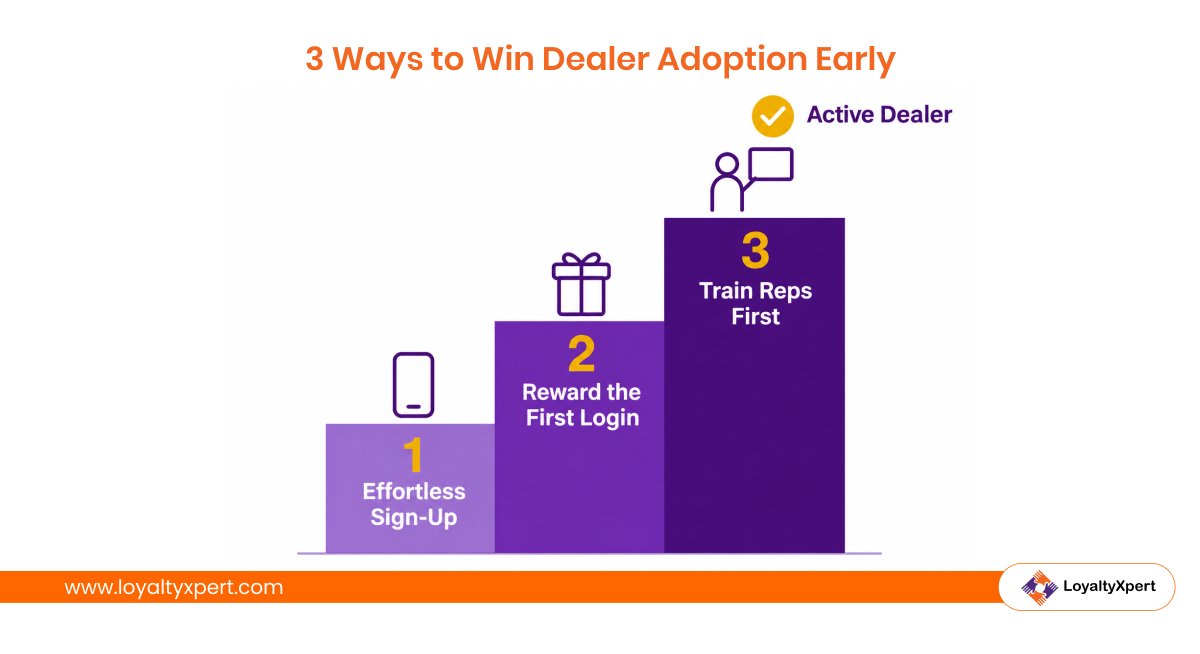
Second, give dealers a reason to log in. Tie early actions to a reward program, such as bonus points for a first app order. Dealer relationship management software works best when each login delivers visible value. Strong dealer network management depends on that habit.
Third, train your own people first. Sales reps answer most dealer questions in the field. Give them short, role-specific sessions and a one-page guide in the local language. Show them how the dealer onboarding software flags incomplete profiles. Then let reps run small demos for dealers.
Step 6: How to Test, Launch, and Monitor a Dealer Management System Deployment
A dealer management system deployment works best in phases rather than all at once. A pilot with a small dealer group tests real orders and claims first. Fixes follow, then regional waves. After launch, adoption metrics show which dealers need help and which workflows need refinement.
A phased dealer management system deployment usually runs in five stages:
- Run user acceptance testing on real order and claim scenarios.
- Pilot with a small dealer group in one region for four to six weeks.
- Fix issues, update training, and confirm dealer management system integration holds under load.
- Roll out in regional waves, using dealer onboarding software to invite digitally ready dealers first.
- Keep a support team on standby for each wave’s first month.
After each dealer management system deployment wave, track these metrics weekly.
| Metric | What It Tells You |
|---|---|
| Dealer Activation Rate | Share of onboarded dealers with a first transaction |
| Digital Order Share | Order volume now flowing through the platform |
| Claim Settlement Time | Whether scheme payouts move faster |
| Sync Error Count | Whether integrations stay stable at volume |
Review these numbers with regional managers, who run dealer network management daily. Feed the results into your dealer relationship management software to target inactive dealers. This loop turns dealer management system deployment into steady improvement.
What Are the Most Common Dealer Management System Implementation Challenges?
Dealer management system implementation challenges usually come from people, process, and data, not the dealer management system itself. Inaccurate records, fragile integrations, dealer resistance, thin training, and unclear ownership stall most rollouts. Each one shows early warning signs you can act on.
5 Problems That Stall Rollouts
| Challenge | Early Warning Sign | How to Prevent It |
|---|---|---|
| Inaccurate Data | Pilot dealers report wrong balances | Run a cleanup sprint before migration |
| Integration Failures | Prices differ between systems | Define data ownership and test at real volume |
| Dealer Resistance | Dealers keep ordering by phone | Link app actions to a reward program |
| Inadequate Training | Tickets repeat the same questions | Train sales reps first, then dealers |
| Unclear Ownership | Decisions wait weeks for approval | Name one accountable business owner |
Ownership deserves special attention. A dealer management system implementation needs a business owner from sales or channel operations, not only IT. That owner keeps dealer network management tied to revenue after go-live.
Is Your Dealer Network Ready for a Phased Rollout?
A dealer network is ready for a phased rollout when objectives, data, and owners are clear. Audit the network, choose the right dealer management system, plan integration, migrate clean data, onboard dealers, and launch in waves. Each step lowers risk for the next.
A well-run dealer management system implementation delivers more than digital orders. It brings secondary sales visibility, faster claim settlement, and engaged dealers into everyday dealer network management. LoyaltyXpert supports this with a SaaS platform, a partner app, and built-in dealer relationship management software. Together, they combine dealer operations, schemes, and loyalty in one place.
Take the next step that fits your stage:
- Book a Demo — See how the platform handles your dealer tiers and schemes.
- Explore LoyaltyXpert — Browse the full suite for manufacturers and their channel partners.
- Contact Us — Discuss your rollout scope and integration needs with our team.
- Become a Partner — Join our partner program and offer channel solutions to your clients.