 Max 13min read
📝 Summary
Manufacturers quickly outgrow spreadsheets and email-based claims. This guide compares 10 warranty platforms built for OEMs, brands, and dealer-led businesses. It explains what to evaluate, how registration and tracking differ, and which questions to ask vendors. It closes with a practical method to cut ten options down to a demo shortlist.
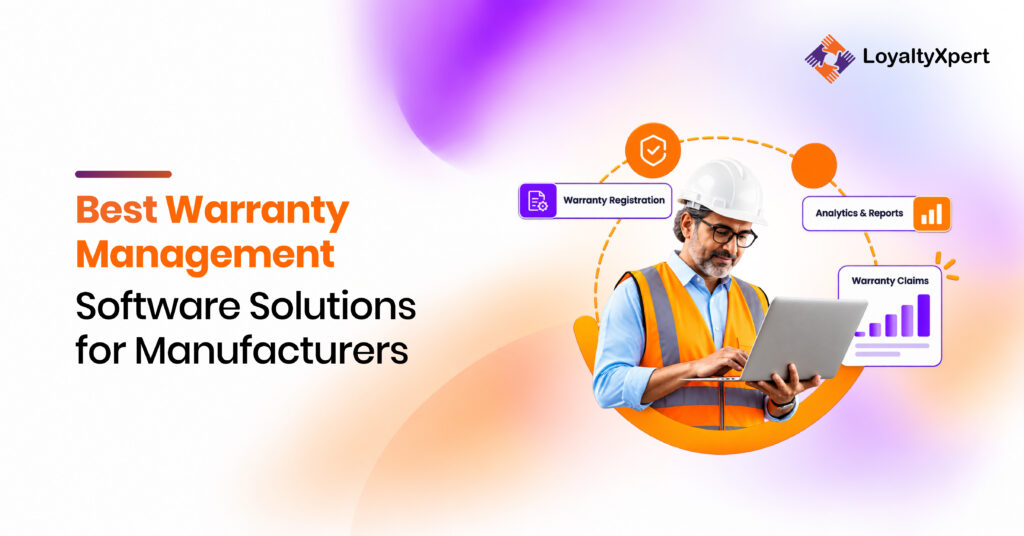
Products warranty work rarely fails in one dramatic moment. A dealer emails a claim photo. Someone retypes it into a spreadsheet. A manager approves it days later. Nobody links it back to the product record. That drift pushes manufacturers away from manual warranty management and toward the best warranty management software. Warranty management software built for channel-led brands keeps registrations, claims, and partner data in one place. This guide reviews ten platforms and a simple shortlisting method.
What Is Warranty Management Software?
Warranty management software is a digital platform that manages a product’s warranty from registration to final settlement. It records ownership, checks coverage, routes claims for approval, handles parts returns, and recovers costs from suppliers. Manufacturers use it to replace spreadsheets and email threads with one shared record for every product, dealer, and claim.
What Features Should Warranty Management Software Have?
Warranty management software for manufacturers runs registration, claim intake, approvals, parts returns, supplier recovery, and reporting in one system. The best warranty management software also syncs with ERP and CRM tools. It turns claim data into quality insight. Six criteria shape how we rate the best warranty management software vendors below.
6 Criteria Used to Evaluate Warranty Management Platform
- Warranty registration software that captures data at the point of sale or installation
- Claim intake for dealers, technicians, and customers
- A rules engine that checks coverage before payment
- Parts return and supplier recovery workflows
- Integration with ERP, CRM, and service systems
- Warranty tracking software that links failures to products and partners
Warranty management software options differ most on criteria four and five. Those gaps decide real cost after go-live. Start any warranty management software comparison with the basics of how warranty management software runs from registration to closure.
Top 10 Best Warranty Management Software
The best warranty management software vendors fall into three groups: enterprise OEM suites, registration-first tools, and claims-first platforms. Picking the best warranty management software starts with the group that fits your channel. The table shows each vendor’s ideal buyer, strength, and integrations.
| Software | Best Suited For | Key Capability |
|---|---|---|
| LoyaltyXpert | Dealer- and distributor-led manufacturers | Digital registration, claim automation, channel visibility |
| Tavant Warranty | OEMs with heavy aftermarket activity | Claims, parts returns, supplier recovery |
| Syncron Warranty | Durable goods OEMs | Registration-to-recovery on one platform |
| PTC Warranty | Service-led enterprises | Warranty plus field service |
| Pega Warranty | Large OEMs with legacy systems | Linked customer and supplier claims |
| Salesforce Manufacturing Cloud | Brands already on Salesforce | Asset, warranty, and claim data model |
| SAP S/4HANA Cloud | Manufacturers running SAP ERP | Customer claims and supplier recovery |
| IFS Cloud | Field service providers | Contract, warranty, and SLA control |
| Registria | Consumer durables brands | Mobile product registration |
| Claimlane | Brands handling B2C and B2B claims | Claims, returns, repairs, supplier cases |
Use this warranty management software comparison to filter warranty management solutions fast. The profiles below show how the best warranty management software vendors differ in depth.
What Is the Best Warranty Management Software for Manufacturers?
The 10 best warranty management software options for manufacturers are LoyaltyXpert, Tavant Warranty, Syncron Warranty, PTC Warranty, Pega Warranty, Salesforce Manufacturing Cloud, SAP S/4HANA Cloud, IFS Cloud, Registria, and Claimlane. Each of these warranty management software vendors suits a different buyer. Read the profiles as a side-by-side warranty management software comparison.
1. LoyaltyXpert
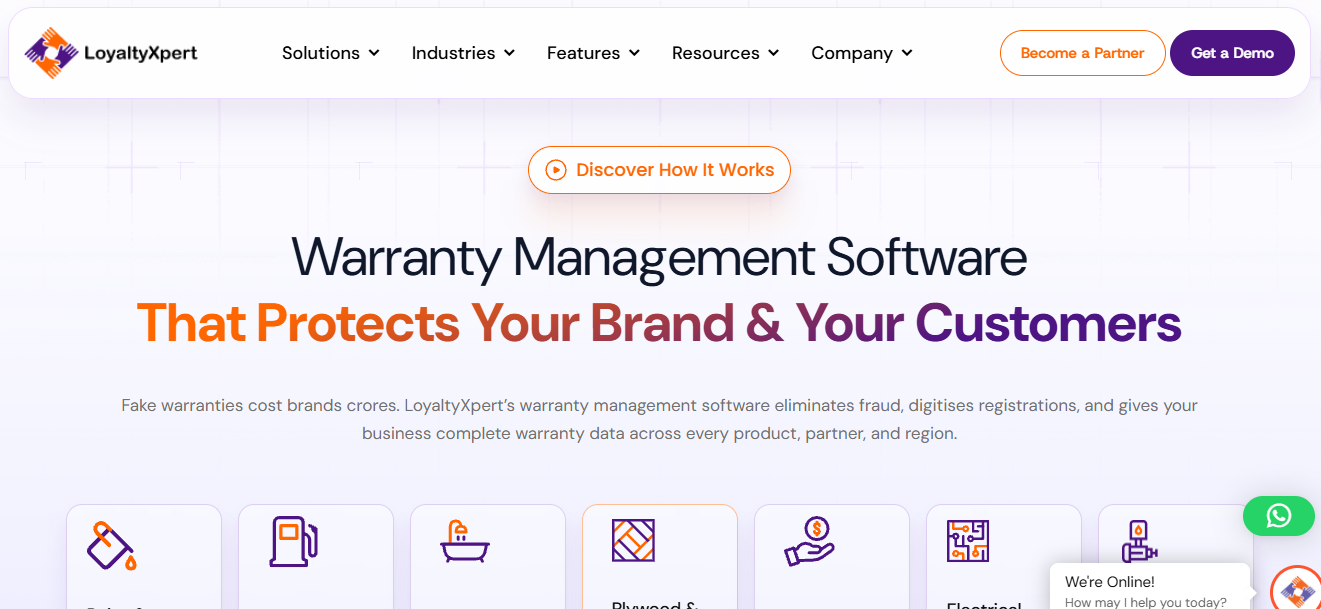
LoyaltyXpert is a SaaS channel engagement platform for manufacturers that sell through dealers, distributors, and influencers. Its warranty module sits alongside sales tracking and channel loyalty, so warranty data connects to the same partner network the brand already manages. That matters for dealer-led businesses, where most registrations and claims begin at the dealer counter rather than with the end customer. LoyaltyXpert warranty management solution functions in that reality, with registration, claims, and partner engagement.
Key Features of LoyaltyXpert
- QR-based product registration at handover, capturing location, timestamp, and invoice in the same step.
- Automated claim workflows with live status visible to dealers and the brand’s service team.
- Checks that flag duplicate and fake claims before anyone approves payment.
- API integration with ERP, CRM, and service network systems, available as SaaS or a custom build.
- Warranty features that plug into the brand’s loyalty app, turning each registration into a channel touchpoint.
It suits manufacturers selling through dealers and installers. The module also plugs into a loyalty app.
2. Tavant Warranty
Tavant is a digital products and solutions company focused on manufacturing, with offices across the US, the UK, India, Australia, and Japan. Its warranty platform gives OEMs one system for claims, product registration, parts returns, service campaigns, and supplier recovery. Tavant describes it as a closed-loop warranty system, so repair data flows back into quality and supplier decisions instead of stopping once a claim is paid. Its manufacturing brochure lists a 30% reduction in claim processing time and a 50% increase in supplier recovery among the outcomes it reports.
Key features:
- Warranty administration covering policy monitoring, fault codes, claims processing, registration, and flat rates.
- A configurable rules framework that automates claim adjudication and validates supplier contracts.
- Supplier recovery built on recorded supplier contracts and part mapping, with a dedicated supplier portal.
- Multilingual and multicurrency setup for manufacturers running warranty across several countries.
3. Syncron Warranty
Syncron is a SaaS company specializing in service lifecycle management for manufacturers, and Mize, a long-standing warranty vendor, now operates within Syncron. Syncron Warranty connects registration, claims, returns, supplier recovery, and service plans on one platform. Customers, dealers, distributors, service centers, and suppliers all work from the same records. Business logic processes routine claims automatically, so warranty teams can focus on exceptions.
Key features:
- Pre-delivery inspection, product registration, and service plan sales in one module.
- Claim submission with photos, videos, and files, plus automatic entitlement checks.
- Supplier claims and return material authorizations generated directly from warranty claims.
- An embedded parts catalog and analytics that surface quality issues for engineering.
4. PTC Warranty
PTC Warranty is part of PTC’s service lifecycle management portfolio. It covers claims and returns, supplier recovery, parts and service orders, and warranty analytics. PTC has paired it with ServiceMax, its field service management solution, which extends warranty data to remote support teams and onsite field engineers. That pairing suits manufacturers whose warranty work happens largely in the field.
Key features:
- Claims and returns management in a single workflow.
- Supplier recovery to reclaim warranty costs from component suppliers.
- Parts and service order management tied to warranty events.
- Enterprise-wide warranty analytics that expose product quality issues.
5. Pega Warranty
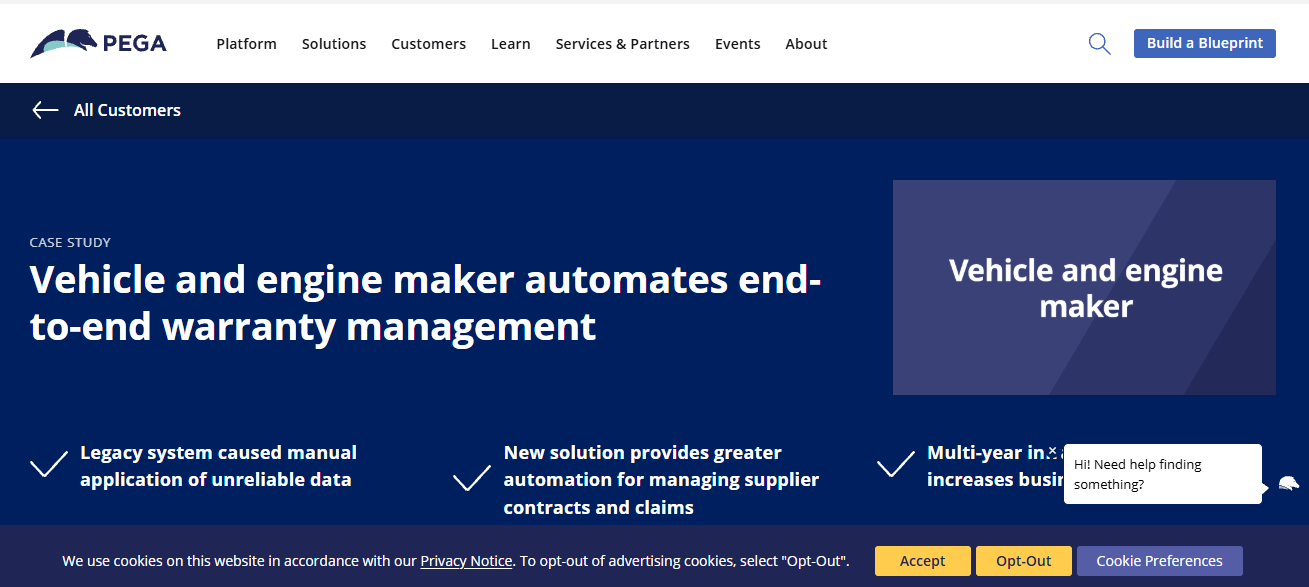
Pega Warranty manages warranty claims, supplier claims, and parts returns as connected cases on Pega’s case management platform. Its integrated framework links the warranty claim, the supplier claim, and the bench test performed at the parts return center. That gives quality teams reliable data on why parts fail. Pega’s customer stories include heavy truck and engine makers replacing decades-old warranty systems, and one vehicle and engine maker reports $12 million a year in increased recovery of warranty spend.
Key features:
- Automatic parts return requests when a claimed part qualifies for return or inspection.
- Supplier recovery calculated from each supplier’s responsibility ratio for a failed part.
- A Supplier Manager portal for supplier registration, disputes, and bulk payments.
- Automated settlement through invoicing, chargebacks, and payments.
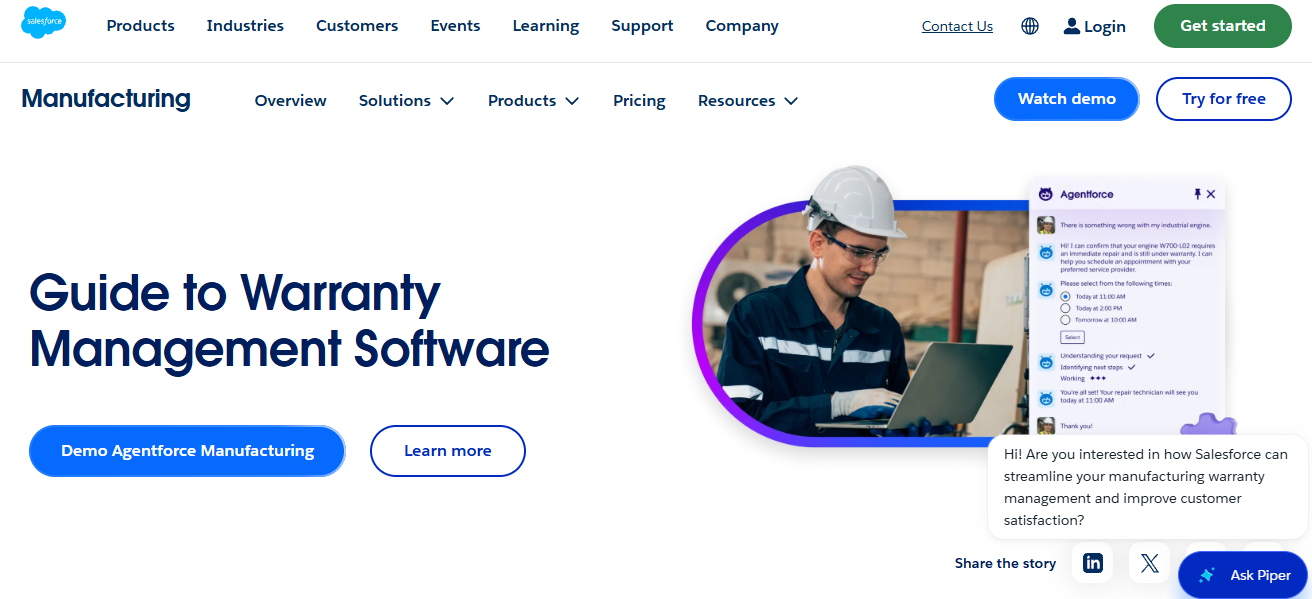
6. Salesforce Manufacturing Cloud
Salesforce Manufacturing Cloud brings warranty management into the CRM many manufacturers already use for sales and service. Manufacturing Cloud for Service tracks warranties, cases, work orders, and claims across the full asset lifecycle. It also handles warranty definition and claims management in the same system. Experience Cloud for Manufacturing gives dealers and partners a shared workspace to submit claims and follow their progress.
Key features:
- Install-base tracking, with warranties, cases, and work orders on one asset timeline.
- Warranty definition and claims management across the asset lifecycle.
- Branded partner portals for claim submission and entitlement checks.
- Supplier recovery that links claims to supplier contracts.
7. SAP S/4HANA Cloud
SAP S/4HANA Cloud Public Edition includes warranty claim management in its service line of business, so claims run inside the same ERP that handles finance and logistics. It supports two processes. Customer claim processing validates and pays a reimbursement request after a repair. Supplier recovery processing forwards a claim to the responsible supplier for reimbursement. Approved amounts post directly to SAP finance, and incorrect postings can be reversed. The service edition is available in more than 45 localized versions.

Key features:
- Claim validation for completeness and eligibility before a decision is made.
- Labor and material items on each claim, including the spare part that caused the damage.
- Supplier warranty claims created and forwarded for reimbursement.
- SAP Fiori apps for managing customer and supplier claims.
8. IFS Cloud
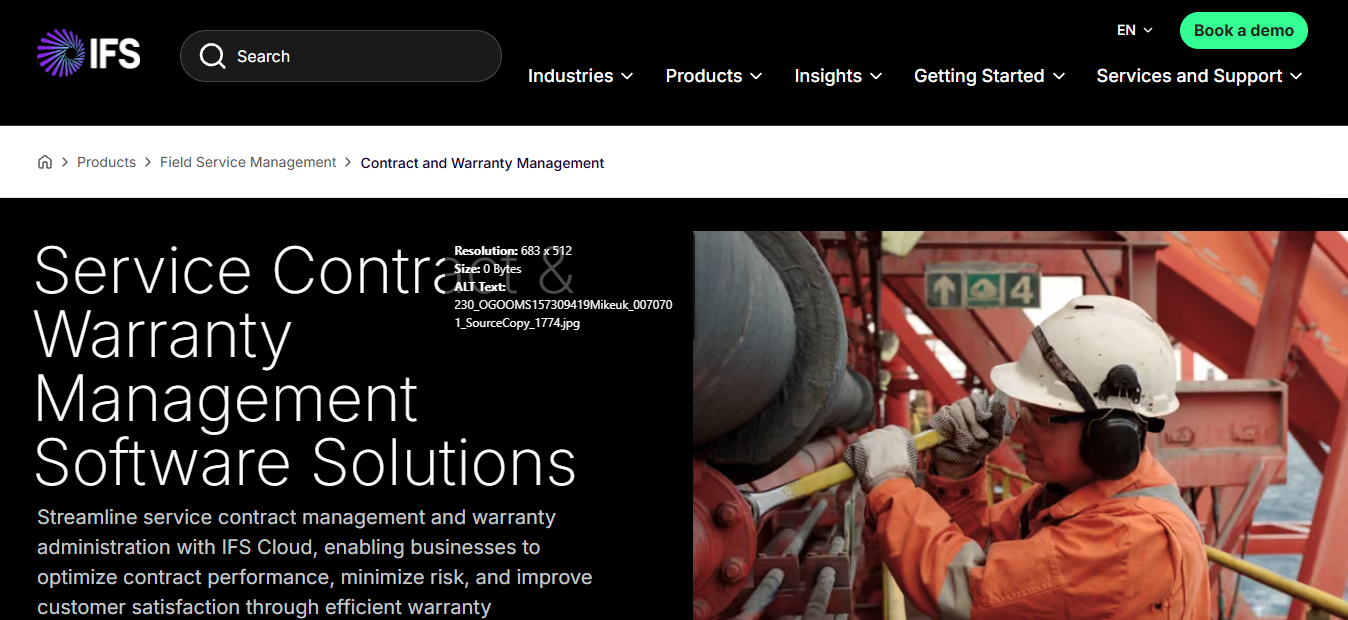
IFS Cloud handles warranty within a wider service management suite that covers planning, scheduling, contracts, and field operations. IFS Contract and Warranty Management gives field service providers real-time visibility across complex agreements, flexible pricing, and automated SLA compliance, with the goal of preventing revenue leakage. The IFS Cloud 25R2 release added Contract/Warranty Application and Swap capabilities. These keep entitlements accurate when products are exchanged.
Key features:
- Service contracts and warranties managed together, with SLA tracking built in.
- Entitlement updates during product swaps to reduce billing errors.
- Connected device (IoT) data that flags performance issues before they escalate.
- Native links to scheduling, dispatch, and field service workflows.
9. Registria
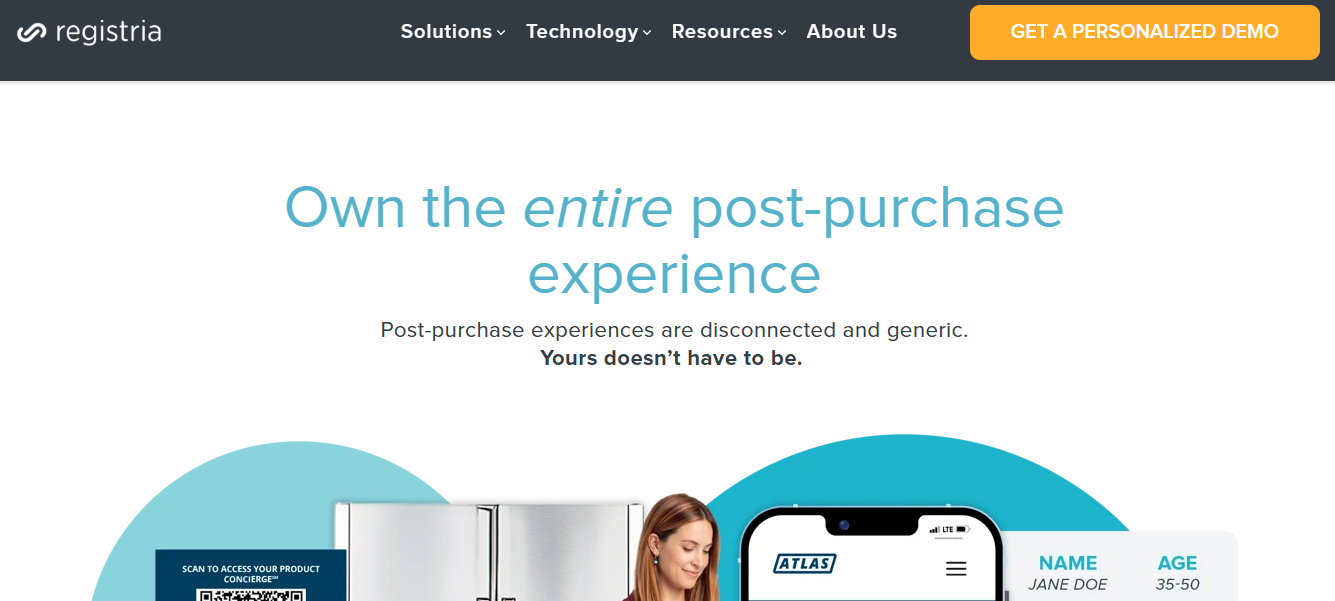
Registria focuses on the moment a product reaches its owner. Its Ownership Experience platform helps durable goods brands identify owners, collect first-party data, and engage them after purchase. Registria launched Photoregister in 2015 as a mobile alternative to paper registration cards, and later added QR-based registration through Photoregister+. It suits consumer durables brands that need warranty registration software owners will actually use.
Key features:
- Mobile Photoregister registration that replaces paper cards.
- QR code entry points on packaging, product materials, or the product itself.
- Owner data used for personalized onboarding and support journeys.
- Post-purchase offers, including extended service plans.
10. Claimlane
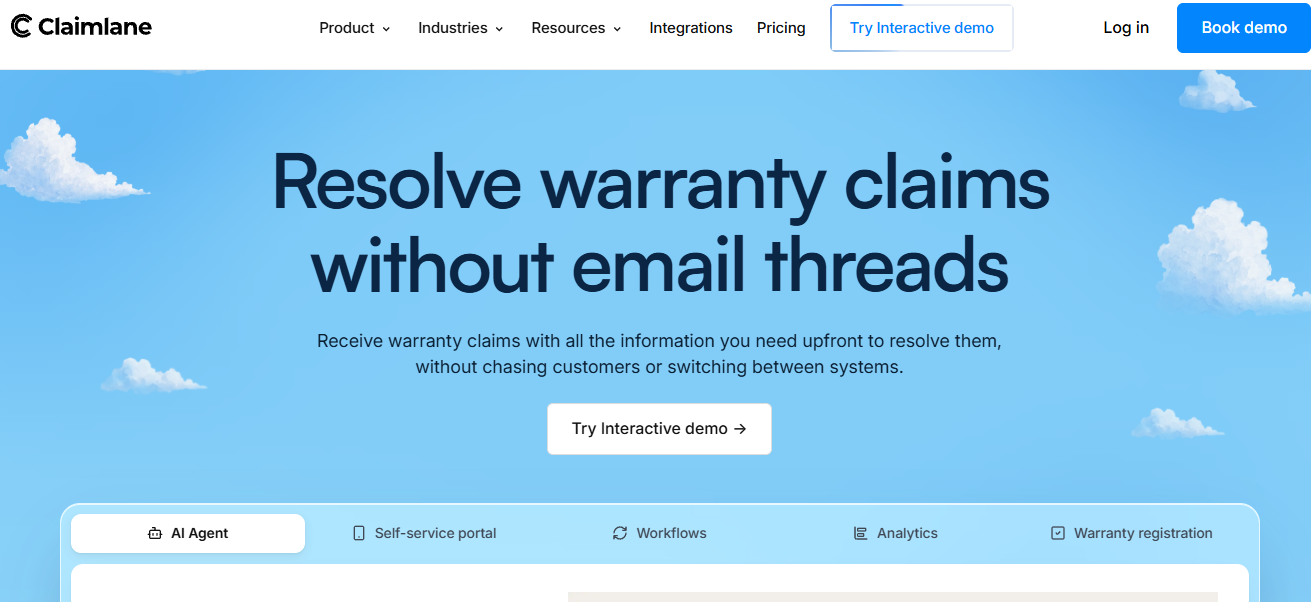
Claimlane is warranty management software for retailers, brands, and manufacturers, built around both B2C and B2B after-sales workflows. End customers submit claims through a self-service portal. Suppliers and manufacturers work from a dedicated B2B portal where every claim arrives in the same structured format. The platform is modular, so a manufacturer that sells mainly through retailers can run only the B2B side.
Key features:
- One portal for warranty claims, registrations, repairs, and returns.
- Workflows, rules, and automations configured per supplier or product.
- A B2B portal where suppliers review, approve, or reject structured claims.
- Analytics that highlight faulty products and return trends.
Warranty Registration Software vs Warranty Tracking Software: What Is the Difference?
Warranty registration software captures ownership data when a product enters service. That includes serial number, purchase date, and installer. Warranty tracking software follows each claim, part, and payment after a failure. Registration proves coverage exists. Tracking proves the claim moved correctly. Most manufacturers need both on one product record.
| Aspect | Registration | Tracking |
|---|---|---|
| Main Job | Records ownership and start date | Follows every claim to closure |
| Key Data | Serial number, invoice, installer | Status, parts, payouts |
| Risk It Reduces | Out-of-coverage claims | Slow approvals and lost claims |
Warranty registration software without tracking leaves claims stuck in inboxes. Warranty tracking software without registration approves unverifiable claims. Weight both in any warranty management software comparison. Many claim management challenges start exactly there. Choose warranty management solutions that run warranty registration software and warranty tracking software on shared data.
Manual Warranty Management vs Warranty Management Software: Which Is Better?
Manual warranty management relies on spreadsheets, email threads, and paper cards. The method copes with a few claims each month. It fails once dealers, SKUs, and service partners multiply. Errors creep in, and failure patterns stay hidden. Modern warranty management solutions replace this with rules.
Warranty Week’s 2026 product warranty report shows U.S. manufacturers paid $30.37 billion in claims in 2025, up 4% on 2024.
Software changes every step of that process. Registration moves from paper cards to QR, mobile, or portal capture. Approvals follow set rules instead of long email chains. Supplier recovery, often skipped under manual warranty management, starts directly from repair data. Reporting shifts from late monthly sheets to live dashboards.
Slow claims under manual warranty management weaken customer retention, because buyers remember how brands handle failure. The best warranty management software keeps that moment short. Good claim management turns a complaint into trust.
How Do I Choose the Right Warranty Management Software for My Business?
The best warranty management software for you matches claim volume, dealer network, product complexity, and systems. Enterprise OEMs need deep supplier recovery. Channel-led brands need dealer-friendly registration and approvals. Consumer brands need lighter warranty management software with simple warranty registration. Map your channel first, then compare warranty management solutions.
High claim volumes with tiered suppliers point toward Tavant, Syncron, PTC, or Pega. Dealer, distributor, and installer networks fit LoyaltyXpert. Teams built on SAP or Salesforce should start with SAP S/4HANA Cloud or Salesforce Manufacturing Cloud. Contract-heavy service businesses lean toward IFS Cloud. Consumer brands with weak registration rates suit Registria.
Linking warranty to reward program software gives dealers a reason to register every sale. Invite the best warranty management software vendors that match this map.
What Questions Should I Ask Warranty Management Software Vendors?
Buyers should ask the best warranty management software vendors about implementation, customization, integrations, support, pricing at scale, security, and reporting. Clear answers show how a platform behaves after go-live, not just during a demo. Written replies keep every warranty management software comparison fair.
6 Questions to Put in Writing
- How long does implementation take for our claim volume?
- Which approval rules can our team change alone?
- Which ERP and CRM connectors work out of the box?
- What support hours and escalation paths exist?
- Where do you host our data?
- How does your warranty tracking software show claim status to dealers?
Send this list to all the best warranty management software vendors you shortlist. Specific answers reveal more about the best warranty management software than any demo.
How Do I Shortlist Warranty Management Software Options?
Shortlisting warranty management software options means cutting ten vendors down to three through a structured review. Map your process, score vendors on fixed criteria, and test finalists with your own claims. This keeps demos focused and stops the loudest pitch from winning.
- Map your manual warranty management workflow end to end.
- Rank the six evaluation criteria by impact.
- Remove vendors missing a must-have integration.
- Send identical questions to the best warranty management software vendors left.
- Test each vendor’s warranty tracking software with three past claims.
- Call references from manufacturers with similar channels.
Most teams start with too many warranty management software options and too little data. A scored warranty management software comparison fixes both. The best warranty management software for your team emerges from scores, not slides.
Final Thoughts
The best warranty management software for a global OEM can overwhelm a mid-size brand. Compare warranty management software options against your channel, claim volume, and systems. Teams leaving manual warranty management should favor warranty management solutions their dealers will actually use. LoyaltyXpert connects registration, claims, and channel loyalty for dealer-led brands. See registration and claims running on your product data, Book a Demo.