How to Choose the Best Loyalty Program Software for Your Business

Choosing the right loyalty program software can have a significant impact on customer retention, repeat purchases, and long-term business growth. The wrong platform may result in low participation, limited engagement, and poor return on investment, while the right solution can help businesses build stronger relationships and increase customer lifetime value.

Today, businesses across industries use loyalty program software to automate rewards, track customer activity, personalize incentives, and manage engagement programs more efficiently. Whether you operate a manufacturing business, retail network, dealer ecosystem, service organization, or distribution channel, selecting the right platform requires careful evaluation.

This guide explains what loyalty program software is, the different types available, key features to consider, pricing factors, implementation best practices, and how to choose a solution that aligns with your business goals.

Navigating the Loyalty Software Environment

A loyalty management platform encompasses core functions that track customer behavior, manage rewards, and analyze program performance. Modern loyalty program software has evolved from simple point-tracking systems into sophisticated platforms that integrate with multiple business systems and provide comprehensive customer insights.

The core functionality includes member management, reward tracking, and program analytics. Advanced platforms offer additional capabilities like personalization engines, predictive analytics, and omnichannel integration. This evolution reflects changing customer expectations and technological capabilities.

Types of Loyalty Programs You Can Run with Loyalty Software

Before choosing a platform, it’s important to know which type of loyalty program best suits your business model. Most loyalty program software supports one or more of the following structures:

1. Points-Based Programs — Customers earn points for every purchase and redeem them for rewards. Simple to run and widely understood by customers. Best for: retail, e-commerce, F&B.

2. Tiered / VIP Programs — Customers move through tiers (Bronze, Silver, Gold) as they spend more, unlocking better rewards at each level. Best for: premium brands, hospitality, subscription businesses.

3. Cashback Programs — A percentage of every purchase is returned as cashback or store credit. Highly appealing to price-sensitive customers. Best for: retail, fintech, D2C.

4. Gamified Programs — Incorporates game-like elements such as challenges, badges, leaderboards, and milestone rewards to drive engagement. Best for: apps, online communities, youth-oriented brands.

5. Referral-Based Programs — Rewards customers for bringing in new buyers through referral codes or links. Best for: SaaS, D2C, service businesses.

6. B2B / Channel Loyalty Programs — Designed for manufacturers and brands that reward dealers, distributors, retailers, or influencers — not end consumers. Requires multi-level tracking and complex reward structures. Best for: manufacturing, FMCG, automotive, pharma.

Essential Features to Consider

Selecting the right loyalty program software requires understanding key features that drive program success. These capabilities determine how effectively the platform can meet business objectives while delivering engaging customer experiences. Let’s explore the critical components that form the foundation of effective loyalty solutions.

Program Management 

The foundation of any loyalty program software centers on effective program administration. Modern platforms must provide robust point tracking capabilities that handle complex earning and redemption rules. Tier management functionality enables businesses to create differentiated experiences for various customer segments. Campaign creation tools allow for targeted promotions and offers, while comprehensive reporting provides insights into program performance.

Customer Engagement 

Engagement features transform traditional loyalty programs into interactive customer experiences. Mobile accessibility has become essential, with customers expecting to manage their rewards through smartphones. Communication tools enable personalized messaging across multiple channels. Social media integration creates opportunities for viral promotion and community building.

Technical Aspects 

The technical foundation of loyalty program software determines its effectiveness and scalability. Integration capabilities ensure smooth data flow between business systems. Security measures protect sensitive customer information while enabling necessary data access. Analytics tools provide insights that drive program optimization and business decision-making.

The combination of these features creates a robust platform capable of supporting sophisticated loyalty programs while maintaining operational efficiency. Understanding these core capabilities helps inform the selection process and ensures alignment with business needs.

Assessment Process

Evaluating business needs requires careful consideration of current operations and future goals. Objectives should align with broader business strategies while remaining achievable through available resources. Budget planning must account for both initial implementation and ongoing operational costs.

Technical requirements deserve special attention, particularly regarding integration needs and scalability demands. A thorough assessment helps identify essential features versus nice-to-have capabilities, informing the selection process.

Key assessment considerations:

  • Current business processes and pain points
  • Short and long-term program objectives
  • Available financial resources
  • Technical infrastructure requirements
  • Staff capabilities and training needs
  • Integration requirements

A systematic assessment process ensures proper alignment between business needs and selected solutions, increasing the likelihood of successful program implementation.

Selection Criteria

The user interface significantly impacts both staff efficiency and customer adoption. Implementation timelines must align with business schedules and resource availability. Support services should match organizational needs for both implementation and ongoing operations.

Platform reliability remains paramount, as program downtime can damage customer relationships and business operations. Cost structures should be transparent, with clear understanding of both immediate and long-term financial commitments.

Key selection factors to consider:

  • Platform usability and adoption potential
  • Implementation complexity and timeline
  • Support availability and response times
  • Customization depth and flexibility
  • Total cost of ownership
  • System reliability and uptime guarantees

These criteria form the foundation for effective platform evaluation and selection decisions.

Integration Considerations

Integration capabilities determine how well loyalty program software works with existing business systems. POS system compatibility ensures seamless reward tracking at checkout. CRM integration provides a complete view of customer relationships. E-commerce platform connections enable online reward earning and redemption.

Mobile requirements extend beyond basic app functionality to include features like digital wallet integration and location-based services. Third-party integrations expand program capabilities through specialized tools and services.

Essential integration points:

  • POS systems and payment processors
  • Customer relationship management platforms
  • E-commerce websites and marketplaces
  • Mobile applications and digital wallets
  • Marketing automation tools
  • Analytics platforms

Successful integration across these touchpoints ensures seamless program operation and data flow.
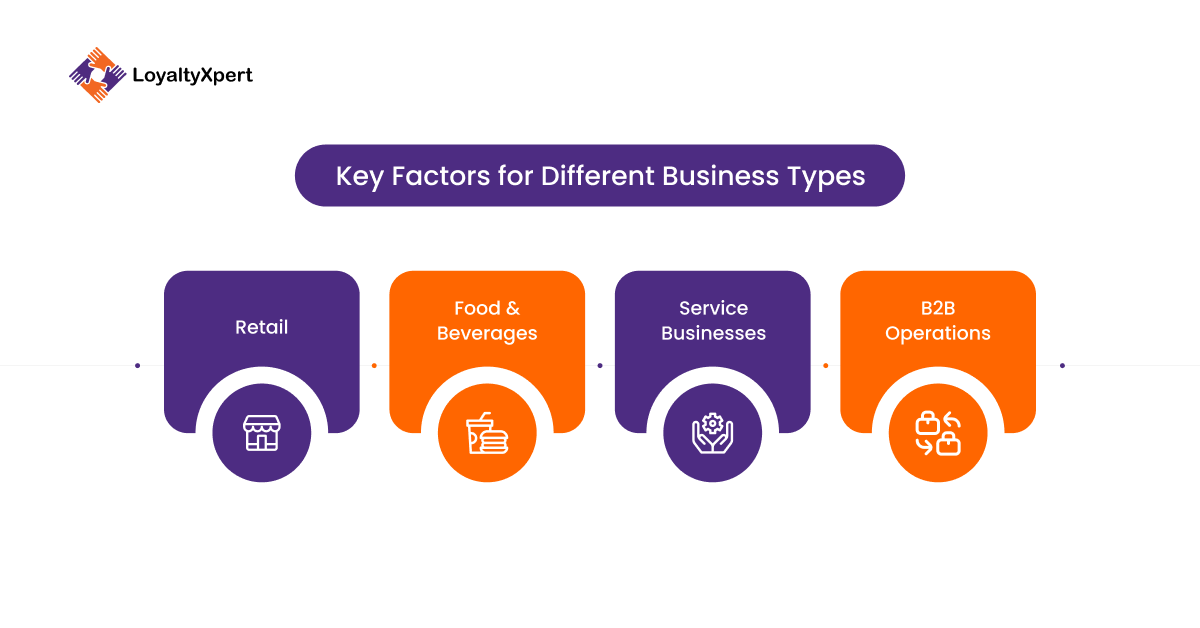
Key Factors for Different Business Types for loyalty program softwareKey Factors for Different Business Types

Understanding industry-specific requirements helps identify the most suitable loyalty program software solution. Each sector presents unique challenges and opportunities that influence platform selection and implementation.

Retail: Retail businesses require robust inventory management features integrated with loyalty tracking. Multi-store capabilities ensure consistent program operation across locations. Customer tracking must work seamlessly across online and offline channels.

Food & Beverages: Restaurants need specialized features like table management and online ordering integration. Delivery services must connect smoothly with loyalty programs to ensure proper point attribution. 

Service Businesses: Service industries require appointment scheduling tied to reward programs and detailed service history tracking.

B2B Operations: B2B companies face unique challenges requiring specialized features. Partner management tools handle complex relationship structures. Multi-level tracking capabilities support sophisticated B2B reward programs. Complex reward structures accommodate varied business relationships and purchasing patterns.

These industry considerations highlight the importance of selecting loyalty program software that aligns with specific sector requirements while maintaining flexibility for future growth.

Program Implementation and Management

The success of a loyalty program depends heavily on proper implementation and ongoing management. This phase requires careful coordination of multiple elements, from vendor selection to cost management. A systematic approach ensures smooth deployment while maximizing program effectiveness.

Vendor Evaluation

Software provider evaluation should examine company history and industry experience. Customer support quality directly impacts program success. Regular platform updates indicate ongoing development investment. Client testimonials provide real-world implementation insights.

Implementation Process

Successful implementation requires detailed timeline planning and resource allocation. Staff training ensures proper program operation and customer service. Data migration demands careful planning to maintain historical information. Testing procedures must verify all system components work correctly before launch.

Cost Analysis

Initial investment includes software licensing, implementation services, and training costs. Ongoing fees cover maintenance, support, and regular updates. ROI calculations should consider both direct program benefits and indirect advantages like improved customer insights.

Hidden costs might include integration development, additional hardware requirements, or premium feature access. Upgrade expenses should be anticipated and budgeted for future program expansion.

The success of implementation and management efforts depends on maintaining clear communication channels and establishing regular review processes. This ongoing attention ensures the program continues to meet business objectives while adapting to changing needs.

LoyaltyXpert Solutions

Our comprehensive loyalty management platform represents the culmination of extensive industry experience and technological innovation. We understand the challenges businesses face in building and maintaining customer loyalty, and our solution addresses these challenges through sophisticated yet user-friendly tools.

Core Platform Capabilities:

  • Advanced reward tracking engines: Our intelligent tracking system handles complex earning rules, multiple currencies, and sophisticated redemption options while maintaining real-time accuracy across all channels.
  • AI-powered personalization: Machine learning algorithms analyze customer behavior patterns to deliver highly personalized offers and communications that drive engagement and conversion.
  • Multi-channel integration: Seamless integration across physical and digital touchpoints creates consistent customer experiences while simplifying program management.
  • Real-time analytics: Comprehensive dashboards provide actionable insights into program performance, customer behavior, and ROI metrics.
  • Secure cloud infrastructure: Enterprise-grade security protocols protect sensitive data while enabling necessary access and analysis capabilities.
  • Mobile-first design: Intuitive mobile interfaces enhance customer engagement while simplifying program participation.

Implementation support includes dedicated project management and training resources. Success stories demonstrate significant improvements in customer retention and program ROI across industries. Our competitive advantage lies in combining powerful features with exceptional service and support.

Common Mistakes to Avoid

Program success often hinges on avoiding common implementation pitfalls. Feature overload can complicate program operation and confuse customers. Insufficient planning leads to integration challenges and operational disruptions. Poor integration limits program effectiveness and data utilization.

Critical mistakes to avoid:

  • Overlooking staff training requirements
  • Rushing implementation timelines
  • Ignoring data quality issues
  • Neglecting customer feedback
  • Underestimating resource needs
  • Failing to plan for scalability

Understanding and actively avoiding these common pitfalls significantly increases the likelihood of program success.

Suggest Read: Choose a Loyalty Software Provider That Fits For Your Business

Best Practices

Effective program design starts with clear objectives and measurable goals. Implementation strategy should follow proven methodologies while adapting to specific business needs. Staff training must cover both technical operation and customer service aspects.

Essential best practices include:

  • Regular performance monitoring
  • Continuous feedback collection
  • Proactive customer communication
  • Regular system updates
  • Staff development programs
  • Data-driven decision making

Following these best practices helps ensure sustained program success and customer satisfaction.

Making the Final Decision

Loyalty program software has become an essential tool for businesses looking to improve retention, increase engagement, and build long-term relationships with customers, dealers, distributors, and channel partners. The right platform not only automates rewards and program management but also provides valuable insights that help businesses make smarter decisions and improve loyalty outcomes.

By understanding your business objectives, evaluating key features, and selecting a scalable platform, you can create loyalty programs that deliver measurable results and sustainable growth. If you’re ready to see what the right platform looks like for your specific business, schedule a free demo, no commitment required. Our team will walk you through how LoyaltyXpert maps to your exact business model, integrations, and goals.
What is an Omnichannel Loyalty Program and Why is it important for businesses (2026)?

An omnichannel loyalty program represents a unified approach to customer engagement across all interaction points. This comprehensive strategy ensures customers receive consistent experiences whether shopping online, through mobile apps, or in physical stores. Modern loyalty program software enables seamless integration of these touchpoints, creating fluid customer journeys that drive engagement and retention.

The shift toward omnichannel programs reflects fundamental changes in consumer behavior. Customers now expect seamless interactions across multiple channels, moving effortlessly between digital and physical touchpoints throughout their purchase journey. Did you know, that studies show that 59% of customers will stop doing business with a brand after bad experiences? Traditional single-channel loyalty programs no longer meet these evolved expectations, making an omnichannel strategy essential for businesses aiming to maintain a competitive advantage in 2025.

The rapid advancement of technology, particularly in mobile and cloud computing, has made sophisticated omnichannel programs more accessible than ever. Loyalty management platforms now offer powerful integration capabilities that enable businesses of all sizes to implement comprehensive omnichannel strategies. This democratization of technology creates opportunities for businesses to enhance customer relationships through connected experiences.

Understanding Omnichannel Loyalty Programs

Omnichannel Customer Loyalty Programs differ significantly from traditional single-channel or multichannel approaches. While multichannel programs operate separate systems for different channels, an omnichannel strategy creates a unified ecosystem where all channels work together seamlessly. This integration ensures customers can earn and redeem rewards consistently across any touchpoint they choose.

The core strength of an omnichannel program lies in its ability to synchronize data in real-time across all platforms. When a customer makes a purchase in-store, their points update instantly in the mobile app. Similarly, rewards earned online become immediately available for in-store redemption. This seamless integration creates a frictionless experience that modern consumers expect.

Benefits of Omnichannel Loyalty Programs

The implementation of an omnichannel program delivers multiple advantages for businesses. Customer experience improves dramatically through consistent recognition and rewards across all channels. Engagement rates increase as customers find it easier to interact with the program through their preferred channels. The comprehensive data collection provides deeper insights into customer behavior and preferences.

Customer retention rates typically show significant improvement with omnichannel programs. The connected experience creates stronger bonds between customers and brands, reducing the likelihood of switching to competitors. ROI benefits emerge through increased purchase frequency, higher average transaction values, and reduced customer acquisition costs.

Key advantages of implementing an omnichannel program include:

  • Complete visibility of customer behavior across channels
  • Enhanced ability to personalize offers and communications
  • Improved operational efficiency through integrated systems
  • Stronger brand loyalty through consistent experiences
  • Greater competitive differentiation in the market

Successfully implemented omnichannel loyalty programs demonstrate clear business impact through measurable improvements in customer engagement, retention, and revenue generation. According to a study by McKinsey & Company, personalization can help companies generate 40% more revenue than their competitors.

Essential Elements of Successful Omnichannel Programs

A unified customer view forms the foundation of effective omnichannel programs. The loyalty management platform must maintain a single customer profile that updates across all channels. This centralized approach enables personalized experiences based on complete customer histories rather than channel-specific data.

Reward structures must remain consistent yet flexible enough to accommodate channel-specific opportunities. Point tracking should update in real-time, allowing customers to earn and redeem rewards seamlessly across channels. Communication strategies must coordinate across all touchpoints while maintaining personalization based on customer preferences and behaviors.

Critical components for program success:

  • Real-time data synchronization capabilities
  • Mobile-first design approach
  • Integrated POS systems
  • Robust API infrastructure
  • Advanced analytics tools
  • Scalable cloud architecture

These elements work together to create a cohesive program that delivers value for both businesses and customers.

Key Technologies Driving Omnichannel Loyalty

The technology foundation of omnichannel programs continues to evolve rapidly. Cloud computing provides the scalability and flexibility needed to manage complex, integrated programs. Artificial intelligence and machine learning enable sophisticated personalization and predictive analytics, helping businesses anticipate and meet customer needs proactively.

Mobile technology serves as the primary interface for many customers, making robust mobile capabilities essential. IoT integration creates new opportunities for automated engagement and reward tracking. Advanced data analytics platforms provide deep insights into customer behavior, while API connectivity ensures smooth integration with existing business systems.

Essential technologies powering modern omnichannel strategies:

  • Cloud platforms for scalable program management
  • AI engines for personalization and predictions
  • Mobile SDKs for app integration
  • IoT sensors for automated engagement
  • Analytics tools for behavior tracking
  • Integration APIs for system connectivity

The technological foundation of omnichannel programs continues to evolve, creating new opportunities for enhanced customer engagement and program optimization.

Implementation Strategies

Successful implementation of an omnichannel program requires careful planning and execution. The initial assessment phase should evaluate current systems, identify integration requirements, and establish clear objectives. Technology selection must consider both immediate needs and future scalability requirements.

The integration process demands careful coordination across departments and systems. Staff training ensures consistent program delivery across all channels. A phased launch approach allows for testing and optimization before full deployment. Continuous monitoring enables quick identification and resolution of any issues.

Critical implementation components:

  • Comprehensive needs assessment
  • Detailed technology roadmap
  • Integration timeline
  • Training schedule
  • Launch milestones
  • Performance metrics

Successful implementation requires careful attention to these elements while maintaining flexibility to adapt to changing needs and opportunities.

Industry-Specific Applications

Different sectors leverage omnichannel loyalty programs in unique ways. Retail businesses focus on connecting online and in-store experiences through integrated point systems. The hospitality industry emphasizes personalized guest experiences across properties and services. Financial services providers create comprehensive reward programs that span multiple product lines.

Healthcare organizations use omnichannel programs to improve patient engagement and compliance. B2B applications often focus on streamlining procurement processes while building stronger vendor relationships.

Key industry applications:

Each industry continues to find innovative ways to leverage omnichannel loyalty programs for improved customer relationships and business growth.

Future Trends and Innovations

The future of omnichannel loyalty programs will be shaped by emerging technologies and changing customer expectations. AI-driven personalization will become more sophisticated, offering truly individualized experiences based on comprehensive customer data. Predictive analytics will enable proactive engagement, anticipating customer needs before they arise.

Voice commerce integration will create new interaction opportunities, while augmented reality experiences will blur the lines between digital and physical engagement. Blockchain technology promises enhanced security and transparency in point management and reward redemption.

Challenges and Solutions

Technical integration presents a significant challenge when implementing omnichannel programs. Legacy systems may require updates or replacement to support modern integration requirements. Data management becomes more complex as programs collect information from multiple sources. Privacy concerns must be addressed through robust security measures and transparent policies.

Customer adoption challenges can be overcome through clear communication and demonstrable program value. Resource allocation requires careful planning to ensure sufficient support across all channels and touchpoints.

Key challenges and their solutions:

  • Integration complexity – Phased implementation approach
  • Data management – Advanced analytics platforms
  • Privacy concerns – Robust security protocols
  • Customer adoption – Clear value communication
  • Resource allocation – Strategic planning and prioritization

These challenges, while significant, can be effectively managed through strategic planning and appropriate technological solutions.

Best Practices

Successful omnichannel programs follow established design principles that prioritize customer experience. Program structures should be simple to understand yet sophisticated enough to deliver meaningful value. Data security measures must meet or exceed industry standards while enabling necessary data accessibility.

Communication strategies should maintain consistency across channels while adapting to channel-specific requirements. Continuous improvement processes ensure programs evolve with changing customer needs and technological capabilities.

Essential best practices:

  • User-centric design principles
  • Regular security audits
  • Consistent brand messaging
  • Performance monitoring
  • Continuous optimization
  • Staff training programs

Following these best practices helps ensure long-term program success and sustainable customer engagement.

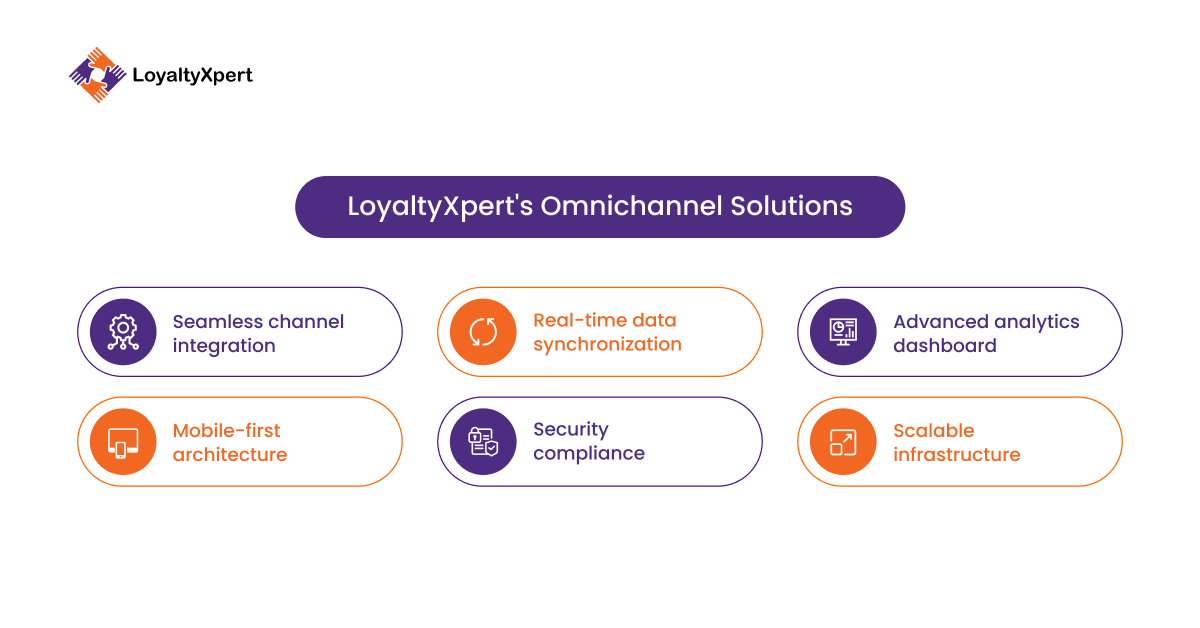
LoyaltyXpert's Omnichannel Loyaltu program SolutionsLoyaltyXpert’s Omnichannel Solutions

The complexity of modern omnichannel loyalty programs demands sophisticated yet user-friendly solutions. LoyaltyXpert’s comprehensive loyalty management platform combines advanced technology with intuitive design to deliver powerful omnichannel capabilities. Our platform empowers businesses to create seamless customer experiences while maintaining operational efficiency.

Core Capabilities:

  • Seamless channel integration – Connect all customer touchpoints for unified experience
  • Real-time data synchronization – Instant updates across all channels and platforms
  • Advanced analytics dashboard – Deep insights into customer behavior and program performance
  • Mobile-first architecture – Optimized for modern customer engagement preferences
  • Security compliance – Industry-leading data protection standards
  • Scalable infrastructure – Grows with your business needs

Each capability has been designed to address specific business challenges while creating opportunities for enhanced customer engagement. Our platform’s flexibility allows customization to meet unique industry requirements and business objectives.

Success stories across industries demonstrate our platform’s effectiveness. From retail chains to hospitality groups, our clients have achieved significant improvements in customer retention and program ROI. Our implementation support team provides comprehensive guidance throughout the deployment process, while our maintenance services ensure optimal performance and continuous improvement.

The LoyaltyXpert difference lies in our deep understanding of omnichannel dynamics and customer behavior. This expertise, combined with our advanced technology platform, enables businesses to create truly exceptional loyalty programs that drive measurable results.

Channeling the future of customer engagement

It goes without saying that the ability to deliver seamless experiences across all touchpoints will become increasingly important for business success in 2025. Organizations that implement comprehensive omnichannel strategies now will be better positioned to meet evolving customer expectations and maintain competitive advantage.

LoyaltyXpert provides the expertise, technology, and support needed to create and manage successful omnichannel loyalty programs. Our platform offers the tools and capabilities essential for modern customer engagement, while our team ensures successful implementation and ongoing optimization. Schedule a demo or avail a free trial today for a demonstration of our omnichannel loyalty solutions.

Gym Loyalty Program: How to Revolutionize Your Fitness Center

Attracting new customers is always a priority for any business, including the fitness industry. However, considering the high level of competition in the fitness industry, retaining the existing members of your gym is the real test. Research shows that since 2005, there’s been a steady rise in gym memberships in the United States. The number of gym memberships has soared by 22%, going over 60.9 million members.

One highly effective way to achieve this is by implementing a well-designed gym loyalty program. These loyalty programs go beyond simple discounts –  they recognize achievements, reward consistent attendance, and personalize each member’s experience. It’s one of the creative ways to stand out from the competition while building loyalty among existing members.

In this blog post, we will explore how a loyalty program can bolster member retention, boost brand image, and forge a vibrant community committed to shared wellness goals. We’ll also provide best-practice insights on designing successful gym rewards initiatives—plus tips on making them a lasting success.

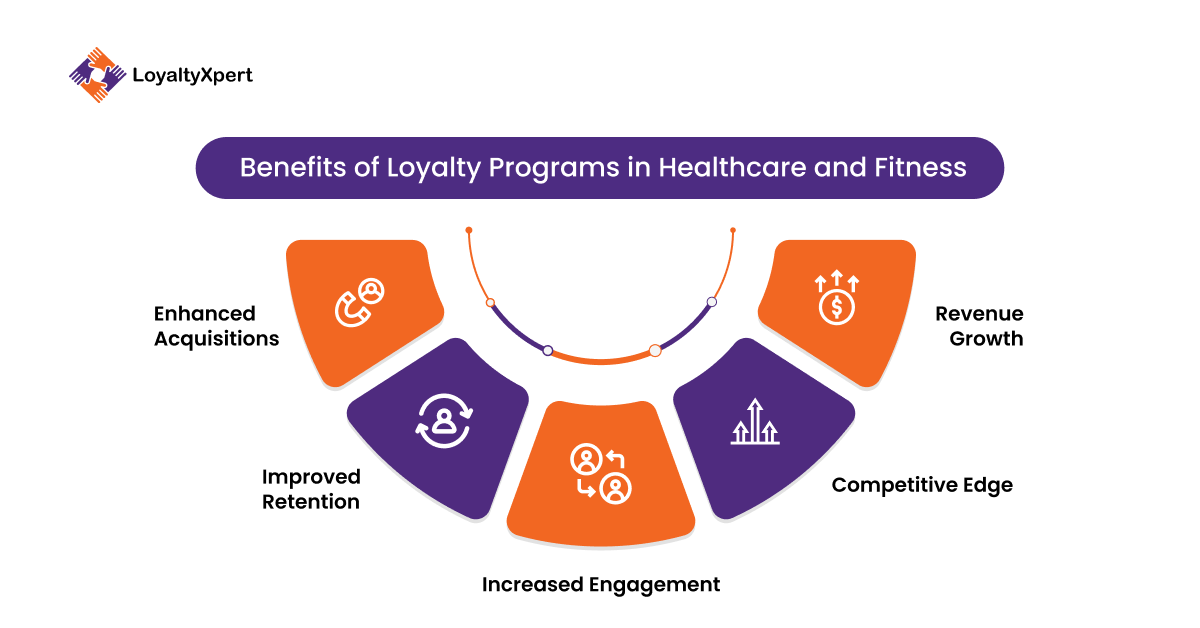
How Can a Loyalty Program Benefit Your Gym?

A thriving gym rewards program is more than a collection of perks—it’s a strategic mechanism that impacts numerous facets of your fitness center. Below are six key benefits:

  • Enhancing member retention 

Holding onto your existing clientele is much more cost-effective than constantly recruiting new members. By offering appealing incentives – like free personal training sessions or access to advanced workout classes – your gym rewards program encourages members to remain committed. This sense of appreciation helps turn short-term participants into loyal, long-standing members.

  • Increasing revenue streams

A loyalty management platform can help gyms diversify their revenue channels. Encourage members to purchase additional services – such as nutritional advice, wellness consultations, or specialized workout classes – by offering loyalty points each time they make a purchase. These points, redeemable for future benefits, lead to a cycle of increased spending. Moreover, if you integrate supplementary merchandise (e.g., branded workout gear), you can incentivize members to buy and accrue even more loyalty rewards.

  • Cultivating a community spirit

An engaging gym member reward program can transform your gym into a close-knit community. Sponsor team-based challenges (like burning a collective number of calories) or host referral contests that reward both new and existing members. This culture of teamwork and mutual encouragement not only motivates participants but also helps them form deeper bonds with each other – and with your gym.

  • Organic word-of-mouth marketing

When people love their experience at your gym, they naturally tell friends and family – especially when there’s a gym referral program in place to sweeten the deal. Satisfied members who redeem meaningful rewards become authentic brand ambassadors, actively amplifying your gym’s reputation across social media and personal networks.

  • Leveraging data for targeted engagement

Integrating a loyalty program software allows you to collect and interpret valuable data, such as attendance habits, class preferences, and purchase histories. You can then use these insights to customize offers, craft new classes, or create targeted marketing campaigns. This analytical approach ensures members feel recognized and helps your gym stay ahead of evolving fitness trends. 

  • Providing competitive advantage

With so many fitness centers vying for people’s attention, offering an exclusive gym member reward program sets you apart. A robust loyalty program showcases your willingness to go the extra mile for your clientele. Over time, the differentiation factor can significantly boost recruitment and retention, giving your gym a lasting competitive edge.

When properly managed, a gym loyalty program becomes a catalyst for sustainable growth – connecting short-term member satisfaction with long-term brand loyalty.

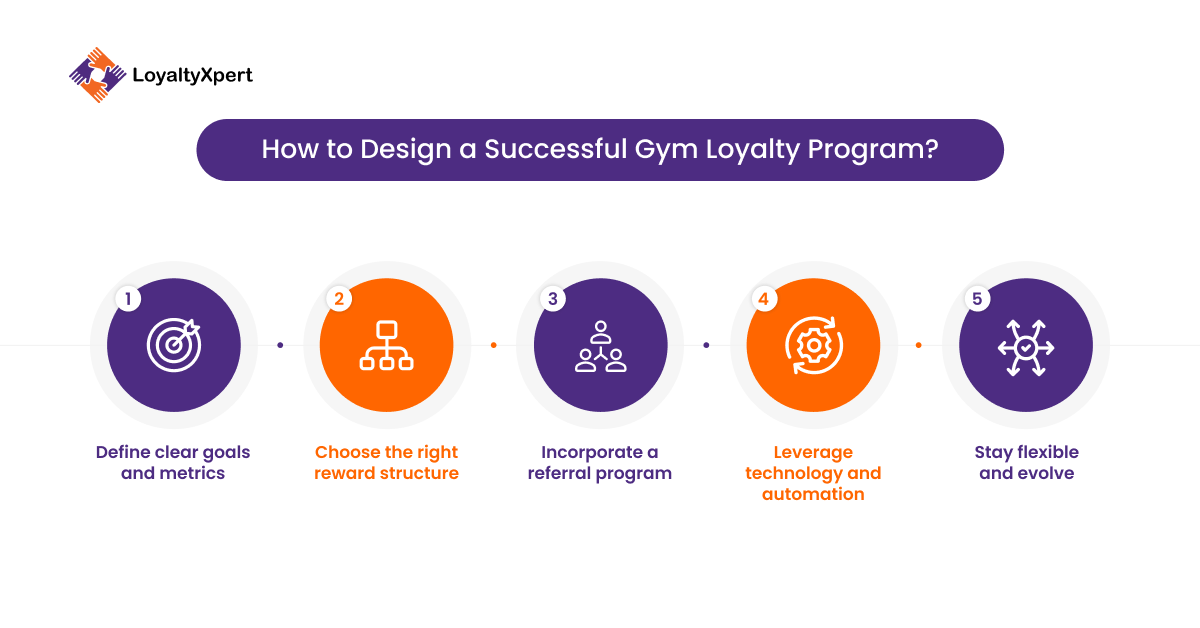
How to Design a Successful Gym Loyalty ProgramHow to Design a Successful Gym Loyalty Program?
Establishing a gym loyalty program that resonates with members requires meticulous planning and attention to detail. Below are five key elements to consider:

  • Define clear goals and metrics

Before launching any gym rewards program, identify what you aim to achieve – whether it’s increasing membership retention, boosting sales of additional services, or improving class attendance. Align each goal with concrete metrics, such as monthly retention rates or upsell revenues. These metrics will not only serve as a benchmark for success but also help you make timely adjustments to your program.

  • Choose the right reward structure

A loyalty program’s success often depends on how you award and redeem points. Some gyms opt for point-per-visit systems, while others integrate spending-based models. You could also combine the two for maximum flexibility. Additionally, think beyond just discounts and freebies – incorporate experience-based rewards like exclusive training sessions, early access to new classes, or priority booking for popular programs. A dynamic reward structure keeps members intrigued and gives them multiple reasons to keep participating.

  • Incorporate a referral program

A well-designed gym referral program can significantly enlarge your membership base. Encourage your current members to bring their friends and family by offering them bonus points or discounts. Provide new joiners with an initial reward or a reduced sign-up fee. This double-sided incentive not only spreads awareness about your gym but also boosts both parties’ loyalty. Make it seamless for members to share referral links or promotional codes across multiple digital channels.

  • Leverage technology and automation

Investing in robust loyalty program software or a loyalty management platform can streamline the entire process, from tracking points to automating reward redemption. You can integrate the platform with your gym’s existing membership system and even set up mobile apps for easy, on-the-go point tracking. Automation not only reduces manual tasks for your staff but also ensures accurate and timely crediting of rewards, enhancing overall member satisfaction.

  • Stay flexible and evolve

Lastly, a successful gym member reward program is one that evolves over time. Gather feedback from your members to understand what rewards they find most valuable. Monitor participation rates and redemption patterns. If certain rewards are underutilized, replace them with new, more compelling offers. Continual improvement ensures that your loyalty program remains relevant, engaging, and capable of driving sustainable growth.

By prioritizing these elements, you lay a strong foundation for a loyalty initiative that delights members, stands out from competitors, and drives real, measurable benefits for your fitness center.

Effective Tips for Long-Lasting Success 

Even the most thoughtfully designed gym loyalty program can lose momentum without consistent oversight and strategic updates. Here are some best practices to ensure your rewards system remains impactful:

  • Promote enthusiastically and often

Incorporate regular promotions and reminders into your marketing strategy – through social media announcements, email newsletters, and in-gym signage. Showcase success stories or leaderboards to cultivate healthy competition and inspire new participants.

  • Stay relevant and engaging

Members will only stay interested if the rewards and challenges truly excite them. Refresh your offerings periodically – maybe introduce a seasonal or holiday-themed challenge, or launch a short-term workout competition offering double points. Changing things up keeps the program fresh.


  • Personalize the experience

Use your loyalty management platform to analyze members’ behavior and preferences. Offer unique perks, targeted fitness programs, or specialized workshops that align with each member’s goals – such as weight loss, muscle building, or stress relief. Personal touches highlight that you understand and care about their specific needs.

  • Celebrate milestones

Recognizing smaller wins can have a profound psychological effect. Whether it’s a member’s sixth month at the gym or their 50th class, send a note of appreciation, award bonus points, or offer a small token of recognition.

  • Gather feedback proactively

Create open lines of communication – through follow-up emails, quick surveys, or spontaneous gym-floor conversations – to understand what works and where you might improve. You can use this data to keep your loyalty program in sync with evolving fitness and wellness trends.

  • Incorporate gamification

Healthy competition can be incredibly motivating, even for a gym loyalty program. Whether it’s a leaderboard for class attendance or a challenge to burn a certain number of calories within a month, gamified components add excitement and keep members hooked.

  • Recognize milestones and achievements

Acknowledge birthdays, membership anniversaries, or major fitness accomplishments with bonus points or special perks. This shows your gym genuinely cares about members’ individual journeys.

Elevate Your Gym with Loyalty

The fitness industry is competitive, and standing out in this fierce landscape your business requires more than modern equipment or aesthetic interiors. A carefully designed gym loyalty program can be the defining factor that not only attracts new members but also keeps them engaged for the long haul. By aligning your program with clear objectives – like boosting retention, encouraging referrals, and delivering personalized rewards – you foster a close-knit community that consistently chooses your gym over competitors.

Moreover, leveraging a loyalty management platform or specialized loyalty program software can streamline every aspect of the program, from automating point allocation to analyzing member behavior. With the right mix of compelling rewards, robust technology, and regular program updates based on user feedback, your gym can cultivate a loyal membership base that stands the test of time.

At LoyaltyXpert, we’re dedicated to helping businesses across industries – fitness-included – create and maintain reward programs that genuinely make a difference. Ready to revolutionize your fitness center? Request a demo with us today to learn how our platform can ease your loyalty program management.

Everything you need to know about the Tiered Loyalty Program

In the B2B space, customer loyalty is vital for long-term business growth. Loyal partners and clients provide consistent revenue streams, act as brand advocates, and are more likely to engage in repeat business. Building trust and rewarding ongoing partnerships are important. According to research, customers spend 67% more on average than those new to your business, highlighting the significant financial benefits of retaining existing clients.

Tiered loyalty programs have become a powerful tool in the B2B sector, offering businesses a structured approach to reward partners and clients for their loyalty and performance. These programs provide escalating benefits as partners reach new milestones, motivating them to increase their sales, improve engagement, and deepen their commitment to the brand.

This guide explores the essentials of tiered loyalty programs in B2B environments. We’ll cover their benefits, talk about which industries can benefit most from implementing them, how to design an effective program, and examples of successful implementations. Whether you’re looking to strengthen relationships with existing partners or attract new ones, this guide will help you create a program that drives sustained loyalty and business growth.

What Is a Tiered Loyalty Program?

A tiered loyalty program is a structured rewards system designed to categorize channel partners or B2B customers into tiers based on predefined metrics such as sales performance, partnership tenure, or engagement levels. As the partners move up the tiers, the rewards become more exclusive and valuable.

This system gamifies partner interactions with your business, fostering a sense of progression and exclusivity. Unlike traditional reward systems that offer uniform incentives, tiered programs provide escalating benefits as partners move up the tiers, motivating consistent collaboration and driving mutual growth.

Why Tiered Loyalty Programs Work?

Tiered loyalty programs effectively leverage partner psychology, motivating them through:

  • Achievement: Advancing through tiers satisfies their drive for growth and recognition of their contributions.
  • Exclusivity: Higher tiers provide access to rewards, benefits, or resources unavailable to lower-tier partners, fostering a sense of privilege and competitive advantage.
  • Reciprocity: Partners who feel valued and rewarded for their efforts are more likely to deepen their commitment and collaboration.

This powerful combination makes tiered programs one of the most effective strategies for enhancing partner retention, strengthening relationships, and boosting mutual revenue growth.

Benefits of Tiered Loyalty Programs

  • Boosts Partner Retention

Progressive rewards incentivize partners to stay committed. Higher-tier perks create “golden handcuffs,” or a sense of dependency, making it hard for partners to switch their business to competitors.

  • Drives Higher Sales Performance

Exclusive benefits at higher tiers motivate partners to achieve more, whether through increased sales volume, new product adoption, or enhanced collaboration, driving up overall revenue.

  • Strengthens Engagement

Tiered systems keep partners actively involved with your business. Features like performance tracking, exclusive events, and milestone-based rewards deepen emotional connections and promote active participation.

  • Provides Actionable Insights

With an effective loyalty management platform, businesses can analyze partner behavior, enabling data-driven decisions to tailor incentives, refine strategies, and forecast trends.

  • Differentiates Your Partnership Program

In competitive industries, tiered programs offer partners a sense of recognition, exclusivity, and privilege, making your program stand out and more attractive than alternatives.

  • Supports Long-Term Collaboration

By fostering loyalty, tiered programs contribute to stable, long-term partnerships. Loyal partners are more likely to champion your offerings, helping with market penetration and mutual growth.

Industries Best Suited for Tiered Loyalty ProgramsIndustries Best Suited for Tiered Loyalty Programs
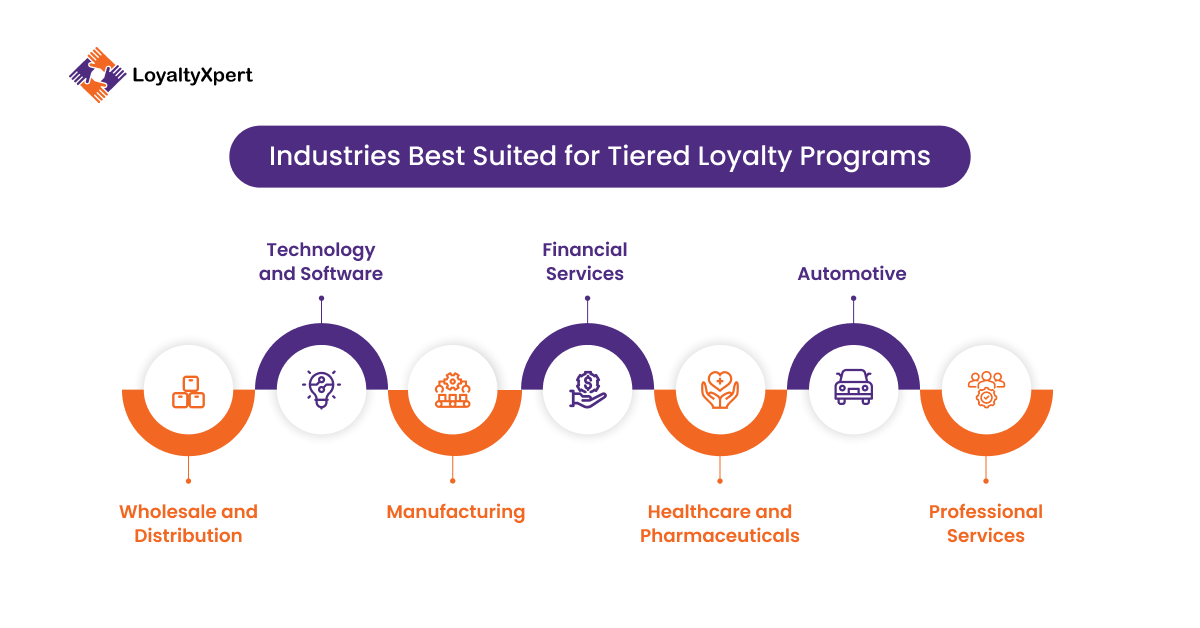
  • Wholesale and Distribution: Tiered programs incentivize channel partners to achieve higher sales volumes by offering benefits like bulk purchase discounts, faster delivery options, and exclusive access to premium products. 
  • Technology and Software: SaaS companies and tech providers reward partners through tiered programs offering perks such as enhanced training, co-marketing funds, and access to beta software for early adoption and feedback. 
  • Manufacturing: Manufacturers use tiered programs to encourage distributors and resellers to prioritize their products. Rewards can include extended credit terms, exclusive product lines, and priority order fulfillment. 
  • Financial Services: Banks and financial service providers engage brokers, agents, or affiliates with tiered programs offering performance-based incentives like increased commissions, marketing support, or access to premium analytics tools. 
  • Healthcare and Pharmaceuticals: Pharmaceutical companies and medical device manufacturers implement tiered programs to reward consistent performance with perks such as educational resources, exclusive product launches, and additional service support. 
  • Automotive: Automotive manufacturers use tiered loyalty programs to reward dealers and service centers for sales targets, customer satisfaction scores, or service volumes, offering benefits like marketing assistance, exclusive inventory, or trip incentives. 
  • Professional Services: Consulting firms and B2B service providers can reward their partners for client referrals, project milestones, or revenue generation through tiered perks such as preferential access to training, certifications, and co-branded opportunities.

Steps to Design an Effective Tiered Loyalty Program

  • Set Clear Objectives

Define your goals—higher partner sales, improved retention, or stronger engagement. Clear objectives shape the program’s structure, rewards, and evaluation metrics.

  • Understand Your Partners

Segment your partner base by performance, industry, or geography to tailor tier benefits effectively. Leverage insights from a loyalty management platform to identify key behaviors and preferences.

  • Choose a Tier Structure
  • Simple Three-Tier Model: Ideal for businesses with a small partner base or straightforward sales goals.
  • Multi-Tier Model: Best for companies with a diverse partner ecosystem and varying levels of contribution.

Ensure tiers are both aspirational and attainable to motivate partners.

  • Design Meaningful Rewards

Balance monetary incentives (e.g., higher margins or rebates) with experiential perks (e.g., exclusive training, co-marketing funds). Lower tiers should offer practical benefits, while higher tiers emphasize exclusivity and long-term value.

  • Make Progress Visible

Provide tools like dashboards or progress trackers so partners can easily see their performance and what’s needed to reach the next tier. Visual elements like badges or tier certificates can add motivation.

  • Incorporate Technology

Use a loyalty management platform to automate performance tracking, personalize rewards, and offer real-time insights. These tools also simplify program management and ensure scalability.

  • Communicate Effectively

Regularly update partners through email, dashboards, or dedicated portals about their progress, available rewards, and opportunities to advance. Clear communication ensures transparency and boosts engagement.

  • Test and Optimize

Track metrics such as partner retention, engagement, and revenue impact. Use feedback from partners to refine the program structure, rewards, and communication strategies for continuous improvement.

Common Challenges and How to Address Them

  • Low Partner Awareness

Solution: Actively promote the program through partner onboarding sessions, newsletters, webinars, and co-branded marketing materials. Ensure your partners understand the benefits and how to participate.

  • Unrealistic Tier Progression

Solution: Design attainable milestones that balance challenge and achievability. Provide clear pathways for advancement with measurable goals aligned to partner capabilities and market conditions.

  • Generic Rewards

Solution: Personalize rewards using data-driven insights about partner needs, industry specifics, and sales priorities. Offer a mix of monetary incentives, business resources, and experiential perks.

  • Complex Program Design

Solution: Keep the program structure intuitive and straightforward for partners to navigate. Leverage loyalty management software to handle the backend complexity, offering user-friendly dashboards and automated updates.

Examples of Successful Tiered Loyalty Programs

  • Cisco Partner Program

The Cisco Partner Program uses a multi-tier program for its channel partners, including Registered, Select, Premier, and Gold tiers. Higher tiers offer access to advanced certifications, enhanced rebates, and co-marketing funds, rewarding partners for growth and specialization.

  • Microsoft Partner Network (MPN)

The Microsoft Partner Network program features tiered levels such as Member, Silver, and Gold, providing benefits like exclusive training, technical support, and access to partner-exclusive software. Higher tiers in the MPN unlock additional co-selling opportunities and incentives.

  • Adobe Solution Partner Program

The Adobe Solution Partner Program includes tiers like Registered, Silver, Gold, and Platinum, offering benefits like lead sharing, marketing resources, and prioritized access to Adobe experts, rewarding partners based on their sales and service contributions.

  • Dell Technologies Partner Program

The Dell Technologies Partner Program rewards partners through tiers like Authorized, Gold, Platinum, and Titanium. As partners climb tiers, they gain access to enhanced benefits like increased rebates, business development funds, and exclusive events.

  • AWS Partner Network 

The Amazon Web Services’ Partner Network program offers tiered benefits across levels like Registered, Select, Advanced, and Premier. Perks include technical enablement, marketing support, and priority customer introductions for high-performing partners.

  • SAP PartnerEdge

The SAP PartnerEdge program features tiered levels like Open Ecosystem, Silver, Gold, and Platinum, providing rewards such as sales enablement, co-innovation opportunities, and access to exclusive partner benefits as partners achieve higher tiers.

Conclusion

A well-designed tiered loyalty program can transform channel partner or B2B relationships, enhancing retention, engagement, and revenue. By aligning rewards with partner needs and leveraging advanced technology, businesses can create programs that deliver measurable results.

Are you looking to implement an effective tiered loyalty program for your partners? LoyaltyXpert offers the tools and expertise to help you design and manage a successful loyalty strategy. Book a demo to learn more!

Key Benefits Of Creating A Customer Loyalty Program For Manufacturers
Creating a loyalty program is key to increasing ROI for your business. Loyalty programs are designed to retain existing customers who are loyal to your brand. Loyal customers make frequent purchases, and the cost of selling to them is relatively low. They also tend to get referral business for you via word-of-mouth marketing. If you want to improve customer loyalty you need to take certain actions such as understanding your customers’ needs, providing them with good services, handling customer complaints well, etc. It is imperative to provide better services to your potential customers if you want to get repeat business.  When you get repeat business from the same customers, you have gained brand-loyal customers. A loyalty program can do wonders for manufacturing businesses. Especially since their target audience consists of suppliers, wholesalers, retailers, or distributors, who they are not in constant contact with. This article is a comprehensive guide to customer loyalty programs for the manufacturing industry.

Proven Approach To Improve Customer Loyalty In Manufacturing

  • Personalized Customer Services
According to a study, more than 70% of customers prefer to do business with companies that use personal information to make their shopping experience more relevant. It can help manufacturing businesses create a unique bond with their customers. They feel valued when you address them with personalized services like wishing them on a special occasion, rewarding them for making frequent purchases, etc.  Listening to your suppliers, dealers, and wholesalers to gather their feedback is also crucial to growth. You can also use their shopping habits to personalize their shopping experience and keep them loyal to your business.
  • Multi-Channel Customer Service Approach
Having a multi-channel service system is one of the most reliable ways to stay connected with your customers, particularly when they need help. They will have more access to your customer service teams creating more customer interactions and a better customer experience. Using various channels for customer service provides an omnichannel experience for your customers. This experience increases customer satisfaction by making your customer service more user-friendly while contributing to increased brand loyalty.
  • Sharing Positive Customer Experience
Collect customer feedback and share their reviews to acquaint other customers with the benefits your business is providing them. Customers tend to trust their peers advocating a brand rather than the brand advertising itself. According to a study, word-of-mouth was the most common source of discovery for new brands, products, and services. Sharing testimonials of your previous clients is a worthwhile idea to showcase trust in your manufacturing business. You can also use surveys to gather their feedback and publicize the results to win the trust of potential clients. 
  • Delivering Added Values Along With Perks
Offering valuable experiences helps your manufacturing brand stand out in a competitive market and build customer loyalty. Provide perks, rewards, and recognition to add value and encourage brand loyalty. Offering personalized solutions and exceptional service also ensures customer satisfaction and trust.
  • Introducing A Strategic Incentive Program
A customer loyalty program offers distinct incentives to build brand loyalty. For manufacturers, loyalty programs are more effective with a points system where customers earn rewards on purchases, redeemable as cash vouchers or products. Research shows that 55% of customers will spend more for a guaranteed good experience. Creating a customer community, such as a knowledge base or ideas forum, also enhances value and encourages interaction. 

Key Benefits Of Creating A Customer Loyalty Program For ManufacturersKey Benefits Of Creating A Customer Loyalty Program For Manufacturers
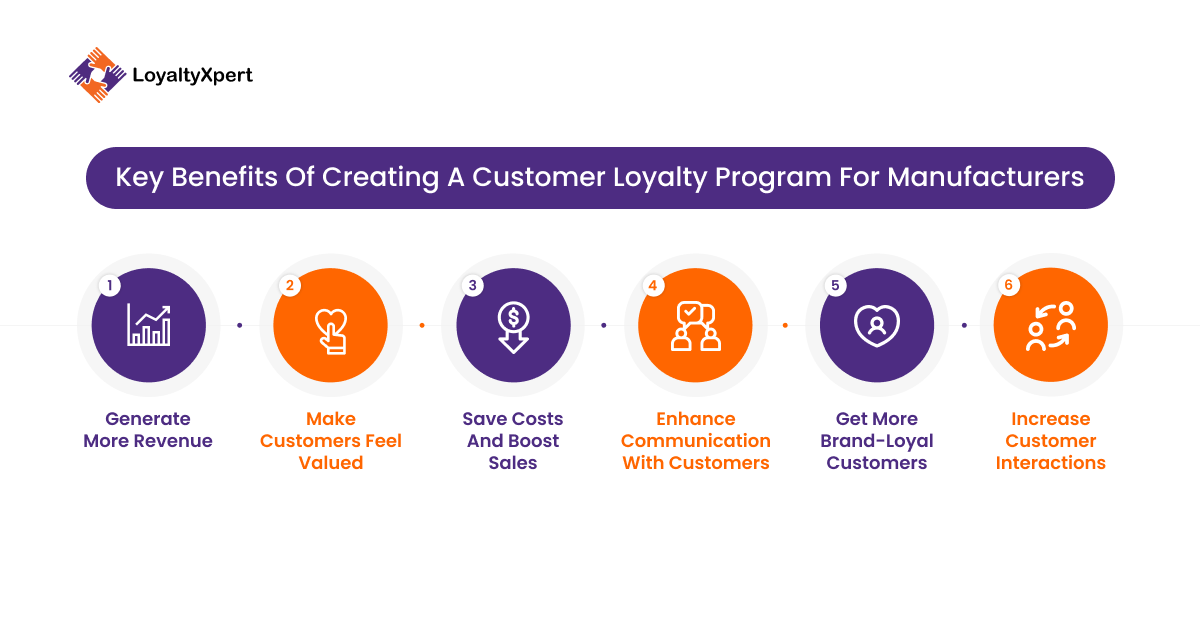
  • Generate More Revenue: By implementing a customer loyalty program, manufacturing businesses can incentivize repeat purchases or bulk purchases. This contributes to a direct increase in revenue.  Loyal customers can help drive future revenue as they have a higher customer lifetime value (CLV). 
  • Make Customers Feel Valued: Loyalty programs help manufacturing businesses show appreciation by rewarding even small actions. This builds an emotional bond, strengthening customer loyalty and trust.
  • Save Costs And Boost Sales: Acquiring new customers costs anywhere from five to 25 times more than it takes to retain existing ones. Loyalty programs help retain customers and also urge them to increase their purchase volume or frequency. This adds to the sales while keeping costs low. 
  • Enhance Communication With Customers: A good loyalty program can act as another touchpoint or channel of communication between the manufacturing business and its customers. This acts as a constant reminder to customers about the brand and it stays at the top of their mind. It can also be used to inform and remind customers about promotional offers, discounts, and other rewards which may encourage them to make more purchases. 
  • Get More Brand-Loyal Customers: The participants of a customer loyalty program in the manufacturing sector can be converted into brand loyalists by offering them relevant rewards and offers they cannot say no to. They will also feel that are incurring a loss by switching to a competitor if they have points accumulated or any other reward within the loyalty program. This helps intensify their loyalty towards your manufacturing business. 
  • Increase Customer Interactions: Notifying participants about their reward balances, new contests, or asking for their feedback, creates personalized interactions with the customers. This would not be possible without the customer loyalty program. Tailored interactions remind customers of the brand, fostering emotional loyalty. 

Recipe for a Successful Manufacturing Loyalty Program

  1. Define Goals & Objectives – Start by clearly defining the purpose of your loyalty program. Tailor it to your target audience and desired outcomes to structure it effectively. 
  2. Choose A Mix Of Rewards – Select relevant rewards based on customer actions. Consider using point-based, tier-based, referral-based, influencer-referral, or value-based systems, or a combination of these, to align with your goals and participant motivations. 
  3. Adopt a Loyalty Management Software –  Implement a loyalty program software platform to streamline the process. This makes it easier for participants to access the program and track their activities while providing a scalable solution for personalized loyalty programs. 
  4. Review & Refine – Use data from the loyalty software to assess what’s working and what isn’t. Periodically refine the program based on insights to improve its effectiveness. 

Why Use a Loyalty Management Platform?

  1. Easy Configuration – Using our loyalty platform, you can create targeted loyalty programs and drive higher engagement and loyalty. 
  2. Customizable Rewards – Choose from an extensive rewards catalog to select the best incentives for your loyalty programs. 
  3. Advanced Analytics – Leverage data to monitor key metrics and generate reports for improved loyalty program outcomes. 
  4. Gamification – Engage customers on a deeper level with a holistic gamification experience designed to make your loyalty program appealing and addictive. 
  5. Integrations – For a smooth transition, our platform seamlessly integrates with your tech stack and allows for effortless loyalty program activation. 

Real-Life Case Study

Demonstrating Improved Brand Loyalty for Manufacturing Businesses

Vir Laminates, a prominent laminate manufacturer in India, was experiencing challenges in reaching a diverse user base, understanding customer buying behavior, costly traditional marketing, lack of automated sales data ,and cost-effective marketing for enhanced brand awareness. With the help of LoyaltyXpert, they launched “VIR Loyalty”. It was a fully automated loyalty program with features such as easy onboarding, automated KYC and a digital sales data dashboard. They were able to onboard 5000+ channel partners and improved channel communication with this loyalty program. Data-driven sales forecasting was also possible with the LoyaltyXpert Platform. VIR Loyalty also acted as a cost-effective method of marketing for enhanced brand awareness. 

Are you looking for a customer loyalty program for the manufacturing industry?

LoyaltyXpert is a well-known loyalty program provider in India. The company holds the expertise to deliver customized programs that will drive more revenue for your business. Contact our expert team today and get more details on how we provide the best loyalty program solutions for the manufacturing industry.

How Can An Education Loyalty Program Transform Your Institution?

Loyalty programs in education may seem unnecessary but they boost enrollment and retention. 40% of students at four-year American universities drop out after six years, according to the National Center for Education Statistics (NCES). The attrition rates are higher at community colleges across the US. 

Learning is not restricted to schools and colleges anymore. Online courses, training programs, and coaching classes are now integral to education. The pandemic accelerated digital tools’ adoption, boosting online learning worldwide (OECD Digital Education Outlook 2023). With more options available, businesses must stand out to attract and retain students.

Implementing education loyalty programs addresses both these issues and improves enrolment & retention rates in educational institutions. 

An education loyalty program can reward various activities such as academic performance, referrals, extracurricular achievements, attendance, school spirit, donations, healthy eating and contributions to society. 

Participants of the Educational Loyalty Program

  • Students – As educational institutions revolve around their students or learners, this group becomes the backbone of the educational loyalty program. Educational institutions need to make them feel appreciated and valued. The rewards in student loyalty programs can range from fee discounts for academic excellence to mentorship programs for excellence in extracurricular activities. Knowing that they will be recognized and rewarded for their hard work and involvement in school activities can help them participate better. This can help create a sense of belonging and loyalty towards the institution which can go beyond their tenure at the institution.
  • Parents – Though they are not directly involved, parents play the role of influencers in the education industry. They make key decisions in aspects of education like enrollment and tuition payment. Parents need to feel valued and that they contribute to their children’s success. This ensures sustained support and advocacy for the institution. This can be achieved through referral benefits, access to exclusive parent-teacher conferences or discounts on tuition fees.
  • FacultyEducation loyalty programs can be used for teachers and other faculty to improve the institution’s reputation and enhance the quality of staff. Faculty are the heart and face of the institution. Attracting and retaining the best teaching and non-teaching talent as staff becomes important. They need to stay loyal and committed to the educational institution. This works if the faculty is valued and their efforts are recognized and rewarded. They can be motivated by professional development opportunities, public recognition or access to exclusive networking events.
  • Alumni – The alumni network plays a crucial role in an institution’s growth through donations and mentorship. Building a community that makes former students feel connected is an ongoing effort. This helps foster their desire to give back to their alma mater and advocate for the institution’s brand. The education loyalty program can reward alumni with invitations to special events, career opportunities and discounts for further education within the institution, if applicable. 

Benefits of Implementing An Educational Loyalty Program

Benefits of Implementing An Educational Loyalty Program

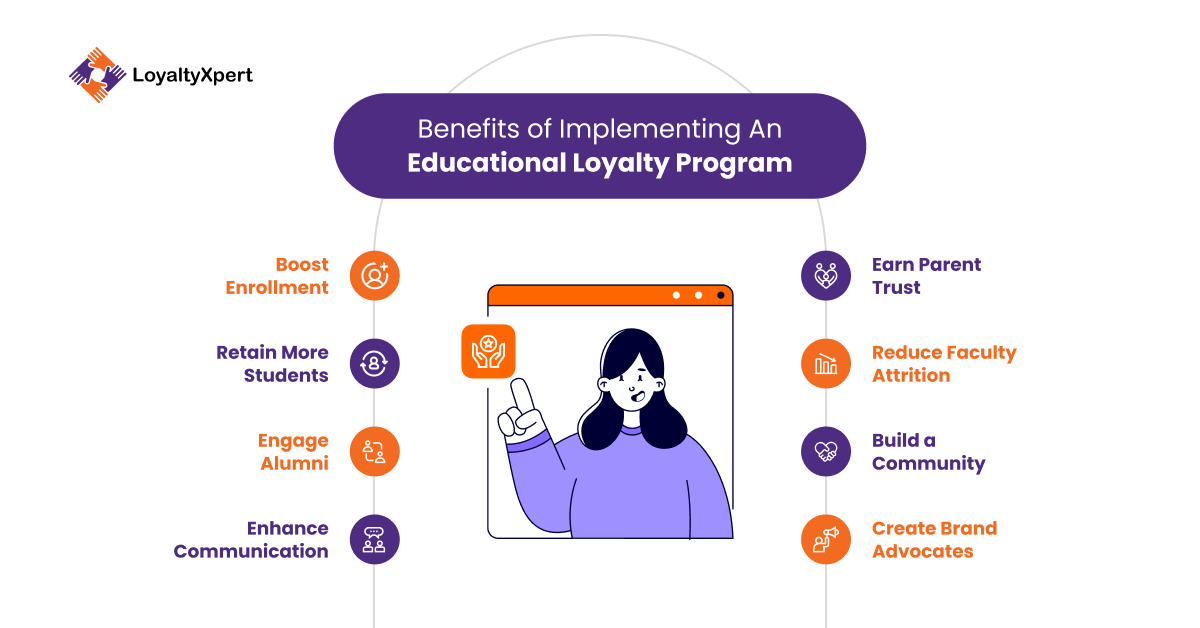
  1. Boost Enrollment – Having an education loyalty program in place can help an institution stand out in the competitive market. Prospective students and their parents can be attracted by tangible benefits. Discounts on tuition fees, access to exclusive events and career-focused advantages can help make the decision to enrol into the institution easier.
  2. Retain More Students – Keeping students enrolled is as important as bringing them in. Both shape their journey and the institution’s success. Rewarding academic excellence, extra-curricular activities, and long-term involvement with the institution can help students invest in their academic journey. This translates into a sense of belonging and loyalty towards the institution.
  3. Engage Alumni – Former students are a huge part of the institution’s ecosystem. They contribute to their alma mater if they are emotionally connected to it and are regularly involved. They can help with job placements, fund donations, mentorship and improve reputation through word-of-mouth. A loyalty program can make them feel valued and keep them interacting with the institution often so that it stays on the top of their mind.
  4. Enhance Communication – The loyalty program can act as a channel of communication from the institution to all its stakeholders. Updates about developments in the institution, achievements of the stakeholders, and event reminders create regular touchpoints. This keeps the participants informed and engaged with the institution. It is also a feedback mechanism that can be used to address issues and adapt programs to meet the stakeholders’ needs.
  5. Earn Parent Trust – Being the decision makers in traditional educational institutions, gaining the trust and confidence of parents is highly important. If they are satisfied with the institution’s benefits and opportunities, they are more likely to recommend it. The loyalty program can help parents feel involved and appreciated. This fosters their loyalty towards the institution.
  6. Reduce Faculty Attrition – To maintain academic quality, it’s crucial to hire and retain top faculty. Loyalty programs that support professional growth and reward contributions can boost job satisfaction. Eventually, this translates into more sincere work and faculty are less likely to leave their jobs.
  7. Build a Community –  A structured loyalty program helps foster a sense of community among its stakeholders. There is scope for interaction and collaboration through rewards, recognition and events. This sense of belonging creates a loyal community that is always ready to support the institution and its initiatives.
  8. Create Brand Advocates – When all your stakeholders feel valued and are satisfied, they act as brand ambassadors and advocate for your institution. This becomes organic promotion which can really help with your brand’s reputation and increase enrollment to your educational institution. In this way, Loyalty programs help drive growth, without any additional costs.  

How to Create an Effective Educational Loyalty Program:

  1. Identify Your Audience – Understanding the needs, preferences, and motivations of each group – students, parents, faculty, and alumni- can help you tailor your rewards program to resonate with them and increase engagement. 
  2. Define goals – Defining what the education loyalty program aims to achieve, can help give it a direction and framework which you can then build upon. It can also help measure the success of the loyalty program whether it is in terms of enrollment, retention or involvement.
  3. Use a Mix of Reward Types – Experiment with different types of rewards and figure out what resonates most with your audience. A comprehensive mix of incentives like discounts, recognition or exclusive access can appeal to a more diverse audience and help maximize participation.
  4. Select a Loyalty Management Platform – Choosing a loyalty management platform that can help you create a personalized program, manage it and track its efficiency can simplify the process. A robust loyalty management software that provides a seamless user experience and valuable insights can help you in efficiently administering the loyalty program
  5. Encourage Participation – Promote the loyalty program and make the sign-up process easy, so that a huge number of stakeholders register for it. After this, create programs that encourage frequent participation to improve engagement.
  6. Optimize Program – Regularly analyze data and gather feedback to figure out areas for improvement. Adapt the loyalty program based on what’s working and make changes based on the evolving needs and preferences of your audience.

Transforming Educational Loyalty with Loyalty Management Platforms

LoyaltyXpert simplifies the creation, management, and optimization of loyalty programs with a comprehensive suite of features, including:

  • Flexible reward systems
  • Robust segmentation
  • Advanced analytics and reporting
  • Seamless integrations with existing systems

Educational institutes interested in the customer loyalty program can get in touch with us.

Components Of Trade Loyalty Program And Its Importance

About 62% of companies struggle with limited visibility of their supply chains and 15% only have insights into production processes. Maintaining transparency and building strong relationships with your trade partners can help your company streamline distribution while also influencing customer engagement and revenue growth. They are also the bridge between your business and end customer, and their loyalty in carrying your products ultimately impacts your revenue. 

Businesses need to set up a trade loyalty program to encourage repeat purchases among key stakeholders in their supply chain like distributors, wholesalers and retailers. They act as the trade partner for your brand and rewarding them for their engagement can strengthen the connection between them and your brand. It encourages them to purchase in bulk and stock up on your product, leading to sustainable growth.

Benefits of Trade Loyalty Programs

Customer Retention: To retain your trade partners and their business, introducing a loyalty program can help you. Rewarding their consistent purchases contributes to sustained business growth and increases their customer lifetime value. You can offer exclusive benefits, discounts, or rewards to enhance your trade partners’ satisfaction and loyalty. It also helps build a sense of loyalty among partners and makes them feel valued and appreciated. 

Valuable Insights: Loyalty Programs act as a direct channel of communication between businesses and their trade partners. with good trade partnerships, you can gain insights into the end customer’s behaviour, preferences and purchasing patterns. Businesses can then analyse this data to refine their marketing strategies and anticipate future trends. This data can also be used to tailor promotions and offers for trade partners. It further helps optimize inventory management, which eventually contributes to increased profitability. 

Lasting Relationships: Loyalty programs allow businesses to regularly interact with their customers and build deeper, more meaningful relationships. They can also be viewed as opportunities for the business to show its appreciation to its trade partners, fostering loyalty beyond transactions. Over time, even casual purchases can become long-term trade partnerships

Customer Advocacy: Trade partners can act as a touchpoint to reach your end customers. Incentivising their purchases and showing appreciation for their actions can turn them into advocates for your brand. Loyal and satisfied trade partners are more likely to share their positive reviews about your brand with their peers. They are also more likely to participate in referral programs and add to your distribution network as well. New customers are more likely to trust the recommendations of existing customers. This reduces acquisition costs for the business while creating a strong community around the brand. 

Types of trade loyalty programs:

  • Point-based: Businesses can offer reward points for activities like purchases, sign-ups to the trade loyalty program, and interactions with the brand. Participants can then exchange these points for savings on subsequent purchases. This motivates them to continue doing business with your brand. 
  • Tier-based: Businesses can divide their trade partners into tiers based on their spending volume. This works because the partners are motivated to increase spending to reach a higher tier and get more benefits and freebies. 
  • Referral-based: By recommending your brand to others in their peer group, trade partners can earn referral points that can be used to avail discounts on future purchases. This motivates them to promote the brand organically while boosting loyalty.
  • Influencer referral: Top-performing distributors or long-standing wholesalers can be allowed to earn more with every sale they contribute to by giving them unique referral codes or affiliate links. This can also be implemented for trade association representatives or business consultants to acquire new trade partners. 
  • Value-based: This type of loyalty program can be utilized for non-transactional activities like leaving reviews, mentioning the brand on social media, giving testimonials, etc. The trade partners contribute to the brand’s social proof and organic visibility. 

How to Build an Effective Trade Loyalty Program

How to Build an Effective Trade Loyalty Program:

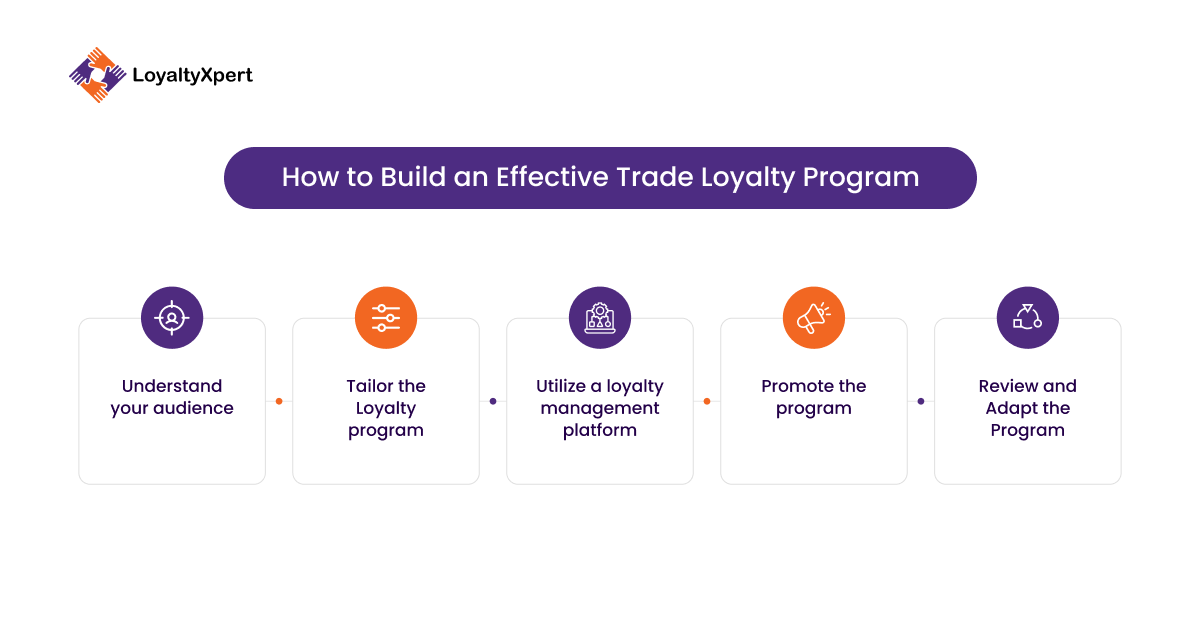
  1. Understand your audience: To have a successful trade loyalty program, you need to start by understanding your supply chain and the trade partners. Their needs and preferences are going to dictate how the loyalty program should be structured to get their attention and participation. Note the changes in purchase behaviour between the different trade partners like wholesalers and retailers and find out what makes them tick. If the loyalty program does not resonate with them, they are less likely to utilize it, thereby making your efforts redundant. 
  2. Tailor the Loyalty program: Based on the information you gather, craft a loyalty program that makes sense to your trade partners. Offer rewards that are relevant to them and encourage them to make repeat purchases or increase the volume of their purchases. You can incentivize them for other actions that add to your revenue, like referrals and reviews. 
  3. Utilize a loyalty management platform: Implementing the trade loyalty program on a software platform like LoyaltyXpert can help make the entire process seamless. When choosing a loyalty solution provider, it is better to go with one that also helps you tailor your loyalty program. The platform needs to be easy to use, able to integrate with existing systems, and quick to implement. 
  4. Promote the program: Encourage your trade partners to join the loyalty program and refer it to others as well. When participation in the loyalty program increases, the benefits from it automatically improve your business growth. Consistently run marketing campaigns on different channels to encourage your prospects to join the loyalty program. You can also encourage your existing members to participate more frequently. 
  5. Review and Adapt the Program: Leverage the analytical power of the loyalty management platform to gain insights about your trade loyalty program periodically. Observe what works and what doesn’t, and keep updating and adapting the program to keep your trade partners interested in it. This ensures the sustainability of the loyalty program in generating revenue for the business. 

Why LoyaltyXpert? 

LoyaltyXpert is a 360-degree solution for building scalable, rewarding and personalized loyalty programs for your business. LoyaltyXpert’s all-in-one loyalty solutions help to digitize and gamify rewards, commissions, and incentives to effectively engage all the channel partners. Now you can expect better channel payouts with rewards and incentive programs. Connect with us to learn more about getting the best trade loyalty program solution for your business.

Key Features of the LoyaltyXpert Platform

  • Multiple Schemes: Customizable, secure loyalty program platform to suit diverse business needs.
  • Real-Time Insights: Analytical tools and KPIs for data-driven decisions.
  • Personalization: Targeted loyalty programs for higher engagement.
  • CRM Integration: Seamless connection with customer relationship management systems.
  • Extensive Rewards Catalog: Handpick rewards to suit your program.
  • Omnichannel Reach: Engage across multiple channels for wider impact.
  • Easy Maintenance: User-friendly platform with minimal upkeep.

B2B Loyalty Programs: Benefits, Strategies, and Best Practices

Building long-term business relationships is critical in today’s competitive B2B environment. While acquiring new customers, dealers, distributors, and channel partners remains important, retaining existing relationships often delivers greater long-term value and profitability.

This is where B2B loyalty programs play a crucial role. Unlike consumer-focused rewards programs, B2B loyalty programs are designed to strengthen business relationships, encourage repeat purchases, improve partner engagement, and increase customer lifetime value through structured incentives and rewards. Research shows that 76% of customers are more likely to return to a company that has a good rewards program.

Whether you’re a manufacturer, distributor, wholesaler, or enterprise business, an effective B2B loyalty program can help improve retention, drive revenue growth, and create stronger partner ecosystems.

In this guide, we’ll explore how B2B loyalty programs work, their benefits, different program types, implementation strategies, and best practices for success.

Key B2B Challenges That Make Loyalty Programs a Necessity

1. Fewer But Bigger Deals: B2B businesses have fewer deals but each one of them adds to the revenue substantially. Losing even a single customer can have a significant impact on your business. Since the stakes are high, retaining customers and fostering a good relationship with them becomes crucial.

2. Fluctuating Demand: The budget cycles and operational requirements of the client’s businesses cause fluctuations in demand. This unpredictability makes customer loyalty even more important in the B2B sector. Since businesses don’t have control over this aspect, they need to have a strategy to avoid loss because of this reason.

3. Complex Buying Process: In B2B, there are more decision-makers, and multiple layers of approvals, evaluations, and negotiations, all of which make the buying cycle really long. This long and formal process ends up taking a lot of the business’ time. There may be a delay in sales too.

4. Focus on Long-Term Relationships: B2B businesses need to prioritize long-term benefits over short-term gains because maintaining good relationships and encouraging repeat purchases from existing customers can make their sales cycle a lot easier. Loyalty programs can help with this without being too resource-intensive and expensive.

Business Growth with B2B Loyalty Programs

1. Customer Retention:  It is a necessity for B2B businesses to focus on customer retention as we have previously discussed. Having a well-crafted B2B loyalty program can work wonders for a business. Rewarding businesses for their continued business makes them feel valued and they are less likely to explore other options. This can help reduce churn.

A B2B loyalty program also serves as a reminder for customers to keep your brand at the top of their minds in between the long sales cycles. Upselling and referrals are also easier through a loyalty program and can help increase the customer lifetime value.

2. Incremental Sales: Moving past customer retention, a B2B loyalty program can also prove to be a good tool to drive incremental sales for the business. By offering rewards, discounts, or exclusive perks, customers are encouraged to make repeat purchases sooner. This increases overall transaction frequency. Customers are encouraged to place bigger orders through volume-based incentives or tiered reward systems.

You can leverage loyalty programs to introduce members to your new products or help them discover supplementary product lines as well. Incentivizing them for these purchases makes upselling and cross-selling seamless. Perks can also be offered during the off-season or when demand is low. This can help smooth out the fluctuations in demand and maintain a steady stream of income. Customers view loyalty programs as an added benefit and can help your brand in a competitive market.

3. Customer Engagement: Staying connected to your customers and keeping them engaged with your business is more important in B2B businesses than B2C. A Loyalty Program is a great way to make this connection deeper. Point updates, new offers, and personalized rewards help create consistent touchpoints for your customers. This keeps your brand relevant in the minds of customers in between transactions.

They are more likely to share feedback, participate in surveys, or attend events which helps foster two-way communication. Including a gamification element in your B2B loyalty program makes it more interactive and fun for your customers. It can help increase client participation as well. Loyalty programs can be used to create emotional bonds with your customers. Rewarding loyal customers is an easy way of turning them into your brand advocates too.

4. Customer Lifetime Value: When a customer stays loyal to your brand for a long time, their contribution to your revenue is larger. This increases their customer lifetime value (CLV) for your business. The accumulated points or other rewards that are a part of Loyalty programs, make it difficult for customers to walk away from the brand. This is called switching cost and it helps reduce the churn of customers for a business.

The rewards of a B2B loyalty program motivate customers to increase their order volume or frequency. They also facilitate upselling and cross-selling which further increases revenue and directly influences CLV. Enhancing CLV through loyalty programs guarantees that each partnership makes a significant contribution to long-term growth.

5. Lead Generation: A well-designed loyalty program should also help in customer acquisition. Businesses need to leverage customer satisfaction to drive organic growth and increase their customer base. Referrals are the main way this can be achieved.

Incentivizing existing customers for every new customer they bring in can be simple with a B2B loyalty program. It demonstrates the commitment to long-term business relationships that your business has. This can entice prospective customers who see the added benefits of partnering with your business. Loyalty programs and rewards can also attract dissatisfied customers of your competitors to your business.

Building a Sustainable B2B Loyalty Program

1. Define Clear And Measurable Goals

The first step in creating a good loyalty program is to outline your goals and objectives. Some of the popular outcomes of loyalty programs include:

  • Increasing loyalty for channel partners or influences
  • Increasing the adoption of certain product lines
  • Building a strong community of users.

The purpose of the loyalty program must always be predetermined.

2. Partner With the Right Loyalty Solution Provider

Choosing the right loyalty management platform can elevate your B2B loyalty program. The key here is to opt for loyalty management software that can help you tailor your loyalty program. It is also beneficial for you to find a platform that is easy to use, seamlessly integrate with your current processes, and quick to implement.

3. Handpick the Right Rewards

Selecting the type of rewards is of paramount importance as it needs to be relevant to your customers. Businesses have to take the needs and preferences of business partners, channel partners, and influencers into account. You can leverage sales data to make sure that the loyalty rewards are relevant to the recipients. Aside from financial rewards, offer personalized experiences, exclusive products, or discounts to your business partners.

4. Create a User-Friendly Program

Using a robust loyalty program software enables you to build a loyalty program that is user-friendly. This ensures that your business partners and influencers can join your B2B loyalty program seamlessly. This makes the process fast and simple.

5. Promote the Program

Your loyalty program can get you the results you want, only if your customers are actively using it. Promoting your B2B loyalty program needs to be consistent. Use channels such as email drip campaigns, social media, and instant messaging apps to promote your loyalty program. Leverage your website and mobile app to drive engagement. Existing marketing assets help build awareness too. Additionally, businesses need to encourage their employees to promote the B2B loyalty program at all times.

6. Analyze and Monitor Results

Analyze and monitor the results of B2B loyalty programs often. Keep an eye on feedback and important data to measure the success of your loyalty program. You can leverage the power of a sophisticated loyalty management platform to focus on the areas that can give your B2B loyalty programs the best results.

7. Upgrade and Update 

Your B2B loyalty program should evolve with time. Making changes to it periodically based on the insights you get can help the loyalty program work better for you. Including new features like gamification and personalizing the loyalty program based on new developments in the industry can help your customers relate to it better.

Conclusion

B2B loyalty programs help businesses strengthen relationships, improve customer and partner retention, and drive long-term revenue growth. By rewarding engagement, purchases, and business performance, organizations can create stronger loyalty among customers, dealers, distributors, and channel partners.

As competition continues to increase across industries, businesses that invest in structured loyalty programs and modern loyalty management platforms will be better positioned to improve engagement, increase repeat business, and build sustainable competitive advantages.

Looking to launch or improve a B2B loyalty program for your customers, dealers, distributors, or channel partners? Contact Us to discuss your requirements or Request a Demo to see how LoyaltyXpert helps businesses drive engagement and loyalty at scale.

How To Design An Effective Healthcare and Fitness Reward Program?

Patient retention is a crucial factor for healthcare businesses and the same goes for fitness companies with customer retention. Customer loyalty in healthcare and fitness is important as it helps retain customers and increases revenue. 

Increasing churn rates has become a concerning challenge for many healthcare and fitness businesses. According to a Patient Pop’s Survey Report, nearly 80% of patients cited poor in-person experience and poor communication as the main reasons for switching healthcare providers.

In today’s day and age, patients are more aware and they expect an optimal, personalized experience. So, how can you ensure customer loyalty and retention? Customer loyalty programs can help you achieve that, making it a valuable part of your strategies to retain customers and foster loyalty. Healthcare loyalty programs are a customer-centric approach to enhancing customer satisfaction and fostering long-term relationships.

This guide focuses on exploring concepts of healthcare loyalty programs and why customer loyalty programs are a must in the healthcare and fitness industries. It also discusses the components that make a successful loyalty program. 

Customer Loyalty Programs in Healthcare and Fitness

Customer loyalty programs or healthcare loyalty programs are customer-centric, strategic initiatives designed to offer incentives and rewards for patient loyalty. 

Just like loyalty programs in other industries, fitness, and healthcare loyalty programs focus on building long-term relationships with customers and patients by enhancing their experience and incentivizing them to continue using the services. However, unlike other industries, these programs in the healthcare and fitness industries also aim to promote wellness and health.

Whether it’s a hospital or clinic, healthcare loyalty programs are designed to suit different needs and budgets. The advanced customer loyalty program platforms enable healthcare providers to customize loyalty programs based on their needs and preferences. This also allows you to provide tailored experiences to your patients and members. Let’s take a look at two examples:

  • A fitness app may offer reward points to its members who achieve a fitness milestone. Members can then redeem these reward points for merchandise or membership discounts.
  • A healthcare loyalty program might reward patients for regular check-ups or participating in wellness events.

Let’s understand what makes loyalty programs crucial in healthcare and fitness.

Benefits of Loyalty Programs in Healthcare and Fitness

Benefits of Loyalty Programs in Healthcare and Fitness 

The healthcare and fitness industry faces numerous challenges, including:

  • Patient retention
  • Client engagement
  • Customer satisfaction

You can address these challenges by building a fitness and healthcare loyalty program. Here’s how these programs can benefit you:

1. Enhanced Acquisitions

A well-designed loyalty program that is also customer-centric can help with acquisition.  When a program offers unique and relevant incentives and rewards, it helps the business differentiate itself from the competition. This helps in improving customer/patient satisfaction and experience, which makes them more likely to stay loyal to the healthcare/fitness organization. 

You can encourage the members through the fitness and healthcare reward programs to share positive feedback and reviews. In addition, rewarding your members for every referral can help acquire new members and increase revenue.

2. Improved Retention

By fostering a sense of loyalty and engagement among your existing members, you can increase retention. Customer loyalty programs that are user-friendly and offer relevant and personalized rewards and incentives for continued engagement encourage members to keep returning, hence, reducing churn rates. 

Healthcare institutions can also reward their patients for adhering to treatment plans and recommending their services to others. Members who are loyal are more likely to stay with your practice, making customer loyalty in healthcare important.

3. Increased Engagement

In the healthcare industry, patient engagement refers to the active involvement of patients in their respective healthcare plans. This is beneficial for both healthcare providers and patients, as it results in better health results for the patients while increasing their loyalty to the healthcare providers.

In the fitness industry, members of customer loyalty programs can earn rewards or incentives for achieving various fitness goals or attending wellness classes. Similar to healthcare loyalty programs, fitness loyalty programs also benefit the fitness centers as well as the customers.

4. Competitive Edge

There’s a lot of competition in the fitness and healthcare industries with every business trying to grab the attention of customers. A loyalty program provides your business with a critical edge, enabling your business to stand out from the competition by offering personalized experiences.

One key advantage of robust loyalty programs is that they provide you with valuable member (patient) data and insights. You can leverage this data to provide your customers with personalized rewards and incentives, making them feel valued and understood. This fosters a deep connection with your customers, leading to enhanced loyalty. 

For example, a report from 2023 mentioned that Cancer Research UK leveraged insights and data from loyalty cards to spot the risk of ovarian cancer in women. 

5. Revenue Growth

Businesses in the fitness and healthcare industry can witness increased ROI through a well-built loyalty program. You can expand your customer base and increase repeat visits, which results in increased revenue. 

Customer loyalty programs tackle industry challenges head-on to offer tailored benefits. This has made loyalty programs a must in the healthcare and fitness industries. 

Types of Loyalty Programs for Healthcare and Fitness

There are various types of loyalty programs that businesses can choose from. However, choosing the right one is important to get the desired results. Here are some of the fitness and healthcare loyalty programs that you can choose from depending on your requirements:

1. Point-Based Programs:

Patients or members of this loyalty program can earn points for their engagement. These points can be redeemed in the form of rewards or discounts on future services.

  • Example: Aetna’s Better Health Rewards program enables its members to earn points for their engagement, like appearing for annual wellness exams, taking part in online health assessments, and more.

2. Tiered Loyalty Programs:

This type of loyalty program includes different loyalty tiers that incentivize customers as they reach higher levels. Incentives may include offering access to premium services.

  • Example: Motion, a tiered loyalty program offered by UnitedHealthcare, focuses on incentivizing and rewards its members for taking part in physical activities and choosing to follow healthy habits.

3. Subscription and Membership Programs

You can give exclusive access, priority scheduling, and other benefits to the members of the program by offering paid memberships. This type of model ensures a steady revenue stream.

  • Example: Parsley Health, a membership-based healthcare provider. By paying a monthly or annual fee, patients get access to personalized health plans, advanced testing, and more.

4. Referral Programs

By integrating referrals, you can make your patients/customers your brand ambassadors. This involves rewarding the new member as well as the member who referred.

5. Wellness Challenges and Rewards:

These programs are particularly effective in the fitness industry, as they reward members as they achieve health milestones. In the healthcare industry, this program promotes a holistic approach to healthcare by offering access to fitness classes, nutrition consultations, and more to improve overall well-being.

  • Example: Blue365, a wellness program that provides its members with exclusive offers and discounts on various wellness services and products. 

Key Components of Loyalty Programs 

:-  User-Friendly Interface

Having an intuitive platform enables you to increase customer engagement, as it enhances their experience. Whether the members are accessing the rewards through mobile apps or websites, it should be easy to navigate.

:-  Personalization:

By leveraging data and insights from customer loyalty programs, you can customize rewards, making them more appealing to members.

:-  Omnichannel Accessibility:

To ensure that your customers can engage with your fitness and healthcare loyalty program, consider offering access across platforms, including through apps, websites, and in-person interactions.

:-  Data Security and Compliance:

In the healthcare industry, it’s crucial to adhere to legal frameworks and regulations like HIPAA. By protecting the data of your customers/patients, you can build and maintain their trust.

While it’s important to keep all key components of a successful loyalty program in mind, implementing a customer loyalty program can be tricky. Here are the best practices to implement loyalty programs successfully:

  • Define and set clear objectives for your program
  • Adopt advanced loyalty program software to build an effective program
  • Ensure employees are familiar with the program to promote it effectively and assist customers
  • Regular review helps in identifying areas for improvement and making necessary adjustments

Embracing Loyalty Programs for a Healthier Future

Implementing customer loyalty programs can offer you a competitive advantage and assist you in thriving in the healthcare and fitness industry. These programs are effective in fostering stronger and long-term relationships with customers leading to increased ROI.

Loyalty Xpert provides a robust loyalty management platform to create personalized and rewarding experiences for your customers. To learn more about how Loyalty Xpert can assist you, book a free demo now!

Fuel Business Growth with a Successful Dealer Loyalty Program

Dealers are a critical supply chain link, especially in building materials and consumer goods. However, maintaining their loyalty can be a challenge for businesses as dealers have multiple options and competing priorities. A well-designed dealer loyalty program can help strengthen the relationship, improve retention and benefit both the business and its dealer network. According to Forbes, a 7% increase in brand loyalty can lead to an 85% increase in customer lifetime value.

The right dealer loyalty program can help your brand stay afloat while building emotional connections with dealers. This relationship helps increase the dealer’s trust and commitment to the brand, which leads to higher sales, and improved dealer performance and eventually positively impacts the bottom line of your business.  

Building Blocks of Dealer Loyalty

  • Partner in Their Growth: Aligning your program with the dealer’s growth plans and objectives shows them that you value their success too. Helping them achieve their goals through your brand will make them look at your brand more positively. 
  • Equipping Dealers with Tools for Success: Making the right tools and resources available to your dealers enables them to effectively sell and promote your brand and its products. Among other things, extensive product training and digital tools can make dealers more confident to represent your brand, close more sales and deliver value to the end customers. This is bound to strengthen dealer loyalty to your business. 
  • Open Communication and Defined Goals: Having open communication channels with your dealer network and regular transparent communication can help solve many issues at the root. Defining the goals and setting mutual objectives can help create a path to success. This can help foster trust, encourage accountability and ultimately strengthen the partnership, driving growth. 
  • Fueling Loyalty with Consistent Support: Businesses should go beyond periodical check-ins and ensure that their dealers know that they can expect support anytime they need it. This can also be expressed through regular training sessions, timely problem solving and frequent updates on products and promotions. By offering continuous guidance, and helping them overcome challenges, dealers are motivated to help the brand reach its goals. 
  • Attracting Customers with Smart Pricing: Businesses need to ensure that their products are priced attractively without compromising on quality. This helps your dealers sell the products to their customers confidently. Competitive pricing helps increase sales and strengthen brand relationships that the dealers can encash on. 
  • Maximizing Visibility with Effective Marketing Support: Providing your dealers with effective marketing support and all the tools they will need to promote your brand and drive sales. This also helps the dealer display your products better and in the FMCG industry especially, shelf space decides a brand’s prominence and in turn, influences consumer choice. If you can convince the dealers to prominently display your products, there will be an increase in sales due to an increase in visibility. 
  • Streamlined logistics for seamless deliveries: Optimizing your supply chain management and improving coordination between manufacturers, dealers and distributors to ensure that your dealers can maintain optimum inventory levels at all times. This reliability helps in building trust and ensures that the dealers can fulfil customer orders without disruption. 

Components of a Successful Dealers Loyalty Program

A successful dealer loyalty program goes beyond incentivizing repeat purchases. It has to foster long-term relationships between the dealers and the brand. According to business.com, those loyal to a brand spend 67% more than those who aren’t. Consider including the following aspects to maximize results and build a compelling dealer rewards program:

  • The brand can reward dealers for consistent buying by offering incentives for increased volume each year. 
  • Offering exclusive promotions or discounts on new product lines can encourage trial purchases, helping dealers introduce new offerings to their customers. 
  • Rewarding dealers who diversify their product range and creating cross-selling opportunities for them can help expand the number of categories the dealer carries from your brand. 
  • Average transaction size can be increased by rewarding dealers for bulk purchases or upselling additional products to boost sales with each order. 
  • A program offering discounts and other benefits to dealers who order online can push them to place more orders on the web, making it faster and more convenient for everyone. 
  • Providing training, certifications and other resources to help the dealers understand the brand and its offering better, can motivate them to sell your products more effectively and confidently.

Unlocking the Power of Dealer Loyalty for Business Growth

A successful dealer loyalty program brings numerous benefits to your business:

  • Building Stronger Connections – Long-term relationships and increased trust result from dealers feeling valued and supported. 
  • Driving More Sales – Loyal dealers will keep coming back, make larger purchases and expand into new product lines or categories. 
  • Turning Dealers into Advocates – Happy and satisfied dealers will spread the word about your brand, acting as valuable promoters for your business. 
  • Reaching New Markets – Dealers who are rewarded for their efforts are motivated to introduce your brand in new markets, helping your business grow. 
  • Reducing Churn – A steady business and reliable supply chain can be ensured if your dealers are happy and loyal to the brand.

Establishing Dealer Loyalty with Structured ProgramsEstablishing Dealer Loyalty with Structured Programs

LoyaltyXpert can help businesses design customized dealer loyalty programs to drive business success. Our loyalty program software is built on ethical practices, transparency, and honesty. Our intuitive loyalty management platform provides businesses with full control and ease of use, ensuring seamless dealer management and maximum impact. 

LoyaltyXpert’s Channel Loyalty Program can help businesses create a well-designed dealer loyalty program with the following features available on the platform: 

  • Real-time Tracking and Reports — Equipped with sophisticated monitoring and reporting tools, our loyalty platform will enable you to get real-time performance reports and be proactive in your response. 
  • Configure Easily — Be it the redemption of loyalty points or point of sale prompts, our cutting-edge loyalty platform makes the configuration of your channel loyalty program extremely simple and easy. 
  • Flexible and Nimble — Being highly nimble and flexible, LoyaltyXpert’s loyalty platform will enable you to make the required changes as you go. 
  • Intuitive Platform — Our intuitive platform can help you anticipate the needs of your channel sales partners proactively and provide them with just that to keep them happy and motivated.

A successful dealer loyalty program creates a win-win for both your business and your dealers. To learn more about LoyaltyXpert and how it can help your business, book a demo now!