B2B Loyalty Programs: Benefits, Strategies, and Best Practices

Building long-term business relationships is critical in today’s competitive B2B environment. While acquiring new customers, dealers, distributors, and channel partners remains important, retaining existing relationships often delivers greater long-term value and profitability.

This is where B2B loyalty programs play a crucial role. Unlike consumer-focused rewards programs, B2B loyalty programs are designed to strengthen business relationships, encourage repeat purchases, improve partner engagement, and increase customer lifetime value through structured incentives and rewards. Research shows that 76% of customers are more likely to return to a company that has a good rewards program.

Whether you’re a manufacturer, distributor, wholesaler, or enterprise business, an effective B2B loyalty program can help improve retention, drive revenue growth, and create stronger partner ecosystems.

In this guide, we’ll explore how B2B loyalty programs work, their benefits, different program types, implementation strategies, and best practices for success.

Key B2B Challenges That Make Loyalty Programs a Necessity

1. Fewer But Bigger Deals: B2B businesses have fewer deals but each one of them adds to the revenue substantially. Losing even a single customer can have a significant impact on your business. Since the stakes are high, retaining customers and fostering a good relationship with them becomes crucial.

2. Fluctuating Demand: The budget cycles and operational requirements of the client’s businesses cause fluctuations in demand. This unpredictability makes customer loyalty even more important in the B2B sector. Since businesses don’t have control over this aspect, they need to have a strategy to avoid loss because of this reason.

3. Complex Buying Process: In B2B, there are more decision-makers, and multiple layers of approvals, evaluations, and negotiations, all of which make the buying cycle really long. This long and formal process ends up taking a lot of the business’ time. There may be a delay in sales too.

4. Focus on Long-Term Relationships: B2B businesses need to prioritize long-term benefits over short-term gains because maintaining good relationships and encouraging repeat purchases from existing customers can make their sales cycle a lot easier. Loyalty programs can help with this without being too resource-intensive and expensive.

Business Growth with B2B Loyalty Programs

1. Customer Retention:  It is a necessity for B2B businesses to focus on customer retention as we have previously discussed. Having a well-crafted B2B loyalty program can work wonders for a business. Rewarding businesses for their continued business makes them feel valued and they are less likely to explore other options. This can help reduce churn.

A B2B loyalty program also serves as a reminder for customers to keep your brand at the top of their minds in between the long sales cycles. Upselling and referrals are also easier through a loyalty program and can help increase the customer lifetime value.

2. Incremental Sales: Moving past customer retention, a B2B loyalty program can also prove to be a good tool to drive incremental sales for the business. By offering rewards, discounts, or exclusive perks, customers are encouraged to make repeat purchases sooner. This increases overall transaction frequency. Customers are encouraged to place bigger orders through volume-based incentives or tiered reward systems.

You can leverage loyalty programs to introduce members to your new products or help them discover supplementary product lines as well. Incentivizing them for these purchases makes upselling and cross-selling seamless. Perks can also be offered during the off-season or when demand is low. This can help smooth out the fluctuations in demand and maintain a steady stream of income. Customers view loyalty programs as an added benefit and can help your brand in a competitive market.

3. Customer Engagement: Staying connected to your customers and keeping them engaged with your business is more important in B2B businesses than B2C. A Loyalty Program is a great way to make this connection deeper. Point updates, new offers, and personalized rewards help create consistent touchpoints for your customers. This keeps your brand relevant in the minds of customers in between transactions.

They are more likely to share feedback, participate in surveys, or attend events which helps foster two-way communication. Including a gamification element in your B2B loyalty program makes it more interactive and fun for your customers. It can help increase client participation as well. Loyalty programs can be used to create emotional bonds with your customers. Rewarding loyal customers is an easy way of turning them into your brand advocates too.

4. Customer Lifetime Value: When a customer stays loyal to your brand for a long time, their contribution to your revenue is larger. This increases their customer lifetime value (CLV) for your business. The accumulated points or other rewards that are a part of Loyalty programs, make it difficult for customers to walk away from the brand. This is called switching cost and it helps reduce the churn of customers for a business.

The rewards of a B2B loyalty program motivate customers to increase their order volume or frequency. They also facilitate upselling and cross-selling which further increases revenue and directly influences CLV. Enhancing CLV through loyalty programs guarantees that each partnership makes a significant contribution to long-term growth.

5. Lead Generation: A well-designed loyalty program should also help in customer acquisition. Businesses need to leverage customer satisfaction to drive organic growth and increase their customer base. Referrals are the main way this can be achieved.

Incentivizing existing customers for every new customer they bring in can be simple with a B2B loyalty program. It demonstrates the commitment to long-term business relationships that your business has. This can entice prospective customers who see the added benefits of partnering with your business. Loyalty programs and rewards can also attract dissatisfied customers of your competitors to your business.

Building a Sustainable B2B Loyalty Program

1. Define Clear And Measurable Goals

The first step in creating a good loyalty program is to outline your goals and objectives. Some of the popular outcomes of loyalty programs include:

  • Increasing loyalty for channel partners or influences
  • Increasing the adoption of certain product lines
  • Building a strong community of users.

The purpose of the loyalty program must always be predetermined.

2. Partner With the Right Loyalty Solution Provider

Choosing the right loyalty management platform can elevate your B2B loyalty program. The key here is to opt for loyalty management software that can help you tailor your loyalty program. It is also beneficial for you to find a platform that is easy to use, seamlessly integrate with your current processes, and quick to implement.

3. Handpick the Right Rewards

Selecting the type of rewards is of paramount importance as it needs to be relevant to your customers. Businesses have to take the needs and preferences of business partners, channel partners, and influencers into account. You can leverage sales data to make sure that the loyalty rewards are relevant to the recipients. Aside from financial rewards, offer personalized experiences, exclusive products, or discounts to your business partners.

4. Create a User-Friendly Program

Using a robust loyalty program software enables you to build a loyalty program that is user-friendly. This ensures that your business partners and influencers can join your B2B loyalty program seamlessly. This makes the process fast and simple.

5. Promote the Program

Your loyalty program can get you the results you want, only if your customers are actively using it. Promoting your B2B loyalty program needs to be consistent. Use channels such as email drip campaigns, social media, and instant messaging apps to promote your loyalty program. Leverage your website and mobile app to drive engagement. Existing marketing assets help build awareness too. Additionally, businesses need to encourage their employees to promote the B2B loyalty program at all times.

6. Analyze and Monitor Results

Analyze and monitor the results of B2B loyalty programs often. Keep an eye on feedback and important data to measure the success of your loyalty program. You can leverage the power of a sophisticated loyalty management platform to focus on the areas that can give your B2B loyalty programs the best results.

7. Upgrade and Update 

Your B2B loyalty program should evolve with time. Making changes to it periodically based on the insights you get can help the loyalty program work better for you. Including new features like gamification and personalizing the loyalty program based on new developments in the industry can help your customers relate to it better.

Conclusion

B2B loyalty programs help businesses strengthen relationships, improve customer and partner retention, and drive long-term revenue growth. By rewarding engagement, purchases, and business performance, organizations can create stronger loyalty among customers, dealers, distributors, and channel partners.

As competition continues to increase across industries, businesses that invest in structured loyalty programs and modern loyalty management platforms will be better positioned to improve engagement, increase repeat business, and build sustainable competitive advantages.

Looking to launch or improve a B2B loyalty program for your customers, dealers, distributors, or channel partners? Contact Us to discuss your requirements or Request a Demo to see how LoyaltyXpert helps businesses drive engagement and loyalty at scale.
How To Design An Effective Healthcare and Fitness Reward Program?

Patient retention is a crucial factor for healthcare businesses and the same goes for fitness companies with customer retention. Customer loyalty in healthcare and fitness is important as it helps retain customers and increases revenue. 

Increasing churn rates has become a concerning challenge for many healthcare and fitness businesses. According to a Patient Pop’s Survey Report, nearly 80% of patients cited poor in-person experience and poor communication as the main reasons for switching healthcare providers.

In today’s day and age, patients are more aware and they expect an optimal, personalized experience. So, how can you ensure customer loyalty and retention? Customer loyalty programs can help you achieve that, making it a valuable part of your strategies to retain customers and foster loyalty. Healthcare loyalty programs are a customer-centric approach to enhancing customer satisfaction and fostering long-term relationships.

This guide focuses on exploring concepts of healthcare loyalty programs and why customer loyalty programs are a must in the healthcare and fitness industries. It also discusses the components that make a successful loyalty program. 

Customer Loyalty Programs in Healthcare and Fitness

Customer loyalty programs or healthcare loyalty programs are customer-centric, strategic initiatives designed to offer incentives and rewards for patient loyalty. 

Just like loyalty programs in other industries, fitness, and healthcare loyalty programs focus on building long-term relationships with customers and patients by enhancing their experience and incentivizing them to continue using the services. However, unlike other industries, these programs in the healthcare and fitness industries also aim to promote wellness and health.

Whether it’s a hospital or clinic, healthcare loyalty programs are designed to suit different needs and budgets. The advanced customer loyalty program platforms enable healthcare providers to customize loyalty programs based on their needs and preferences. This also allows you to provide tailored experiences to your patients and members. Let’s take a look at two examples:

  • A fitness app may offer reward points to its members who achieve a fitness milestone. Members can then redeem these reward points for merchandise or membership discounts.
  • A healthcare loyalty program might reward patients for regular check-ups or participating in wellness events.

Let’s understand what makes loyalty programs crucial in healthcare and fitness.

Benefits of Loyalty Programs in Healthcare and Fitness

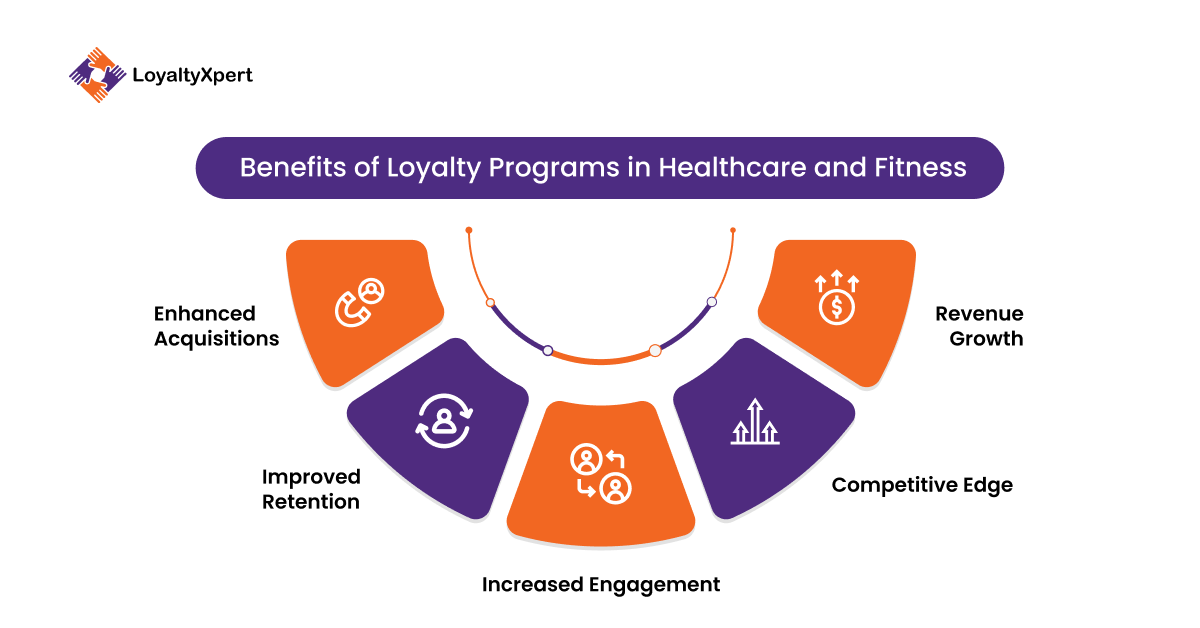
Benefits of Loyalty Programs in Healthcare and Fitness 

The healthcare and fitness industry faces numerous challenges, including:

  • Patient retention
  • Client engagement
  • Customer satisfaction

You can address these challenges by building a fitness and healthcare loyalty program. Here’s how these programs can benefit you:

1. Enhanced Acquisitions

A well-designed loyalty program that is also customer-centric can help with acquisition.  When a program offers unique and relevant incentives and rewards, it helps the business differentiate itself from the competition. This helps in improving customer/patient satisfaction and experience, which makes them more likely to stay loyal to the healthcare/fitness organization. 

You can encourage the members through the fitness and healthcare reward programs to share positive feedback and reviews. In addition, rewarding your members for every referral can help acquire new members and increase revenue.

2. Improved Retention

By fostering a sense of loyalty and engagement among your existing members, you can increase retention. Customer loyalty programs that are user-friendly and offer relevant and personalized rewards and incentives for continued engagement encourage members to keep returning, hence, reducing churn rates. 

Healthcare institutions can also reward their patients for adhering to treatment plans and recommending their services to others. Members who are loyal are more likely to stay with your practice, making customer loyalty in healthcare important.

3. Increased Engagement

In the healthcare industry, patient engagement refers to the active involvement of patients in their respective healthcare plans. This is beneficial for both healthcare providers and patients, as it results in better health results for the patients while increasing their loyalty to the healthcare providers.

In the fitness industry, members of customer loyalty programs can earn rewards or incentives for achieving various fitness goals or attending wellness classes. Similar to healthcare loyalty programs, fitness loyalty programs also benefit the fitness centers as well as the customers.

4. Competitive Edge

There’s a lot of competition in the fitness and healthcare industries with every business trying to grab the attention of customers. A loyalty program provides your business with a critical edge, enabling your business to stand out from the competition by offering personalized experiences.

One key advantage of robust loyalty programs is that they provide you with valuable member (patient) data and insights. You can leverage this data to provide your customers with personalized rewards and incentives, making them feel valued and understood. This fosters a deep connection with your customers, leading to enhanced loyalty. 

For example, a report from 2023 mentioned that Cancer Research UK leveraged insights and data from loyalty cards to spot the risk of ovarian cancer in women. 

5. Revenue Growth

Businesses in the fitness and healthcare industry can witness increased ROI through a well-built loyalty program. You can expand your customer base and increase repeat visits, which results in increased revenue. 

Customer loyalty programs tackle industry challenges head-on to offer tailored benefits. This has made loyalty programs a must in the healthcare and fitness industries. 

Types of Loyalty Programs for Healthcare and Fitness

There are various types of loyalty programs that businesses can choose from. However, choosing the right one is important to get the desired results. Here are some of the fitness and healthcare loyalty programs that you can choose from depending on your requirements:

1. Point-Based Programs:

Patients or members of this loyalty program can earn points for their engagement. These points can be redeemed in the form of rewards or discounts on future services.

  • Example: Aetna’s Better Health Rewards program enables its members to earn points for their engagement, like appearing for annual wellness exams, taking part in online health assessments, and more.

2. Tiered Loyalty Programs:

This type of loyalty program includes different loyalty tiers that incentivize customers as they reach higher levels. Incentives may include offering access to premium services.

  • Example: Motion, a tiered loyalty program offered by UnitedHealthcare, focuses on incentivizing and rewards its members for taking part in physical activities and choosing to follow healthy habits.

3. Subscription and Membership Programs

You can give exclusive access, priority scheduling, and other benefits to the members of the program by offering paid memberships. This type of model ensures a steady revenue stream.

  • Example: Parsley Health, a membership-based healthcare provider. By paying a monthly or annual fee, patients get access to personalized health plans, advanced testing, and more.

4. Referral Programs

By integrating referrals, you can make your patients/customers your brand ambassadors. This involves rewarding the new member as well as the member who referred.

5. Wellness Challenges and Rewards:

These programs are particularly effective in the fitness industry, as they reward members as they achieve health milestones. In the healthcare industry, this program promotes a holistic approach to healthcare by offering access to fitness classes, nutrition consultations, and more to improve overall well-being.

  • Example: Blue365, a wellness program that provides its members with exclusive offers and discounts on various wellness services and products. 

Key Components of Loyalty Programs 

:-  User-Friendly Interface

Having an intuitive platform enables you to increase customer engagement, as it enhances their experience. Whether the members are accessing the rewards through mobile apps or websites, it should be easy to navigate.

:-  Personalization:

By leveraging data and insights from customer loyalty programs, you can customize rewards, making them more appealing to members.

:-  Omnichannel Accessibility:

To ensure that your customers can engage with your fitness and healthcare loyalty program, consider offering access across platforms, including through apps, websites, and in-person interactions.

:-  Data Security and Compliance:

In the healthcare industry, it’s crucial to adhere to legal frameworks and regulations like HIPAA. By protecting the data of your customers/patients, you can build and maintain their trust.

While it’s important to keep all key components of a successful loyalty program in mind, implementing a customer loyalty program can be tricky. Here are the best practices to implement loyalty programs successfully:

  • Define and set clear objectives for your program
  • Adopt advanced loyalty program software to build an effective program
  • Ensure employees are familiar with the program to promote it effectively and assist customers
  • Regular review helps in identifying areas for improvement and making necessary adjustments

Embracing Loyalty Programs for a Healthier Future

Implementing customer loyalty programs can offer you a competitive advantage and assist you in thriving in the healthcare and fitness industry. These programs are effective in fostering stronger and long-term relationships with customers leading to increased ROI.

Loyalty Xpert provides a robust loyalty management platform to create personalized and rewarding experiences for your customers. To learn more about how Loyalty Xpert can assist you, book a free demo now!

Fuel Business Growth with a Successful Dealer Loyalty Program

Dealers are a critical supply chain link, especially in building materials and consumer goods. However, maintaining their loyalty can be a challenge for businesses as dealers have multiple options and competing priorities. A well-designed dealer loyalty program can help strengthen the relationship, improve retention and benefit both the business and its dealer network. According to Forbes, a 7% increase in brand loyalty can lead to an 85% increase in customer lifetime value.

The right dealer loyalty program can help your brand stay afloat while building emotional connections with dealers. This relationship helps increase the dealer’s trust and commitment to the brand, which leads to higher sales, and improved dealer performance and eventually positively impacts the bottom line of your business.  

Building Blocks of Dealer Loyalty

  • Partner in Their Growth: Aligning your program with the dealer’s growth plans and objectives shows them that you value their success too. Helping them achieve their goals through your brand will make them look at your brand more positively. 
  • Equipping Dealers with Tools for Success: Making the right tools and resources available to your dealers enables them to effectively sell and promote your brand and its products. Among other things, extensive product training and digital tools can make dealers more confident to represent your brand, close more sales and deliver value to the end customers. This is bound to strengthen dealer loyalty to your business. 
  • Open Communication and Defined Goals: Having open communication channels with your dealer network and regular transparent communication can help solve many issues at the root. Defining the goals and setting mutual objectives can help create a path to success. This can help foster trust, encourage accountability and ultimately strengthen the partnership, driving growth. 
  • Fueling Loyalty with Consistent Support: Businesses should go beyond periodical check-ins and ensure that their dealers know that they can expect support anytime they need it. This can also be expressed through regular training sessions, timely problem solving and frequent updates on products and promotions. By offering continuous guidance, and helping them overcome challenges, dealers are motivated to help the brand reach its goals. 
  • Attracting Customers with Smart Pricing: Businesses need to ensure that their products are priced attractively without compromising on quality. This helps your dealers sell the products to their customers confidently. Competitive pricing helps increase sales and strengthen brand relationships that the dealers can encash on. 
  • Maximizing Visibility with Effective Marketing Support: Providing your dealers with effective marketing support and all the tools they will need to promote your brand and drive sales. This also helps the dealer display your products better and in the FMCG industry especially, shelf space decides a brand’s prominence and in turn, influences consumer choice. If you can convince the dealers to prominently display your products, there will be an increase in sales due to an increase in visibility. 
  • Streamlined logistics for seamless deliveries: Optimizing your supply chain management and improving coordination between manufacturers, dealers and distributors to ensure that your dealers can maintain optimum inventory levels at all times. This reliability helps in building trust and ensures that the dealers can fulfil customer orders without disruption. 

Components of a Successful Dealers Loyalty Program

A successful dealer loyalty program goes beyond incentivizing repeat purchases. It has to foster long-term relationships between the dealers and the brand. According to business.com, those loyal to a brand spend 67% more than those who aren’t. Consider including the following aspects to maximize results and build a compelling dealer rewards program:

  • The brand can reward dealers for consistent buying by offering incentives for increased volume each year. 
  • Offering exclusive promotions or discounts on new product lines can encourage trial purchases, helping dealers introduce new offerings to their customers. 
  • Rewarding dealers who diversify their product range and creating cross-selling opportunities for them can help expand the number of categories the dealer carries from your brand. 
  • Average transaction size can be increased by rewarding dealers for bulk purchases or upselling additional products to boost sales with each order. 
  • A program offering discounts and other benefits to dealers who order online can push them to place more orders on the web, making it faster and more convenient for everyone. 
  • Providing training, certifications and other resources to help the dealers understand the brand and its offering better, can motivate them to sell your products more effectively and confidently.

Unlocking the Power of Dealer Loyalty for Business Growth

A successful dealer loyalty program brings numerous benefits to your business:

  • Building Stronger Connections – Long-term relationships and increased trust result from dealers feeling valued and supported. 
  • Driving More Sales – Loyal dealers will keep coming back, make larger purchases and expand into new product lines or categories. 
  • Turning Dealers into Advocates – Happy and satisfied dealers will spread the word about your brand, acting as valuable promoters for your business. 
  • Reaching New Markets – Dealers who are rewarded for their efforts are motivated to introduce your brand in new markets, helping your business grow. 
  • Reducing Churn – A steady business and reliable supply chain can be ensured if your dealers are happy and loyal to the brand.

Establishing Dealer Loyalty with Structured ProgramsEstablishing Dealer Loyalty with Structured Programs
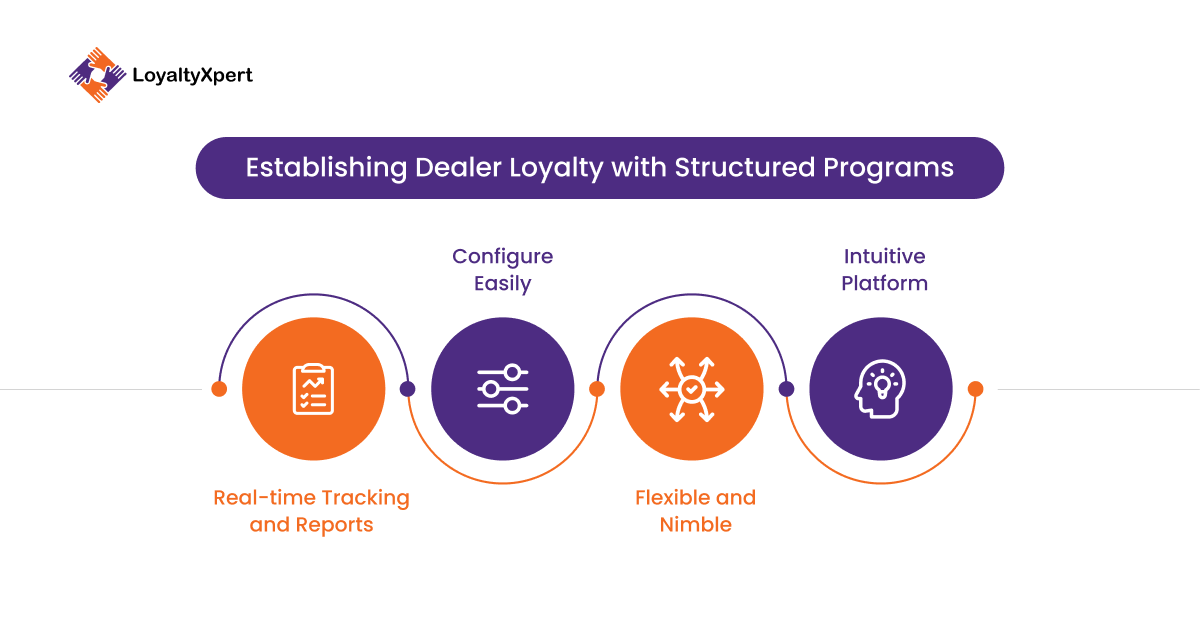
LoyaltyXpert can help businesses design customized dealer loyalty programs to drive business success. Our loyalty program software is built on ethical practices, transparency, and honesty. Our intuitive loyalty management platform provides businesses with full control and ease of use, ensuring seamless dealer management and maximum impact. 

LoyaltyXpert’s Channel Loyalty Program can help businesses create a well-designed dealer loyalty program with the following features available on the platform: 

  • Real-time Tracking and Reports — Equipped with sophisticated monitoring and reporting tools, our loyalty platform will enable you to get real-time performance reports and be proactive in your response. 
  • Configure Easily — Be it the redemption of loyalty points or point of sale prompts, our cutting-edge loyalty platform makes the configuration of your channel loyalty program extremely simple and easy. 
  • Flexible and Nimble — Being highly nimble and flexible, LoyaltyXpert’s loyalty platform will enable you to make the required changes as you go. 
  • Intuitive Platform — Our intuitive platform can help you anticipate the needs of your channel sales partners proactively and provide them with just that to keep them happy and motivated.

A successful dealer loyalty program creates a win-win for both your business and your dealers. To learn more about LoyaltyXpert and how it can help your business, book a demo now!

7 Winning Strategies for Crafting a Successful Sports Loyalty Program

Sports loyalty programs have transformed how sports brands, clubs, and franchises connect with their fans. These programs elevate fan engagement beyond game attendance, creating lasting relationships that benefit both sports organizations and their supporters. In fact, 75% of customers say that a brand with a loyalty program will be favored.

Passionate sports fans represent a unique audience with strong emotional connections to their favorite teams. A well-designed sports loyalty program harnesses this passion, converting it into measurable engagement and revenue growth. Modern loyalty program software enables sports organizations to create personalized experiences that resonate with different fan segments.

Strategy 1: Create a Multi-Tier Fan Experience

Successful sports loyalty programs implement tiered membership structures that reward dedication and encourage progression. A typical structure might include:

Bronze Silver Gold MVP
Basic rewards Enhanced benefits Premium access Elite experiences
Game updates Priority ticketing VIP parking Private events
10% discounts 15% discounts 20% discounts 25% discounts
Digital rewards Merchandise perks Meet & greets Exclusive access

Each tier offers clear value propositions and attainable progression paths. Sports clubs can track success through tier progression rates, member satisfaction scores, and revenue per tier.

Strategy 2: Gamification and Fan Engagement

Gamification transforms passive spectators into active participants. Sports franchises leverage loyalty management platforms to create engaging experiences through:

  • Points for attending games, purchasing merchandise, and concessions
  • Social media challenges and hashtag campaigns
  • Fantasy league participation rewards
  • Real-time prediction games during matches
  • Achievement badges and virtual trophies

Strategy 3: Digital Integration and Mobile Experience

Modern sports loyalty programs thrive on robust digital integration through mobile apps. Digital ticket management serves as the foundation, allowing fans to easily access and manage their game passes. Real-time score updates keep fans connected to their teams, while instant reward redemption capabilities ensure immediate gratification.

Virtual stadium experiences create immersive opportunities for remote fans to feel connected to the action. Digital memorabilia collection adds a new dimension to fan engagement, particularly appealing to younger demographics. Advanced features like seat upgrades, food and beverage ordering, and parking assistance enhance the game-day experience while driving program participation.

Strategy 4: Personalized Rewards and Recognition

Personalization elevates sports loyalty programs from transactional to emotional relationships. Custom jerseys and merchandise create personal connections to the team, while behind-the-scenes stadium tours offer unique perspectives on game-day operations. Player meet-and-greet sessions provide unforgettable moments for dedicated fans, creating lasting memories and stronger brand loyalty.

Recognition extends beyond physical rewards through personalized digital experiences. Birthday messages from team players make fans feel valued, while anniversary rewards acknowledge long-term loyalty. Access to exclusive training sessions provides inside looks at team preparation, and personalized game highlights keep fans engaged with content tailored to their interests. The combination of physical and digital recognition creates a comprehensive reward experience that resonates with diverse fan preferences.

Strategy 5: Data-Driven Fan Insights

Sports loyalty programs generate valuable data across multiple dimensions. Demographic information helps understand fan composition and preferences, enabling targeted marketing and personalized communications. Behavioral data tracks attendance patterns, purchase history, and engagement levels, providing insights for program optimization. Fan preferences regarding players, merchandise, and content guide product development and marketing strategies.

These insights enable sports franchises to create more engaging experiences. Usage patterns inform app development and feature prioritization, while social interaction data guides community building efforts. The comprehensive view of fan behavior helps sports brands deliver more relevant and engaging experiences across all touchpoints.

Loyalty program software enables sports brands to collect and analyze valuable fan data:

Insight Categories Data Points Applications
Demographics Age, location, preferences Targeted marketing
Behavior Attendance, purchases, engagement Personalized offers
Preferences Favorite players, merchandise choices Product development
Engagement App usage, social interaction Content strategy

Strategy 6: Event-Based Rewards

Event-based rewards create excitement around game days through strategically timed offerings. Pre-game benefits include early access ticketing opportunities, guaranteed premium parking, and exclusive access to team warmups. During games, members can access spontaneous seat upgrades, special concession pricing, and limited-edition merchandise offers.

Post-game experiences extend the excitement through photo opportunities with players, exclusive content access, and special merchandise deals. Championship events and tournaments receive enhanced reward structures, creating additional excitement during peak seasons. These time-sensitive rewards drive attendance and engagement while providing memorable experiences for loyal fans.

Strategy 7: Community Building and Social Integration

Strong fan communities amplify the impact of sports loyalty programs through shared experiences. Moderated fan forums create safe spaces for discussion and debate, while official social media groups facilitate direct communication between teams and fans. User-generated content campaigns encourage creative expression and sharing, building a sense of ownership and belonging.

Physical gatherings strengthen online connections through organized fan meetups and events. Exclusive member gatherings provide opportunities for deeper engagement, while virtual fan zones bridge the gap for remote supporters. These community elements transform individual fans into connected groups, creating powerful advocacy networks for sports brands.

Common Challenges and Solutions of Sports Loyalty Program

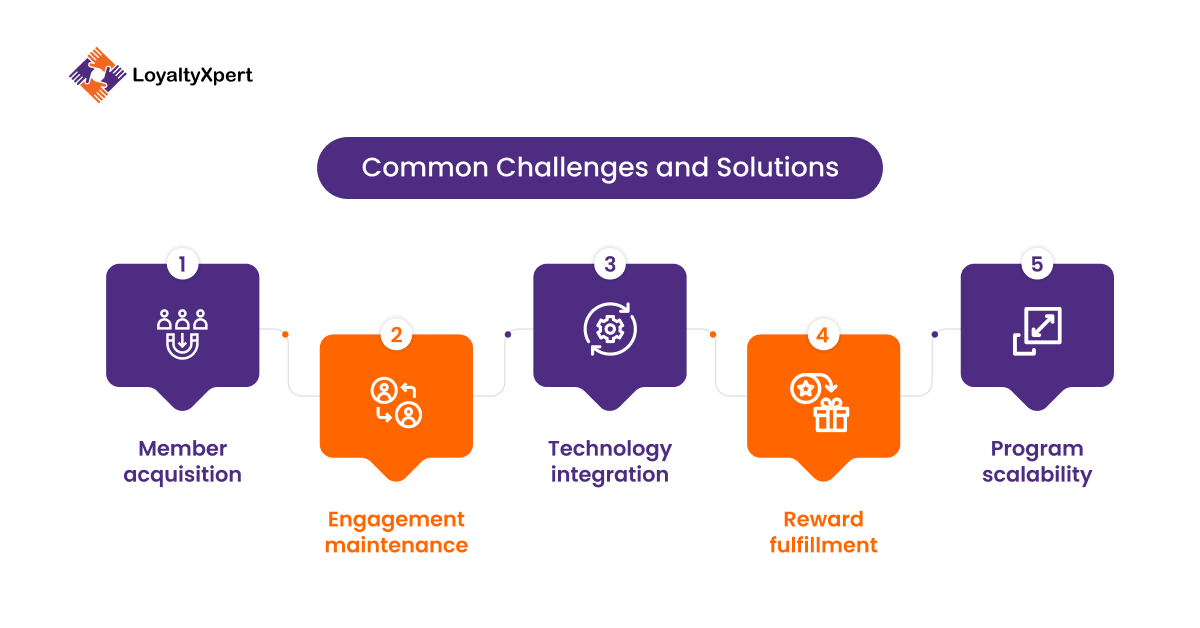
Common Challenges and Solutions

  • Member acquisition: Member acquisition presents a significant challenge for sports loyalty programs. The solution lies in implementing multi-channel marketing strategies that target different fan segments through their preferred communication channels. Clear value proposition communication and streamlined enrollment processes help overcome initial resistance.
  • Engagement maintenance: Engagement maintenance requires consistent effort to keep members active and interested. Regular program updates, exciting rewards, and personalized communications help maintain enthusiasm. Special promotions during off-season periods can maintain engagement when game-related activities are minimal.
  • Technology integration: Technology integration often poses technical hurdles during implementation. A phased approach to implementation, starting with core features and gradually adding complexity, helps manage these challenges effectively. Thorough testing and dedicated technical support ensure smooth integration with existing systems.
  • Reward fulfillment: Reward fulfillment can become complex as programs scale. Automated systems for reward tracking and distribution streamline this process, while clear documentation and efficient support channels help resolve any fulfillment issues quickly and effectively.
  • Program scalability: Program scalability concerns arise as membership grows. Cloud-based platforms provide the necessary flexibility to scale operations smoothly, while robust data management systems ensure consistent performance regardless of user volume.

The LoyaltyXpert Difference

The success of a sports loyalty program depends heavily on the technology platform powering it. LoyaltyXpert offers a comprehensive loyalty management platform specifically designed for sports brands, clubs, and franchises. Our solution combines powerful features with flexible integration capabilities to create engaging fan experiences across all touchpoints.

Core Platform Capabilities:

  • Advanced member tracking and tier management
  • Real-time reward processing and distribution
  • Secure data collection and analysis
  • Mobile app development and support
  • Customizable gamification elements
  • Multi-channel communication tools

Our platform stands out through intelligent integration features that seamlessly connect with existing systems. The robust API framework enables smooth data flow between ticketing systems, merchandise platforms, and customer databases. This integration creates a unified view of fan behavior while streamlining program operations.

Sports franchises benefit from our dedicated support services that include:

  • Program design consultation
  • Implementation guidance
  • Staff training programs
  • Technical support
  • Regular platform updates
  • Performance optimization

The LoyaltyXpert difference lies in our understanding of sports fan psychology and behavior. This expertise influences every aspect of our platform design:

Strategic Advantages:

  • Sports-specific engagement tools
  • Flexible reward structures
  • Advanced analytics capabilities
  • Scalable architecture
  • Enhanced security features
  • Mobile-first design

Running Towards Success

A successful sports loyalty program combines engaging rewards, seamless technology, and personalized experiences. Strategic implementation of these seven strategies helps sports brands create lasting fan relationships and drive business growth. LoyaltyXpert’s comprehensive platform provides the tools and support needed to launch and manage an effective sports loyalty program.

Ready to transform your fan engagement strategy? Contact our team today for a personalized demo of how LoyaltyXpert can help create and manage your sports loyalty program or avail a free trial to see it yourself. Our experts will work with you to design a solution that meets your specific needs and objectives while delivering measurable results for your organization.

Partner with LoyaltyXpert to create lasting fan relationships that drive growth and success for your sports brand.

Discover How Mason Loyalty Programs Drive Engagement and Growth

Connecting and engaging with your customers is critical to retain their business. Having an effective loyalty program can help you deepen your connection with the end users. 

Masons play a significant role in any project in the building sector. From small home renovations to government infrastructure projects, they are considered key influencers in their sector and their recommendations have a huge part to play in buying decisions. This makes them valuable partners for businesses. To nurture this relationship, businesses are adopting a Mason loyalty program, where they reward Masons for their contributions and foster long-term connections. 

Understanding the Importance of Mason Loyalty Programs

Masons are skilled workers who are experts in their niche, and their recommendations influence purchase decisions. So, it becomes important for businesses to gain their favor to cement the brand’s success in a competitive market. A Mason loyalty program can help businesses engage existing users and attract new users as well. When rewarded for their purchases and loyalty to the brand, Masons become brand advocates and ensure repeat purchases for the business.

Types of Mason Loyalty Programs

  • Point-based: Businesses offer points for activities like purchases, sign-ups to the Mason loyalty Program, and interactions with the brand. Program members can then redeem these points as discounts on future purchases, which encourages them to keep engaging with the business.
  • Tier-based – Businesses can divide their customers into tiers based on their spending volume. This approach works well in a price-sensitive market, where Masons are motivated to increase spending to reach a higher tier and get more benefits and freebies.
  • Referral-based – By recommending the business to others in their trade Masons can earn referral points that can be used to avail discounts on future purchases. This motivates them to promote the brand organically while boosting loyalty.
  • Influencer referral – Since masons influence the buying decisions of contractors and architects, businesses can provide them with affiliate links or codes through which they earn a little for every order that they get for the brand. This motivates them to suggest the brand in all projects and increases revenue for the business.
  • Value-based – This type of loyalty program can be utilized for non-transactional activities like leaving reviews, mentioning the brand on social media, giving testimonials, etc. These programs help brands get masons to contribute to their social proof and organic visibility. 

Driving Business Growth with Mason Loyalty Programs

  • Masons as Key Influencers – Masons are critical in building brand loyalty for construction companies since they influence the purchasing decisions for the products that have to be used on a particular project.
  • Building Connections GBR TMT’s Influencer Loyalty Program helped them speak directly to the Masons and create lasting connections with them. Using a robust loyalty program software, they could incentivize them for their daily work. These added incentives can strengthen Masons’ loyalty towards businesses that recognize and reward their work.
  • Data-Driven Decisions – By implementing a Mason loyalty Program, businesses can gain product usage insights and other data that can help them make informed decisions regarding their marketing and sales strategies.
  • Gamification for Better Engagement: Having an influencer loyalty program that features gamification, boosts customer engagement. GMT TMT implemented a Mason loyalty program and noticed that the gamification features on the loyalty management platform increased the frequency of usage.
  • Building Bonds with Technology: Making the Mason loyalty program accessible by utilizing smart technology, reinforces customer engagement and strengthens brand loyalty. Using features like a mobile app and push notifications, you can ensure brand recall for the masons and share new products and promotions on the go.
  • Easy Reward Redemption: By using a loyalty management platform, businesses can make it a hassle-free experience for Masons to redeem their rewards, leading to better retention. A simple, easy-to-use loyalty program keeps the masons engaged with your business and drives demand for your products as well. 

Businesses that Benefit from Mason Loyalty Programs

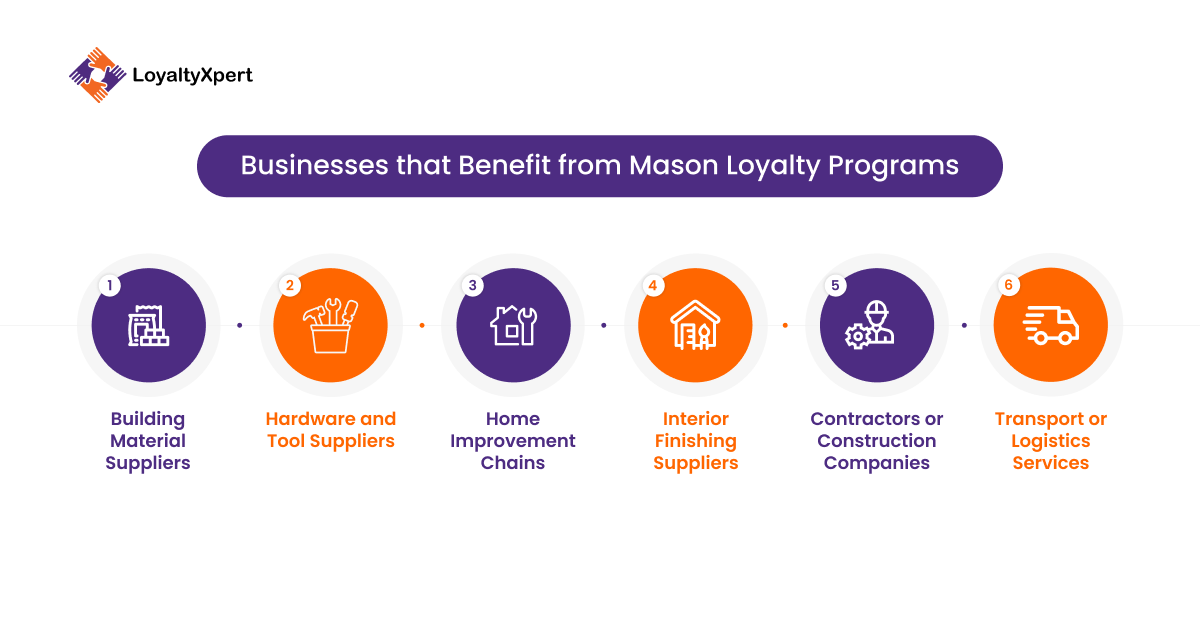
Businesses that Benefit from Mason Loyalty Programs

  • Building Material Suppliers – Companies that deal in building material supplies like cement, bricks, TMT, steel, sand, etc., especially, can benefit from a Mason loyalty program to increase brand loyalty and encourage repeat purchases.
  • Hardware and Tool Suppliers – Retailers, distributors, and heavy equipment rental companies, can offer Mason loyalty programs to ensure business from all projects the Mason works on.
  • Home Improvement Chains – Large retail chains that supply construction, electrical, plumbing, and other related materials, can reward points or discounts to members for frequent purchases.
  • Interior Finishing Suppliers – Companies dealing in finishing materials like paint, fixtures, flooring, tiles, insulation, etc. can also benefit from a Mason loyalty program. This would work because the masons are usually consulted on what finishes could be used for a project, post-construction.
  • Contractors or Construction Companies – These businesses can implement internal loyalty programs to increase morale and boost the productivity of masons. It also helps in retaining more masons and reducing attrition rates.
  • Transport or Logistics Services – The construction industry requires a lot of logistic support and a variety of transportation services to complete their job. They can incentivize Masons to use their services more frequently by offering discounts, priority services, and rewards based on the frequency of deliveries. 

Mason Loyalty as the Foundation of Growth

Engaging with masons on a regular basis and ensuring that they vouch for your brand can help you generate more revenue, boosting your bottom line. Hence, making the Mason loyalty program is not just a trend, but a necessity. 

LoyaltyXpert can help you customize a loyalty program that works for your business. You can turn Masons into brand advocates and ensure long-term business success with a simple, easy-to-use, loyalty management platform. Get in touch with us today to build stronger connections and elevate your business.

6 Expert Tips for Your Loyalty Program Management

Loyalty programs can help businesses with customer retention and growth. A Loyalty management platform helps manage these long-term programs. With more brands launching their personalized loyalty programs, demand for loyalty management platforms is also rising.

The global loyalty management market was valued at $11.71 billion in 2023 and, with the rising demand, is expected to grow to $41.21 billion by 2032. Managing your loyalty program is as crucial as designing one.

In this blog, we’re sharing six realities about loyalty program management and six expert tips to create a successful loyalty program.

Realities Nobody Tells You About Loyalty Program Management

Loyalty program management comes with its struggles and challenges, and here are six of them that have been noted from long-term loyalty programs.

1. Balancing Rewards and Costs for Long-Term Success

Striking the right balance between the rewards offered and the costs involved is one of the challenges in loyalty program management. For example, high-value rewards can quickly consume the program’s budget if there’s an unexpected surge in redemption rate. You should reassess the value-to-cost ratio to run a successful loyalty program without depleting your resources. Various reports show the importance of considering different variables in creating a successful loyalty program. With more brands offering loyalty programs to attract customers, you should check the evolving loyalty program market trends to maintain a profitable loyalty program.

2. Ensuring Seamless Data Integration With the Right Software

Your loyalty program management relies on the data integration between your CRM and the loyalty program software. Inadequate management software can result in misalignment between systems, leading to incomplete or inaccurate customer profiles. Choosing a platform with experienced technical teams can effectively handle your program’s personalization and ensure smooth data flow.

3. Refreshing Program Rewards to Prevent Customer Fatigue

With the surge in loyalty programs, even the high-performing programs can lose their appeal over time. Recurring rewards may result in customers losing interest in the program. Loyalty program management requires regular updates to combat this customer fatigue. Creative engagement strategies such as seasonal offers, one-time offers, or flash sales can keep customers interested and engaged.

4. Gathering Genuine Customer Feedback for Program Improvement

While regular updates based on customer feedback are necessary for loyalty program management, it can be challenging to ensure genuine feedback. Customers may not always be upfront about their experiences. Often, they’ll only share their experience if they’re extremely satisfied or dissatisfied. Using a powerful loyalty management platform can help you capture subtle behavioral cues, such as changes in engagement or redemption patterns. You can refine your program according to these evolving behavioral patterns.

5. Protecting Your Program Against Fraud and Security Risks

Fraud in loyalty programs includes false signups, identity theft, reward abuse, etc. A robust loyalty management platform can help you fight these vulnerabilities. Built-in features, such as multi-factor authentication, anti-bot detection, and transaction monitoring, can mitigate these risks.

6. Focusing on Patience and Long-Term Goals for Lasting Impact

Loyalty programs are designed for long-term goals and require patience to measure meaningful results. Sudden spikes in parameters like engagement might not result in sustainable loyalty goals. Therefore, a successful loyalty program needs timely data checks and updates based on performance metrics. A loyalty management platform automates this task and helps you focus on long-term goals.

Despite a few challenges, loyalty programs remain one of the most effective ways to achieve long-term business objectives. The success of a loyalty program relies on efficient management driven by data. Here are six key strategies for effectively managing a successful loyalty program.

Secret Tips About Successful Loyalty Management

Loyalty programs focus on rewards and incentives to match business goals. If you’re exploring loyalty programs as a business strategy, you should start by defining your business goals.

1. Understand Your Business Goals and KPIs

You can measure success only if you define what success means to your business—your business goals. Defining your business goals is the first step towards understanding why you need a loyalty program in the first place. 

One way to get clarity on your business goals is by assessing your business needs and goals within a timeframe.

  • What are your short-term and long-term business goals?
  • Are your expectations from the loyalty program aligning with your business goals?

You can check with your marketing and sales team to understand more about it:

  • What type of reward system works best in your industry?
  • What should you consider as a conversion in the campaign?
  • Which segment of customers are you targeting?
  • Are your customers responsive to online campaigns?
  • What KPIs from social media engagement are helpful to your business?

Finding answers to these questions can help you in setting a clear direction for your loyalty program. 

Once you clearly define your goals, you can break them down into smaller tasks and delegate them to your loyalty management team. This team often includes roles like a loyalty manager who oversees the campaign and data analysts who analyze the performance data.

A defined timeline helps to remind your team to report back with the KPIs to check the progress of your loyalty campaign. Your team can use a loyalty management platform to handle the campaign’s end-to-end process.

2. Create a Customer Persona and Onboarding Flow

Not all loyalty programs are created equal. Each program is highly personalized to suit a niche consumer’s needs and interests. Creating a persona of your target customers can help you understand their behavior, preferences, and weaknesses.

You can use different data collection methods to understand your target audience, such as surveys, social media trends, and market study reports. When you create a persona, you can idealize your target audience by defining their characteristics, such as:

  • Their demographics
  • Their preferences
  • What is their average purchase power?
  • Are they active Internet users?

These data points will help you determine the type of rewards that will work for your target audience. This will also help you understand where to market your campaign and establish communication channels.

The next step is seamlessly onboarding customers. Your loyalty program software should be equipped with a user-friendly interface to make onboarding seamless. Customer support channels and resource articles can make this process easy.

An efficient loyalty program management platform can make this process easy to monitor. It can help you find workflow gaps or determine if your customers are stuck at any stage. You can also use the loyalty management platform to update your program according to customer feedback.

Ensure your loyalty program’s signup process is easy and clutter-free. In addition, instant reward points for signup can further motivate customers to join your program and refer to their network if there are referral rewards.

Once you’ve set up your signup/onboarding process, the next step includes deciding how to reward your customers and channel partners.

3. Structure Reward Schemes Using Loyalty Program Software

Loyalty programs use different types of reward systems to suit various customer profiles and business goals. Market research can help you determine which structure works best for your business based on your customer persona. Choosing rewards that are attractive to your target customers will ensure maximum engagement in your campaign.

Once you’ve selected your reward scheme, you can use loyalty program software to structure your reward system. You can integrate your customer data by connecting your CRM (customer relationship management) system to your loyalty software.

The next step is to create communication channels to support your loyalty program. Asking customers to sign up using a mobile number or email ID can establish communication channels with them.

Conducting a pilot test with small groups can help test your reward program and find errors, if any. You can make adjustments to your loyalty program before making it live.

Once the program is live, you must promote your campaign through suitable marketing channels for better engagement. Make it interactive periodically to ensure your customers keep returning to your program.

4. Incorporate Contests and Deals to Make Interactive Programs

Your customers need a reason to visit your program often. There are a few things you can do to attract your customers and improve customer engagement, such as: 

  • Contests, flash sales, and exclusive offers 
  • Limiting time to redeem rewards 
  • Adding interactive elements using ROI calculators

These interactive elements can be helpful and valuable to your customers. A loyalty management platform can help you understand your audience, enabling you to offer personalized offers and rewards. 

These platforms can track your customers’ interactions with the program—whether they use their rewards or check their total points. You can use these insights to strategize further steps in the program. Constant monitoring of your campaign can help you evolve your program according to customer feedback.

4. Monitor and Manage the Campaigns Consistently 

Monitoring customer feedback is one of the most effective ways to understand if your program is working. You can evaluate feedback using a data-driven method through a loyalty management platform. It can provide you with real-time performance data on customer engagement, allowing you to make necessary changes accordingly.

You should also analyze periodic reports on KPIs to assess the program’s performance. Furthermore, you have to be patient, as loyalty campaigns typically take some time to show results since the goal is to influence long-term customer relationships. So, it is necessary to have realistic goals and patience to see results. Also, you should remember that frequent changes to the existing reward structure might destroy the purpose of your loyalty program.

You can try out one-time offers and time-sensitive deals to try different strategies without disrupting the long-term reward system. Customizing these strategies to match the market trend can increase your loyalty program’s engagement. You should also promote these new rewards through multiple marketing channels to reach your target audience.

5. Explore Omnichannel Loyalty Programs.

The success of your loyalty program largely depends on how you promote it. For this, you can use marketing channels such as social media, in-store advertisements, and events. 

Structure your loyalty program based on your market research to collect data from all communication channels.

A robust loyalty management platform will have the necessary features to analyze and compile data from multiple channels in one place. Proper data collection allows you to manage your reward distribution through the management platform. You can also make better optimization decisions based on the reports from these platforms.

The success of your loyalty program depends on how you manage it and adapt to necessary changes. A powerful loyalty management platform can provide you with the required insights to make those informed decisions.

Conclusion

You should always consider your business goals and target market while creating a loyalty program. The tips we shared will help you to formulate and manage an effective loyalty program. Different niches call for different needs, so you should always prioritize your business goals and study your market before making any objective decisions. To achieve successful results, you should focus on long-term goals from these programs and manage them accordingly. Using a well-functional loyalty management platform can make your job easier.

LoyaltyXpert provides an excellent loyalty management platform for creating and managing your campaigns. It also allows seamless integration with your existing systems and campaign creation using this platform. Our loyalty management platform is equipped with all the features for various industries. You can book your demo here!

Complete Guide to Designing a Successful Hybrid Loyalty Program

A hybrid loyalty program combines digital and traditional engagement methods for a comprehensive customer rewards experience. These integrated programs merge the convenience of online interactions with meaningful in-person experiences, creating lasting customer relationships across multiple touchpoints.

Understanding Hybrid Loyalty Programs

A hybrid loyalty program represents the evolution of traditional reward systems, combining physical and digital touchpoints to create a comprehensive customer engagement strategy. These sophisticated programs leverage both online and offline channels, offering customers maximum flexibility while providing businesses with rich data insights and multiple engagement opportunities. In fact, in a survey conducted by Deloitte, 75% CEOs around the globe stated that they will increase their investments in building hybrid experiences by 2025.

A successful hybrid loyalty solution provides:

  • Consistent experiences across all channels
  • Flexible reward redemption options
  • Real-time tracking and updates
  • Personalized communications
  • Rich customer insights
  • Streamlined program management

The value of hybrid loyalty schemes extends beyond basic points and rewards. These programs create emotional connections through personalized experiences while driving measurable business results through data-driven insights.

Benefits of hybrid loyalty schemes include:

  • Enhanced customer convenience through multiple access points
  • Richer data collection from diverse interaction channels
  • Increased engagement through varied touchpoints
  • Better personalization capabilities
  • Improved program ROI through optimized resource allocation

Key Components of a Hybrid Loyalty Program

Digital Elements

The digital foundation of a hybrid loyalty program centers on mobile accessibility and real-time engagement. Modern loyalty program software integrates mobile apps, digital wallets, and automated tracking systems to provide instant gratification and easy reward redemption. Push notifications, personalized offers, and digital rewards create continuous engagement opportunities.

Modern loyalty program software must include robust digital features:

  • Mobile apps with integrated digital wallets
  • Real-time points tracking and balance updates
  • Virtual reward catalogs and instant redemption
  • Multi-channel communication tools
  • QR code integration
  • Digital receipt capture

Traditional Elements 

Physical engagement remains essential for creating memorable customer experiences. In-store interactions, tangible rewards, and face-to-face service build emotional connections that digital channels alone cannot replicate. Traditional elements like membership cards and printed materials provide familiar touchpoints for customers who prefer conventional methods.

Traditional Elements Physical components remain essential:

  • Membership cards for in-store identification
  • Printed rewards catalogs
  • Tangible benefits (gift cards, merchandise)
  • Face-to-face customer service
  • In-store exclusive offers

Integration Points 

Seamless integration between digital and traditional channels forms the core of successful hybrid programs. The loyalty management platform must support consistent experiences across all touchpoints while maintaining a single customer view. This unified approach enables personalized engagement based on complete customer profiles and behavior patterns.

A successful hybrid loyalty solution requires seamless integration:

  • Single customer view across channels
  • Consistent point earning and burning rules
  • Unified branding and messaging
  • Integrated data collection and analysis
  • Cross-channel reward redemption
  • Synchronized customer support

Designing Your Hybrid Program

The foundation of an effective hybrid customer loyalty program starts with strategic planning and clear objectives. This phase requires careful consideration of customer preferences, business capabilities, and technological requirements to create a program that delivers value while remaining operationally feasible.

Planning Phase 

Success metrics must align with business objectives while considering customer expectations. Resource allocation should account for both technological implementation and ongoing program management. A phased rollout approach allows for testing and optimization before full-scale deployment.

Success starts with thorough planning:

  • Define program objectives aligned with business goals
  • Identify target audience segments and preferences
  • Establish measurable KPIs
  • Allocate resources for implementation and maintenance
  • Create timeline for rollout and optimization

Program Structure 

The loyalty program software should support flexible point systems, multi-tiered benefits, and varied redemption options. A well-designed tier structure might include:

Standard Silver Gold Platinum
Basic benefits Enhanced rewards Premium perks VIP privileges
1x points 1.5x points 2x points 3x points
Digital rewards Physical + Digital Exclusive access Concierge service

Technology Infrastructure 

A robust loyalty management platform should offer:

  • Scalable loyalty platform selection
  • API integration capabilities
  • Robust data management systems
  • Security protocols and compliance
  • Mobile optimization
  • Real-time processing capabilities

Implementation Strategies of Hybrid Loyalty Program

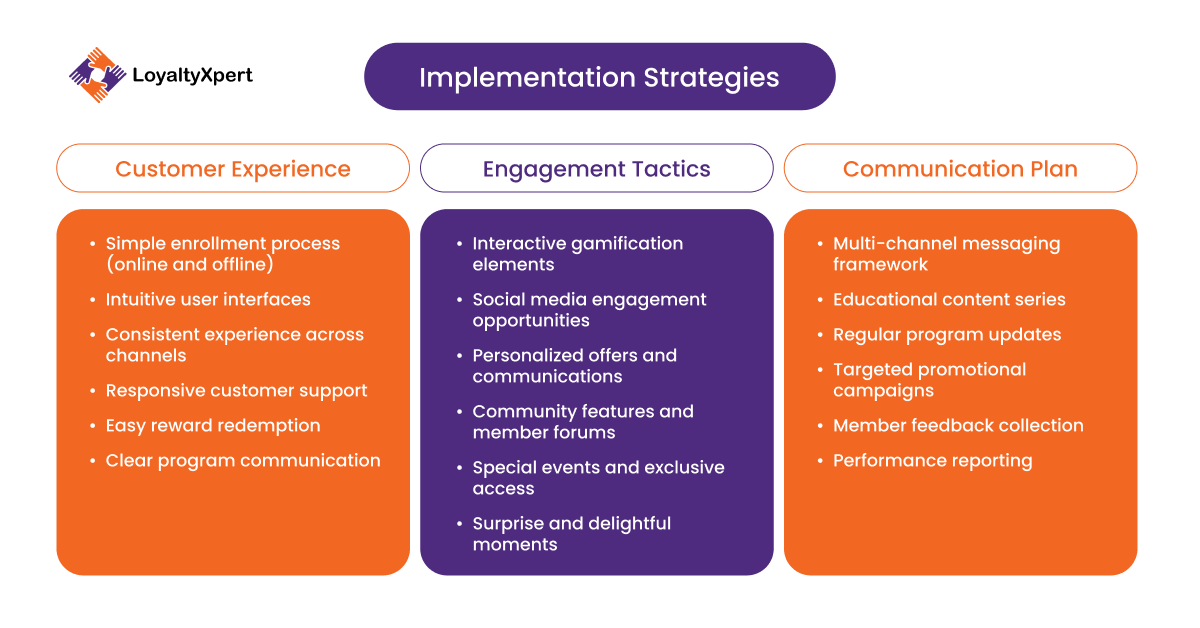
Implementation Strategies

Successful implementation of hybrid loyalty solutions requires careful orchestration of multiple elements. The focus should remain on creating seamless customer experiences while maintaining operational efficiency.

Customer Experience 

Program enrollment should be simple and accessible through both digital and traditional channels. The user interface must provide intuitive navigation and clear value communication. Customer support should be readily available through multiple channels to address inquiries and issues promptly.

Focus on creating frictionless interactions:

  • Simple enrollment process (online and offline)
  • Intuitive user interfaces
  • Consistent experience across channels
  • Responsive customer support
  • Easy reward redemption
  • Clear program communication

Engagement Tactics 

Gamification, social integration, and personalization drive ongoing participation. Community features and exclusive events create emotional connections beyond transactional relationships. Regular program updates and surprise rewards maintain excitement and engagement.

Drive participation through:

  • Interactive gamification elements
  • Social media engagement opportunities
  • Personalized offers and communications
  • Community features and member forums
  • Special events and exclusive access
  • Surprise and delight moments

Communication Plan 

Multi-channel messaging ensures program visibility and understanding. Educational content helps members maximize program benefits. Regular feedback collection enables continuous improvement and adaptation to changing customer needs.

Develop a comprehensive strategy:

  • Multi-channel messaging framework
  • Educational content series
  • Regular program updates
  • Targeted promotional campaigns
  • Member feedback collection
  • Performance reporting

Common Challenges and Solutions

Challenge Solution
Technology integration Choose flexible loyalty program software
Customer adoption Provide clear value proposition
Data management Implement robust analytics tools
Resource allocation Start small and scale gradually

Best Practices

Personalization drives program success through targeted offers and customized experiences. Data security measures protect sensitive information while building trust. Excellent customer service supports program adoption and ongoing engagement. Regular program evolution ensures continued relevance and value delivery.

Strong analytics capabilities enable data-driven decision-making and program optimization. Integration with existing business systems streamlines operations and provides comprehensive customer insights. Regular staff training ensures consistent program delivery across all channels.

Best Practice Offerings
Personalization
  • Leverage customer data for targeted offers
  • Create relevant rewards options
  • Customize communication preferences
  • Adapt program features to usage patterns
Data Security
  • Implement strong encryption
  • Regular security audits
  • Clear privacy policies
  • Secure data storage
  • Compliant handling procedures
Customer Service
  • Multi-channel support options
  • Quick response times
  • Knowledgeable staff
  • Problem resolution protocols
  • Regular training updates

Future of Hybrid Loyalty Programs

Technological advancement continues to reshape hybrid loyalty schemes. Artificial intelligence enables deeper personalization and predictive analytics. Internet of Things integration creates new engagement opportunities through connected devices. Blockchain technology promises enhanced security and transparency in point management and reward redemption.

Augmented reality experiences will blend digital and physical interactions in novel ways. Voice commerce integration will simplify program interaction and reward redemption. Advanced analytics will provide increasingly sophisticated customer insights and program optimization opportunities.

Path to Successful Loyalty Programs

A well-designed hybrid loyalty program creates lasting customer relationships through seamless integration of digital and traditional engagement methods. Strategic planning, robust technology, and continuous optimization drive program success. The future promises exciting opportunities through emerging technologies and evolving customer expectations. LoyaltyXpert offers comprehensive solutions to help businesses create and manage successful hybrid loyalty programs that drive growth and customer satisfaction.

Ready to redefine your customer loyalty strategy? Start a free trial or request a demo today for a demonstration of our industry-leading loyalty management platform.

Explore the Essence of Successful Jewelry Loyalty Programs

The growing global jewelry market was valued at $224.39 billion in 2023 and is expected to reach $343.90 billion by 2032 from $232.94 in 2024. However, retaining customers and increasing purchase frequency still remain two common challenges for jewelry brands. To tackle this, many successful brands leverage loyalty programs. Unique jewelry loyalty programs make customers feel special and valued, encouraging brand loyalty and repeated sales.

If you’re exploring business strategies to promote your jewelry business, consider building an effective loyalty program for your brand. This can help you with customer acquisition, retention, and business growth. In this blog, we’re sharing a comprehensive guide to creating your jewelry loyalty program with examples of 6 successful jewelry loyalty programs. Let’s dive in!

What Is a Jewelry Loyalty Program?

A jewelry loyalty program rewards customers for their purchases and makes them feel valued by the brand. These programs are customized to make their shopping experience unique and memorable. Jewelry loyalty programs stand out for their rewards, focusing on exclusive experiences and personalized offers.

It’s important to design a rewards system that aligns with your business goals and customer needs. There are several types of reward systems that you can build by leveraging loyalty program software. Some of the most commonly used ones include:

  1. Point-based rewards: Customers are offered points for their brand engagements, such as purchases, signups, and social media interactions. They can redeem these points in their future purchases from the brand.
  2. Tier-based rewards: This loyalty program enables jewelry brands to segment their customers into different tiers based on a fixed target, such as spending volume. Tier members who meet these targets get upgraded to higher tiers with exclusive perks.
  3. Referral-based rewards: Customers get reward points for every successful referral. They can redeem these points for discounts and special offers on future purchases.
  4. Influencer referral rewards: Brands provide referral and affiliate links to reward influencers for their promotional activities. Influencers receive these rewards for every successful signup using their reference code.
  5. Value-based rewards: This type of program enables jewelry companies to reward their customers for their value generation through non-transactional activities such as online reviews. Brands gain organic visibility and trust from user-generated reviews and social media mentions.

Jewelry loyalty programs can often combine different types of reward systems to create a meaningful experience for their customers. With the boom of e-commerce and digitalization, jewelry companies are also adopting new technologies to cater to modern customer needs. 

Let’s take a look at some of the key features of a successful jewelry loyalty program.

Interactive Elements

These days, loyalty programs can be accessed through smartphones and web applications. To replicate the touch-and-feel experience of traditional jewelry shopping, brands in the jewelry industry are integrating AI and augmented reality elements in their loyalty programs.

Giveaway contests and games are other features that can help increase customer interaction. Including social media posts and reviews as ways to win the contests boosts brand visibility and brand awareness. Mobile applications help to distribute these rewards effectively and encourage repeat purchases from the same brand.

Omnichannel Loyalty Programs

Apart from mobile applications and online-based rewards, jewelry brands also offer in-store rewards in their loyalty programs. Exclusive in-store promotional events are an influential way to reward customers. Your brand can create exclusive events for new product launches and offer invites to the members in top loyalty program tiers. Such exclusive experiences can create an emotional connection with the loyal customer base.

You can also tie up with influencers to offer their potential customers a glimpse of these exclusive events. Influencers can also help create helpful content for their followers about the jewelry brand they partner with.

Educational Content

One of the best ways to attract new customers is by providing them with value-added content. Jewelry loyalty programs can incorporate educational content such as style guides and influencer haul videos into their loyalty programs. These resources can help customers with product reviews and encourage them to choose what works for them.

Additionally, personalized rewards are a significant feature of a jewelry loyalty program.

Personalized Rewards

Personalized rewards and custom-made jewelry are among the best features of loyalty programs to enhance customer loyalty. Some examples of such personalized rewards may include:

  1. Surprise gifts on birthdays or anniversaries
  2. Birthday discount offers
  3. Exclusive VIP experiences
  4. Personal style consultations
  5. Access to limited edition collection

Brands design their loyalty programs to personalize the rewards in line with their business goals and brand values. Successful loyalty programs ensure that the members enjoy the perks they receive and stay loyal to the brand. Jewelry companies can also leverage a loyalty management platform to manage these programs and seamlessly adapt to their customer needs.

If you are exploring loyalty programs as a business strategy to promote your jewelry brand, you can create one by following these steps.

How to Create a Jewelry Loyalty Program

How to Create a Jewelry Loyalty Program?

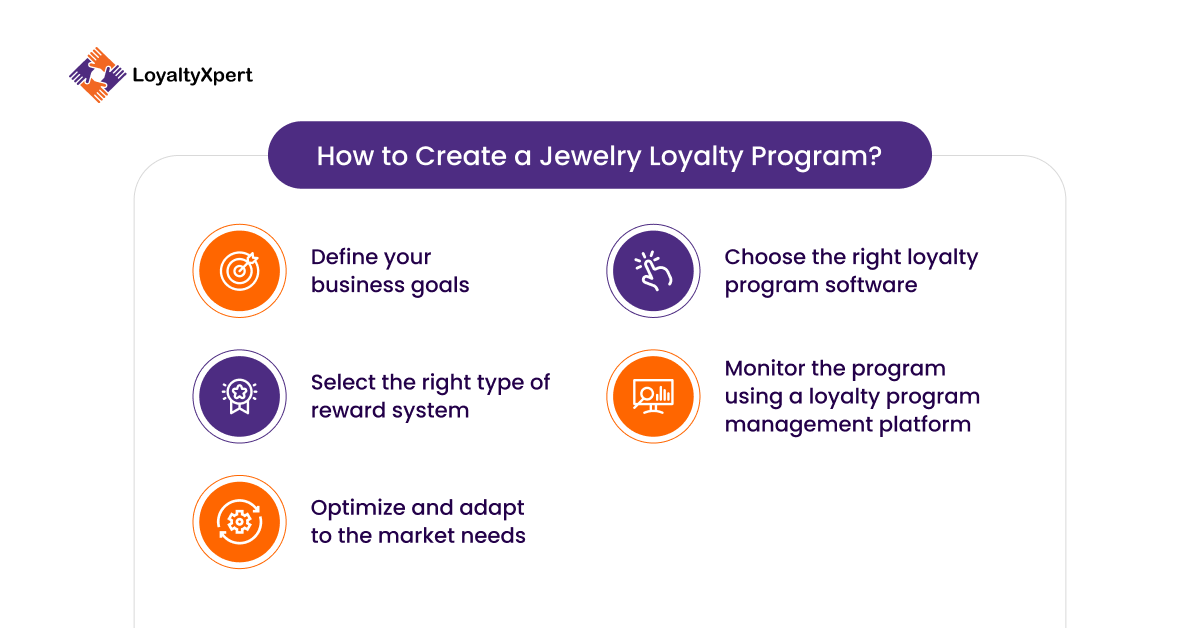
Loyalty programs are not a one-fits-all solution for businesses even in the same Jewelry industry. That’s why you should structure your program according to your brand’s needs, which is the first step in building your jewelry loyalty program. Here are the steps you can follow:

Step 1: Define your business goals

You must list your business goals, understand your customers’ needs, and convert them into KPIs and reward structures aligning with those goals.

Step 2: Select the right type of reward system

You can choose a reward structure that suits your customers and business goals. You can also combine different types of rewards to create a customized experience for your customers.

Step 3: Choose the right loyalty program software

You can use loyalty program software to create your program and seamlessly distribute the rewards. Make sure your loyalty program is easy to sign up for and use rewards.

Step 4: Monitor the program using a loyalty program management platform 

Loyalty programs are long-term strategies aimed at customer retention. You can monitor the performance of your program using a loyalty management platform.

Step 5: Optimize and adapt to the market needs

You can analyze the performance reports and make data-driven changes to the program. A loyalty management platform can help you step up and adapt your program to the new market trends.

You can also take inspiration from successful jewelry loyalty programs out there. Here are six successful jewelry programs in the industry.

  • Swarovski Crystal – Swarovski Club

Swarovski Crystals’ Swarovski Club is a tier-based loyalty program with bronze, silver, and gold tiers. Customers can join these member-only tiers that offer exclusive perks depending on their spending volume. Standard rewards of this program include birthday discounts, style guides, and early access to presale events.

With higher spending, they can also unlock VIP status within the program, allowing access to VIP events. The brand gets its brand advocates through these exclusive events. These highly desirable membership rewards motivate customers to spend more on the brand product.

Accumulating rewards and spending them on jewelry is a long-term process; hence, this loyalty program helps Swarovski with long-term customer retention and sales.

  • Pandora – PANDORA Club

Pandora Club is an excellent example of a personalized loyalty program offering a unique business model that stands out. The members-only limited edition charms and birthday gifts make Pandora Club a unique loyalty program with no tiers. Customers can access the coveted Pandora club by sharing more personal information with the brand.

Customers get a 10% signup bonus and a “Pink” status in the My Pandora program. After their purchases, they can unlock the Silver and Gold levels when they reach a particular spending volume.

With instant rewards from the get-go and limited edition exclusive products, Pandora Club helps the brand create an emotional connection with the customer. With exclusive birthday gifts, Pandora retains customer loyalty for a lifetime.

  • Tiffany & Co. – Blue Box Loyalty Program

Blue Box loyalty program by Tiffany & Co. offers their members various exclusive experiences as rewards. These experiences include early access to their new and limited edition collection, customized style consultations, invites to exclusive events, and more. The point-based loyalty program offers redeemable points for future discounts and helps improve brand loyalty.

  • Stella & Dot – Style Club

Stella & Dot’s Style Rewards program combines points and tiers that reward customers for their purchases and non-transactional activities. Customers get points for signups, social media engagement purchases, and discounts on birthdays.

Customers can redeem their points or accumulate them to reach the Insider and VIP tiers, unlocking exclusive perks like new product offers, swags, and event invites.

Jewelry companies can retain customers with instant gratification rewards for customer actions and improve sales through promotions to specific tiers. Exclusive perks make a sense of privilege and motivate members to spend more on the brand’s jewelry.

  • Zales – Vault Rewards

Zales Diamonds Vault rewards is a tier-based loyalty program with Sapphire, Ruby, Emerald, and Diamond tiers. Each tier has additional perks like free shipping, custom-designed jewelry, and annual membership benefits.

Vault rewards also provide member-only experiences like unlimited professional jewelry cleaning and inspection, complimentary style consultations, and event access. These highly personalized rewards make customers feel valued and return to the brand for the next purchase.

  • Flink’s Jewels- Flinks First

Flink’s First loyalty program offers customers store credits for their purchases. These are time-limited credits redeemable within a year. The total net spend is calculated for a timeframe, and store credits are issued for a limited period.

In addition, they offer birthday and anniversary rewards to their loyalty program members. This loyalty program combines rewards such as points, tiers, and store credits.

Design a Dazzling Campaign Just Like Your Jewelry Brand

Jewelry loyalty programs are uniquely crafted, attending to the brand’s goals and customer needs. By carefully monitoring your business goals, you can also structure a reward program for your jewelry brand. Incorporating advanced features can enhance the customer experience in your program. You can automate many tasks of your loyalty program using advanced software.
Since loyalty programs are a long-term strategy, you should constantly monitor the program using a loyalty management platform. LoyaltyXpert offers a specialized loyalty program platform to help jewelry brands with every stage of designing a robust loyalty program. To learn more about LoyaltyXpert and how it can help your business, book a demo now!

7 Powerful Channel Incentive Programs to Electrify Your Wire & Cable Business

The global wires and cables market size, valued at $208.89 billion in 2023, is expected to see a compounded annual growth rate of 6.23% to reach $357.34 billion by 2032. However, the industry has seen fluctuating demand and high competition in recent years. Brands face significant challenges, such as rising costs, counterfeit products, and complex supply chain management.

Many brands have already taken steps to fight these issues and retain their channel partners through channel loyalty programs. They’ve created exclusive mobile applications for retailers and electricians to offer channel loyalty rewards. These programs can help you introduce your business to a new market, attract new customers, and retain channel loyalty.

Here are seven tested channel incentive programs that can be a game-changer for your business if you’re exploring ways to establish and expand your wire and cable business to new markets.

1. Point-Based Sales Channel Incentives Program

Point-based sales incentive programs reward your channel partners with points when they achieve their sales target. Your partners can redeem their earned points for discounts, cashback, or other gifts on future purchases. You can customize these programs by setting a sales volume or a target timeframe.

You can achieve your short-term and long-term business goals through carefully designed channel partnership programs. Rewards for reaching sales targets quarterly or within a specific period help with your short-term revenue targets. Sales-volume-based incentives help you build long-term channel loyalty.

Havells’ Sampark is an example of a point-based incentive program, where they provide exclusive incentives to their channel partners. Retailers and electricians can redeem their points in future purchases of specific products from the brand. This channel partner program is perfect for increasing sales.

2. Sales Performance Incentive Funds (SPIFs)

You can allocate a sales performance incentive fund (SPIF) to reward your channel partners for reaching or exceeding their sales targets. Businesses set aside an amount to reward retailers and electricians with one-time bonuses or exclusive gifts. You can identify partners who perform exceptionally well and reward them to retain a long-term partnership.

You can also incorporate SPIFs into new product launches to promote marketing and sales. These funds can help your partners introduce your products to new markets, ensuring demand for the product and accelerating sales cycles. The SPIF program is a great way to meet your short-term sales and revenue targets.

3. Rebate-Based Channel Incentive Program

Rebates are one of the oldest forms of channel partner incentives. You can reward your customers with cashback or rewards for their high-volume purchase of a specific product. It can promote large order volumes when you want to clear old stock or launch a new product.

You can also use rebates as an effective channel partner strategy for data collection. Loyalty program software can build a streamlined process to distribute rebates among your partners. It can also help avoid rivalry among your channel partners. You can use a loyalty program management platform to manage your rebate incentive program effectively.

4. Channel Referral Rewards Program

Channel partner referrals are the best assets for growing your business through your partner’s network. You can reward successful referrals and encourage them to promote your brand to their network down the supply chain.

Retailers and electricians are the primary influencers in this industry. Their referrals can benefit you by enhancing your brand awareness, credibility, and low-cost customer acquisition. Incentivizing these referrals can increase sales and organic marketing for your business.

5. Training and Support Programs

Training your channel partners can upskill them and open new opportunities. With knowledge-sharing programs, you can introduce your products to end users, such as electricians. You can also provide safety booklets and other marketing assets as a part of the program. 

Through these training programs, you can create a strong community of professionals who know everything about your brand’s products—specifications, safety measures, and workarounds. You can also use this professional network to promote your products and services.

Rewarding electricians for completing these training programs and attending workshops can create a personal connection with them. You can customize these rewards with discounts on your brand’s products and join them in a loyalty program.

6. Marketing Development Funds (MDF)

Marketing development funds (MDF) are pre-allocated incentives for marketing initiatives. You can use this fund to incentivize your partner’s marketing efforts. They can use this incentive to promote your brand’s products through advertisements, seminars, and in-person events. Wire and cable companies use this promotional strategy to gain brand visibility and awareness.

Since MDFs are pre-initiative funds, it might be difficult to estimate the cost and ROI of this program. However, this type of incentive program can build trust between channel partners. The main goal of the incentives program is to form long-term partnerships, and MDFs do that very well in the wire and cable industry.

7. Co-operative Marketing Funds

Co-operative marketing funds are an allocated marketing budget to offer channel partners after they achieve specific marketing goals and sales targets. You can use these post-initiative funds to reward your channel partners for their business with your brand. 

Since the funds are post-initiative, cooperative marketing funds are more defined for calculating ROI. This shared investment model ensures mutual benefits for your brand and channel partners for meeting your business goals.

You can choose the best incentive programs for your brand after carefully studying your market and channel partners’ behavioral patterns.

When deciding on a reward structure, you can choose from the following loyalty programs based on your business goals.

  1. Points-based programs where you can reward your retailers and electricians with redeemable points for every purchase. They can redeem these points for discounts or cashback on their next purchase. Accumulated points encourage your partners to do more business with you and refer your products to more people.
  2. Tiered Loyalty Programs offer a tier-based reward system based on your channel partner’s spending volume and other milestones. You can offer exclusive offers and benefits for each tier, making it a desirable status your partners look up to. Since your channel partners need to reach a specific target to unlock exclusive targets of each tier, this can help increase sales volume.
  3. Value-based programs help with customer engagement and brand credibility. You can use this program to reward your partners for their value addition through non-transactional actions. A value-based program can reward electricians who attend your training sessions and knowledge-sharing events.
  4. Paid or subscription-based programs best suit retailers wanting to partner with you for specific goals. Paid subscriptions work well for big brands partnering with small channels. These programs ensure long-term partnerships while channel partners benefit from the exclusive perks of a subscription.

Choosing the right loyalty program can help with your business goals. However, the wire and cable market is known for counterfeiting, supply chain inefficiencies, and lack of traceability.

Here are some tips for avoiding these pain points and creating a successful channel incentives program.

Here are some tips for avoiding these pain points and creating a successful channel incentives program.

  • Incorporating QR Codes

Unique product QR codes can help your brand in many ways. You can ensure brand authority and fight counterfeiting with unique QR codes. Your customers can scan these codes to ensure they’re buying genuine products.

You can pair QR codes with your loyalty program where your customer gets rewarded for scanning your product through your brand’s app. These steps can help fight back counterfeiting and faculty supply chains.

Displaying the QR codes for your mobile applications and social media can also help customers engage with your brand. You can further promote your products and offers to your customers through these social media channels.

  • Establishing Omnichannel Campaigns

The electrical wire and cable industry has a diverse customer base with different needs. You should personalize your channel reward program to match the needs of your target audiences. Creating an omnichannel campaign that includes offline, online, and mobile- channels will help you include your diverse target audience.


Omnichannel campaigns are an excellent solution for loyalty programs in the wire and cable industry. You can also use QR codes in the campaign to ensure authenticity, traceability, and trust among your customers.

  • Choosing the Right Loyalty Program Software

After carefully choosing your business goals, you should decide on the KPIs for your loyalty program. The role of loyalty program software is to create a seamless process to match your business goals by measuring KPIs. So, you should choose the right software to make this process easy and efficient.

LoyaltyXpert is a loyalty program software with all the necessary features to convert your business goals into measurable metrics.

  • Keeping up With the Performance Analysis

Performance metrics of your loyalty program show the success rate of your program. You can analyze your incentive program on various levels to understand how effective it is in customer retention:

  • Are your partners using your loyalty program?
  • Are they redeeming their rewards?
  • Have you achieved your goals within the target periods?

A powerful loyalty management platform can give you real-time data; accordingly, you can make data-driven updates to your channel loyalty program.

  • Optimizing Your Program With Data Collection

Once the program is running, you should take feedback from your channel partners. Creating rewards they don’t enjoy would destroy the purpose of your loyalty program. Once you know what works best with your channel partners, you can tweak the program to enhance the reward structure.

Conclusion

channel incentive programs are influential tools for the wire and cable businesses to create a brand name in the market. You can use different reward strategies such as SPIFs and referrals to meet your business goals. In addition to attracting new channel partners and retaining the existing ones, channel loyalty programs also help overcome challenges such as counterfeiting and fraud. A successful reward program helps you stay authentic in the market and boost sales. You can use powerful loyalty software to create and manage your channel incentive program. Using an advanced loyalty management platform like LoyaltyXpert, you can seamlessly optimize your reward program. Click here to get a demo of how LoyaltyXpert’s loyalty software works for your business today!

How Does a Cement Industry Loyalty Program Enhance Customer Retention?

Retaining loyal customers can be a game changer for your business in an otherwise competitive cement industry. Reports suggest customer loyalty programs improve customer retention.

Cement industry loyalty programs are becoming increasingly popular, with brands trying to build stronger relationships with their key channel partners, including contractors, distributors, and influencers.

A reward-based cement industry loyalty program can encourage repurchases from loyal customers and improve brand advocacy using reviews and word-of-mouth feedback. In this blog, we’ll cover the role of loyalty programs in the cement industry, the types of loyalty programs, and the steps to build a successful loyalty program for your business.

What Is the Role of Loyalty Programs in the Cement Industry?

With a few brands dominating the cement industry, other players are exploring ways to gain a portion of the smaller leftover market share. A cement industry loyalty program can help your brand solve the customer attrition rate in three ways:

Making Brands Stand Out

Trust in brands is the primary deciding factor when choosing raw materials like cement. Since most cement brands offer similar services and price points, adding customized rewards can encourage organic brand advocacy. Your existing customers, such as engineers and builders, might promote your brand to their peers in exchange for rewards from the loyalty programs. Recommendations from such vital players help your brand gain trust in the market and stand out in the construction industry.

Lowering Customer Acquisition Costs 

Introducing a new cement brand is difficult and expensive, and customer referrals are one of the best ways to acquire new customers. Effectively incentivizing referrals can profit your business. A carefully designed cement industry loyalty program can help you discover new acquisition avenues to lower acquisition costs. The same goes for expanding your cement brand to new markets. You can lower the acquisition expenses by rewarding your existing customers for bringing a new customer and the new customer with a reward redeemable at the next purchase.

Strengthening Long-Term Relationships With Channel Partners

The cement industry depends on long-term partnerships with engineers, contractors, and builders to ensure consistent demand and supply. Cement industry loyalty programs that reward these important partners strengthen these relationships, providing long-term brand loyalty.

Even though loyalty programs aim to sustain a healthy relationship with consumers, not every stakeholder responds the same to loyalty programs. You should customize the reward system based on the customer behavior in the cement industry.

You can implement different reward systems to create a loyalty program for your cement industry channel partners. Here’s a list of loyalty programs that will suit the cement industry.

Types of Loyalty Programs for the Cement Industry

Businesses across industries commonly choose four types of loyalty programs. You can select one or combine different types to create a custom loyalty program for your brand.

Point-Based Loyalty Programs

In a point-based loyalty program, customers are rewarded with points for each purchase. These points are redeemable for discounts, rebates, or free products at their next purchase. This program helps to keep the purchase cycle alive with the same brand by encouraging builders to repeat purchases using accumulated points. It is one of the cement industry’s most commonly used loyalty programs to maintain long-term loyalty.

Tiered Loyalty Programs

Tiered loyalty programs categorize customers into different tiers based on various parameters. Your customers qualify for a specific tier by meeting these parameters, such as a fixed purchase volume.

You can customize the requirements for each tier, which offers exclusive rewards to each tier. Members in each tier feel valued for their brand loyalty through the sense of exclusivity. A tiered cement industry loyalty program helps create an emotional connection between your brand and customers.

Influencer Loyalty Programs

An influencer loyalty program generally rewards influencers for promoting a brand to their followers. In the cement industry, decision-makers such as engineers, builders, and contractors are the key influencers.

You can reward these influencers with bonuses or commissions for their referrals and recommendations. Since they are the decision-makers in the construction industry, their advocacy matters in various customers’ decision-making.

Referral Loyalty Programs

Referral loyalty programs reward existing customers for referring new customers. This type of cement industry loyalty program relies on word-of-mouth marketing principles, and you can reward your customers with monetary bonuses or redeemable points to grow your business.

Referral loyalty programs work well with channel partners like structural engineers and project managers, who refer the brand to their partners and earn a reward. This type of loyalty program in the cement industry is a great way to expand the brand’s network while strengthening existing client relations.

Choosing the correct type of loyalty program for your cement brand can enhance customer loyalty and retention. Moreover, these programs benefit your brand in many ways.

Loyalty program software helps with each step of creating a loyalty program. From segmenting customers to designing the reward structure and distribution system, the software helps manage the cement industry's loyalty program.

What Are the Benefits of a Cement Industry Loyalty Program?  

Cement industry loyalty programs can benefit cement brand owners and their channel partners, such as distributors, in various ways. Here are some ways in which loyalty programs benefit the cement industry:

Loyalty programs improve customer retention.

One significant benefit of a cement industry loyalty program is improved customer retention. Loyalty programs reward your channel partners and influencers for motivating them to spread the word through their referrals. This strategy helps keep existing customers doing business with your brand, and these rewards keep customers returning to your brand for future purchases.

Loyalty rewards can boost sales volume.

Loyalty programs help build emotional connections with customers who become your brand advocates. A successful loyalty program makes your customers feel appreciated for their personal recommendations of your brand in their professional circles and relevant discussion sites.

Loyalty enhances brand advocacy.

Loyalty program software provides valuable customer data showing essential metrics in the cement industry. Metrics such as customer purchasing behavior, preferences, and engagement help you understand the market and create strategies accordingly. Loyalty program software can also give you data-driven results and help you modify the reward system to meet your business needs.

Loyalty program data provides better market insights.

Loyalty program software provides valuable customer data showing essential metrics in the cement industry. Metrics such as customer purchasing behavior, preferences, and engagement help you understand the market and create strategies accordingly. Loyalty program software can also give you data-driven results and help you modify the reward system to meet your business needs.

Loyalty incentives promote Cost-Effective Marketing.

Acquiring new customers for your cement brand is expensive and highly competitive. Loyalty programs offer a cost-effective way to attract and retain new customers. Loyal customers can form an organic channel for your brand, promoting it to more people, which is significantly inexpensive compared to acquiring new customers.

A successful reward model structure further enhances your program’s performance by choosing proper data sets. Using the following steps, you can build an efficient loyalty program for your cement brand.

How Do We Create a Loyalty Program in the Cement Industry?

Designing a successful cement industry loyalty program takes detailed planning and the proper technology support. Here’s a step-by-step guide to creating a loyalty program for your brand.

Step 1: Identify the Business Objectives and Set Goals

Define your business goals to achieve from the loyalty program.

  • Are you introducing your brand to a new market?
  • Are you trying to expand your brand to more builders?
  • Do you want to stop customer attrition?

Details of your business goals will help you design a program that reaches your target audience.

Step 2: Choose the Correct Type of Loyalty Program

Depending on your business objectives and goals, you can decide which type of loyalty program would best meet those goals. Assessing the industry trend can also help you understand the type of rewards your customers enjoy and choose a loyalty program accordingly.

Step 3: Choose the Right Loyalty Program Software

The success of the loyalty program depends mainly on analyzing the data collected from the campaign. Make sure you choose loyalty program software, such as LoyaltyXpert, that offers all the necessary features.

Step 4: Right Segmentation of the Customers

To personalize the loyalty program, you must understand your customers’ characteristics and group them into specific groups. You can segment your customers using different metrics, such as purchase behavior, industry influence, and so on.

Step 5: Promote the Cement Industry Loyalty Program

After setting up the program, one crucial step is choosing the proper channels to promote it. You should find the best marketing channels to reach your audience and start engaging with your customers, promoting your loyalty program, and highlighting the value customers will receive from these programs.

Step 6: Continuous Monitoring and Optimization of the Loyalty Program

Last but not least, you need to monitor loyalty programs using the data collected from the loyalty management platform and evaluate their performance. You need to readjust the program’s parameters to deliver the desired results if necessary.

Conclusion

Customer retention is a challenge in competitive industries like the cement industry. Loyalty programs that offer different incentive models help you improve customer retention by forming long-term customer relationships. Cement industry loyalty programs can be powerful tools to reach more customers and maintain customer relationships through effective communication channels.

LoyaltyXpert is a loyalty software service you can trust to build your loyalty program. With a dedicated team to research your business goals, you can design the best-performing loyalty programs with us. Book a demo now!