How Knowing Your Dealers Better Can Transform Your Loyalty Strategy 

Think of your dealer loyalty program like a friendship. You wouldn’t give the same birthday gift to your fitness-obsessed friend and your book-loving colleague, would you? Yet most manufacturers treat all their dealers exactly the same way. This approach is like giving identical gifts to everyone on your list – some will love it, others won’t use it at all.

The global loyalty management market was valued at $15.9 billion in 2024 and is expected to grow to $41.21 billion by 2032, but here’s the problem – most businesses still run their dealer loyalty program based on guesswork rather than actual data about their partners.

Most manufacturers pour money into dealer loyalty program initiatives without really understanding what makes their partners tick. Generic approaches fail because they ignore the unique characteristics and motivations of different dealer segments. The solution? Channel partner data and dealer engagement strategies that transform one-size-fits-all programs into personalized, highly effective partnerships. Smart loyalty program companies in India are leading this transformation by implementing data-driven loyalty program approaches.

Why Most Dealer Loyalty Programs Fail

Many dealer loyalty programs for manufacturers’ fall flat because they’re built on assumptions rather than solid channel partner data. Manufacturers design rewards based on what they think dealers want, not what dealers actually need.

Another major issue is treating all dealers the same. A small regional distributor has completely different needs than a large urban dealer. Yet they often get identical program benefits and communication.

Poor understanding of dealer behavior leads to some serious problems. Companies that ignore common loyalty program issues see their programs fail. This results in:

  • Low participation rates – Dealers don’t engage with programs that don’t meet their needs
  • Wasted resources – Money spent on ineffective rewards and incentives
  • Missed growth opportunities – Failing to identify high-potential dealers or address struggling partners

The manufacturers who get it right use channel partner data to create competitive advantages. They’ve shifted from simple transactions to building real relationships based on understanding and mutual benefit.

What Data Should You Collect About Your Dealers?

Successful dealer engagement strategies start with collecting the right information. Here are the key categories that matter most:

  • Sales and Purchase Information: Understanding your dealers’ buying patterns reveals important insights about their business. Look at order frequency, seasonal changes, which products they prefer, and how their sales have grown over time. Payment behavior also reveals financial health and stability.
  • Business Operations Data: This covers their market reach, customer base size, and how much of their local market they capture. Understanding their competitive situation helps you see where you fit in their business mix.
  • Communication and Engagement Preferences: Track how dealers prefer to receive program updates, their response rates to different communication channels, participation in training programs, and app-based loyalty program usage patterns. This channel partner data helps optimize your dealer engagement strategies.
  • Company Profile Information: Basic details like company size, years in business, employee count, and technology adoption levels help you understand their capabilities and growth potential.
  • Program Engagement Behavior: Monitor how dealers use your app-based loyalty program, which rewards they redeem, and their satisfaction levels. This shows what’s working and what isn’t in your data-driven loyalty program.
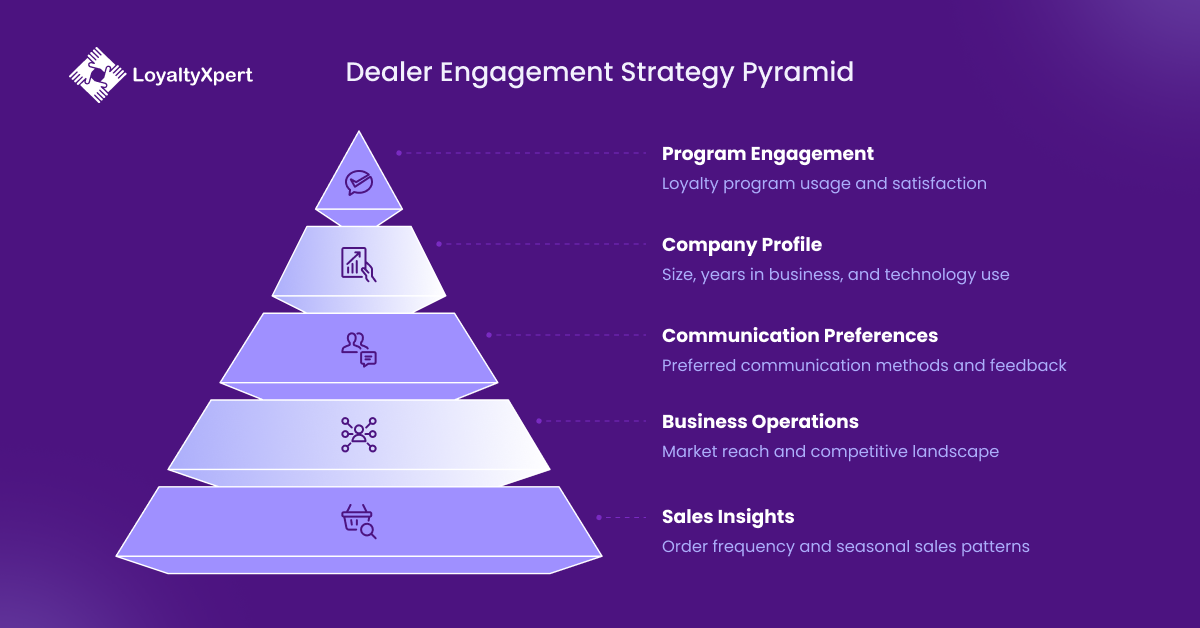
Dealer Loyalty Program Engagement Strategy Pyramid

How to Gather Dealer Intelligence

Collecting channel partner data starts with comprehensive onboarding surveys when dealers join your program. Regular business reviews help maintain updated information while building stronger relationships.

Your channel loyalty software can automatically track digital interactions. Here’s what to monitor:

  • Digital Platform Analytics: Track how dealers use your portal, which emails they open, and what training sessions they attend. This provides real-time insights into engagement patterns.
  • Transaction Analysis: Sales data reveals behavior patterns you might miss otherwise. Look for trends in ordering frequency, product preferences, and seasonal variations.
  • Event and Communication Tracking: Monitor participation in training programs, webinars, and business meetings. Response rates to different communication channels show preferences.
  • Third-Party Data Integration: Incorporate industry reports, credit information, and market intelligence to build comprehensive dealer profiles.

Fun Fact

Companies using predictive analytics in their dealer engagement strategies see 40% higher engagement compared to those relying solely on historical data.

How to Use Dealer Data to Improve Loyalty Programs

Raw data becomes valuable when you analyze it properly. Start with dealer segmentation – group your partners based on performance, behavior, and potential. This organization makes everything easier to manage and optimize.

  • Performance-Based Clustering: Group dealers based on sales volume, growth rate, and market performance metrics. This helps identify top performers, steady contributors, and those needing support.
  • Behavioral Segmentation: Categorize dealers based on engagement patterns, communication preferences, and loyalty program usage. Some prefer digital interaction while others want personal contact.
  • Predictive Analytics Applications: Identify which dealers might reduce their engagement or switch to competitors. These insights help you take proactive action before losing valuable partners.
  • Growth Opportunity Identification: Spot dealers ready for expansion support or those with untapped potential in their markets.

Performance pattern recognition reveals seasonal trends and product preferences. Understanding these patterns helps you plan better and provide more relevant support through your dealer loyalty program.

Advanced analytics techniques like machine learning can uncover hidden patterns in your data. Real-time analytics provide immediate insights for quick program adjustments.

Personalizing Your Dealer Loyalty Program Approach

Data insights enable you to create customized reward structures that match individual dealer capabilities:

  • Performance-Matched Incentives: If a dealer focuses on high-volume sales, offer volume-based incentives. If another specializes in premium products, provide exclusive access rewards.
  • Communication Strategy Optimization: Some dealers want monthly newsletters, others prefer quarterly calls. Timing matters just as much – avoid contacting dealers during their busiest seasons unless urgent.
  • Adaptive Support Programs: Provide training and assistance based on specific needs. Tech-savvy dealers might want advanced digital marketing support, while traditional dealers might prefer sales technique training.
  • Dynamic Incentive Optimization: Adjust your loyalty strategy for manufacturers based on ongoing performance data. Continuous optimization ensures your program stays relevant and effective.

Did You Know?

Manufacturers using channel partner data to personalize their dealer loyalty programs see 2.5x higher engagement rates compared to those using generic reward structures.

Essential Tech Tools for Modern Dealer Loyalty Programs

Modern loyalty program companies in India offer advanced channel loyalty software platforms that integrate multiple data sources into comprehensive dealer profiles. These app-based loyalty program solutions enable manufacturers to implement truly effective data-driven loyalty programs.

  • Integrated Data Management: Centralized systems consolidate dealer information from multiple sources, creating single views of each partner relationship.
  • Real-Time Analytics Dashboards: Monitor dealer engagement, performance trends, and program effectiveness instantly. Quick insights enable faster decision-making.
  • CRM Integration and Enhancement: Combine loyalty program data with traditional customer relationship management information for unified partner views.
  • Advanced Analytics and AI: Predict dealer ordering patterns, identify dealers at risk of switching suppliers, optimize dealer loyalty program rewards based on individual dealer preferences, and automate personalized incentive recommendations that drive dealer engagement strategies.

Data-driven loyalty program platforms also handle security and privacy requirements, ensuring dealer information stays protected while remaining accessible to authorized team members.

LoyaltyXpert’s Smart Dealer Approach

LoyaltyXpert’s platform goes beyond traditional point-based systems to deliver deep dealer insights and personalized dealer engagement strategies. The system combines transactional, behavioral, and demographic data for complete partner understanding.
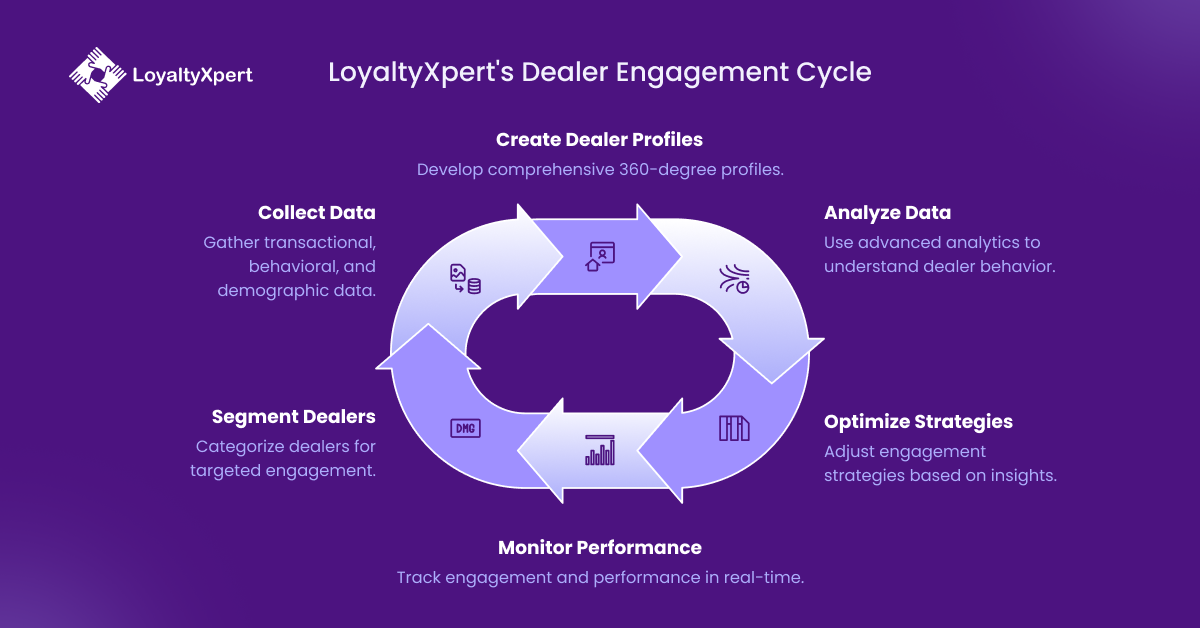
LoyaltyXpert's Dealer Loyalty Program Engagement Cycle

  • 360-Degree Dealer Profiles: Comprehensive views combining all data sources provide complete pictures of each dealer relationship and performance history.
  • Advanced Analytics Engine: Data-driven insights help understand dealer behavior patterns and optimize engagement strategies based on historical performance and trends.
  • Real-Time Performance Dashboards: Immediate visibility into dealer engagement, performance trends, and program effectiveness helps teams respond quickly to changes.
  • Advanced Segmentation and Targeting: Sophisticated dealer categories based on multiple variables enable precise targeting and personalized program delivery.

No CTA found.

Our platform seamlessly integrates with existing CRM and ERP platforms, ensuring dealer insights enhance rather than complicate existing workflows.

Key Metrics to Measure Loyalty Program Success

Track engagement metrics like program utilization rates and feature adoption across your app-based loyalty program. Business performance indicators include sales growth by segment and share of wallet expansion.

  • Engagement and Participation Metrics: Monitor active participation across dealer segments, feature adoption rates, and communication response levels. 
  • Business Performance Indicators: Track sales growth, market share expansion, and customer lifetime value improvements from loyalty program participation. 
  • Relationship Health Metrics: Measure dealer satisfaction scores, retention rates, and Net Promoter Scores to gauge program effectiveness.
  • Program Efficiency Measures: Calculate cost per engaged dealer, personalization effectiveness, and ROI from different program elements.

These numbers show whether your loyalty strategy for manufacturers actually drives meaningful business results.

Dealer Loyalty Program: Common Challenge and Solution

Even the best-planned data-driven loyalty program implementations face obstacles. Understanding these challenges upfront helps you prepare effective solutions and ensure smoother program adoption across your dealer network.

  • Data Quality and Completeness Issues

Challenge: Inconsistent or incomplete dealer information affects analysis accuracy and program personalization effectiveness. 

Solution: Implement incentives for accurate data sharing and establish regular validation processes to maintain information quality. Create data completion rewards within your dealer loyalty program.

  • Privacy and Trust Concerns

Challenge: Dealers may be reluctant to share sensitive business information due to competitive concerns or privacy worries. 

Solution: Address concerns with transparent communication about data usage and demonstrate clear value delivery through actionable insights. Show dealers exactly how their data improves their business outcomes.

  • Technology Adoption Resistance

Challenge: Some dealers feel uncomfortable with new digital tools and app-based loyalty program platforms, preferring traditional phone orders and paper-based tracking methods. 

Solution: Implement your channel loyalty software gradually, starting with simple features like digital catalogs before introducing advanced analytics. Provide hands-on training sessions and dedicated support to help dealers see immediate benefits from data-driven loyalty program features.

  • Integration Complexity Management

Challenge: Connecting loyalty platforms with existing business systems can be technically complex and time-consuming.

Solution: Partner with experienced channel loyalty software providers who specialize in seamless system integration and have proven track records with similar implementations.

The key to overcoming these challenges lies in patience, clear communication, and demonstrating tangible value at every step. Most resistance disappears when dealers see real benefits from participating in your loyalty strategy for manufacturers.

Making It Happen: Your Implementation Roadmap

Start with a foundation assessment over three months. Evaluate your current data collection methods and identify gaps. Plan your technology infrastructure and build stakeholder support.

  • Phase 1: Foundation and Assessment (Months 1-3)

Evaluate existing dealer data collection methods, assess technology needs, and build cross-functional support for initiatives.

  • Phase 2: System Implementation (Months 4-8)

Deploy your channel loyalty software, onboard dealers with baseline channel partner data collection, integrate with existing dealer management systems, and launch your app-based loyalty program with core features.

  • Phase 3: Analysis and Personalization (Months 9-12)

Create meaningful dealer segments, implement personalized strategies, and establish comprehensive performance monitoring.

  • Phase 4: Optimization and Scaling (Months 12+)

Refine programs based on feedback, implement advanced analytics, and scale successful approaches across your dealer network.
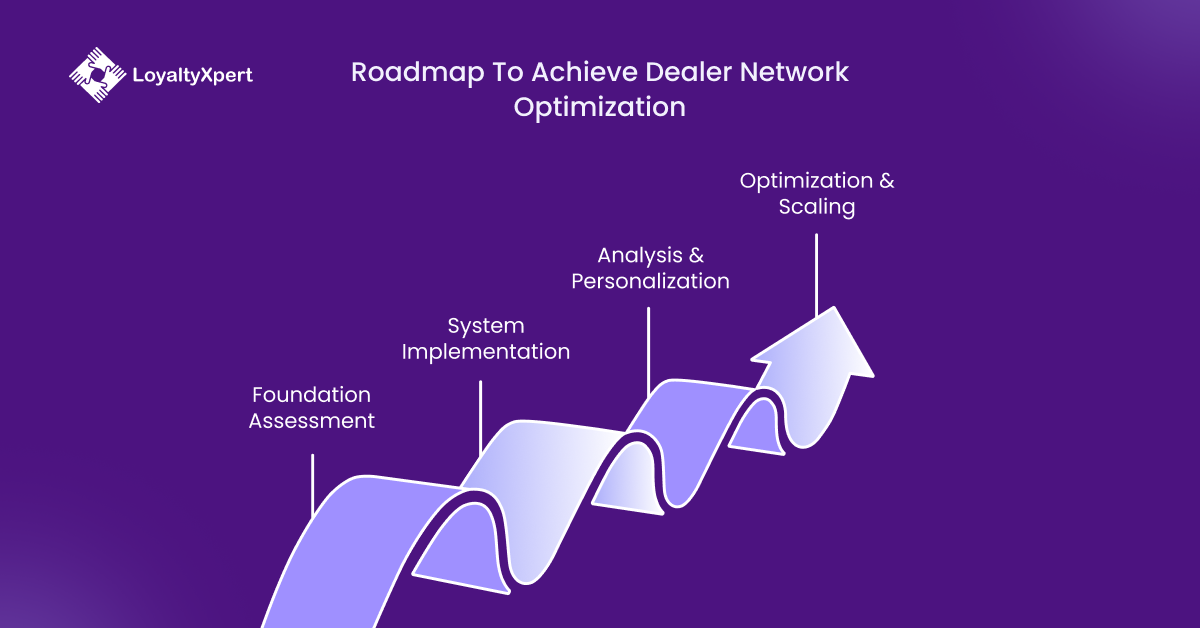
Roadmap To Achieve Dealer Loyalty Program Network Optimization

Key Success Factors

Focus on data governance with clear policies for collection, storage, and usage. Ensure dealer buy-in through transparent communication and demonstrated value. Build internal capabilities for platform management and data analysis.

Strengthen Dealer Relationships with Data Insights

Understanding dealers through comprehensive channel partner data collection transforms generic programs into strategic business accelerators. Effective dealer loyalty programs powered by data-driven loyalty program insights enable personalized experiences that drive engagement, increase sales, and build lasting partnerships through proven dealer engagement strategies.

The shift to data-driven loyalty program approaches requires investment in channel loyalty software and processes, but the returns include higher dealer retention, increased order frequency, and stronger dealer advocacy for your products. Loyalty strategy for manufacturers that leverage channel partner data consistently outperform generic approaches.

Transform your loyalty program strategy and build stronger partnerships that drive real business results. Contact us today or schedule a demo to discover how our advanced analytics platform can optimize your dealer engagement strategies and revolutionize your dealer relationships through data-driven insights.
6 Proven Ways To Improve Quality And Reduce Costs In Plywood Production

Every plywood manufacturer faces the same challenge: keeping plywood production cost under control while meeting rising quality standards. It’s like trying to fill a bucket with a hole in the bottom—without the right approach, costs keep climbing while quality suffers. Rising raw material prices, stricter customer demands, and competition from low-cost producers have made this balance even trickier to achieve.

Modern manufacturers need smart strategies that tackle both quality and cost issues at the same time. The good news? The most successful plywood companies have discovered that improving quality often leads to lower costs, not higher ones. When you reduce manufacturing costs through better processes, you usually end up with better products too.

Quality vs. Cost Challenges of Plywood Manufacturing

Plywood manufacturers today face pressure from multiple directions. Raw material costs keep rising, while customers expect better quality at competitive prices. Competition from overseas producers adds another layer of complexity, forcing manufacturers to find new ways to improve plywood quality without breaking the bank.

Traditional manufacturers often struggle with outdated equipment and processes that waste materials and time. Think of it like driving an old car that burns too much fuel—it gets you where you need to go, but at a much higher cost than necessary. Modern plywood manufacturing efficiency requires fresh thinking about how work gets done.

The solution isn’t choosing between quality or cost savings—it’s finding strategies that deliver both. The most successful companies have learned that these two goals work together when approached correctly.

Let’s explore six proven methods that can help your plywood production process become more efficient, profitable, and competitive.

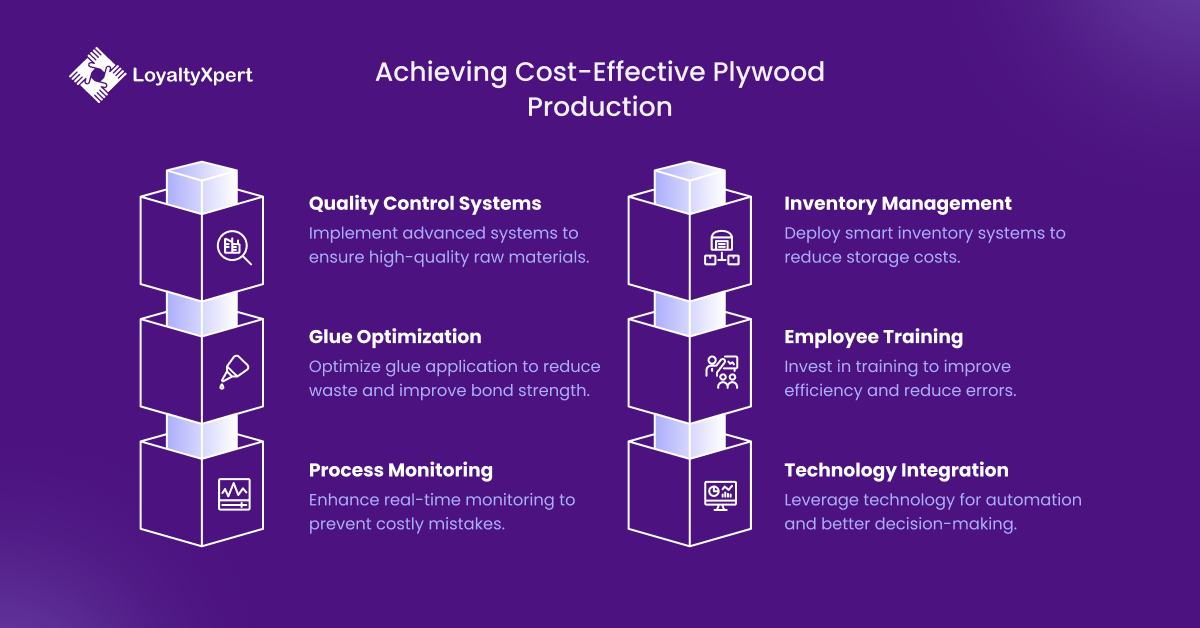
6 Proven Ways To Improve Plywood Production

Achieving Cost-Effective Plywood Production

1. Implement Advanced Raw Material Quality Control Systems

Your finished product quality depends heavily on the materials you start with. Poor quality veneers and lumber create problems throughout the entire plywood production process. Smart manufacturers now use detailed grading and sorting systems that catch defects before they become expensive problems.

Setting up moisture content controls at the intake stage prevents warping and bonding issues later. Working with suppliers to establish quality partnerships helps ensure consistent material quality while often reducing costs through bulk purchasing agreements.

These upfront quality checks might seem like extra work, but they’re actually cost-saving tips for manufacturers that pay dividends throughout production. Preventing defective materials from entering your process eliminates downstream waste and rework costs.

2. Optimize Glue Application and Adhesive Management

Glue application is where many manufacturers waste money without realizing it. Too much adhesive increases costs without improving quality, while too little creates weak bonds that lead to product failures and customer complaints.

Precise application techniques and regular equipment calibration ensure consistent coverage while minimizing waste. Some manufacturers save money by exploring alternative adhesive formulations that perform well at lower costs. Modern application systems can reduce manufacturing costs by 15-20% while actually improving bond strength.

Environmental regulations also favor efficient adhesive use. Minimizing waste helps with compliance while reducing disposal costs—another example of how quality improvements support cost reduction.

3. Enhance Production Process Monitoring and Control

Real-time monitoring during pressing operations prevents costly mistakes before they happen. Temperature and pressure variations that go unnoticed can ruin entire batches, creating expensive waste and delays.

Automated quality checkpoints throughout production catch problems early when they’re easier and cheaper to fix. Statistical process control helps identify trends that could lead to quality issues, allowing for preventive action rather than reactive fixes.

Quality control in plywood industry works best when it’s built into the process rather than added at the end. Modern monitoring systems provide the data needed for smart decision-making and continuous improvement.

4. Deploy Smart Inventory and Material Management

Just-in-time inventory systems reduce storage costs while ensuring materials stay fresh and defect-free. Digital tracking of material flow helps identify waste points and optimization opportunities throughout the plywood production process.

Smart storage condition management protects material quality, preventing deterioration that leads to waste and rework. Integration with supplier systems creates seamless operations that reduce handling costs and minimize inventory carrying expenses.

Waste stream analysis often reveals valuable recycling opportunities. Materials that were once discarded can often be repurposed, turning waste costs into revenue streams.

5. Invest in Employee Training and Quality Culture Development

Well-trained employees make fewer mistakes, work more efficiently, and contribute valuable improvement ideas. Comprehensive quality training programs help staff understand how their work affects the final product and company profitability.

Cross-training initiatives create operational flexibility that reduces overtime costs and improves production scheduling. When employees understand multiple processes, they can spot problems and opportunities that specialists might miss.

Quality metrics and incentive programs align employee interests with company goals. Staff who understand how their performance affects quality and costs naturally focus on manufacturing cost reduction tips and process improvements.

6. Leverage Technology Integration and Automation

Automated cutting and sorting systems eliminate human error while increasing throughput. Quality inspection technology using computer vision and sensors catches defects that human inspectors might miss, especially during high-volume production runs.

Production planning and scheduling software optimizes workflow to minimize setup time and material waste. Integration of quality management systems with production control creates seamless information flow that supports better decision-making.

Real-time reporting and analytics dashboards give managers the visibility needed to spot problems quickly and make data-driven improvements. These systems become especially valuable for companies also implementing app-based loyalty programs to track customer satisfaction and feedback. In fact, 79% of consumers are more inclined to recommend businesses with strong loyalty programs.

The Role of Quality Management Systems in Plywood Production

Quality management systems provide the foundation for sustainable improvements in both quality and cost performance. When properly implemented, these frameworks create consistent processes that eliminate waste while ensuring reliable product standards.

Key components of effective quality management:

  • ISO 9001 Implementation: Provides structured frameworks for consistent improvement and reduces variability that leads to waste and quality problems.
  • Continuous Improvement Methodologies: Help manufacturers systematically reduce manufacturing costs while enhancing product quality through data-driven decisions.
  • Customer Feedback Integration: Ensures improvements align with market needs and measures customer satisfaction effectively.
  • International Compliance Benefits: Opens doors to new markets and premium pricing opportunities, making quality investments pay for themselves through increased revenue.

These quality management approaches work together to create sustainable improvements that benefit both operational efficiency and customer satisfaction.

Did you know?

For an average manufacturing company, the “Cost of Poor Quality” (COPQ) can drain as much as 20% of total sales revenue!

LoyaltyXpert’s Approach to Manufacturing Quality Management

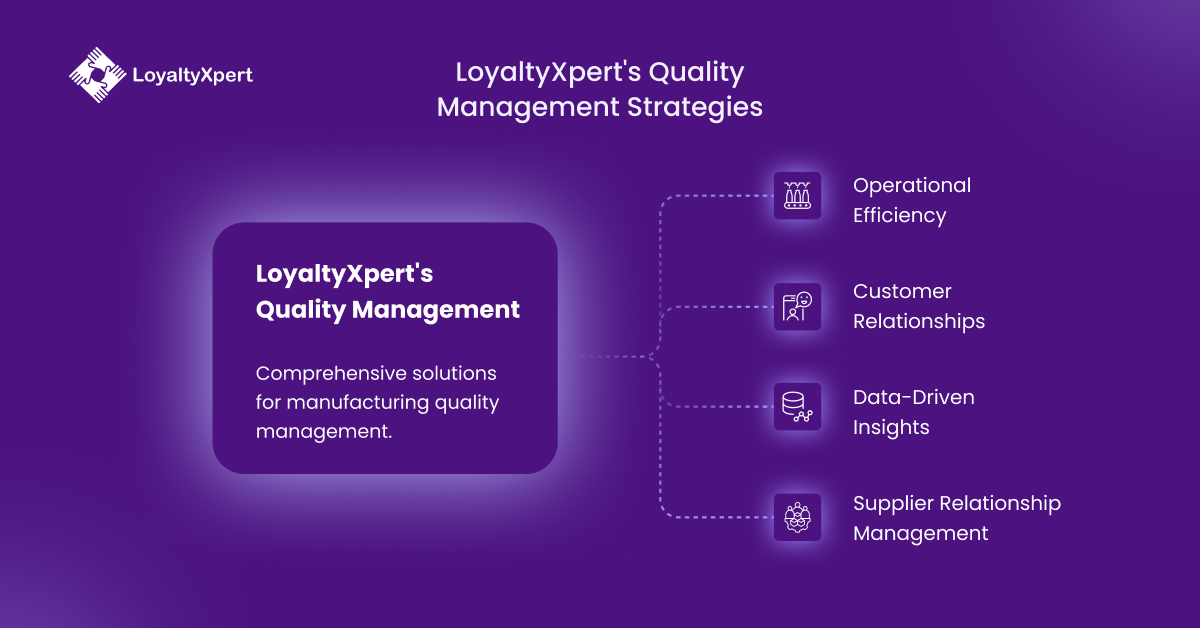
LoyaltyXpert offers specialized solutions for manufacturers looking to improve both operational efficiency and customer relationships. Our platform integrates with production management systems to provide comprehensive quality tracking and reporting features.

LoyaltyXpert's Quality Management Strategies in Plywood Production

Staff performance monitoring and incentive programs help create a culture focused on plywood manufacturing efficiency. Customer feedback integration and analysis tools provide insights that guide improvement efforts and product development decisions.

The platform’s data-driven insights support continuous improvement initiatives while supplier relationship management features help maintain quality standards throughout the supply chain. For loyalty program companies in India and global markets, these integrated approaches create competitive advantages that are difficult for competitors to match.

No CTA found.

Getting Started with Quality and Cost Improvements

Beginning your quality and cost improvement journey requires a systematic approach that builds momentum while delivering early wins. The key is focusing your efforts where they’ll have the biggest impact on both quality and profitability.

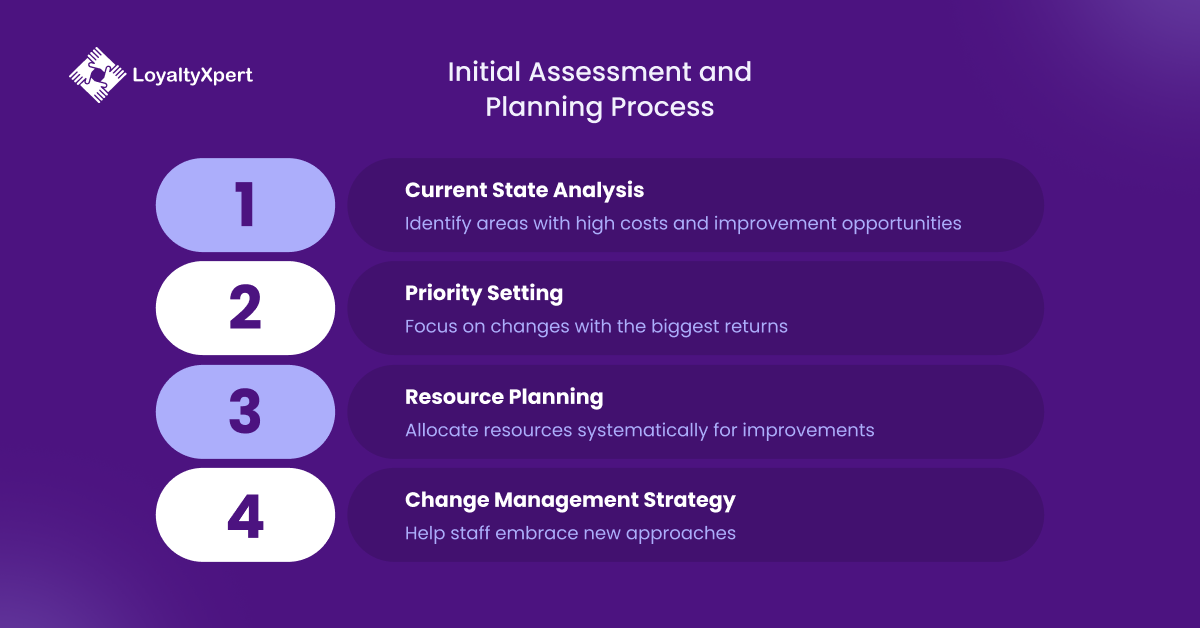
Initial assessment and planning:

  • Current State Analysis: Identify areas where quality problems create highest costs and look for improvement opportunities with measurable impact.
  • Priority Setting: Focus limited resources on changes delivering biggest returns while balancing impact potential with implementation feasibility.
  • Resource Planning: Allocate budget and personnel systematically to ensure improvements happen in logical sequence rather than randomly.
  • Change Management Strategy: Help staff embrace new approaches through clear communication about benefits and proper training support for smooth transitions.

Initial Assessment and Planning Process in Plywood Production

Starting with a solid foundation ensures that your improvement efforts build on each other rather than working in isolation.

Common Implementation Challenges and Solutions

Every manufacturing improvement initiative faces obstacles, but understanding common challenges helps you prepare effective solutions. Success comes from anticipating these issues and having practical strategies ready.

Common implementation hurdles:

  • Change Resistance Management: Normal in traditional manufacturing environments but manageable through proper communication, training, and consistent leadership support.
  • Capital Investment Concerns: Can seem intimidating but focusing on high-impact, low-cost improvements first builds momentum and provides funds for larger investments.
  • System Integration Complexity: Requires careful planning but shouldn’t prevent progress; start with standalone improvements while planning for future integration.
  • Training and Development Needs: Should be viewed as investments rather than costs since well-trained employees generate returns through improved efficiency and reduced waste.

With proper planning and realistic expectations, these challenges become manageable steps in your improvement journey rather than insurmountable obstacles.

Industry Best Practices and Benchmarking

Leading plywood manufacturers have discovered that cost-saving tips for manufacturers often come from sharing knowledge and benchmarking against industry leaders. Learning from others’ successes accelerates your own improvement efforts while avoiding common pitfalls.

Proven industry approaches:

  • Knowledge Sharing Benefits: International standards and certification requirements provide tested improvement roadmaps that have been proven across many companies.
  • Sustainable Production Trends: Create new opportunities for both cost reduction and quality improvement while supporting premium pricing through responsible manufacturing.
  • Technology Adoption Patterns: Reveal proven approaches across different market segments that can be adapted to your specific situation.
  • Regional Customization: Flexible approaches that can be customized to local conditions while maintaining overall effectiveness across different markets.

Building Quality Into Your Manufacturing Future

These six strategies work best when implemented together rather than separately. Quality control in plywood industry operations and cost management support each other when approached systematically.

Companies that embrace integrated approaches gain competitive advantages that are difficult for rivals to match. The plywood production process will continue evolving, but the fundamental principle remains: smart manufacturers deliver better products at lower costs through systematic improvement.

Manufacturers who evaluate their current approaches and implement proven improvements now will be best positioned for future success. Request a demo or contact us to learn how our manufacturing solutions can help you implement these strategies while building stronger customer relationships through innovative loyalty programs.

Why a Field Sales Tracking App Is the Smartest Move for Your Sales Team Right Now!

Have you ever had your field sales manager call the same rep for the third time asking, “Where are you? Have you finished the client visit yet?” Meanwhile, that rep is stuck in traffic between appointments, frustrated about constant check-ins. Managing field sales teams without proper visibility has become like trying to navigate a highway blindfolded. Field sales tracking apps are changing this dynamic completely, transforming how businesses monitor, manage, and optimize their field sales operations.

Limited visibility into supply chains and field operations leads to inefficiencies, with McKinsey reporting that 45% of companies have little to no real-time tracking, contributing to significant productivity losses. Furthermore, field sales teams spend nearly 24% of their time on administrative tasks rather than selling—time that could be redirected toward revenue-generating activities with the right sales tracking software in place.

Modern field sales apps go far beyond basic location monitoring. They provide comprehensive visibility, accountability, and data-driven insights that help sales managers optimize team performance while giving field reps the tools they need to succeed. Whether you’re managing retail clients, B2B accounts, or teams implementing loyalty programs, these applications deliver the transparency and efficiency that traditional methods simply can’t match.

Why Traditional Sales Tracking Apps Are Failing

Sales teams today face new challenges that old ways of working can’t solve. Long sales cycles mean building strong relationships with clients over months or even years. At the same time, managing remote and field teams has become harder than ever. Your sales reps might be visiting clients in different cities, giving product demos, or setting up new systems—all while managers have no real-time visibility into what’s happening.

Rising costs to find new customers put pressure on every sales meeting to deliver results. Companies using advanced sales data and analytics are setting higher standards, leaving businesses that still rely on weekly reports and manual tracking at a clear disadvantage.

Did You Know? Sales teams using mobile sales tracking technology reduce reporting time by up to 75%, freeing 1–2 hours daily for selling, helping reps reclaim 20% of sales capacity by reducing manual contract work.

What Is a Sales Tracking App and How Does It Work?

A sales tracker functions as the central nervous system for your field sales operations. Unlike basic CRM systems that primarily store customer data, these field sales applications provide real-time monitoring of sales activities, location tracking, and performance analytics all within a mobile-first platform designed for field teams.

These mobile sales tracking applications integrate seamlessly with existing CRM and business systems, creating a unified view of customer interactions, sales activities, and performance metrics. When your team is working with clients on implementing technology solutions or loyalty management platforms, the sales force tracker captures every meeting, tracks time spent at each location, and logs follow-up activities automatically.

Real-time data collection capabilities mean that managers can see immediately when reps arrive at client locations, how long they spend in meetings, and what outcomes result from each visit. The field sales app becomes an extension of their daily routine rather than an additional burden, especially when coordinating implementations for businesses across various industries including loyalty program companies in India and other markets.

Top Benefits of Implementing a Sales Tracking App

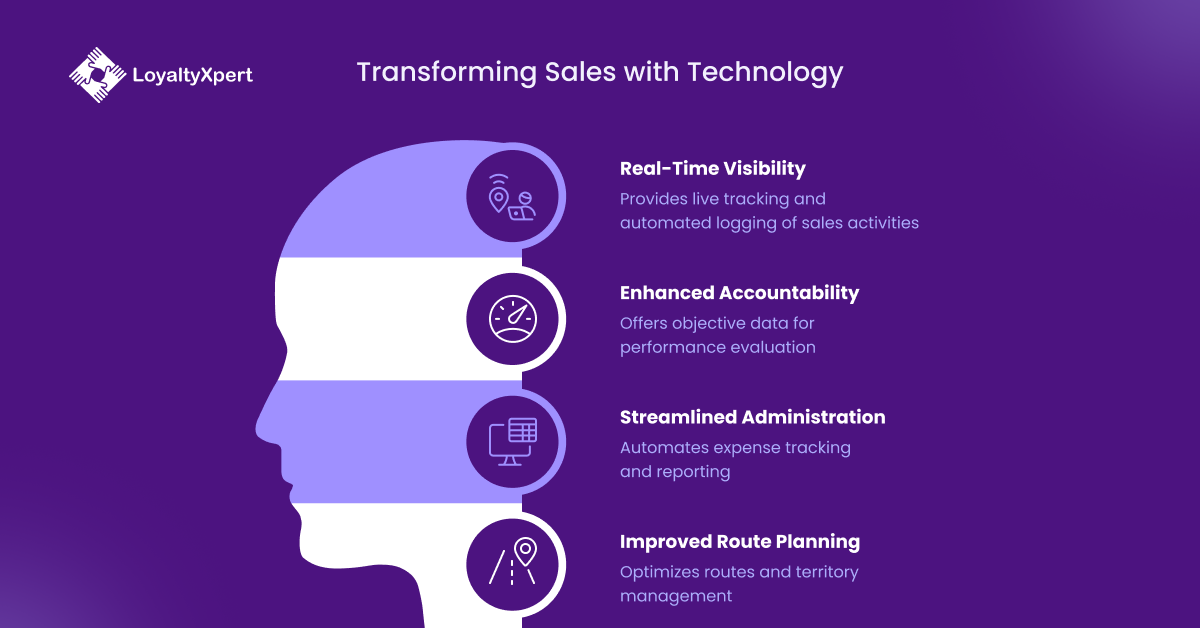
Modern sales tracking software addresses these challenges by providing comprehensive solutions that transform how sales teams operate. The most effective implementations deliver measurable improvements across four key areas that directly impact revenue and efficiency.

Transforming Sales with Sales Tracking App Technology

Real-Time Visibility Into Field Sales Activities

Sales performance tracking applications provide complete visibility through live location tracking and automated activity logging. The sales tracker automatically logs arrival times, tracks meeting duration, and prompts reps to record key discussion points.

Example: Imagine a sales manager noticing that their top performer consistently spends longer at client meetings. The tracking data reveals they’re taking time to understand client pain points thoroughly, helping the manager coach other team members to adopt similar approaches.

Enhanced Accountability and Performance Management

Sales tracking software functions like fitness trackers for your sales team—providing objective data about daily activities and performance that eliminates subjective evaluation. The field sales application reveals patterns that might not be obvious through traditional reporting, such as which activities correlate with successful outcomes.

Example: A sales rep struggling with conversions discovered through their tracking data that successful colleagues make follow-up calls within 24 hours of meetings, while they typically wait 3-4 days. This insight helps them adjust their approach immediately.

Streamlined Administrative Processes

The administrative burden decreases dramatically with proper sales force tracker systems. Automated expense tracking and reimbursement calculations eliminate manual reporting, while the mobile sales tracking app records location, time, and purpose automatically.

Example: Instead of spending Sunday evenings compiling expense reports and mileage logs, sales reps can focus on preparing for the upcoming week’s client meetings while the system handles all administrative tracking automatically.

Improved Route Planning and Territory Management

GPS-based route optimization helps sales teams maximize efficiency and reduce travel costs. The sales tracker suggests optimal routes between client appointments, while territory mapping ensures balanced coverage across all prospects and clients.

Example: A field sales rep who typically visits 4 clients per day discovers that optimized routing allows them to comfortably visit 6 clients in the same timeframe, creating more opportunities for relationship building and deal closure.

These benefits work together to create a comprehensive improvement in sales team performance, leading to higher productivity, better client relationships, and increased revenue generation.

LoyaltyXpert’s Sales Tracking Application: A Comprehensive Solution

LoyaltyXpert’s sales tracking app addresses the unique needs of businesses managing complex field sales operations across various industries. The application goes beyond basic tracking to provide comprehensive tools for performance optimization and team management.

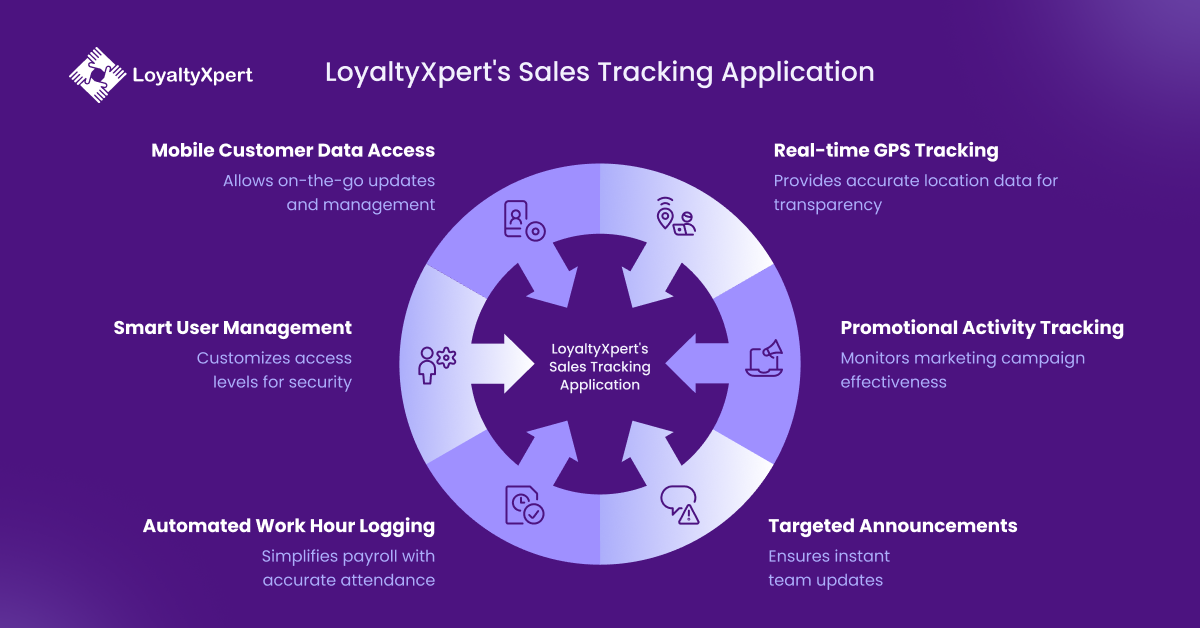
Core features include:

  • Real-time GPS tracking with timestamped location logs for complete transparency
  • Promotional activity tracking and campaign monitoring for marketing effectiveness
  • Targeted announcements and communication tools for instant team updates
  • Automated work hour logging and attendance management for accurate payroll
  • Smart user and role management with customized access levels
  • Customer data management accessible from mobile devices for on-the-go updates

Promotional activity tracking and campaign monitoring features help managers understand which marketing initiatives drive the best results. If your team is promoting new services across different territories, the sales tracker tracks which messages resonate most effectively with different client segments.

The automated work hour logging and attendance management system eliminates disputes about time tracking while providing accurate data for payroll and performance evaluation. Smart user and role management capabilities ensure that sensitive information about clients and their implementations remains secure.

LoyaltyXpert's Sales Tracking App

LoyaltyXpert’s comprehensive approach combines powerful technology with practical business insights, making it easier for companies to implement effective sales tracking software that delivers immediate value while building long-term competitive advantages.

No CTA found.

Key Features to Look for in a Sales Tracking App

When evaluating sales tracking software for your business, prioritize these essential capabilities:

  • Mobile-first design with offline capability for areas with poor cellular coverage
  • Real-time GPS tracking and geofencing for automatic location detection
  • Automated reporting and analytics for actionable performance insights
  • Integration capabilities with existing CRM and business systems
  • Customizable dashboards and user roles for different access levels
  • Security features and data protection for sensitive client information

The sales force tracker should automatically detect when reps arrive at client locations and prompt them to log relevant information about their visits. Scalability for growing sales teams ensures that your investment remains valuable as your business expands.

Best Practices For Implementing Sales Trackers Apps

Successful sales tracking software implementation isn’t just about choosing the right technology—it’s about ensuring your team embraces and maximizes its potential. The following best practices help organizations avoid common pitfalls while accelerating adoption and results.

  • Clear Communication About Objectives: Teams need to understand how the sales tracker will help them become more effective rather than feeling like they’re being monitored unnecessarily.
  • Set Specific Goals and Success Metrics: Establish benchmarks for measuring impact on sales performance, whether tracking client retention improvements or monitoring territory coverage efficiency.
  • Ensure Team Buy-in Through Proper Training: Sales reps need to see how the field sales application makes their jobs easier by demonstrating time savings and enhanced earning potential through better performance.
  • Establish Data Privacy and Usage Policies: Protect both your company and clients while ensuring compliance with relevant regulations and maintaining trust through transparent communication about data usage.

These best practices create a foundation for successful sales tracker adoption that transforms field sales operations. When teams understand the value and feel supported throughout the implementation process, the technology becomes a powerful enabler rather than an obstacle to productivity.

The Smart Move Your Competition Hasn’t Made Yet

The evidence is clear: sales tracking apps provide essential capabilities that modern sales teams need to succeed. From real-time visibility and enhanced accountability to streamlined administration and data-driven insights, these applications transform field sales management from guesswork into precision.

LoyaltyXpert’s comprehensive field sales application delivers all these benefits while integrating seamlessly with various business systems and loyalty program implementations. Whether your team serves enterprise clients, retail businesses, technology companies, or specialized industries, this technology provides the visibility and efficiency needed to exceed performance goals.

The question isn’t whether your sales team needs a sales force tracker—it’s how quickly you can implement one to start seeing results. Companies that continue relying on traditional field sales management methods will find themselves increasingly disadvantaged compared to competitors who leverage these powerful tools to optimize their sales operations.

Request a demo today to see how LoyaltyXpert’s sales tracking software can transform your field sales operations, or contact us to experience the immediate impact on your team’s productivity and performance.

5 Must-Know Benefits of Visiting an Industrial Exhibition in 2025

There’s something uniquely irreplaceable about the energy of an industrial exhibition. The energy of seeing machinery in action, testing technologies firsthand, and discussing ideas face-to-face with experienced professionals remains unmatched. After a few years of virtual substitutions and hybrid formats, 2025 brings a strong return to well-organized, in-person exhibitions, especially within the industrial sector.

These events are no longer limited to just networking or showcasing equipment. For manufacturers, suppliers, and channel-focused businesses, exhibitions are proving to be vital platforms for market learning, partner development, and direct engagement with decision-makers. The purpose has matured, and the benefits have grown deeper.

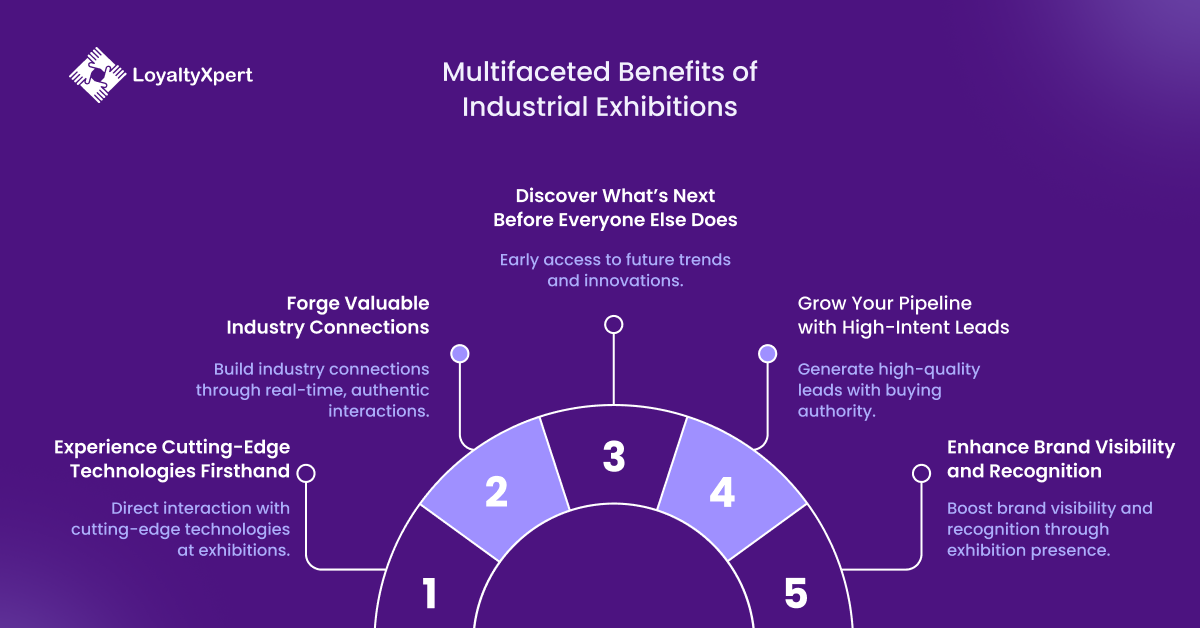
Here are five key reasons why being present at an industrial exhibition in 2025 can make a measurable difference for your business:

Multifaceted Benefits of Industrial Exhibitions

Benefit 1: Experience Cutting-Edge Technologies Firsthand

Industrial innovation moves fast, but it can be difficult to truly assess a technology’s value through slideshows or online videos. Exhibitions bridge that gap by placing you face-to-face with the tools, systems, and platforms shaping the future of production, automation, and efficiency.

At these events, professionals aren’t just learning—they’re interacting. Live demonstrations and hands-on sessions provide context around implementation, scale, and compatibility. Enterprises are better able to visualize how new systems could fit into their own operations and what investment levels make sense for their growth roadmap.

Here’s what visitors typically gain from direct exposure at industrial exhibitions:

  • View real-time demonstrations of smart machinery, robotics, CNC systems, and flexible automation tools.
  • Engage in product comparisons on the floor to assess accuracy, speed, and usability.
  • Discuss technical specifications and challenges with product developers, engineers, and support teams.
  • Test equipment in person to evaluate performance under real-world usage.

Benefit 2: Forge Valuable Industry Connections

The contacts made at exhibition markets often lead to productive conversations, joint ventures, and trusted supplier relationships. These events gather professionals who understand the language of manufacturing, the nature of industrial processes, and the reality of operational needs. That makes every discussion sharper and more relevant.

Unlike digital outreach, these connections are formed in real-time, based on authentic interaction. Many visitors use the opportunity to explore new suppliers, meet regional partners, and evaluate potential channel or integration collaborations.

Key connection-building opportunities at exhibitions include:

  • One-on-one discussions with business owners, technical consultants, and operations managers.
  • Exploring new vendor partnerships and solutions not previously on your radar.
  • Discovering potential collaborators for logistics, service contracts, or local distribution.
  • Building peer-level connections that extend beyond the event into long-term business value.

Benefit 3: Discover What’s Next Before Everyone Else Does

The pace of change in industrial sectors has increased, with advancements in automation, sustainability, and digital transformation entering the market faster than ever. Exhibitions offer a window into what manufacturers, software providers, and toolmakers are preparing for the near future.

Rather than learning about a trend months after it’s launched, visitors can explore it while it’s being introduced. Many product launches, concept tools, and pilot platforms make their first appearance at these exhibitions. For businesses that rely on early adoption or staying competitive in lean manufacturing, this head start is vital.

No CTA found.

By attending, you gain early access to:

  • New product innovations across sheet metal forming, process automation, and control systems.
  • Interactive sessions on topics like connected factories, machine learning in operations, and smart inventory flow.
  • First looks at redesigned or upgraded versions of popular industrial platforms.
  • Presentations and panel talks offering practical implementation advice for emerging technologies.

Benefit 4: Grow Your Pipeline with High-Intent Leads

Most visitors to industrial exhibitions attend with a purpose—they’re researching solutions, comparing vendors, or reviewing potential investment options. That makes these environments particularly valuable for demand generation and pipeline development.

The quality of leads gathered at exhibitions often exceeds that from digital outreach. You are engaging with people actively working through buying decisions, many of whom influence or control procurement within their organizations. The right conversation at the exhibition booth can quickly evolve into a qualified sales opportunity.

Did you know?

Around 81% of trade show attendees hold buying authority, making them strong candidates for business partnerships or conversions.

Lead generation opportunities you can expect:

  • Immediate engagement with professionals actively exploring a specific solution or product category.
  • On-the-spot data collection through QR scans, badge tracking, or demo exhibition participation.
  • Direct contact with key decision-makers who typically remain inaccessible through standard outreach.
  • Easier lead qualification based on real-time discussions and use-case alignment.

Benefit 5: Enhance Brand Visibility and Recognition

Industrial exhibitions are more than just lead-generation environments—they’re places where brands make an impression. From launching a new product to reinforcing your presence in a key market, the exposure gained from a strong exhibition presence can extend well beyond the event itself.

The setting allows you to demonstrate not only what your product does, but also how your company thinks, through branding, messaging, and interaction. Visitors remember who explained things clearly, who engaged sincerely, and who looked prepared. That visibility often opens future doors you weren’t planning for.

Did you know?

88% of businesses participate in trade shows to raise brand awareness, making it one of the top strategic goals for industrial exhibitors.

Here’s how presence at an exhibition elevates your brand:

  • A well-designed and informative exhibition booth serves as a visual anchor, drawing attention from across the hall.
  • Engaging with visitors face-to-face builds familiarity and strengthens market perception.
  • Distributing branded material, digital resources, or interactive content creates touchpoints that extend post-event.
  • Word-of-mouth momentum and social mentions from attendees help boost long-term visibility in your category.

LoyaltyXpert’s Channel Loyalty Program: Turning Exhibition Contacts into Partnerships

After a successful exhibition, the real opportunity lies in how efficiently you follow up and build on those new contacts. Whether it’s a conversation that showed strong interest or a quick scan of a visitor badge, these moments hold long-term value—if acted upon with the right tools. Exhibitions help you gather intent-rich leads; LoyaltyXpert helps you turn them into real business outcomes.

The following are the ways LoyaltyXpert’s platform supports your post-exhibition strategy and relationship-building goals:

  • Personalized reward experiences

Create tailored reward structures that reflect the preferences and behaviors of your exhibition-acquired leads. By segmenting partners and contacts based on their engagement, you can deliver meaningful incentives that keep them involved beyond a single interaction.

  • Omnichannel communication and engagement

LoyaltyXpert’s system allows you to engage contacts across multiple touchpoints such as email, mobile, and distributor platforms, without losing consistency. This helps maintain momentum from the first meeting to the point of conversion and beyond.

  • CRM system integration

Exhibition-generated leads can be immediately synced with your existing CRM, eliminating data gaps and manual effort. From there, you can automate reward-based follow-ups or route hot leads to your sales team for timely outreach.

  • Real-time insights and performance tracking

Use analytics dashboards to measure engagement, track reward redemptions, and optimize your loyalty strategy based on what’s actually working. This gives you control over retention efforts with full visibility.

  • White Label Loyalty flexibility

Deliver loyalty programs under your own brand—customized logos, languages, colors, and region-specific rules. This not only strengthens brand recall from the exhibition but reinforces trust and professionalism across your entire loyalty journey.

Your Next Strategic Step

Industrial exhibitions in 2025 are more than scheduled events on a calendar—they’re real opportunities to learn what’s working in the field, engage with serious buyers, and gain visibility where it counts. They give your team the space to evaluate technologies firsthand, understand competitor strategies, and connect with exhibition industry professionals who influence decisions. Every conversation, every demo, and every insight gathered can become a meaningful step toward business growth—when followed through effectively.

LoyaltyXpert helps you bridge that gap—transforming leads into engaged, returning partners through structured loyalty programs and personalized rewards.

Start building stronger post-exhibition relationships—book a free demo today.

SaaS Based Loyalty Vs. In House Loyalty: What is best for you?

As businesses double down on retention and customer lifetime value, loyalty programs have emerged as a central pillar of modern customer strategy. However, the decision on how to run those programs has grown more complex. Companies at different stages and with varying internal capabilities now face a critical choice: build an in-house loyalty infrastructure from scratch or implement a SaaS based loyalty platform that’s already built to scale.

In-house systems offer full control but require deep technical resources, extended development timelines, and continuous investment. SaaS loyalty platforms, on the other hand, reduce operational friction, offer rapid deployment, and support complex reward systems without the long lead times.

The decision no longer revolves solely around price or control. It involves understanding where your business stands, how quickly you need to launch, and what kind of operational efficiency you expect in the long run. 

Let’s unpack the real differences between SaaS based loyalty and In-house loyalty with practical clarity.

Why SaaS-Based Loyalty Programs Are Gaining Popularity

Loyalty programs have evolved from static point-collection tools to dynamic systems that drive recurring revenue, engagement, and retention. Among available options, SaaS-based loyalty platforms have emerged as the preferred choice for businesses looking to deploy high-impact solutions without deep infrastructure investments or long timelines.

SaaS loyalty solutions have gained traction for several reasons:

  • Rapid launch timelines that enable businesses to go live within weeks rather than months
  • Pre-built workflows and logic engines designed for customer, channel, and influencer programs
  • Easy configuration of rules, tiers, and rewards without development dependency
  • Consistent feature upgrades driven by market feedback and product evolution
  • Integrated reporting and analytics dashboards that enable marketers to measure ROI quickly
  • Access to multilingual and mobile-friendly interfaces that improve adoption across user segments

For many brands, the appeal lies in the ability to roll out robust loyalty experiences without leaning heavily on IT or product teams. SaaS providers manage the backend infrastructure, updates, and security, allowing marketing and CX teams to focus on strategy, segmentation, and personalization. 

Did you know?

The global loyalty management market is projected to grow from $15.19 billion in 2025 to $41.21 billion by 2032, at a CAGR of 15.3%, with SaaS-based platforms driving much of this momentum due to their speed, scalability, and ease of deployment.

Building Loyalty In-House – Advantages and Limitations

Creating a loyalty platform in-house can seem like the best route for companies with strict governance requirements or highly specific workflows. And in certain contexts, it is. But the reality of building and maintaining an in-house system often reveals far more complexity than most teams anticipate.

Why some companies choose to build in-house:

  • Full control over architecture, features, and data handling
  • Custom-tailored rewards logic and UI/UX specific to their audience
  • Ability to embed loyalty directly into proprietary software or internal platforms

However, these perceived advantages come with significant trade-offs:

  • Development Cost and Timelines: Building an industry loyalty platform from scratch takes months, sometimes over a year. Development costs are often underestimated, especially when factoring in testing, integration, and future-proofing for scale or new channels.
  • Maintenance Overhead: Once launched, the real work begins. Teams must handle everything from security patches to server uptime, reward logic changes, data syncing, and campaign management. This diverts engineering bandwidth from product innovation to platform support.
  • Limited Agility: Updating features, redesigning rules, or running new campaigns usually means going back to the dev queue. This slows down marketing responsiveness, making it harder to adapt quickly to new market opportunities or customer insights.
  • Hidden Costs: Beyond staffing and development, in-house programs often carry hidden costs like training internal teams, managing downtime, integrating third-party tools, and ensuring compliance with ever-evolving data laws.

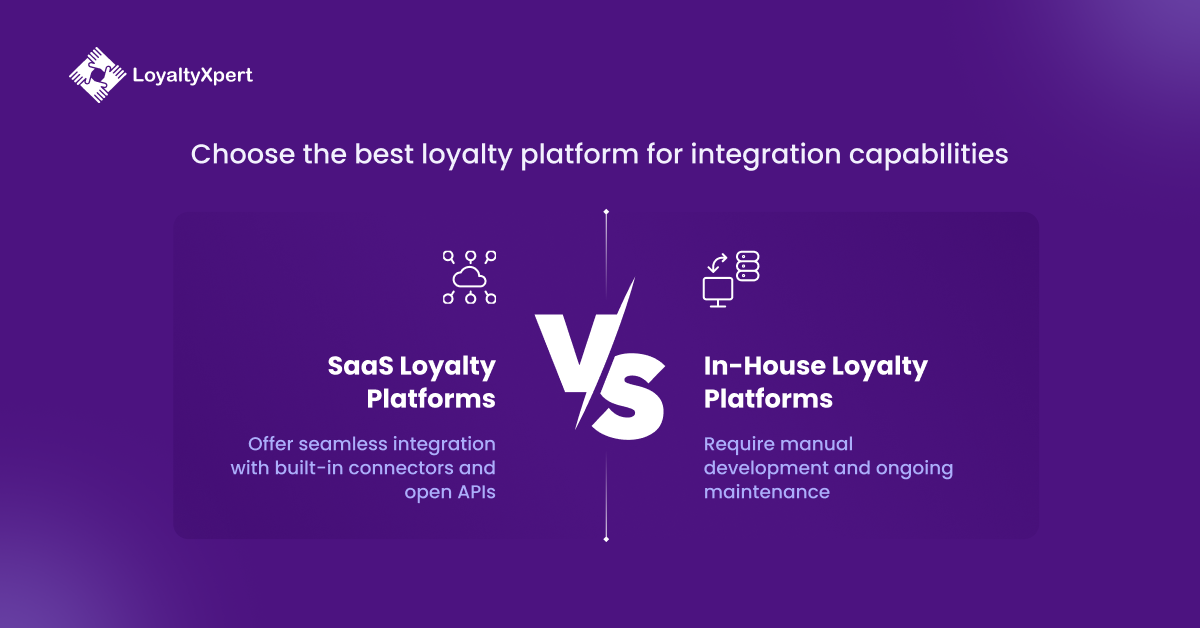
Integration Capabilities – Why SaaS Based Loyalty Platforms Work Better with Your Stack

Choose the best Saas Based loyalty platform for integration capabilities

Loyalty programs can only perform well when they operate in sync with the rest of the business ecosystem. Data flows between departments, tools, and customer touchpoints must remain uninterrupted to ensure that every action, including purchase, referral, or engagement, feeds directly into a broader strategy. Integration, therefore, becomes a critical pillar in the success and scalability of any loyalty initiative.

SaaS loyalty platforms are engineered to support this kind of operational alignment from the start. Their architecture is designed to plug into a business’s existing tech stack, streamlining implementation across multiple departments and systems without complex custom development.

The following are key reasons loyalty SaaS platforms offer superior integration capabilities:

  • Built-in connectors for major CRM and POS systems that sync customer data, transactions, and communication triggers automatically
  • Open APIs and developer toolkits that reduce development cycles and enable smooth deployment within both modern and legacy systems
  • Real-time communication between loyalty systems and marketing automation tools to personalize campaigns based on behavioral data
  • Pre-configured compatibility with eCommerce platforms that ensures accurate tracking of orders, redemptions, and customer journeys

In contrast, integration with in-house loyalty platforms requires significantly more time, development bandwidth, and ongoing upkeep. Internal teams are responsible for creating each connector manually, managing security protocols, and ensuring stable data synchronization as systems evolve. This adds technical weight and increases the likelihood of data mismatches, delays, or compatibility issues during scale-ups or system upgrades.

SaaS loyalty solutions, such as the one offered by LoyaltyXpert, remove integration barriers through a modular infrastructure that streamlines internal systems and strengthens customer engagement.

No CTA found.

SaaS vs In-House Loyalty – Which Works Best for Your Business Type?

Operational trade-offs between choosing SaaS-based loyalty systems and in-house builds become clearer when mapped against execution speed, control, cost exposure, and adaptability. The breakdown below helps identify the stronger fit by function.

Evaluation Criteria SaaS Loyalty Platform In-House Loyalty Platform
Deployment Speed Pre-built modules and admin dashboards support quick go-to-market. Most businesses can launch in under 4–6 weeks. Development timelines often stretch beyond 6–12 months, depending on customization and resource availability.
Tech Resource Requirement Requires minimal ongoing IT involvement. Marketing or CX teams can manage campaigns, segments, and rewards directly through the UI. Requires a dedicated team of engineers, QA analysts, DevOps, and support personnel to build, launch, and maintain the program infrastructure.
Upfront Investment No infrastructure or coding costs. Pricing is predictable through monthly or annual subscriptions based on features and usage. Requires significant capital investment in software development, infrastructure, data management tools, and testing environments.
Security and Compliance Managed by the SaaS provider, with protocols in place for data encryption, backups, incident response, and compliance with privacy regulations. Security oversight rests entirely with the internal team, including compliance enforcement, breach management, and data governance infrastructure.
Scalability Easily supports multiple user types, loyalty tiers, and geographies without changing the underlying architecture. Scaling loyalty models across new markets or segments requires rework, manual deployment, and extended testing, especially for multi-region rollouts.

How LoyaltyXpert Simplifies Loyalty – Your SaaS Loyalty Management Platform

Running a loyalty program shouldn’t feel like running an entire IT department. LoyaltyXpert gives businesses the ability to design and manage high-performance loyalty initiatives, without needing to build everything from the ground up or chase down dev support at every step.

The platform is structured for real-world use cases. From rewarding customers, engaging dealers, or activating influencers, LoyaltyXpert’s loyalty program software equips you with tools that are intuitive, robust, and built to adapt.

  • Create tier-based or behavior-based programs with customizable logic and rewards
  • Manage all program types, such as customer, channel, and influencer, from a single dashboard
  • Configure branding, UI, and language settings to match local markets and global teams
  • Leverage real-time data to measure performance and adjust rules, budgets, or tiers instantly
  • Integrate directly with CRMs, POS, ERPs, or marketing platforms to keep everything connected and in sync
  • Maintain security and compliance standards without having to build them yourself

Final Word

Choosing how to implement an industry loyalty program is no longer a secondary decision tucked under marketing or IT. It’s an operational call that influences how businesses retain customers, engage partners, and drive repeat behavior at scale. The loyalty model you choose sets the tone for how adaptable, measurable, and cost-effective that engagement becomes over time.

SaaS-based loyalty platforms bring structure without rigidity. They shorten the time between strategy and execution. They eliminate overhead without limiting scale. Most importantly, they allow teams to shift focus from building tools to actually growing engagement, refining incentives, and understanding what loyalty looks like in practice.

LoyaltyXpert was built around these needs. It gives brands the ability to run flexible, integrated loyalty programs across multiple segments, all while maintaining transparency, efficiency, and control. For organizations ready to move beyond disconnected reward schemes and into fully operational loyalty ecosystems, the path forward is clear.

LoyaltyXpert is ready to support the way your business builds loyalty. Start with a free demo today!


Reasons Paint Manufacturers Should Invest in the Influencer Loyalty Program

Across the paint industry’s value chain, one group consistently shapes brand choice yet often goes under-prioritized—painters, dealers, and contractors. These professionals form the critical layer between manufacturers and end consumers. When homeowners seek painting advice, they rely on the recommendation of someone they trust to deliver the best result, not marketing material or packaging.

This shift in buyer behavior has elevated influencers as frontline decision-makers, often determining which brand gets purchased. For manufacturers, that means market performance increasingly depends on building lasting trust and engagement with this influencer group. A well-structured influencer rewards program, built around their daily realities and motivations, gives brands a strategic advantage – 

Securing loyalty right where it matters most: at the final point of brand choice!

From Brushes to Brand Loyalty – The Case for Investing

Brand loyalty in the paint industry is shaped less by mass advertising and more by hands-on interactions between the product and those who use it daily—painters, contractors, and retailers. They are the ones your customers turn to for recommendations, and their choices carry real influence. Without a structured rewards system in place, their loyalty becomes transactional and easily influenced by competing incentives.

Effective influencer loyalty programs give manufacturers a way to formalize trust and recognition, turning one-time recommendations into ongoing brand commitment. 

Did you know?

Brands that run structured loyalty programs see 12–18% higher annual revenue growth from program participants compared to non-members. That kind of uplift doesn’t happen by chance, it comes from consistent engagement and stronger partnerships.


For paint manufacturers competing in an increasingly price-sensitive and crowded market, investing in these relationships isn’t a marketing add-on. It’s a business decision that shapes channel loyalty and long-term growth.

Inside the Influencer’s Mind – What Makes a Painter Recommend Your Brand

When a painter recommends a brand, it’s not a casual mention, it’s a reflection of what they trust on the job. That recommendation carries weight because it’s earned through experience, not marketing. For them, every project is a promise to deliver quality, and the brand they stand behind needs to make that promise easier to keep.

The most consistent drivers behind painter loyalty are customer satisfaction, reliable brand support, and trust built over time. While technical quality matters, what often secures long-term loyalty is how well the brand stands behind its product and supports the professional using it.

Painters tend to prefer brands that:

  • Match the needs of their customers—whether it’s easy-to-clean finishes or specific textures and color consistency
  • Provide timely rewards, incentive programs, and practical after-sales help
  • Reduce day-to-day friction with simple application and product reliability
  • Offer tools, training, or even just recognition that helps them grow in their profession

Worth Knowing:

A study report on factors influencing paint brand preference showed that “customer perspective” was the most statistically significant factor influencing a painter’s loyalty, followed by promotional incentives. At the core, painters want to work with brands that make them look good in front of their clients, reward their loyalty, and reduce friction on the job.

Why Invest Now – Key Reasons to Launch an Influencer Rewards Program Today

Paint manufacturers operating without an influencer rewards system today are missing a proven opportunity to stabilize and grow their market presence across regions.

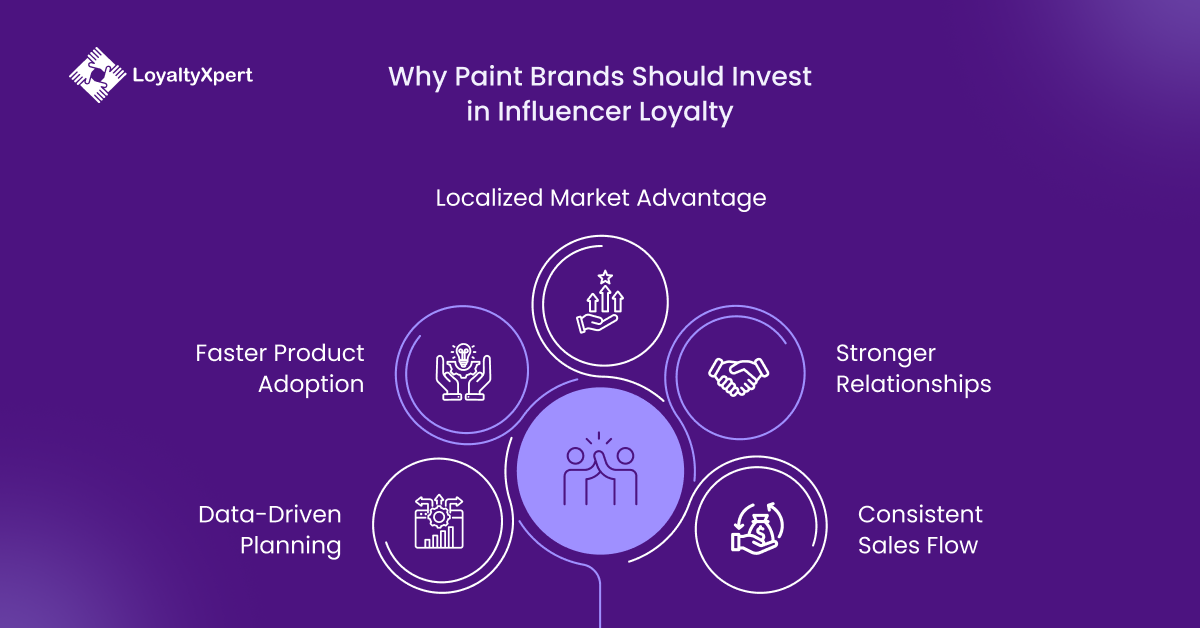
Here are the practical reasons why manufacturers should prioritize influencer loyalty in the paint industry immediately:

Why Paint Brands Should Invest in Influencer Rewards Program

  • Consistency in Sales Flow

Rewarding painters and dealers for brand engagement ensures repeat product movement, not just one-time sales. It builds predictable volume at the distributor and retailer level and removes dependency on seasonal promotions.

  • Stronger Professional Relationships

Loyalty programs open a structured channel to recognize and engage with painters on a professional level. When the relationship is supported with training, communication, and practical incentives, the brand becomes part of their working identity.

  • Localized Market Advantage

In regions where brand loyalty is often shaped by word-of-mouth and field-level experience, retaining local influencers gives a significant edge over national campaigns. Programs can be tailored to region-specific motivators.

  • Faster Adoption of New Products

Influencers engaged through loyalty programs are more likely to try and promote new product lines. They become early adopters and testers, helping improve rollout performance and customer confidence.

  • Data for Smarter Planning

An influencer rewards program captures participation trends, regional preferences, and feedback loops. This allows the business to make strategic decisions on product mix, inventory, and marketing investment with real usage insights.

No CTA found.


What Works – Core Features of a High-Performing Influencer Rewards Program

If a rewards program doesn’t reflect the realities of the job site, it won’t stick. Painters and contractors aren’t looking for hollow perks; they want support that helps them work better, earn more, and feel recognized for the business they bring. 

An industry loyalty program that performs well is one that fits into their routine without making things complicated, and gives them reasons to keep choosing your brand over the next one on the shelf.

The following features consistently prove to be effective when done right:

  • Clear Segmentation: Not all painters work at the same scale or have the same experience. A well-structured program identifies tiers and offers relevant goals. This avoids fatigue and builds aspiration within the loyalty cycle.

  • Flexible Reward Mechanism: Some painters value cash benefits, others prefer tools, training vouchers, or healthcare support. Flexibility in reward types ensures the program speaks directly to each segment’s real-world needs.

  • Simplicity and Transparency: Complicated tracking systems or delayed redemptions destroy trust. Influencers need a simple, mobile-accessible platform where they can track earnings, progress, and reward options at any time.

  • Recognition Beyond Numbers: Highlighting top painters in digital platforms, creating achievement badges, or even celebrating milestones in small gatherings adds emotional connection to the brand. Recognition goes a long way in loyalty.

  • Built-in Learning Support: Including access to certified trainings, usage guides, and product demos within the program builds trust. It’s a signal that the brand is invested in their success, not just their purchases.

  • Real-time Feedback and Analytics: Programs should enable field feedback to reach the brand quickly. In return, the business should analyze data on reward preferences, region-wise performance, and engagement dips to take corrective steps fast.

LoyaltyXpert’s Influencer Rewards Program – Built for Real Impact in Paint Sales

Loyalty doesn’t start at the storefront, it starts with the people who apply, sell, and recommend your products every day. LoyaltyXpert’s Influencer Loyalty Program is designed to help paint manufacturers strengthen those relationships with the structure and consistency they deserve.

  • Find and Engage the Right Influencers: LoyaltyXpert is a loyalty program software that helps paint brands identify the right influencers already recommending their products or with the potential to become high-impact advocates. From onboarding to ongoing interaction, the platform makes it easy to build and strengthen these relationships.

  • Create a Dedicated Channel for Loyalty: With a separate channel tailored specifically for painters and field influencers, brands can deliver focused messaging, personalized updates, and exclusive offers. This structure helps keep communication relevant and ensures your brand remains top of mind where it matters most.

  • Motivate with Meaningful Rewards: Forget one-size-fits-all incentives. LoyaltyXpert lets you design custom reward programs based on region, influencer role, activity level, or sales performance. Whether it’s tiered rewards, referral bonuses, or milestone-based recognition, the program adapts to how your partners work.

  • Track, Measure, and Improve: The platform’s built-in analytics let you monitor influencer activity, evaluate performance, and refine strategies based on real data. KPIs can be tracked in real time, so you know which efforts are working and where adjustments are needed.
  • Make Loyalty Seamless and Scalable: From multilingual support to mobile-friendly access, the loyalty management platform removes friction for both the brand and the influencer. Cash rewards can be claimed directly through the app, and referrals can be tracked without manual follow-ups, saving time while increasing participation.

Conclusion

In the paint industry, loyalty takes shape through trust built on real job sites, through hands that apply the product and voices that guide the purchase. And that trust is earned by those who stand between your brand and the buyer: painters, contractors, and dealers who influence product choice every day. What they value most is recognition, relevance, and a clear reason to stay aligned with your brand.

LoyaltyXpert’s influencer rewards program gives paint manufacturers the ability to turn everyday brand interactions into measurable loyalty. It connects performance with purpose and influence with outcomes.

If you’re serious about securing long-term preference where decisions actually happen, this is where to start. Book a demo and see how LoyaltyXpert helps you build loyalty that lasts.

Why Agroforestry is Booming in India — And What It Means for the Future of Farming

Across India’s agricultural heartlands, a transformation is underway, driven less by technology and more by ecology. Agroforestry in India, once considered a peripheral approach, is now being recognized as a strategic solution to restore degraded farmland, stabilize incomes, and cushion farmers against erratic weather. While traditional agroforestry farming models remain entrenched, farmers who integrate trees into their systems are beginning to see tangible, layered gains.

The real opportunity lies not just in adoption, but in consistency, and that requires incentives beyond subsidies. Loyalty programs designed for the agricultural ecosystem can play a crucial role here. By rewarding sustainable behavior, tracking participation, and creating long-term value loops, they unlock a framework where environmental responsibility aligns with rural profitability.

What’s Fueling the Agroforestry Boom in India?

Adoption of agroforestry systems across Indian states has accelerated, not due to a single policy shift, but because of a convergence of economic and environmental necessity. The National Agroforestry Policy laid foundational direction, but its real strength lies in how state-level schemes have contextualized it. For example, Odisha’s Mission Samrudhi and Maharashtra’s tree insurance-linked integration with their crop cycles.

Did you know?

Agroforestry spans approximately 28.42 million hectares, covering nearly 8.65% of India’s total land area. This reflects how quickly it’s moved from concept to practice, and also demonstrates both grassroots uptake and institutional support.

Multiple market factors also support this shift. The demand for timber and medicinal species from domestic and export channels has created viable value chains. Agroforestry, unlike seasonal cultivation, offers income layering across short, mid, and long-term horizons. It also absorbs climate shocks more effectively, giving smallholder farmers a buffer where conventional monocultures fall short.

How Agroforestry in India Builds Farmer Prosperity

Agroforestry is gaining traction among Indian farmers not only for its ecological value but for its ability to generate layered income streams and improve long-term financial stability. It presents a shift from single-output models to more resilient, multi-tiered systems.

The following are specific ways agroforestry benefits and directly supports farmer prosperity:

  • Timber and Tree Crops as Assets: Timber species like teak, eucalyptus, bamboo, and subabul (for fodder) function as long-term financial buffers. These trees act like growing capital, requiring no monthly deposits but accruing value steadily over time. Farmers harvest them strategically to fund future needs such as land expansion, irrigation, or education.
  • Reduced Input Dependency: The ecological functions of agroforestry systems lower operating costs. Leaf fall improves soil organic matter, while tree canopies create microclimates that reduce pest incidence. The result is a natural reduction in pesticide and fertilizer use, improving soil health and reducing cash outflow.
  • Multi-Stream Income Generation: Agroforestry breaks the “single crop, single income cycle.” Trees like guava, custard apple, or moringa offer seasonal produce; timber crops accumulate long-term returns; leguminous intercropping adds short-term cash flow. This income diversity helps smooth financial gaps between harvests.
  • Resilience Against Climate Shocks: Agroforestry strengthens a farm’s ability to withstand climate extremes. Tree cover shields crops from heat and heavy rain, while deep roots tap subsoil moisture during dry spells. This structure helps stabilize yields when weather patterns grow erratic. Agroforestry and climate change adaptation go hand in hand, making farms more resilient, not reactive.
  • Long-Term Soil and Water Security: Agroforestry improves soil health through organic matter buildup, better root structure, and natural nitrogen fixation. It also enhances water retention by reducing runoff and aiding groundwater recharge. Together, agroforestry and soil health, and agroforestry and water conservation, contribute to sustained land productivity and ecological balance.

Turning Policy into Practice for Agroforestry in India

While India’s agroforestry policies have laid a strong foundation, bridging the gap between vision and adoption requires local, practical interventions. Many of the challenges lie not in the framework, but in its execution at the farmer level.

Here are the key focus areas that demand attention for agroforestry to become mainstream:

  • Regulatory Clarity on Tree Felling and Transport: Despite national-level exemptions, many states retain outdated controls. Farmers remain wary of investing in timber species without guaranteed ease of harvest and sale.
  • Accessible Quality Planting Material: Certified saplings remain in short supply. Farmers often rely on informal or unverified sources, which affects growth rates and survival.
  • Skilling and Field-Level Support: Agroforestry requires specialized knowledge, like tree spacing, intercropping combinations, and maintenance cycles. Without structured training and extension, many plantings fail to reach maturity.
  • Incentive Monitoring Systems: Disbursement of subsidies and incentives under schemes like SMAF (Sub-Mission on Agroforestry) needs digital tracking to ensure transparency, especially for small and marginal farmers.
  • Market Integration and Value Chains: Farmers need confidence in off-take. Institutional buyers, FPOs, and agri-businesses must create reliable pathways for timber, fruits, and biofuel sales.

Loyalty Programs in Agriculture – A Model That Works

Adoption of agroforestry and sustainable agriculture at large relies heavily on consistent engagement. Well-structured industry loyalty programs in agriculture do more than distribute rewards; they create behavioral continuity, encourage learning, and build long-term brand and institutional trust among farmers.

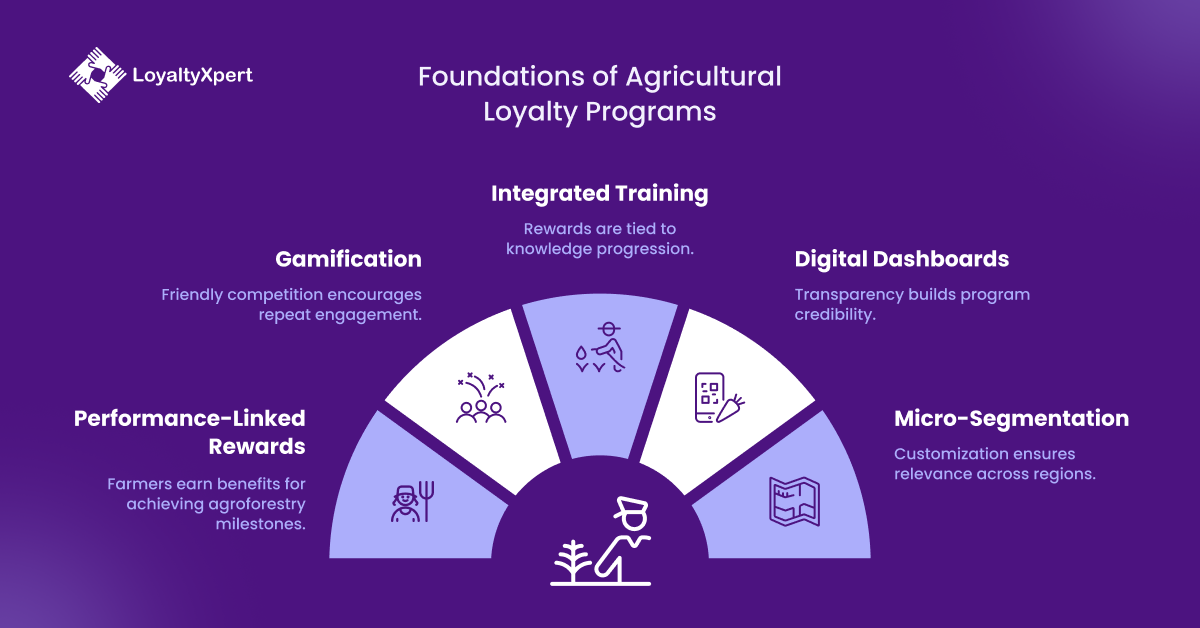
Here’s how loyalty models are being successfully adapted to agriculture today:

Foundations of Agricultural Loyalty Programs

  • Performance-Linked Reward Structures: Farmers earn points or benefits for completing specific agroforestry milestones, like survival rates of saplings, spacing accuracy, or yield tracking. These rewards are tiered, motivating sustained participation.
  • Gamification and Local Leaderboards: Friendly competition among village clusters or FPOs encourages repeat engagement. Recognition-based rewards (e.g., “Top Agroforestry Champion in District”) drive visibility and trust.
  • Integrated Training Modules: Access to rewards is tied to knowledge progression. Completion of short agroforestry courses, on-site demos, or climate-resilient farming sessions unlocks exclusive benefits.
  • Digital Dashboards and Access Points: Farmers view their points, rewards, and upcoming targets via mobile apps or community booths. This transparency builds program credibility and repeat engagement.
  • Micro-Segmentation by Region and Practice Type: Loyalty platforms powered by AI and analytics allow hyper-local customization. This ensures that a farmer in Odisha doesn’t receive the same reward strategy as one in Maharashtra.

No CTA found.

LoyaltyXpert’s Loyalty Management Platform Powering Agroforestry Engagement

When farmers are expected to shift from traditional methods to long-term agroforestry systems, the decision hinges on trust, clarity, and tangible rewards. LoyaltyXpert’s loyalty program software bridges that gap by providing a structured, digital-first loyalty platform that aligns incentives with sustainable farming and agroforestry practices.

The platform supports agroforestry engagement through:

  • Multi-scheme flexibility: Run different reward models based on region, tree type, or farmer group.
  • Data-driven personalization: Deliver role-specific rewards, such as sapling credits, fertilization bonuses, or training points, based on farmer actions and timelines.
  • CRM and omnichannel support: Track farmer performance, manage touchpoints, and ensure consistent communication across mobile apps, field agents, and dashboards.
  • Seamless program customization: Use white-label branding and localized content to build region-specific trust.
  • Real-time analytics: Monitor sapling survival, participation rates, and redemption behavior with built-in KPIs to refine strategy.

Conclusion

Every decision a farmer makes is a bet on the future. Choosing to plant trees, nurture them over seasons, and wait years before they yield takes more than information. It takes belief. Agroforestry works because it honors that belief and rewards patience. But belief needs backing. It needs systems that recognize effort, reward consistency, and keep the momentum alive between sowing and payoff.

LoyaltyXpert’s platform helps connect each milestone in a farmer’s journey from planting saplings to nurturing soil health, with structured, data-backed recognition. It transforms intent into commitment and good practices into predictable outcomes.

If you are looking to align your sustainability goals with farmer engagement in a way that’s measurable and repeatable, now is the moment to act. Book a free demo to see how LoyaltyXpert can help grow stronger roots for both loyalty and land.

Top 7 Examples of the Best Loyalty Programs in the Automotive Industry

The automotive industry has dramatically shifted its focus from pure acquisition to strategic retention. Automotive loyalty programs have emerged as powerful tools for manufacturers, dealers, and parts retailers looking to maintain customer relationships between those long purchase cycles. According to Accenture, customers enrolled in dealer loyalty programs spend 12-18% more on service than non-members.

Think of a well-designed automotive loyalty program as the regular maintenance that keeps your business engine running smoothly. The most successful automotive companies now implement sophisticated loyalty management platforms to track, reward, and engage customers throughout their ownership journey.

Automotive dealerships with loyalty programs report members visiting service departments 3.4 times annually, with 23% repurchasing a vehicle within 4.1 years. These programs create sustainable competitive advantages through increased customer lifetime value and brand advocacy.

The Evolution of Automotive Loyalty Programs

Remember the old punch cards your local garage used to offer? Those primitive systems marked the early days of automotive rewards programs. Modern automotive industry loyalty programs have completely reimagined what’s possible.

Today’s programs leverage loyalty program software to create multi-dimensional engagement that rewards not just purchases but service visits, social sharing, and even content engagement. This shift has been like upgrading from a basic sedan to a luxury vehicle—the core function might be the same, but the experience is miles apart.

Loyalty management platforms enable even smaller automotive dealers to offer robust programs once only possible for industry giants. The data these platforms collect allows for personalization at scale, turning generic promotions into tailored experiences.

Why Automotive Loyalty Programs Matter Now

Loyalty program members repurchase vehicles every 4.1 years on average, though broader industry trends suggest longer cycles due to rising prices and extended ownership periods. This extended period creates unique retention challenges for automotive manufacturers who need to maintain relationships with customers who might not make another major purchase for years.

Meanwhile, customer acquisition costs are 5x higher than retention costs, and service departments are a critical revenue stream. Losing service customers to competitors jeopardizes future sales and profits

Automotive Industry rewards programs

Competition has intensified with direct-to-consumer models disrupting traditional dealer networks. Automotive rewards programs create valuable differentiation in this increasingly crowded marketplace.

Top 7 Examples of the Best Automotive Loyalty Programs

1. FordPass Rewards

Ford’s comprehensive loyalty initiative exemplifies how automotive manufacturers can create meaningful connections with customers. FordPass Rewards members earn points for vehicle purchases, service visits, and app engagement.

The program integrates with connected car technology, allowing members to remotely control vehicle functions and schedule service directly through the app. FordPass members earn points on a tiered system—42,000 points for new vehicle purchases and 10 points for every dollar spent on service.

Ford reports a 35% increase in service retention among program members compared to non-members, proving that well-implemented automotive loyalty programs deliver measurable business results.

2. Nissan One to One Rewards

Nissan One to One Rewards cleverly addresses long purchase cycles by focusing on service events as engagement opportunities. One to One Rewards members earn points for service and maintenance, creating regular touchpoints between vehicle purchases.

The program’s co-branded Visa card provides additional earning opportunities, with members receiving 5 points per dollar at dealerships and on gas purchases. Nissan has balanced immediate gratification with long-term rewards through flexible redemption options.

Nissan dealerships report that program members visit for service 1.5 times more frequently than non-members and spend an average of 20% more per visit—compelling evidence of how loyalty program software drives business outcomes.

3. BMW Inside Edge

BMW’s Inside Edge program targets company car drivers—a valuable but often overlooked segment in the automotive industry. The program offers exclusive rewards and special access opportunities while collecting valuable data through integrated surveys.

The program leverages a sophisticated loyalty management platform to deliver highly personalized experiences based on vehicle usage patterns and driver preferences. BMW reports that Inside Edge has improved fleet customer retention by 24% and significantly increased advocacy among company car drivers.

No CTA found.


4. WingStuff Wing Rewards

Specialty retailer WingStuff demonstrates how smaller automotive parts and automotive accessories companies can build community through loyalty. Their tiered program—with Silver, Gold, and VIP Platinum levels—creates aspirational goals for members.

What makes Wing Rewards particularly effective is its integration of social and advocacy components. Members earn points not just for purchases but for referring friends, social sharing, and writing reviews. WingStuff reports that program members are 3.5 times more likely to make repeat purchases than non-members.

5. NAPA Rewards

NAPA’s program stands out for its dual-track approach serving both professional automotive repair shops and DIY customers. For commercial accounts, NAPA Rewards offers tiered benefits including volume discounts and priority delivery. Retail customers earn points on every purchase.

The program emphasizes practical business benefits beyond discounts, including access to technical resources and training. NAPA’s loyalty program software integrates with its inventory and sales systems, enabling highly targeted promotions based on purchase history.

NAPA reports a 28% increase in commercial account retention and a 32% increase in average order value among program members—clear evidence that thoughtfully designed automotive rewards programs deliver tangible results.

6. Volvo Cars Loyalty Program

Volvo’s innovative approach, the Kronor Experience bases rewards on vehicle age—the older the car, the better the rewards. This structure aligns with Volvo’s brand values while addressing a common challenge for automotive dealers: keeping customers engaged throughout the full ownership cycle.

The program offers tiered discounts on maintenance and parts based on vehicle age, with older vehicles receiving more substantial benefits. Members receive benefits like discounted service, free vehicle health checks, and priority appointments.

Volvo reports a 45% increase in service visits for vehicles over five years old among program members, demonstrating how automotive industry loyalty programs can extend customer relationships beyond the warranty period.

7. Advance Auto Parts Speed Perks

Advance Auto Parts has incorporated gamification elements into its Speed Perks program, creating an engaging experience through “Mystery Bonus” rewards that create moments of delight.

Members earn 10 points for every dollar spent, with 500 points equaling $5 in rewards. The program’s mobile app enables a seamless omnichannel experience, allowing members to check points, find stores, and access personalized offers.

Speed Perks members shop 4.5 times more frequently and spend 35% more annually than non-members—powerful evidence that well-executed loyalty program software drives significant business results.

Key Success Factors in Automotive Loyalty Programs

Successful loyalty programs for automotive industry share several key characteristics: seamless dealer management system integration, mobile-first implementation, personalization capabilities, and a balance between transactional and emotional loyalty.

Effective use of loyalty management platforms streamlines operations and provides valuable insights into customer behavior. These platforms automate routine tasks while generating data-driven recommendations that help automotive dealers optimize their initiatives.

Components of Successful Automotive Industry Loyalty Programs

LoyaltyXpert stands out among loyalty management platforms for its specialized automotive industry solutions. With tailored features for automotive dealers and automotive manufacturers, LoyaltyXpert’s platform addresses the unique challenges of vehicle purchase cycles and service retention. Our system integrates seamlessly with existing dealer management software while offering the flexibility to design tiered rewards that drive both purchase and service loyalty.

Implementing an Effective Automotive Loyalty Program

For automotive companies considering implementation, selecting the right loyalty management platform represents the most critical decision. Define clear objectives and success metrics that align with business goals, and create seamless customer experiences across all touchpoints.

Build proper measurement frameworks to enable continuous program optimization. Automotive industry loyalty programs generate valuable data that can inform broader business decisions about inventory, staffing, and marketing investments.

Expert Tip:

Ensure all team members understand the program’s benefits and actively promote enrollment. Programs with strong staff support consistently outperform those lacking internal champions.

The Future of Automotive Loyalty Programs

Connected car integration represents the next frontier for automotive loyalty programs. Vehicles automatically scheduling maintenance based on usage patterns will create new opportunities for proactive engagement.

Electric vehicle-specific loyalty considerations will become increasingly important as EV adoption accelerates. Blockchain technology promises to revolutionize rewards tracking, while AI-powered personalization will transform customer experiences by anticipating needs.

Forward-thinking automotive manufacturers are already exploring how loyalty programs can encompass not just traditional ownership but newer models like vehicle subscriptions and on-demand mobility.

Driving Long-Term Success Through Loyalty Initiatives

The seven automotive loyalty programs highlighted demonstrate how strategic customer retention initiatives deliver measurable business results. From Ford’s connected car integration to Volvo’s age-based rewards structure, these programs showcase innovative approaches to the unique challenges of the automotive industry.

With acquisition costs rising and competition intensifying, automotive companies that prioritize retention through well-designed loyalty programs create sustainable competitive advantages. While points and discounts drive initial engagement, it’s the recognition, personalization, and sense of belonging that transform transactional customers into passionate brand advocates.

LoyaltyXpert offers comprehensive automotive loyalty program solutions tailored to manufacturers, dealerships, and parts retailers. Our industry-specific platform drives service retention, increases parts sales, and fosters lasting customer relationships. Contact us to discover how their specialized loyalty solutions can strengthen your competitive position and build enduring customer connections.

Ultimate Proven Marketing Tips For Fuel & Oil Distributors In Dubai

In Dubai’s rapidly evolving energy landscape, fuel and oil distributors play a pivotal role in driving logistics, industrial expansion, and urban mobility. With the city positioned as a global oil powerhouse, supported by state-of-the-art infrastructure and a digitally fluent population, fuel and oil distributors must go beyond operational excellence to succeed in this competitive market.

The UAE’s oil upstream market is set to expand from USD 9.77 billion in 2025 to USD 12.59 billion by 2030, growing at a projected CAGR of 5.2%. This acceleration is tied to focused investments in infrastructure, increased adoption of digital tools, and rising customer expectations around convenience, personalization, and reliability.

Fuel & Oil Distributor Marketing in Dubai: 5 Winning Strategies

Fuel and oil distributors in Dubai are increasingly investing in forward-looking strategies that prioritize loyalty, digital engagement, and brand distinction. Below are the 5 proven marketing tactics shaping fuel and oil distributor marketing, giving businesses a competitive edge and driving sustainable growth.

Strategic Marketing Tactics for Fuel and Oil Distributors

1. Launch Loyalty Programs That Drive Repeat Business

Loyalty programs play a vital role in driving repeat business and building long-term customer relationships in the fuel and oil industry. As consumer expectations evolve and competition intensifies, distributors in Dubai are recognizing the value of well-designed loyalty strategies that go beyond simple point systems.

Here’s a compelling fact: the UAE’s loyalty program market is projected to reach US$490.8 million by 2025, growing at a strong 16.1% annual rate. This steady rise highlights how loyalty programs are becoming a strategic focus across industries, including the fuel and oil distribution sector. To succeed in this space, a loyalty program needs to be functional, rewarding, and easy to use, offering real value that keeps customers coming back.

Key components of successful industry loyalty programs include:

  • Tiered Rewards that motivate customers to spend more frequently by unlocking exclusive benefits (priority fueling lanes, premium offers). 
  • Redemption Flexibility, allowing points to be used across fuel, car wash, groceries, and partnered outlets (like cafes or retail chains). 
  • Mobile Integration that enables seamless tracking, redemption, and real-time offers via branded apps.

2. Build a High-Performing Website That Converts

A distributor’s website is more than a corporate brochure. It’s the digital handshake, the first impression, and often the silent sales force behind every inbound inquiry. In a sector like fuel and oil, where professionalism and clarity matter, websites must not just inform, they must convert.

High-trust websites have:

  • Intuitive Navigation that instantly guides users to “Fuel Delivery,” “Fleet Programs,” or “Retail Locations” without friction. 
  • Transparent CTAs like “Request a Quote,” “Schedule Delivery,” or “Join Loyalty Program,” embedded smartly across pages. 
  • Live Chat or instant inquiry tools that lower the communication barrier, especially for procurement teams seeking fast quotes.

3. Improve Visibility with SEO and Local Search

With 99% of the UAE population online, your next customer is likely searching for fuel delivery, pricing, or nearby suppliers before making contact. For fuel and oil distributors, showing up in those local search results, especially for queries like “fuel delivery near Jebel Ali” or “diesel supplier Dubai Industrial City,” can be the difference between winning or losing a contract.

Search Engine Optimization (SEO) helps position your business for high-intent terms like “fuel and oil services in Dubai” or “lubricant products distributor in Dubai.” Well-optimised service pages and location-based content directly impact rankings and drive qualified leads.

Local SEO takes it further, especially for location-specific leads:

  • Google Business Profile Optimization: Complete profiles with up-to-date NAP (Name, Address, Phone), service categories, business hours, and high-quality imagery help fuel visibility.
  • Localized Landing Pages: Create content for specific service zones like “Al Quoz diesel services” or “Sharjah commercial fuel delivery” to rank better.
  • Customer Reviews: Encourage loyal clients to leave feedback. A 5-star review not only boosts credibility but signals to Google that your business is active and trustworthy.

No CTA found.

4. Run Smart Paid Campaigns (PPC, Display and Retargeting)

While organic marketing builds momentum over time, paid campaigns deliver instant visibility, putting your brand in front of the right buyers at the exact moment they’re searching. For fuel and oil distributors, this means reaching procurement officers, fleet operators, and industrial clients when decisions are being made.

Smart fuel and oil distributor marketing strategies include:

  • Google Search Ads: Bid on keywords like “commercial diesel supplier Dubai” or “bulk fuel UAE” to capture high-intent traffic. 
  • LinkedIn Sponsored Content: Promote case studies or loyalty program offers directly to decision-makers in logistics, loyalty programs for automotive, or industrial sectors. 
  • Geo-Fenced Display Ads: Target ads to users around logistics hubs, industrial areas, or event venues like GITEX or ADIPEC. 
  • Display & Retargeting Ads: Re-engage website visitors with limited-time offers or loyalty program updates.

5. Content That Speaks the Language of Fuel and Oil Distributors

Good content doesn’t just inform, it influences. And when your audience includes logistics heads, procurement managers, and business owners, your content needs to be sharp, relevant, and solution-oriented. Fuel and oil distributors who understand their audience’s pressures cost efficiency, supply reliability, and operational downtime can use content to address real concerns.

Formats that resonate include:

  • Whitepapers & Industry Reports: Offer research-backed insights on fuel pricing trends or sustainability practices in the Gulf. 
  • Case Studies: Walk through how you helped a fleet save on fuel costs or reduced delivery delays with smart routing. 
  • Educational Blogs: Answer FAQs like “How to choose a fleet card program in the UAE” or “Benefits of tiered loyalty programs for fuel buyers.”

Building Lasting Loyalty with LoyaltyXpert’s Proven Solutions

Loyalty doesn’t happen by accident. It’s built through consistent value, meaningful rewards, and customer experiences that feel personal and relevant. LoyaltyXpert’s loyalty program software is designed to help fuel and oil distributors create programs that are smart, adaptable, and built for real business outcomes.

Here’s how LoyaltyXpert’s loyalty program for fuel and oil enables distributors to create loyalty that’s built to last:

  • Built for Fuel Distributors: LoyaltyXpert’s loyalty management platform is tailored for the operational realities of fuel and oil businesses. Whether you serve thousands of individual drivers daily or manage long-term contracts with commercial fleets, the platform adapts to fit your model and scale with your growth. 
  • Personalized Offers That Work: Blanket discounts no longer move the needle. LoyaltyXpert lets you segment your customers based on how they buy, how often they visit, and what they value most. Then, it helps you deliver offers that feel timely, relevant, and personal. 
  • Seamless Mobile Experience: Today’s customers expect convenience. LoyaltyXpert supports mobile-first engagement, allowing users to track points, get alerts, and redeem rewards from their phones. It’s loyalty without friction, delivered through an interface customers enjoy using. 
  • Automated Campaigns with Impact: Time-bound offers, reward reminders, and festive campaigns can all be automated. Set them up once, and the system handles the delivery, giving your petrol station marketing efforts scale without adding pressure to your team. 
  • Reward Partnerships That Add Value: Fuel customers appreciate options. LoyaltyXpert helps you connect with partners, like auto service providers or retailers, to offer rewards that stretch beyond the pump. More variety means more reasons to stay loyal.

Conclusion

Growth in the fuel and oil distribution industry doesn’t happen through guesswork. It takes clear strategies, reliable tools, and a strong focus on what truly drives customer decisions. In a fast-paced and competitive market like Dubai, staying still means losing ground. The distributors who lead are those who invest in smarter loyalty, sharper outreach, and more connected digital experiences. Every interaction counts—from how your brand appears online to how you reward repeat business.

LoyaltyXpert gives you a framework to move with confidence, supported by technology, driven by data, and shaped around your goals. Its loyalty program helps you connect with your customers in more meaningful ways and turn everyday transactions into lasting brand relationships.

Request a free demo with LoyaltyXpert and see how you can start building stronger customer relationships today.

Want More Customers? Here’s How Influencers Can Help You Get Them!

Implementing structured influencer loyalty programs creates lasting relationships that drive customer acquisition and retention beyond what conventional marketing approaches can achieve. But if only, it were that simple to implement.

Let’s take a walk down memory lane, you’ve just launched a fantastic new product line. Your marketing materials look sharp. Your distribution channels are primed. But then… crickets. The flood of new customers you expected turns out to be a trickle. Sound familiar? The hard truth is that traditional advertising just doesn’t pack the punch it once did. Banner ads get blocked, emails go unread, and trade show booths get passed by. Meanwhile, influencer marketing continues to deliver impressive results — and not just for B2C brands selling lifestyle products. 

Think influencers are just for fashion and fitness brands? Think again. From industrial equipment to technical services, B2B companies leveraging strategic influencer partnerships are seeing remarkable customer acquisition results.

But there’s a secret: one-off influencer campaigns aren’t enough. The real magic happens when you combine influencer relationships with loyalty program software to create a sustainable customer acquisition engine. It’s like adding a turbocharger to an already powerful engine — you get exponentially better performance with the right combination.

Why Influencer Marketing Works When Traditional Advertising Falls Flat

Consumers have developed “ad blindness” – mentally filtering out promotional content without conscious thought, similar to how city dwellers eventually stop noticing sirens.

This is precisely where influencer marketing breaks through. People trust recommendations from other people far more than branded messages. When an industry expert recommends a solution, it bypasses advertising defense mechanisms because it arrives through a human connection rather than a corporate channel.

What makes influencer marketing so effective?

  • Trust transfer: Influencers have already built credibility with your target audience
  • Contextual relevance: Recommendations come within valuable content, not interruptions
  • Authentic demonstration: Products shown in real-world applications
  • Targeted reach: Access to highly specific audience segments

The Power of Influencer Marketing

Bottom Line

The authenticity and trust inherent in influencer recommendations help brands overcome increasing customer skepticism toward traditional advertising, making it a critical component of modern marketing strategies.

Finding Your Perfect Influencer Match

The term “influencer” typically evokes images of Instagram celebrities, but industry loyalty programs require a completely different type of influencer.

Follower count should not be your primary metric. For B2B and manufacturing companies, an influencer with 5,000 highly engaged industry professionals will deliver far better results than a general business influencer with 500,000 followers.

For manufacturing and B2B contexts, ideal influencers typically fall into these categories:

  • Industry Thought Leaders: Consultants, analysts, and subject matter experts
  • Technical Specialists: Engineers, designers, or technical professionals with hands-on experience
  • Customer Advocates: Existing customers with authority in their organizations
  • Trade Journalists: Media professionals covering your industry

The most effective influencer loyalty programs recognize these different types and tailor approaches accordingly. A technical specialist excels at detailed product demonstrations, while a thought leader better positions your brand’s vision.

Key metrics to evaluate potential B2B influencers:

  • Engagement quality: Are comments thoughtful and relevant?
  • Content relevance: How closely aligned is their content with your offerings?
  • Audience composition: Who exactly follows them and are they your potential customers?
  • Technical knowledge: Do they genuinely understand your industry’s complexities?

Successful B2B influencer partnerships depend more on relevance, credibility, and audience alignment than on follower count, making careful selection and evaluation essential for program success.

No CTA found.


The Loyalty-Influencer Connection: A Powerful Combination

Influencer loyalty isn’t merely about getting influencers to promote your brand; it’s about creating a sustainable ecosystem where influencers, your brand, and your customers all continuously benefit from the relationship.

A loyalty management platform provides the technical foundation for this ecosystem. It allows you to:

  • Track the complete customer journey: See which influencers drive actual conversions and long-term value
  • Create personalized onboarding experiences: Welcome influencer-referred customers with special experiences
  • Provide meaningful rewards to influencers: Move beyond one-time payments to ongoing incentives
  • Gather intelligence for optimization: Learn which partnerships deliver the highest-value customers

One industrial equipment provider implemented a sophisticated loyalty program software solution that tracked influencer-referred customers. They discovered these customers had a 37% higher lifetime value and were 28% more likely to become advocates themselves.

Building an Effective Influencer Loyalty Program

Creating an influencer loyalty program requires thoughtful structure. Most failed programs treat influencers as short-term promotional channels rather than long-term partners. A one-time bonus won’t create employee loyalty, and similarly, it won’t create influencer loyalty.

Four essential components of effective influencer rewards structures:

  • Baseline compensation: Ensuring basic efforts are recognized
  • Performance incentives: Rewards that scale with actual business results
  • Exclusivity bonuses: Additional benefits for exclusive partners
  • Long-term growth paths: Clear progression opportunities

A tiered approach often works best:

  • Bronze tier: New influencer partners receive basic benefits
  • Silver tier: After demonstrating results, influencers gain enhanced rewards
  • Gold tier: Top-performing influencers receive premium benefits and input opportunities

Your loyalty management platform should make this structure easy to implement and track, automatically calculating tiering and distributing rewards.

Implementing Your Influencer Loyalty Roadmap

Turning an influencer loyalty strategy into reality requires methodical planning and execution. Each phase builds upon the previous one, creating a comprehensive approach that minimizes risk and maximizes results.

Building Your Influencer Loyalty Program

Phase 1: Foundation (1-2 months)

  • Define objectives and success metrics
  • Select your loyalty program software
  • Develop your tiering structure and rewards framework

Phase 2: Recruitment (2-3 months)

  • Identify potential influencer partners
  • Create onboarding materials and training resources

Phase 3: Launch (1 month)

  • Kickoff with initial influencer cohort
  • Deploy tracking mechanisms in your loyalty management platform

Phase 4: Optimization (Ongoing)

  • Monitor performance metrics
  • Refine program elements based on results

The implementation journey transforms a concept into a functional program, with each phase addressing specific challenges while building toward a cohesive whole that delivers sustainable results.

Measuring Metrics That Matters

Traditional influencer metrics like likes and shares might look impressive in reports but often fail to demonstrate genuine business impact. Whereas, mature influencer loyalty programs focus on metrics that directly connect to business outcomes.

Key business impact metrics to monitor:

  • Attributed Revenue: Direct sales traced to specific influencer partnerships
  • Customer Acquisition Cost: Program investment divided by new customers acquired
  • Conversion Rate: Percentage of influencer-driven prospects becoming customers
  • Customer Lifetime Value: Long-term value of influencer-acquired customers

Modern loyalty management platforms provide attribution capabilities to track these metrics accurately. Without proper tracking, connecting influencer activities to business outcomes becomes nearly impossible.

For calculating true ROI, we recommend this formula:

ROI = (Total Attributed Revenue × Profit Margin – Total Program Cost) ÷ Total Program Cost)

A specialty tool manufacturer discovered their influencer loyalty program was delivering a 341% ROI – their best-performing marketing channel by a significant margin – once they implemented proper attribution through their loyalty program software.

Navigating Common Influencer Loyalty Program Pitfalls

Even the most thoughtfully designed influencer loyalty programs can encounter obstacles. Understanding these common challenges in advance helps you implement preventative measures rather than reacting after problems emerge.

  • Overemphasizing Reach Over Relevance: Many companies chase influencers with the largest audiences rather than the most relevant ones. A technical influencer speaking directly to your buyer persona will almost always outperform a general business influencer with a larger following.
  • Neglecting Relationship Management: Successful influencer loyalty requires ongoing relationship nurturing. Assign clear ownership for influencer relationships within your team.
  • Failing to Integrate with Existing Programs: Your influencer loyalty program shouldn’t exist in isolation from your other loyalty initiatives. Use the same loyalty management platform to coordinate both sides of the equation.
  • Inconsistent Measurement Approaches: Establish your key metrics at program launch and ensure your loyalty program software is configured to track them consistently.

Recognizing these potential stumbling blocks early allows you to design your program with safeguards that prevent the most common causes of influencer program underperformance, ensuring your initiative delivers expected results.

Future Trends in Influencer Loyalty

The intersection of influencer marketing and loyalty programs continues to evolve rapidly:

  • AI-Enhanced Matching and Optimization: Advanced loyalty program software now includes AI capabilities that predict which influencer partnerships will deliver the strongest results.
  • Blockchain-Verified Performance: Integration between blockchain verification systems and loyalty management platforms is creating new standards for performance transparency.
  • Immersive Co-Creation Experiences: Leading manufacturing loyalty programs now include opportunities for top-tier influencers to participate directly in product development.
  • Micro-Community Focus: Pioneering brands are partnering with influencers who lead highly engaged micro-communities focused on specific topics or interests.

Fun fact:

B2B companies implementing structured influencer loyalty programs experience 11 times higher ROI from their influencer investments compared to those running isolated campaigns without loyalty integration.

Deploy Influencer Loyalty as a Strategic Advantage

Strategic influencer loyalty programs deliver multiple benefits that compound over time:

  1. They attract customers otherwise unreachable through traditional channels
  2. They convert prospects at higher rates due to the trust transfer from respected influencers
  3. They acquire customers with higher lifetime value
  4. They create ongoing acquisition engines rather than temporary campaign spikes

The key enabler is the right technology foundation. A robust loyalty management platform provides the infrastructure needed to track, reward, and optimize these complex relationships at scale.

Influencer relationships should be viewed not as a marketing tactic but as a fundamental business asset. When properly structured and supported through effective loyalty program software, these relationships become a proprietary advantage that competitors cannot easily replicate.

Transform your customer acquisition strategy with a customized influencer loyalty program. Contact our team at LoyaltyXpert today to discover how our specialized industry loyalty solutions can help you build, track, and optimize influencer partnerships that deliver measurable business results.