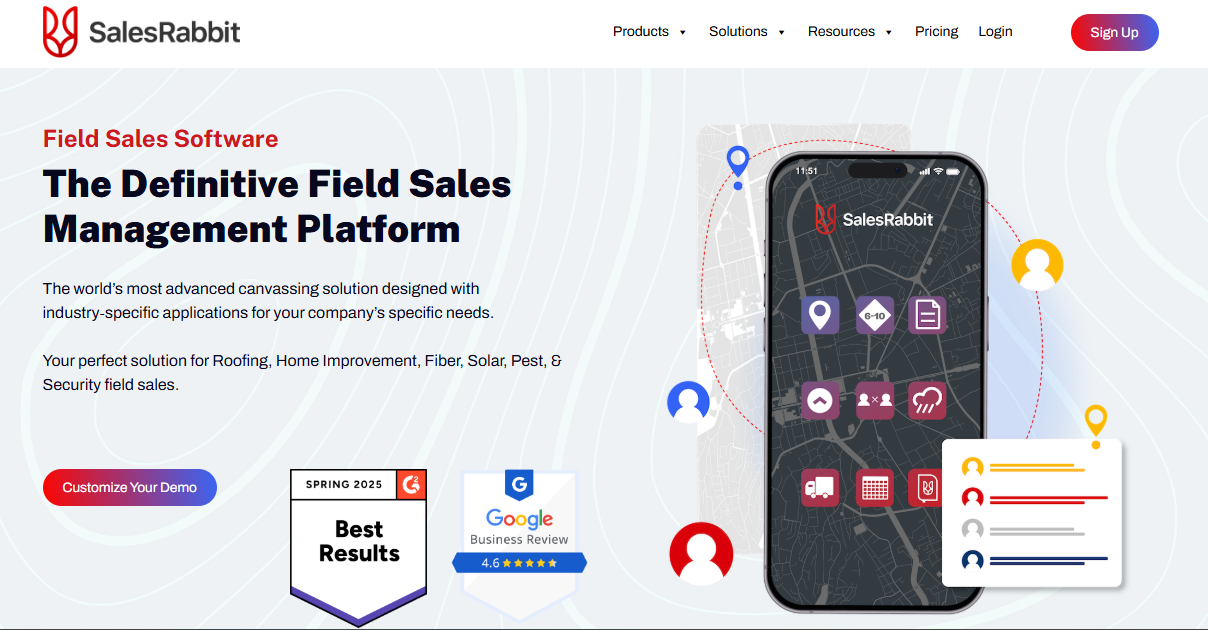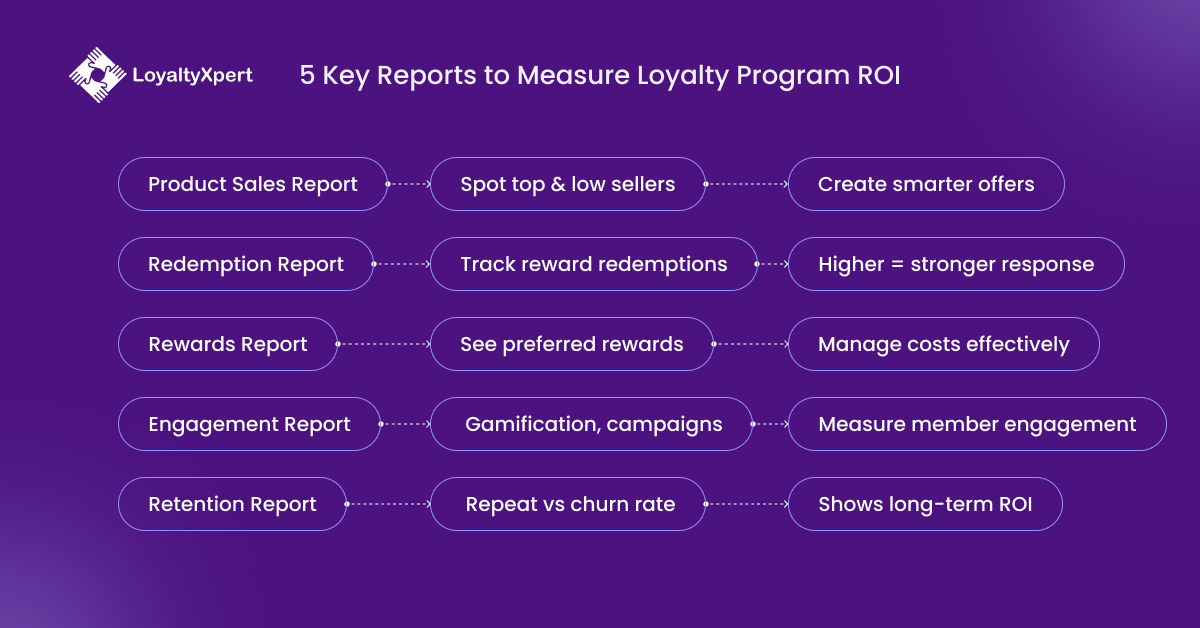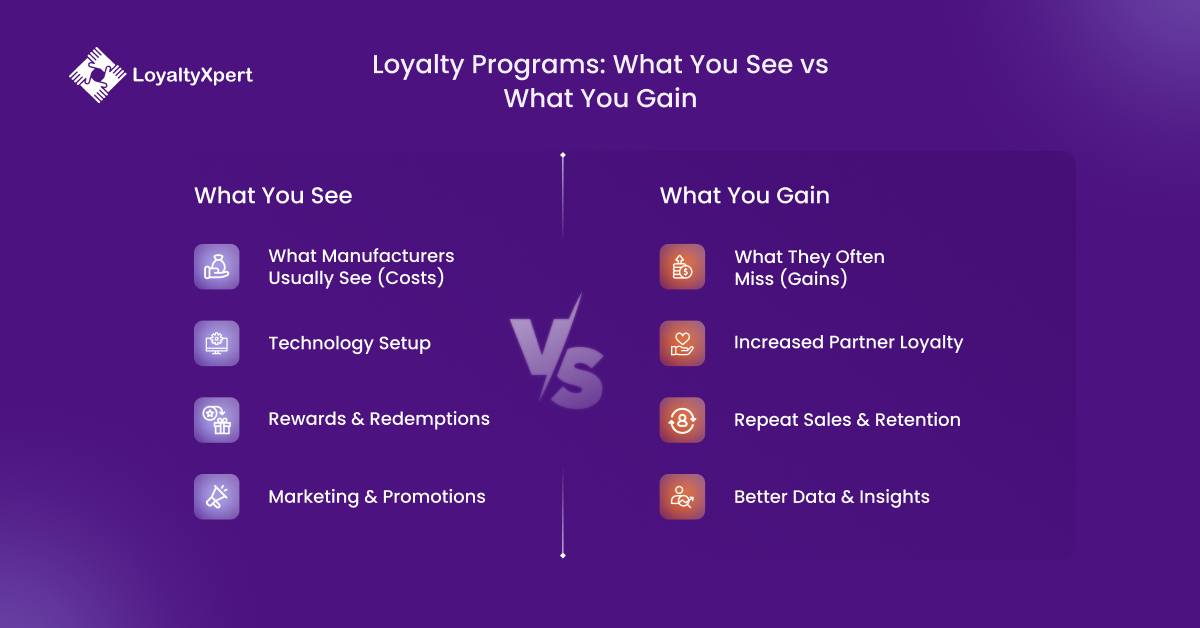
A Complete Guide to Adding Warranty Management Features to Your Loyalty App

Ever wondered why customers switch brands even after loving your product? 

Surprisingly, it’s often not because of the product but because of the post-purchase experience. Slow service, lost bills, and confusing claim processes frustrate customers and push them toward competitors.

This is exactly where Warranty Management Software becomes a game-changer. When manufacturers offer fast, transparent, and seamless warranty support through their loyalty app, customer trust increases, and repeat sales rise naturally.

Today, warranty isn’t just paperwork but it’s the brand promise. A digital warranty experience like LoyaltyXpert app shows customers that the manufacturer stands behind every product. And in a competitive market, that reliability becomes a powerful differentiator.

A strong warranty experience helps manufacturers:

  • Reduce customer churn
  • Improve after-sales efficiency
  • Boost customer loyalty and retention
  • Increase repeat sales through trust-building
  • Strengthen brand perception across markets

When warranty support becomes simple and predictable, your product becomes the customer’s preferred choice again and again.

The Shift to Digital Warranty Management Software

For decades, warranty claims revolved around paper invoices, printed cards, and manual verification. But customers today expect speed, clarity, and convenience. They want instant access, quick claims, and predictable timelines without digging through old files. And that’s why businesses are investing in warranty management software.

This shift has opened doors for powerful digital warranty solutions, integrated directly into loyalty apps.
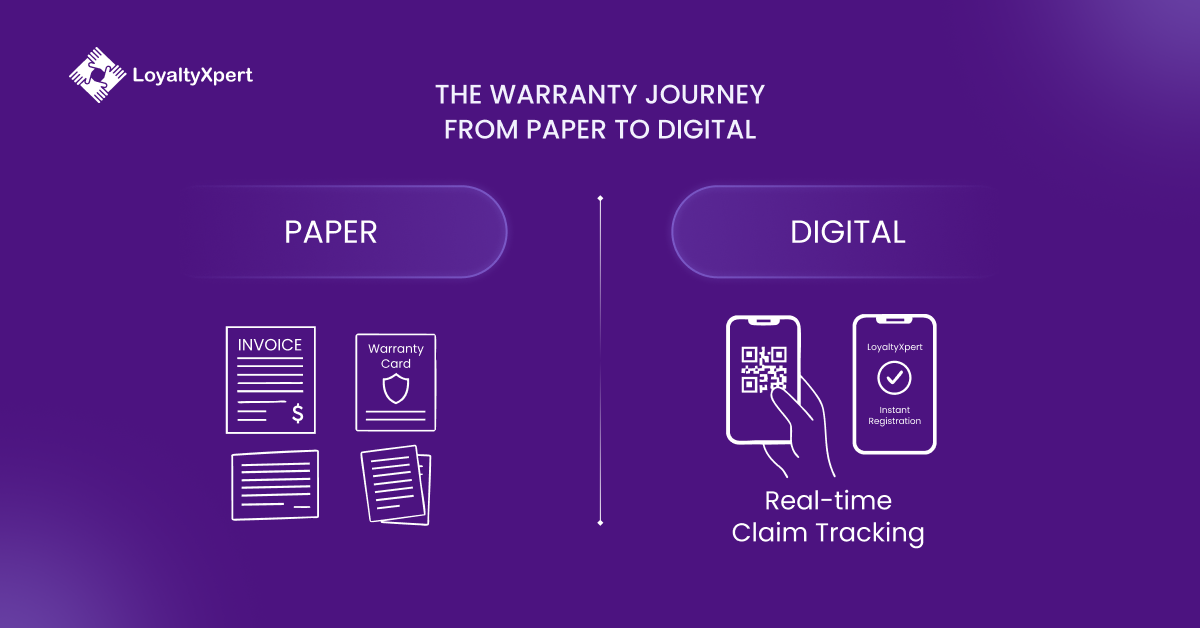
THE warranty management FROM PAPER TO DIGITAL

Manufacturers are now using:

  • Warranty claims processing solutions to automate approvals
  • Warranty software solutions to track product details and service history
  • Warranty management software solutions for full product lifecycle visibility
  • Warranty claims management systems that reduce errors and fraud
  • Digital warranty solutions that eliminate paperwork entirely

And because customers already engage with the loyalty app for rewards, points, and updates, adding warranty inside the same platform creates a unified, seamless after-sales ecosystem.

In short, Loyalty apps are no longer just reward platforms, they are becoming the heart of the customer’s ownership experience.

💡Did you know?

Nearly 40% of warranty claims fail simply because customers lose their paper invoices.

Key Benefits for Higher Customer Satisfaction

Most brands lose customers not because of product issues, but because the support experience feels slow, disconnected, or frustrating. When a customer doesn’t know where to submit a claim, who to contact, or how long it will take, trust breaks instantly.

This changes the moment a brand integrates Warranty Management Software directly into its loyalty app. Suddenly, customers get clarity, speed, and transparency, all in one place.

There are multiple benefits of using a warranty management software. Below we have discussed the core benefits that make this integration a powerful competitive advantage.
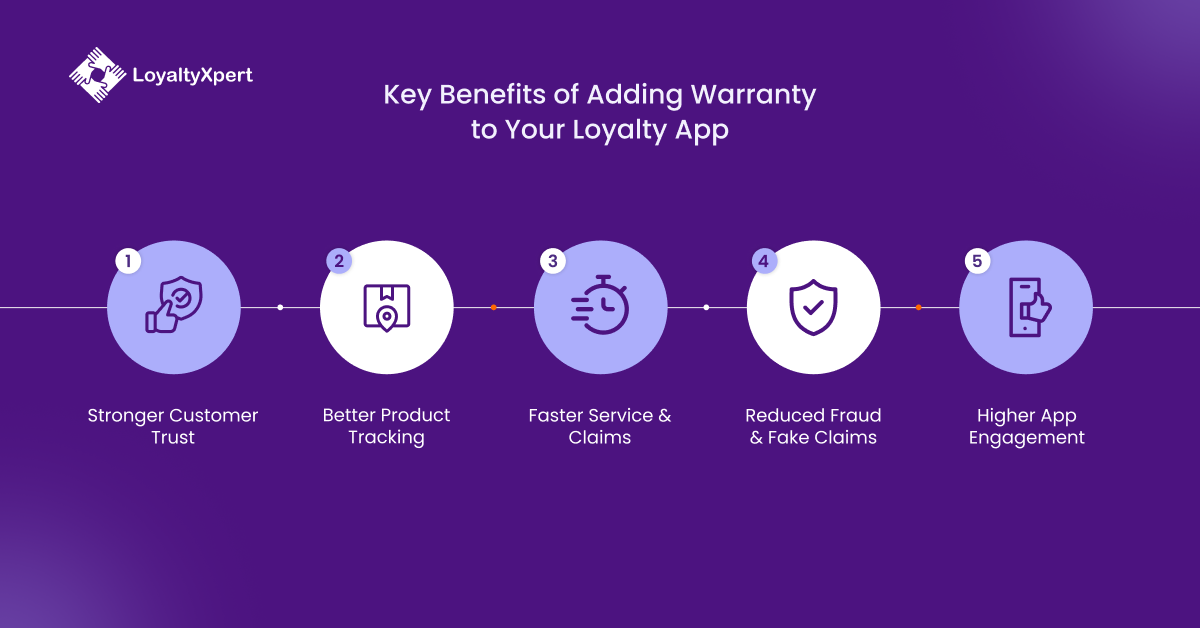
Key Benefits of Adding Warranty management to Your Loyalty App

1. Stronger Customer Trust

A seamless warranty experience reassures customers that the brand truly cares even after the purchase is made. With a unified digital warranty solution, customers can:

  • Register products instantly
  • View warranty status anytime
  • Raise claims without paperwork

This simple shift builds confidence and strengthens long-term loyalty. A brand that makes warranty easy becomes a brand people trust.

2. Better Product Tracking

When all warranty data flows through a single warranty management software solution, manufacturers gain full visibility into product performance across regions, batches, and customer groups. This helps brands:

  • Track product issues early
  • Identify manufacturing defects
  • Improve product quality based on real usage data

Better tracking leads to better decision-making and better products.

3. Faster Service & Claims

The biggest pain point for customers is slow claims processing. A digital warranty claims processing solution eliminates this entirely. Inside the loyalty app, customers get:

  • Quick claim submission
  • Auto-validation of product and purchase details
  • Real-time claim status updates

Manufacturers, in turn, use a warranty management system to speed up verification and approvals. Faster service means happier customers and higher repeat sales.

4. Reduced Fraud & Fake Claims

Paper bills are often misplaced, edited, or forged. With digital records, verification becomes clean and accurate. A strong warranty management software helps brands:

  • Validate claims automatically
  • Track serial numbers and activation dates
  • Prevent duplicate claims

This not only saves time but also protects revenue by reducing fraudulent payouts.

5. Higher App Engagement

When customers rely on your loyalty app for warranties, they return more often. Every interaction such as claim updates, reminders, and service alerts, keeps them inside your ecosystem. This increase in engagement naturally leads to:

  • More reward redemptions
  • Higher product awareness
  • Better brand recall
  • Stronger long-term loyalty

Warranty becomes the bridge that connects after-sales support with customer engagement.

Key Features For Better Customer Experience

Most warranty frustrations come from one thing: unclear processes. Customers are tired of filling out long forms, hunting for old invoices, waiting for updates, or visiting service centers without information. A modern loyalty app like LoyaltyXpert equipped with Warranty Management Platform removes all this friction and makes the experience smooth, transparent, and fast.

To deliver that level of convenience, your warranty management process must include the following essential features that are designed to improve trust, speed, and customer satisfaction.

1. QR/Barcode Product Registration

Instead of making customers type long product details, a simple QR or barcode scan completes registration in seconds. This feature helps your digital warranty solution:

  • Auto-detect product and serial details
  • Avoid manual data entry mistakes
  • Speed up the onboarding process

It sets the tone for a clean, error-free warranty cycle.

2. Digital Proof-of-Purchase Storage

Lost bills are the biggest roadblock in warranty claims. With digital storage, customers can upload or take a picture of their invoice and save it for life. Your warranty management software solution ensures:

  • Secure cloud-based storage
  • Instant access during claims
  • Zero dependency on paper documents

This alone reduces frustration and improves claim success rates.

3. Automated Claims Workflow

A good warranty module should feel effortless. Automated workflows allow claims to move smoothly from submission to approval without manual delays. An efficient warranty claims processing solution enables:

  • Auto-validation of purchase details
  • Smart routing to the right department
  • Faster approval timelines

Customers feel taken care of, and your service team stays efficient.

4. Real-Time Claim Status

Nothing irritates customers more than not knowing what’s happening with their claim. Real-time tracking inside the loyalty app creates complete transparency. With a strong warranty management system, users get:

  • Live claim progress
  • Instant notifications
  • Clear next steps

This reduces uncertainty and builds long-term trust.

5. Service Center Mapping

When customers need help, they want quick access to the nearest authorized service center. Mapping inside the app ensures zero guesswork. This feature offers:

  • Location-based service center suggestions
  • Operating hours and contact details
  • Easy navigation to the correct facility

A smoother servicing experience improves brand satisfaction.

6. Warranty Alerts & Notifications

Many customers miss out on warranty benefits simply because they forget. Timely reminders inside your loyalty app keep them engaged and informed. These alerts include:

  • Claim updates
  • Expiry reminders
  • Service due notifications

They also boost app activity, strengthening your digital relationship with users.

7. Easy Integrations (CRM/ERP)

A warranty system is only as good as the data flowing into it. Seamless integration ensures that all information stays accurate and updated. Your warranty software solutions should integrate with:

  • CRM for customer profiles
  • ERP for product and batch data
  • Service systems for repair workflow
  • Loyalty modules for rewards

This creates one unified ecosystem for better control and

smarter decisions.

How Software Helps Manage Warranty Claims for Different Claim Types

Think about what usually happens after a customer buys your product. They walk out of the store, install the product, and disappear until something goes wrong. Most brands lose touch at this stage. But with the right Warranty Management System, that post-purchase silence becomes a powerful engagement opportunity.

Customers no longer see a warranty as paperwork. They see it as care, continuity, and commitment from your brand. And when integrated inside your loyalty app, warranty becomes a reason for them to return again and again.
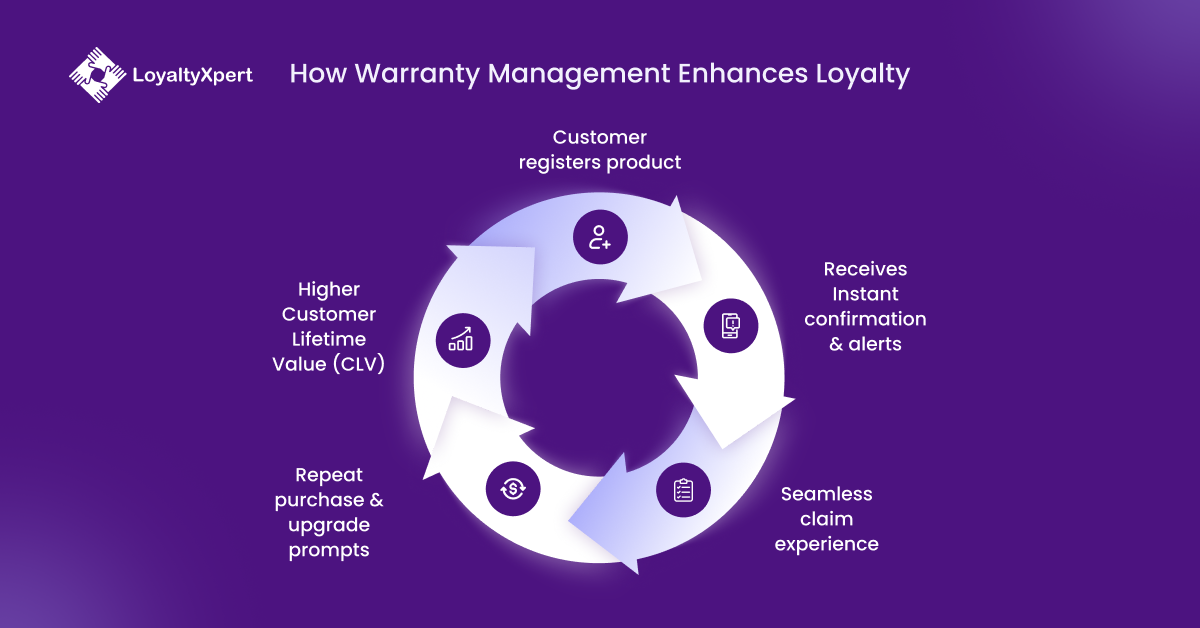
How Warranty Management Enhances Loyalty

How it transforms your loyalty ecosystem for Improved Product Quality:

  • Turns post-purchase into a loyalty touchpoint

The moment customers register warranties through your app, you open a communication channel. You can greet them with instant confirmation, personalized offers, and onboarding tips, that is all built on data captured through your digital warranty solution.

  • Promotes repeat buying & timely upgrades

A smooth claim experience builds trust. Trust drives repeat buying. Intelligent prompts like upgrade suggestions before warranty expiry can be automated through your warranty management software solution, creating new revenue opportunities.

  • Improves customer lifetime value (CLV)

When customers receive quick support, transparent communication, and fair resolution via your warranty claims management system, they stay loyal. Every seamless claim handled is a reinforcement of brand reliability, directly boosting LTV.

💡 Did you know?

A unified digital warranty inside your loyalty app can cut claim-processing time by 50%, thanks to automated validation and real-time updates.

Implementation Blueprint for Faster Claim Processing

Before adding a warranty to your loyalty app, you must create a clear roadmap. This ensures the system works for your customers, your dealers, and your internal teams. Here’s a practical blueprint manufacturers can follow to integrate a strong warranty claims processing solution.

1. Audit Your Current Warranty Process

Start with the basics like how is warranty handled today? Map out pain points like delayed claim approvals, paper receipts, or manual follow-ups. This helps you understand where warranty software solutions can bring efficiency and cost savings.

2. Define the Customer Journey

Visualize the ideal experience from product purchase to claim closure.
Ask:

  • How should customers register products?
  • When should they receive alerts?
  • Where do they track status?

Designing this journey upfront ensures the digital warranty solution is intuitive and customer-friendly.

3. Connect Dealers & Service Partners

Warranty is not just a manufacturer’s function, it’s a full ecosystem. Ensure dealers, installers, and service centers are connected to your warranty management software solution. This reduces miscommunication and speeds up verification and claim approvals.

4. Automate Approvals & Verification

Automation is where most manufacturers see immediate ROI.
Set rules for approvals, document verification, and service partner allocation. Let the warranty claims management system handle routine checks so your team can focus on complex cases.

5. Test, Launch & Optimize

Once everything is mapped, test the entire flow of product registration, claim submission, service center mapping, and real-time notifications. Launch your module in phases and keep refining the system based on customer behavior patterns and feedback collected from your loyalty app.

Data Security to Prevent Revenue Leakage

Imagine a customer uploading their bill, serial number, and personal details only to wonder, “Is my data safe?”

This fear is real, and any gap can break trust instantly. That’s why your Warranty Management Software must do more than just process claims; it must protect every piece of information your customers share.

No CTA found.

A strong security foundation builds confidence. When customers know their data and invoices are safe, they engage more freely with your loyalty app. And for manufacturers, a secure system means fewer disputes, smoother audits, and complete transparency.

What data security should look like:

  • Protecting user data & invoices

Your warranty software solutions should offer encrypted storage, secure upload channels, and access-controlled dashboards. Customers feel safer when every invoice and warranty card sits inside a protected digital vault.

  • Creating a tamper-proof digital trail

Every action including registration, claim upload, and verification, should be logged automatically. A reliable warranty claims management system maintains a clear digital trail that prevents fraud and builds operational accountability.

  • Building trust with secure architecture

For manufacturers, trust is currency. Implementing a digital warranty solution with compliance features, audit logs, and role-based permissions reinforces long-term customer confidence.

Real Business Impact of Strong Product Warranty

Most brands think warranty only adds cost. But when done right, it adds real, measurable value. With a smart warranty management software solution inside your loyalty app, manufacturers unlock insights, efficiency, and stronger customer relationships.

The best part? These benefits show up quickly.

The real impact you can expect:

  • Higher NPS & customer satisfaction

A responsive claim process powered by a modern warranty claims processing solution eliminates frustration. Fast approvals and transparent updates directly lift trust and your Net Promoter Score.

  • Lower service workload

Automated workflows reduce manual checks, paperwork, and follow-ups. Your team spends less time validating claims and more time resolving important cases. This is where a strong warranty management software creates immediate operational relief.

  • Better product insights through data

With all claims, product failures, and service history stored in one place, manufacturers get cleaner insights. Patterns become visible. Problems become predictable. This helps refine product quality and future warranty strategies using your digital warranty solution.

💡Fun Fact

Over 70% of customers prefer brands that provide digital warranties because convenience and clarity matter more than ever.

How LoyaltyXpert Ensure Maximum Returns

Manufacturers often hesitate before adopting new technology, not because they don’t see the value, but because they worry about integration, data safety, and control. That hesitation disappears the moment they experience a system built specifically for them. This is where LoyaltyXpert, powered by advanced Warranty Management Software, makes all the difference.

LoyaltyXpert doesn’t just help you manage warranties but it helps you transform warranties into a strategic after-sales and loyalty engine. With robust features, seamless integrations, and field-tested reliability, it gives manufacturers exactly what they need to simplify claims, boost customer trust, and access deeper product insights.

Why LoyaltyXpert stands out:

  • API-ready architecture for manufacturers

LoyaltyXpert is built to plug into your existing processes effortlessly. Its API-driven structure ensures your ERP, CRM, service network, and loyalty app all stay in sync, making your warranty management software solution more powerful.

  • Secure, scalable, and easy to integrate

With enterprise-grade security and a flexible workflow engine, it supports everything from small-scale claims to high-volume operations. This gives manufacturers peace of mind when handling sensitive records in their warranty claims management system.

  • Proven results across multiple industries

From consumer electronics to building materials, brands have already streamlined their after-sales with LoyaltyXpert’s digital warranty solution. Faster claims, fewer errors, and stronger customer loyalty, that’s the impact manufacturers continue to see.

The Final Thought

In today’s competitive market, customers stay loyal to brands that support them beyond the purchase. That’s why manufacturers are turning to smart, digital-first warranty solutions to strengthen trust and enhance the after-sales experience. With the right Warranty Management Software, warranty becomes more than a service, it becomes a powerful driver of repeat purchases, customer satisfaction, and long-term loyalty.

A seamless digital warranty journey shows customers that you value their time, their investment, and their experience with your brand. And when your warranty process is smooth, quick, and transparent, you create customers who confidently choose you again.

If you’re ready to upgrade your loyalty app with a robust and intuitive warranty module, LoyaltyXpert is here to help.

You can contact us for a consultation or get a free demo to experience how our platform transforms warranty into a true loyalty advantage.
Why Manufacturers Trust Meet Management Software for Ground-Level Brand Promotion

Imagine your promotions are planned to perfection, your campaigns are creative, yet sales remain stagnant. The culprit isn’t the product or the message, but it’s the inconsistent execution on the ground. In the competitive world of manufacturing, a brand’s visibility isn’t decided in boardrooms. It is either won or lost in the field. This is where Meet Management Software steps in, transforming fragmented field efforts into measurable, impactful brand promotions.

For manufacturers, every missed dealer visit or delayed activation isn’t just an operational gap but a lost revenue. With the right promotions management software, you can ensure that every nukkad meet, contractor interaction, and mason-painter-plumber engagement translates into a meaningful connection. From scheduling offline meetings to tracking outcomes, a robust meet management app or meeting management system ensures every touchpoint works toward your brand’s growth.

Ground-Level Promotion Is Tough, but the Right Software Makes It Easy

Ground-level brand promotion has always been challenging. Field teams, dealers, and promoters operate across thousands of locations, making it nearly impossible to track execution accurately. Inconsistent dealer engagement, missed activations, and a lack of real-time insights cost manufacturers millions every year.

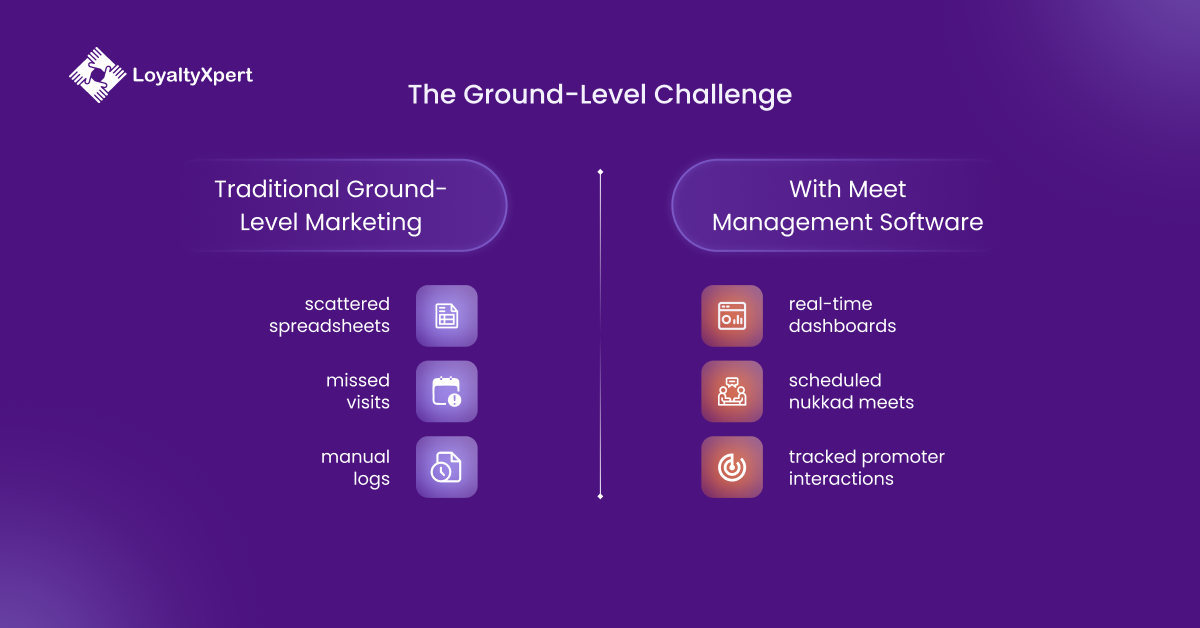
The Ground-Level Challenge for Meet Management Software

This is where Meet Management Software comes into play. Acting as a bridge between strategy and execution, it brings visibility and accountability to field operations. Brands no longer rely solely on manual reports. They gain real-time insights that enhance field marketing efficiency, improve sales execution, and elevate overall performance.

With features tailored for offline interactions, from nukkad meet planning to contractor meeting management software, manufacturers can monitor, guide, and optimize every ground-level activity.

The Real Pain Points of Ground-Level Brand Promotion

Even the best marketing strategies stumble when the field execution falters. Here’s why manufacturers face challenges at the ground level:

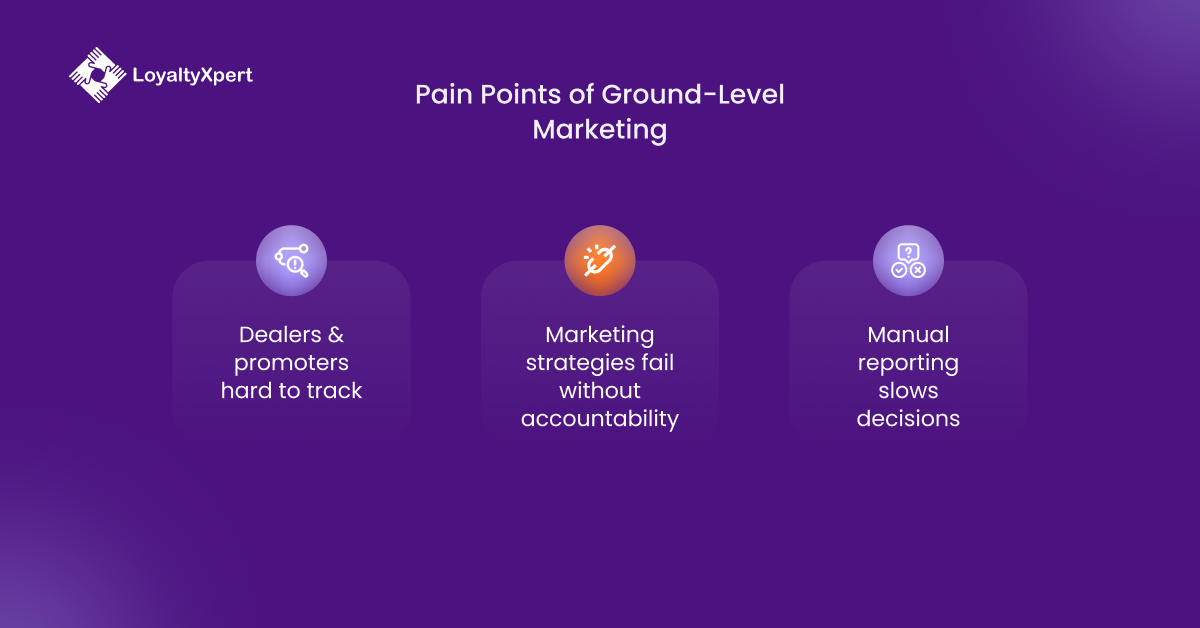
Pain Points of Ground-Level Marketing of Meet Management Software

1. Dealers, Promoters, and Field Representatives Are Hard to Track

Field teams are constantly on the move. Dealers get missed, promoters skip planned activations, and brand messaging often varies. This inconsistency creates gaps in visibility and weakens brand impact.

With a mason painter plumber meeting software, you can track every dealer interaction, promoter activity, and offline engagement. A meeting management system ensures no nukkad meet is missed, every field rep is accountable, and messaging remains consistent.

2. Manual Reporting Slows Down Decisions

Relying on spreadsheets, WhatsApp messages, or paper logs slows decision-making. By the time data reaches manufacturers, insights are outdated, and opportunities have passed. ROI of campaigns remains unclear, and corrective actions are delayed.

A meeting management app automates reporting in real time. Manufacturers can now see exactly which activations were completed, where gaps exist, and how field teams are performing. This not only improves brand promotion software effectiveness but also enhances overall field marketing efficiency.

3. Marketing Strategies Fail Without Accountability

Even the most well-crafted campaigns fail when execution lacks accountability. Without measurable oversight, budgets are wasted, promotions flop, and teams lose direction.

Integrating a meet management software provides a single source of truth. Every nukkad meet, offline session, or dealer interaction is logged, tracked, and analyzed. With clear performance metrics, manufacturers can ensure sales execution aligns perfectly with the marketing plan, and field teams remain responsible for results.

The Meet Management Software

For manufacturers, the real challenge isn’t just creating a product but making sure it reaches the right people, at the right time, in the right way. Missed dealer visits, inconsistent nukkad meets, or poorly executed field promotions can fade brand impact and sales. This is where Meet Management Software becomes a game-changer. It bridges the gap between strategy and execution, giving manufacturers control over every ground-level activity.

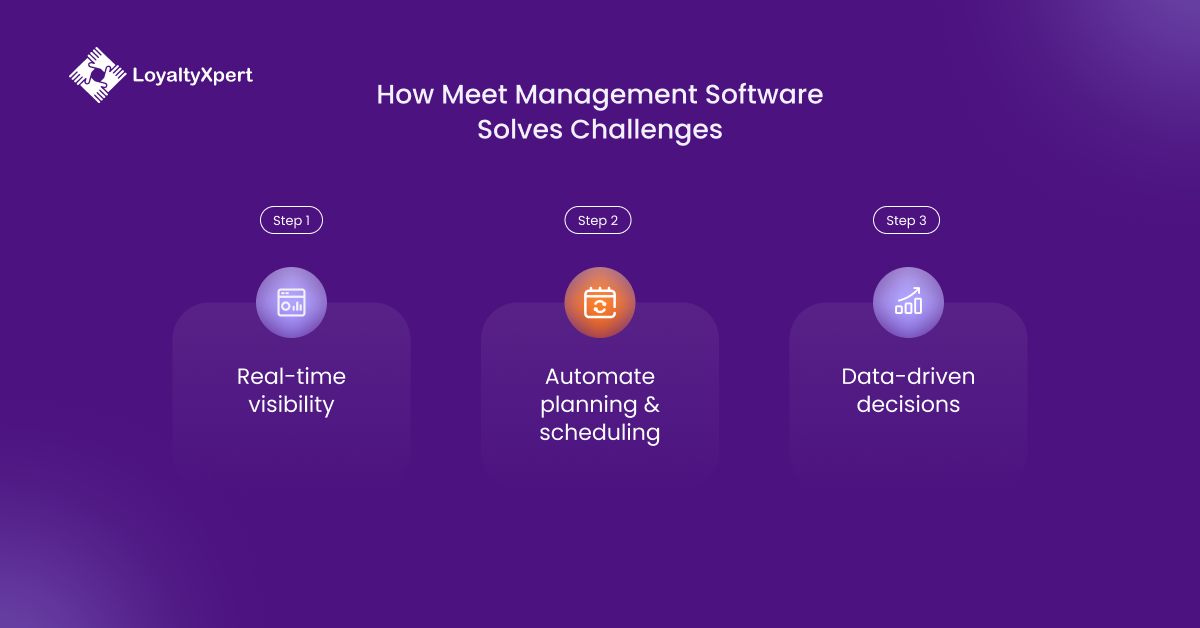
How Meet Management Software Solves Challenges

1. Real-Time Visibility Into Every Field Activity

Imagine having a window into every nukkad meet, mason-painter-plumber interaction, and offline activation, all in real time. With Meet Management Software, you can:

  • Track dealer engagement, promotions, stock, and demos instantly
  • Monitor offline meetings and field team performance
  • Gain actionable brand promotion insights

This kind of real-time reporting and field activity tracking ensures that manufacturers never miss an opportunity and can act swiftly to optimize campaigns.

2. Automate Planning, Scheduling, and Execution

Field teams juggle multiple visits, routes, and priorities every day. Manual planning often leads to overlaps, missed visits, and wasted effort. The automation reduces costs and boosts efficiency. A robust meeting management app allows you to:

  • Assign tasks and plan daily schedules for dealers and promoters
  • Optimize routes for maximum coverage
  • Ensure every nukkad meet or offline meeting counts toward measurable goals

By automating these processes, manufacturers can implement effective marketing strategies while reducing errors and operational stress. This is the essence of sales scheduling software in action.

3. Data-Driven Decisions That Boost ROI

Without data, field marketing is guesswork. With the right meet management software, every visit, promotion, and dealer interaction feeds into an analytics dashboard, allowing manufacturers to:

  • Identify top-performing dealers and promoters
  • Spot underperforming regions or campaigns
  • Optimize resources to maximize ROI

This data-driven marketing approach ensures that ground-level investments generate measurable returns, turning field activity into tangible business growth.

? Did you know?

Manufacturers lose millions each year due to missed dealer visits, and Meet Management Software can track everyone in real time.

Professional Meeting Management Software Features That Transform Ground-Level Marketing

A truly effective promotions management software does more than track. It empowers field teams, strengthens dealer relationships, and ensures campaigns deliver results.

1. Task Management and Automated Alerts

Field teams operate in a fast-paced, dispersed environment. Forgetting a visit or missing a promotion deadline can derail an entire campaign. Key features include:

  • Smart task management for daily schedules
  • Automated activity alerts and reminders for promoters and dealers
  • Tracking progress and completion in real time

This keeps the entire team aligned and ensures no offline meeting or nukkad meet is ever overlooked.

2. Loyalty Program Integration for Dealers and Promoters

Motivation drives performance. A loyalty program software integrated with your Meet Management Software rewards dealers and promoters for consistent execution.

  • Incentivize high performance with points or bonuses
  • Recognize top-performing promoters and dealers
  • Boost advocacy through structured reward programs

When field teams feel valued, their engagement improves, directly impacting brand promotion success.

3. Local SEO & Digital Marketing Support

Ground-level marketing doesn’t exist in isolation. Linking offline activities with online visibility amplifies results. A comprehensive meeting management system may include:

  • Local SEO support for dealer locations
  • Tracking offline campaigns and their online impact
  • Integrating digital tools to enhance online presence and in-store visibility

By connecting offline and online efforts, manufacturers can maximize their reach and improve the overall effective promotions management software.

? Fun Fact

Field teams can cover thousands of locations, but without the right software, more than 30% of offline promotions go untracked!

Why Manufacturers Prefer Meet Management Software Over Traditional Methods

Traditional methods of ground-level brand promotion, such as manual logs, spreadsheets, and scattered reports, just can’t keep up with today’s fast-paced, multi-location operations. Manufacturers face missed activations, inconsistent messaging, and delayed insights, which cost both time and revenue. Meet Management Software solves these problems by providing a centralized, real-time, and actionable platform for field teams.

1. Speed and Efficiency at Scale

Manual tracking slows everything down. Imagine having to consolidate hundreds of dealer visit reports from different regions, only to realize a key nukkad meet was missed. With a meeting management app or meeting management system, these challenges vanish.

  • Replace spreadsheets with automated dashboards
  • Track every offline meeting, mason-painter-plumber engagement, and contractor interaction instantly
  • Improve operational efficiency while managing multiple cities and teams

This is the power of scalable field management, turning complex field operations into smooth, predictable execution.

2. Consistency Across All Markets

In the coatings industry, a brand’s reputation is built on consistency. Whether a painter meets your promoter in Mumbai or a dealer interacts with your team in Delhi, the experience should feel identical.

Meet Management Software ensures:

  • Uniform messaging at every dealer outlet
  • Standardized execution for every nukkad meet and offline promotion
  • Stronger in-store experience across all touchpoints

This consistency reinforces trust, strengthens your presence in the coatings industry, and helps your brand stand out in crowded markets.

3. Measurable Impact on ROI and Brand Recall

Without clear metrics, manufacturers cannot link promotions to sales or engagement. With the right promotions management software, every activity becomes measurable.

  • Real-time reports show completed activations and dealer engagement
  • Insights into high-performing regions and promoters
  • Clear connections between ground-level activity and sales growth

This provides measurable marketing ROI, improves brand visibility, and ensures that field marketing efforts translate directly into tangible business results.

? Did you know?

Automating nukkad meets and contractor interactions can boost marketing ROI by up to 25% with smarter field tracking.

Real-World Manufacturer Use Cases

The versatility of Meet Management Software extends across industries. Manufacturers in diverse sectors use it to streamline field operations, improve accountability, and increase ROI.

1. Paint & Coatings Industry

Paint manufacturers rely on contractor meeting management software to:

  • Track painter engagement and loyalty
  • Monitor shade demos and product sampling
  • Ensure dealer activations are completed as planned

The result: stronger ground-level presence, higher brand recall, and measurable field marketing success.

2. FMCG and Consumer Goods

Fast-moving consumer goods companies use offline meeting management tools to:

  • Schedule and track sampling campaigns
  • Manage in-store promotions across multiple outlets
  • Monitor distributor visits and engagement

By replacing manual reporting with a meeting management system, FMCG brands ensure consistency, accountability, and faster decision-making.

3. Industrial Equipment & Construction

In B2B environments, manufacturers use Mason Painter Plumber meeting software and meeting management apps to:

  • Schedule product demos for contractors and large clients
  • Track regional marketing campaigns and offline meetings
  • Streamline communication between sales teams and field operators

These industry-specific marketing software applications demonstrate the scalability and flexibility of modern meet management solutions. They help manufacturers improve field execution while reducing operational friction, as shown in numerous field marketing case studies.

Key Takeaways on Why Manufacturers Can’t Ignore This Technology

Ground-level brand promotion is no longer about guesswork or hope. Today, manufacturers need control, visibility, and measurable impact at every touchpoint. Without it, even the best marketing strategies can fail to translate into real sales.

No CTA found.

Meet Management Software ensures that every dealer visit, promoter interaction, and nukkad meet is tracked and optimized. From offline meeting management to contractor meeting management software for masons, painters, and plumbers interactions, every field activity becomes accountable.

Why manufacturers trust this technology:

  • Every offline interaction builds brand recall and loyalty
  • Real-time reporting and analytics enable smarter decisions
  • Field teams are guided and monitored, reducing missed activations
  • Integrates seamlessly with other digital marketing tools for manufacturers
  • Improves efficiency and drives results through ground-level marketing software

With this technology, field execution stops being a gamble and starts delivering effective marketing outcomes consistently.

Conclusion

In today’s competitive marketplace, manufacturers who rely on spreadsheets, manual logs, or scattered reports are always a step behind. The real advantage lies in visibility, accountability, and data-driven action.

A meeting management system or meeting management app transforms every nukkad meet, dealer engagement, and mason-painter-plumber visit into a strategic brand-building opportunity. Using promotions management software, manufacturers can ensure consistent messaging, optimize resources, and measure ROI with precision.

The bottom line: Meet Management Software isn’t just a tool but a growth engine. It enhances sales performance software, strengthens brand promotion ROI, and allows manufacturers to win the field, one actionable interaction at a time.

Want to see it in action? Contact us to learn more, or get a free demo of LoyaltyXpert today and transform your ground-level marketing.

How to Create a Unique Brand Identity in the Competitive Paint Market

Imagine walking into a paint store. There are rows of buckets, similar promises, identical shades, and every brand claiming “premium quality.” For most customers, it’s overwhelming. For most painting businesses, it’s a daily battle.

This is exactly where paint brand marketing begins: not with flashy campaigns, but with a unique brand identity that communicates why your paint business exists and what makes it different.

In today’s crowded paint industry, differentiation isn’t optional; it’s survival. When products look and perform almost the same, your identity becomes the anchor that customers remember. Clear positioning builds trust, helps shoppers make quicker decisions, and drives customer loyalty.

A strong identity shapes every part of your marketing strategy, from packaging and painter communication to dealer engagement and your in-store experience. More importantly, it helps your paint brand show up consistently across channels, whether through digital marketing, local events, or retail presence.

What does a Strong Identity help you achieve? 

  • Clear brand recognition among customers
  • A stronger emotional connection that can evoke emotions
  • Higher recall at local searches and high-traffic areas
  • More consistent paint business marketing
  • Improved dealer and painter advocacy
  • Increased repeat business and customer trust

When the market is crowded, the brand with clarity becomes the brand customers trust.

Master The Foundation of Effective Paint Brand Marketing

Before designing campaigns or hunting for the best marketing strategies for painting businesses, you need to conduct market research. According to Grand View Research, the global paints and coatings market size was estimated at USD 211.28 billion in 2024 and is anticipated to reach USD 280.19 billion by 2030. The coatings industry doesn’t run purely on advertisements. It actually runs on influence, relationships, and trust.      

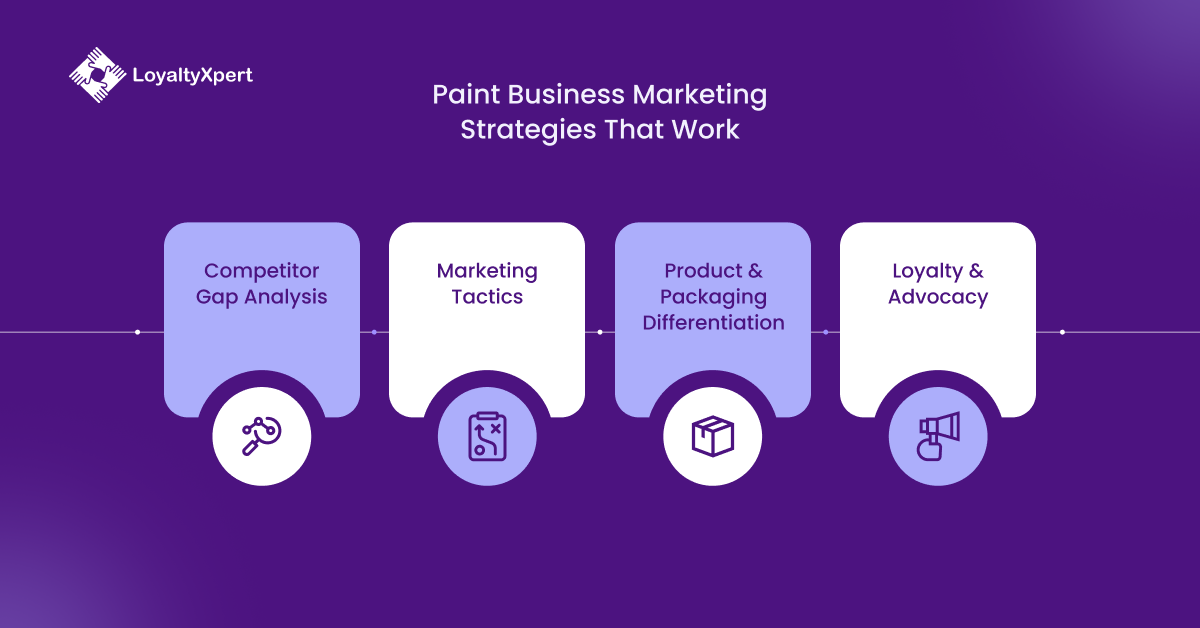
Paint Brand Marketing Strategies That Work

1. Understanding Buyer Influence in the Paints and Coatings Industry

Purchase decisions in painting services often involve multiple stakeholders. Understanding who influences choices helps your paint business position itself better.

Key Influence Groups:

  • Dealers: Recommend what sells and what they trust. Earning their confidence is critical.
  • Painters: Often the strongest influencers. Their comfort and experience impact brand choice.
  • Contractors: Prioritize durability, finish, and reliability. A clear, credible identity resonates strongly.
  • Homeowners: Seek aesthetics, trust, and guidance. Storytelling helps them feel confident.

A brand identity that speaks differently to each segment becomes memorable and strengthens your competitive edge in the painting industry.

2. Spot Competitor Blind Spots With Effective Marketing Strategies

Even strong painting companies leave gaps, benefits they don’t highlight, or audiences they overlook. Your advantage lies in identifying these blind spots. 

So, how to Identify Blind Spots?

  • Gap Analysis: Understand what competitors promise versus what customers still desire.
  • Underused Benefits: Maybe your paint dries faster, resists moisture, or offers bold colors. Highlight these.
  • Segment Needs: Homeowners may want shade cards, while painters prefer easy application.

Aligning your marketing strategy with these insights makes your identity sharper and your positioning harder to ignore. Additionally,  below are some effective marketing strategies you can include:

  • Story-driven dealer activations
  • In-store experience improvements
  • Shade-selection tools for homeowners
  • Painter community engagement
  • Value-based offers supported by a loyalty program

These moves naturally help your painting businesses increase visibility and grow sales without shouting louder than competitors.

? Fun Fact

Some paint brands use scratch-and-sniff technology on sample cards, letting customers experience the scent of fresh paint before buying.

The Effective Marketing Strategies Behind Every Memorable Paint Label

A strong brand doesn’t start with a logo, but it starts with clarity. In the paint industry, successful painting businesses know exactly who they are and what they stand for. This clarity is the foundation of an effective marketing strategy.

1. Define a Brand Mission That Powers Your Entire Marketing Strategy

Your mission is the north star of your paint marketing strategy. It guides communication, product innovation, and even how painting contractors perceive your business. First, ask yourself, Why does your paint business exist beyond selling paint?

A clear mission provides direction to your team and builds confidence in your target audience. Whether your focus is affordability, premium quality, sustainability, or professional-grade performance, this mission informs all campaigns, store marketing, and painting services initiatives.

2. Shape Brand Values That Strengthen Your Brand Story

Values are the emotional foundation of your brand identity. They never sit idle on a website. They appear in every action and every communication. Common values for successful painting businesses include: 

  • Innovation: New shades, faster drying, improved coverage
  • Durability: Long-lasting coatings and superior protection
  • Sustainability: Lower volatile organic compounds (VOCs) and eco-friendly production
  • Painter-first approach: Respect for professionals who bring your brand to life

Clear values make your brand story authentic, improving trust among painting companies, dealers, and customers.

3. Create a Distinct Personality That Supports Your Strong Online Presence

Your paint brand must feel a certain way the moment customers see your packaging, brochure, or ad. Personality strengthens your digital marketing and painting business marketing style.

A distinct identity includes recognizable tone, visual identity, and communication style. This clarity amplifies your best marketing ideas, strengthens brand recognition, and improves engagement with painters, contractors, and homeowners.

Product-Level Differentiation – The Most Overlooked Paint Brand Marketing Advantage

Many paint businesses focus on promotions but forget that the product itself is often the strongest differentiator. In a crowded paints and coatings industry, your formulation, performance, and science give you an edge that competitors can’t copy.

1. Engineer USPs Backed by Coatings Industry Innovation

Highlight strengths that matter in real-life use. Your USPs must be supported by research, not generic claims. Your USPs can be weatherproof protection, washable wall technology, low-VOC formulas, or better surface bonding and smoother finishes. As per a report, over 53% of manufacturers globally are transitioning to low-VOC systems, citing environmental regulations and safer application. 

These innovations help your painting businesses stand out and strengthen customer perception.

2. Highlight In-House Strengths Through Effective Marketing Strategies

Every paint business has unique strengths, such as R&D teams, quality materials, or advanced labs. These are differentiators when highlighted. 

Showcase R&D processes, science behind coating performance, quality and consistency, and testing protocols for durability. Sharing these stories builds trust among painting contractors, dealers, and customers.

3. Use Certifications as Trust Builders in Your Marketing Strategy

Certifications are more than badges. They are proof of credibility, and instantly elevate your paint business in the eyes of customers. Useful trust markers include ISO certifications, BIS compliance, Environmental safety certifications, and VOC safety approvals.

Including these in your branding, packaging, store displays, and even on digital platforms improves perception and supports the Best advertising strategies for paint shops. When supported with a strong identity and, eventually, enhanced by tools like LoyaltyXpert for channel partners, these credibility boosters make your brand stand out across all touchpoints.

The Visual Identity & Packaging – Where Paint Brand Marketing Meets Shelf Power

Before customers hear your story, they see your bucket. Packaging is the first handshake between your brand and the customer. A strong visual identity drives local visibility and higher sales.

1. Packaging Built for Impact and a Better In-Store Experience

Effective packaging improves content marketing, dealer recommendations, and impulse purchases. Your key focus areas should be Clear color codes such as easy shade identification, high readability like coverage, drying time, and VOC info, and premium cues like: Matte surfaces, metallic elements, structured layouts.

Purposeful design communicates perceived value even before the lid opens.

2. A Signature Look That Strengthens Your Brand Story

A strong identity is built on consistency. Your logo, color palette, and typography should work together like a visual signature people can recognize instantly from billboards to WhatsApp creatives.

A signature look strengthens your Paint business marketing by ensuring every touchpoint feels unified. Whether you’re running digital campaigns, shade-card promotions, or the best advertising strategies for paint shops, a distinct design makes your communication more impactful.

This visual consistency also supports all the best marketing ideas for the painting business, increasing recall and building long-term trust with painters, contractors, and homeowners

? Did you know?

White paint was once so rare and expensive that it was considered a status symbol in homes, centuries before modern mass production.

Win at the Counter With Dealer-Centric Paint Brand Marketing

Dealers are a major influence in the painting industry. Building strong relationships boosts sales and provides a competitive advantage without high ad budgets.

1. Build a Loyalty Program That Inspires Consistent Advocacy

Dealers recommend brands they trust, and those that reward them consistently. A well-structured loyalty initiative can turn your dealer network into your strongest marketing engine. A modern loyalty program may include:

  • Rewards for monthly targets
  • Referral bonuses for bringing in new painters
  • Training incentives for product knowledge
  • Exclusive access to new shade cards or premium SKUs

Using a loyalty program software or loyalty management platform helps strengthen brand reputation, improve repeat business, and motivate dealers consistently. It automates rewards, tracks performance, and keeps dealers motivated throughout the year, ultimately helping you increase sales in the paint business. 

2. Engage Painters With Effective Marketing Strategies

Painting contractors often decide which paint brand is applied. You can engage them through hands-on demonstrations, painter meets and training sessions, trial programs and free samples, and recognition events for long-term partners.

These marketing strategies foster credibility and strengthen your painting business marketing.

3. Boost Dealer Visibility Through Powerful In-Store Experience Design

Great in-store branding does more than decorate the shop, it drives conversions. When customers walk into a paint store, they should feel your brand more strongly than any other. Tools that create high-impact in-store visibility are:

  • POP displays
  • Shelf strips
  • Glow boards
  • Product feature charts
  • Shade panels
  • Demo zones

Smart designs amplify your Paint store marketing and help dealers sell more with confidence.

Transform Product Features Into a Compelling Brand Story

Customers don’t just buy paint, they actually buy what the paint stands for. In the competitive paint industry, the most memorable brands are those that turn features into stories, and stories into trust. This is where the powerful paint brand marketing shines.

1. Share the Truth Through Digital Marketing

Every bucket has a story of how it’s made, what it stands for, and why it’s better. Use digital marketing to showcase manufacturing and testing processes, safety protocols, product quality and durability.

This transparency strengthens your paint marketing strategy and connects emotionally with customers, strengthening brand recognition.

2. Showcase Real-Life Results

People trust what they can see. Real transformations help them imagine what your paint can do for their walls and their spaces. You can show transformations with:

  • Before and after photos
  • Testimonials from homeowners and contractors
  • Painter success stories

Visual content enhances trust and supports effective marketing strategies. These proof points significantly improve your Paint business marketing, making your brand look credible, dependable, and customer-centric.

3. Content That Educates Is The Secret to Effective Marketing

Informative content establishes your brand as a leader in the market. When you educate buyers, they rely on you for guidance, and that positions you above competitors.

Impactful content ideas include blogs on surface preparation and color trends, painting tips for homeowners, shade guides and color psychology, product comparison articles and painter technique videos.

Educational content improves recall, drives engagement, and supports all the best marketing ideas for painting business, especially when shared across digital platforms.

Dominating the Digital Landscape using Online Presence That Shapes Perception

Your digital presence influences potential customers before they ever visit a store. A strong online presence is critical for modern paint business marketing.

1. Build a Website Optimized for Local SEO

A high-performing website should include:

  • Shade selection tools
  • Dealer locators
  • Room visualizers
  • Easy-to-read product pages

Local SEO ensures your painting businesses are discovered first, driving traffic and conversions, and helps you increase sales in the paint business by capturing intent-driven traffic.

2. Capture Demand With Proven Marketing Strategies

Use tested digital methods to generate leads and boost store visits.

  • SEO and Google Business Profile optimization
  • Paid ads for homeowners and contractors
  • Content on color trends and home decor

These marketing strategies power your paint business marketing, attract leads digitally, and amplify offline presence.

3. Maintain Brand Consistency Across All Digital Marketing Channels

Consistency is what makes brands unforgettable. Whether you’re running the best advertising strategies for paint shops or publishing content for painters, the brand must “look and feel” the same everywhere.

Ensure consistency across:

  • Website visuals
  • Social media posts
  • Google and marketplace listings
  • Dealer support content
  • Product brochures and digital catalogues

A unified presence strengthens trust and increases recognition, supporting everything from your paint store marketing to your broader digital brand system.

Craft a Signature Brand Experience Across Every Touchpoint

A memorable paint brand isn’t built from one interaction. It’s actually built from hundreds of small experiences. In the competitive paint industry, the brands that win are the ones that deliver consistency before the sale, during the sale, and long after the bucket leaves the store. This is the true essence of strong paint brand marketing.

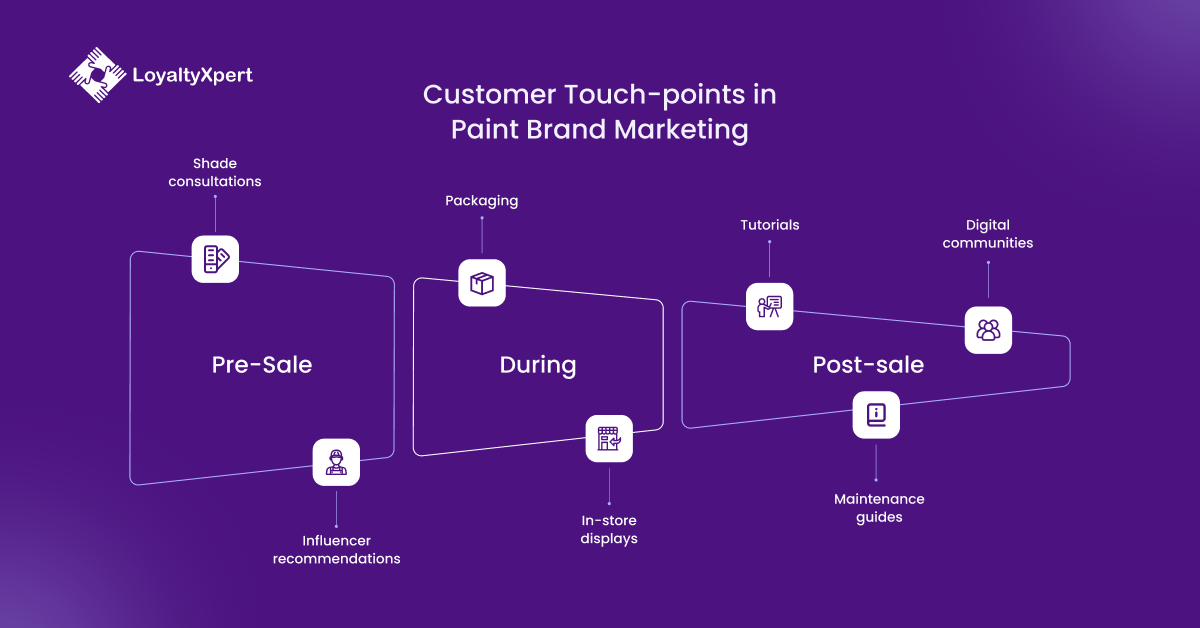
Customer Touch-points in Paint Brand Marketing

Pre-Sale Guiding the Customer With Confidence

Before they buy, customers often need clarity. They want to know which shade suits their home, which finish will last longer, and which brand painters trust. Strong pre-sale touchpoints include:

  • Shade consultations (online or in-store)
  • Painter recommendations and influencer advocacy with home decor influencers
  • Digital visualizers and color tools
  • Educational content integrated with marketing strategies

These touchpoints not only increase trust but also integrate naturally with the best marketing ideas for the painting business, helping homeowners choose your brand faster.

During Sale at the Shelf and the Counter

The moment of purchase is when customers make quick decisions. Your in-store presence must communicate quality, clarity, and confidence. Impactful during-sale elements are:

  • Distinctive packaging that stands out
  • Strong merchandising units
  • Dealer counter branding
  • POP materials and shade cards
  • Clear product benefits highlighted visually

This boosts your paint store marketing and strengthens your paint business marketing right where buying decisions occur.

Post-Sale: Keep the Relationship Alive

Most paint brands go silent after the sale, but strong brands continue nurturing their customers. This post-sale focus builds trust and encourages repeat purchases. Ideal post-sale initiatives are: 

  • Product tutorials and usage videos
  • Maintenance guides
  • Direct mailers with shade tips or repaint reminders
  • After-sales support for contractors and painters
  • Digital communities for professional painters

No CTA found.

Supporting these touchpoints with tools like a LoyaltyXpert platform helps you stay top-of-mind and increase sales in the paint business year after year.

Internal SEO Opportunities

This section is perfect for linking to additional articles, such as:

  • How to Use Digital Tools to Improve Your Paint Store Marketing
  • Best Advertising Strategies for Paint Shops in 2025
  • Top Paint Business Marketing Trends Every Brand Should Watch
  • How to Build Loyalty Among Painters and Dealers

Strategic internal linking boosts authority, improves navigation, and elevates your organic ranking.

Closing Thoughts

In a crowded market, anyone can make paint, but only a few brands create lasting impressions. Strong brand identity, clarity, and consistency give a competitive edge, increase customer loyalty, and support sustainable growth for your painting businesses.

The brands clear about who they are, consistent across every touchpoint, committed to satisfied customers, and focused on customer behavior, preferences, and needs, clearly win.

Great paint brand marketing shows up with clarity, delivers value, and owns that space in your target market where trust lives. Build it well and your paint business will grow stronger, differentiated, and more resilient.

To make loyalty a key part of your growth strategy, contact us today or get a free demo to see how LoyaltyXpert can help you engage customers and boost repeat business.

Budget-Friendly Adhesive Marketing Ideas To Boost Your Brand Visibility

Why isn’t anyone noticing my adhesive? It’s strong, reliable, and built to deliver excellent product performance. But on crowded store shelves, it feels invisible.

If this thought has crossed your mind as a brand owner, you’re not alone. In the global adhesives market, customers are flooded with similar products, all promising strength, speed, and durability. Customers such as carpenters, contractors, and homeowners are spoiled for choice, and in this competitive landscape, brand loyalty is hard to earn.

Here’s the tough truth: shouting louder or spending more on ads rarely works. Big budgets don’t win in adhesive marketing; strategic thinking does. And when strategic thinking combines with creative adhesive technologies, even small brands gain a powerful competitive advantage in a noisy competitive landscape.

In a world where every adhesive looks the same, the brands that succeed aren’t the ones with the deepest pockets; they’re the ones that stick in people’s minds with adhesive solutions. That’s where adhesive marketing gets exciting. It’s not about celebrity endorsements or huge campaigns. It’s about insight, creativity, and consistent messaging that connects with real users. A smart, budget-conscious adhesive brand can still create impact, build trust, and become unforgettable.

In this blog, I’ll share practical, low-budget creative strategies to make your adhesive brand stand out. Here, you’ll see how smart moves, clear messaging, powerful ideation, strategic thinking, and client-centric storytelling can help your adhesive brand stick with your target audience without spending heavily.

Understanding Your Brand’s Core & The Market Size

Before you execute any adhesive promotion or creative marketing campaigns, you need to clarify the foundation of your brand. Many business owners jump straight to adhesive marketing without understanding who their customers are. But the best adhesive brand strategic thinking starts with deep clarity, not deep pockets. Your marketing becomes cost-effective the moment you know exactly who you’re speaking to.

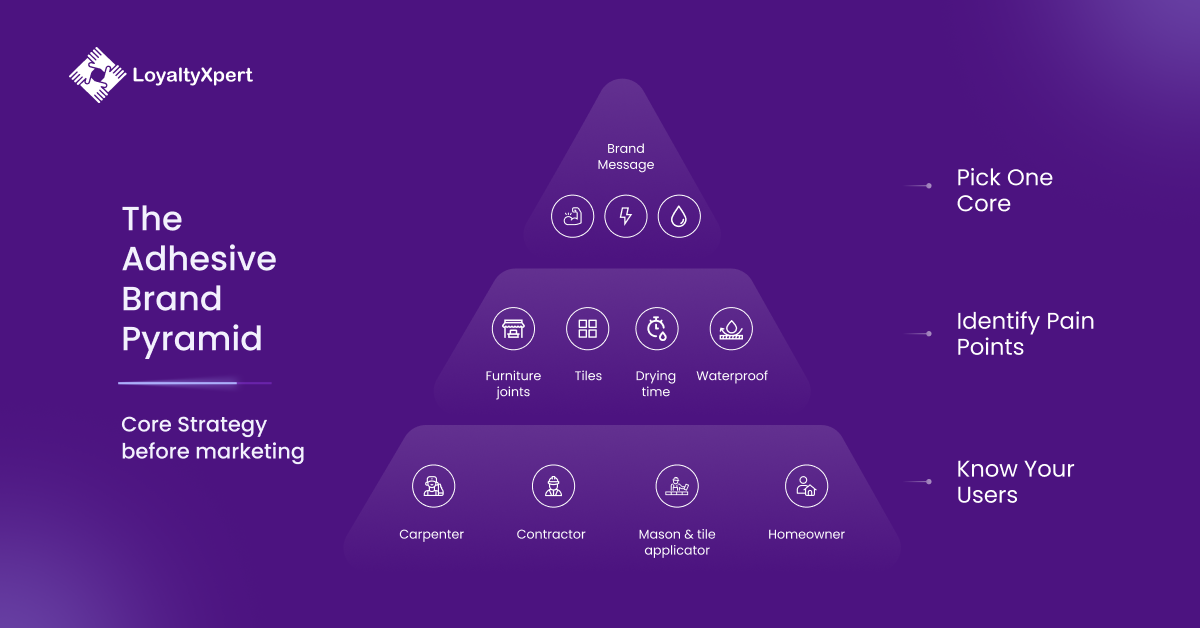
The Adhesive Marketing Brand Pyramid

In the global adhesives industry, your target audience usually falls into four groups:

  • Carpenters
  • Contractors
  • Masons & tile applicators
  • DIY users & homeowners

Each of these groups chooses adhesives for different reasons. A carpenter wants grip strength and long-term reliability. A contractor wants fast-setting time and cost-effectiveness. A homeowner wants an easy-to-use, mess-free solution.

When your messaging reflects this diversity with client-centric precision, your brand positioning becomes stronger and easier to stick in the market size of construction and automotive industries. **Marketing becomes cost-effective when it is driven by strategic thinking, supported by creative solutions, and backed by an understanding of growing demand for adhesives, including hot melt adhesives, epoxy adhesives, polyurethane adhesives, and acrylic adhesives, that perform well across different surfaces and high temperatures.

Identify Pain Points Your Adhesive Solves in the Adhesive Market

The fastest way to build trust without spending money is to show that you understand a user’s problems. People trust brands that solve real problems. When your marketing campaigns highlight issues like tiles popping, long drying time, or failures in humid areas, the content instantly resonates.

Your business earns trust faster when communication shows strategic thinking, creative solutions, and powerful ideation, instead of generic advertising.

Common pain points include:

  • Furniture joints coming loose
  • Tiles popping up
  • Long drying time slows down work
  • Poor bonding on moist or uneven surfaces
  • Adhesives that don’t perform consistently

The automotive industry and construction industry often face similar challenges when selecting adhesives. For example, bonding in vehicle weight reduction projects or high-rise building and construction industry projects requires advanced adhesive technologies. Using water-based adhesives or solvent-borne adhesives compliant with stringent environmental regulations ensures performance while maintaining regulatory compliance.

Choose One Core Message For Your Brand’s Adhesive Marketing

Every strong adhesive brand is known for one thing. It may be strength, waterproof bond, instant set, versatility, heat resistance, chemical resistance, or eco-friendly. Pick ONE core message and let it guide every piece of content, demonstration, WhatsApp communication, and dealer conversation. When you focus on one thing, the message becomes memorable and marketable.

Once you have clarity on who your target audience is, what problems you’re solving, and what single promise you own, you can craft an adhesive brand story that becomes the backbone of all your low-cost marketing activities. Then, it becomes easier to create marketing campaigns that stick. A single focused message also helps your agency team align storytelling with strategic thinking and client-centric insights.

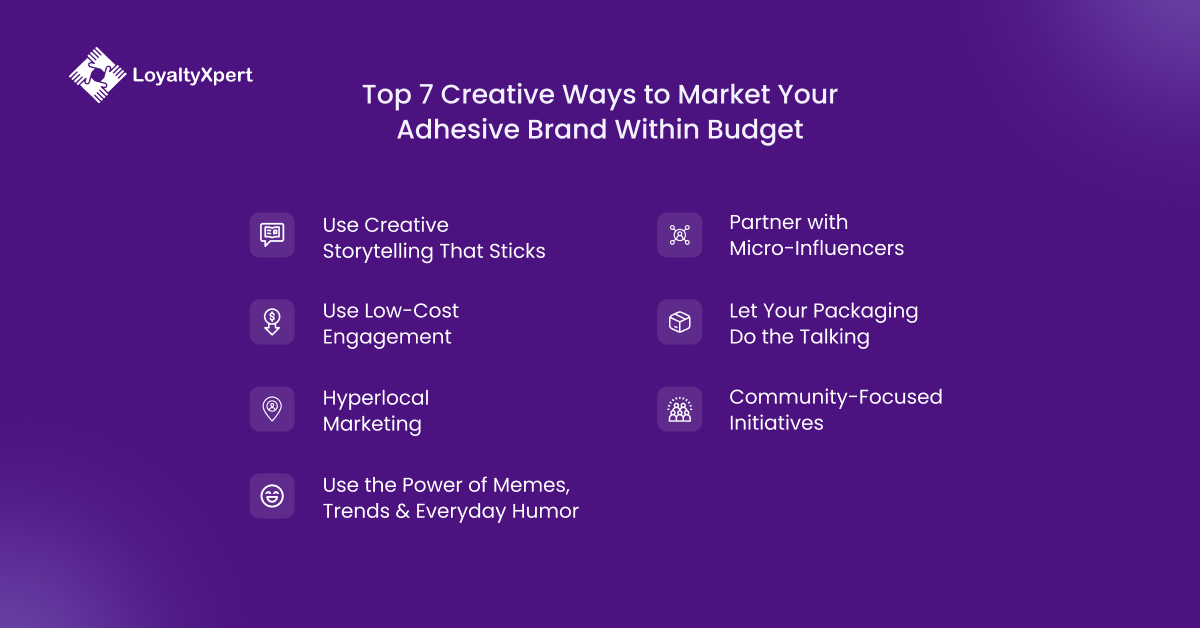
Top 7 Creative Ways to Market Your Adhesive Brand Within Budget

This is especially relevant in emerging markets and the Middle East, where technological innovations in reactive adhesives, UV cured adhesives, and cyanoacrylate adhesives are rapidly changing the global adhesives market. Performance standards and environmentally friendly solutions are becoming key decision drivers, making your messaging critical to capturing market share.

1. Use Creative Storytelling For Adhesive Marketing That Sticks

Think about Fevicol again: most of their iconic ads were simple ideas built around everyday life. No star cast, no high production… just clever storytelling.

They used strategic thinking, adhesive technologies, cultural humor, and creative solutions. Your adhesive brand can do the same with low-budget powerful ideation.

Imagine this: A carpenter tries lifting a chair he glued yesterday… and now the whole table sticks with it. He looks confused, the family looks impressed, and the caption reads – “When bonding goes beyond expectations.”

It’s simple, funny, and instantly relatable. That’s the kind of creativity that sticks. Here are a few storytelling formats that work beautifully for adhesive marketing with low budgets:

  • Micro-stories (20–30 sec reels): Quick moments of “unexpected strength,” “everyday hassles solved,” or funny bonding scenarios with powerful ideation. These can show hot melt adhesives, UV cured adhesives, or cyanoacrylate adhesives in action. 
  • Relatable humor from Everyday Bonding Moments: A rickshaw whose mirror is fixed with your adhesive and survives every bump. A mason joking that your adhesive technologies have more patience than him.

Why this storytelling approach works:

People share what they enjoy, not what they are told. In a low-involvement category like adhesives, powerful ideation and storytelling become your biggest competitive advantage and your most affordable one. They help you stick in the minds of your customers, outperforming bigger competitors.

2. Use Low-Cost Engagement For Adhesive Marketing

In adhesive marketing, professionals influence customers long before they ever see it. Your product lives in the hands of carpenters, masons, contractors, and tile setters. These people care about performance more than packaging. Earning their trust doesn’t require a massive marketing budget, but it requires presence, respect, and consistency.

In emerging markets and the Middle East, where market growth is driven by technological advancements and rising consumer demand, a client-centric approach can make a deeper impact.

Picture this scene: A mason is explaining tile setting to a homeowner. The homeowner asks which adhesive will work best. The mason recommends the brand he trusts, the brand that supported him, trained him, and stayed visible in his toolbox. This is adhesive marketing at its finest.

Simple ways to build that trust:

  • Skill-based challenges: Friendly competitions like “Strongest Joint Challenge” or “Fastest Tile Fix Demo,” highlighting polyurethane adhesives or epoxy adhesives.
  • WhatsApp mini-workshops: Share bonding tips, quick-fix videos, and troubleshooting hacks.
  • On-site demos: Show how UV cured adhesives, hot melt adhesives, or solvent borne adhesives perform in real-life conditions.
  • Practical branded tools: Measuring tapes, pencils, cutter blades, and aprons.

These strategies require minimal spend but high strategic thinking. They also strengthen competitive advantage over competitors, especially in regions like the Middle East and Asia Pacific region, where market expansion and production volume are increasing.

3. Hyperlocal Adhesive Marketing – Striking Creative Ideas

Fevicol became a household name because it reflected everyday India. Our jokes, our settings, and our small joys. But you don’t need their budget to capture that charm. You just need to stay close to the people you serve.

Hyperlocal content powered by creative solutions helps your brand stick emotionally. Posters referencing local culture, festival-themed stickers, or regional humor show client-centric understanding of your target audience.

Imagine this:

During Navratri, a carpenter paints “Bond So Strong, Even Garba Steps Can’t Break It” on his toolbox sticker. Or a tea stall has a playful poster that says, “Our tea breaks are short. Our bonds aren’t.”

These tactics work well in:

  • Construction and automotive industries projects requiring reactive adhesives or smart adhesives
  • Packaging industry applications where flexible packaging uses water-based adhesives
  • Regions like Middle East and emerging economies where market adhesives demand innovation

Such ideas make your brand noticeable in a competitive landscape. Recent developments in bio-based adhesives, silicone adhesives, and cyanoacrylate adhesives give you more storytelling opportunities to stand out.

4. Use the Power of Memes, Trends & Everyday Humor

Today’s marketing battlefield is not TV or billboards—it’s WhatsApp forwards, Instagram reels, cricket commentary moments, and meme pages. If a brand can make people smile, it wins attention instantly.

Adhesives are a low-involvement category. Humor is high-involvement. It makes people stop scrolling. Trendjacking lets your brand stick in fast-moving digital conversations.

Picture this: A trending cricket moment where a player refuses to let go of the bat. Caption: “Grip so strong, even we’re impressed.” A Bollywood scene where two characters refuse to separate. Caption: “The original strong bond.”

Formats that work:

  • Trend jacking
  • Meme templates around “strong bond moments”
  • Expectation vs Reality short videos

Why this works:

Memes travel. Reels get shared. Jokes get forwarded. You can reach thousands, sometimes millions, without spending a rupee. Global adhesives brands in the automotive industry or construction industry can also leverage humor to highlight high performance standards or environmentally conscious solutions in a relatable way.

5. Partner with Micro-Influencers For Adhesive Marketing

Who influences adhesive buying decisions? Not movie stars. Not lifestyle influencers. But carpenters, DIY creators, craft hobbyists, and even college students building models or projects.

Ask them to share real application videos showcasing water borne adhesives, epoxy adhesives, or UV cured adhesives. This form of marketing feels authentic and relatable.

Micro creators help your business stand out by:

  • Showcasing genuine adhesive technologies and product performance
  • Increasing recall
  • Helping your brand stick

Imagine a local carpenter shooting a raw, unfiltered video on his phone, saying:
“Yeh wala chipak jaata hai. Tension mat lo.” This simple line is more powerful than any big-budget celebrity endorsement.

Key strategies:

  • Collaborate with creators having 1,000–30,000 followers
  • Offer barter deals: product samples in exchange for tutorials
  • Encourage hacks, repairs, DIY crafts, and project builds

Why this works:

Authenticity beats advertising. When real people use your adhesive solutions, it builds credibility faster than billboards. This Micro-influencer marketing strategy also highlights smart adhesives, cyanoacrylate adhesives, solvent borne adhesives, and water based adhesives, which are critical in emerging markets and Middle East applications.

6. Let Your Packaging Do the Talking in the Adhesives Market

In the global adhesives industry, packaging isn’t just a container; it’s your salesperson, educator, and advertisement all in one.

Imagine someone standing at a hardware store, confused between five adhesive brands. All they have is 5 seconds to decide. What makes them pick yours?

Smart packaging strategies:

  • Add quirky lines or a fun personality
  • Show easy-to-understand usage illustrations
  • Highlight certifications and performance standards boldly, such as waterproof, heat-resistant, and quick-bonding.

These cues act as trust badges on shelves. Good packaging can save thousands in advertising because it sells for you even when you’re not speaking. This is where creative solutions and strategic thinking blend seamlessly.

Pro tip: Include insights about hot melt adhesives, UV cured adhesives, polyurethane adhesives, solvent borne adhesives, cyanoacrylate adhesives, acrylic adhesives, and water based adhesives on your packaging. Demonstrating compliance with stringent environmental regulations and low volatile organic compounds appeals to the environmentally conscious buyer.

Recent developments in bio based adhesives and smart adhesives can also be highlighted to show your brand’s innovative edge in automotive applications, construction industry, and packaging industry applications.

Did you know?
A quirky line on your adhesive packaging can improve shelf pick-ups by 20–30%, even without changing the formula. 

? Did you know?

A quirky line on your adhesive packaging can improve shelf pick-ups by 20–30%, even without changing the formula. 

Leading market players in the Middle East and Asia Pacific region are already leveraging such tactics, contributing to market expansion and market growth.

7. Community-Focused Adhesive Marketing Initiatives

Some of the strongest adhesive brands didn’t grow by only selling products. They grew by adding client-centric value to empower your target audience, showing they care about more than just profit. You don’t need big budgets to build that kind of bond.

Ideas for community-first adhesive marketing:

  • School craft workshops using epoxy adhesives, hot melt adhesives, and reactive adhesives
  • “Repair Don’t Replace” awareness drives promoting traditional adhesives and other adhesives
  • Partner with NGOs for upcycling events using solvent borne adhesives or water based adhesives

Why it works:

People trust brands that contribute, not just advertise. When your adhesive promotion is rooted in community upliftment, your brand feels human, and humans buy from brands that feel human.

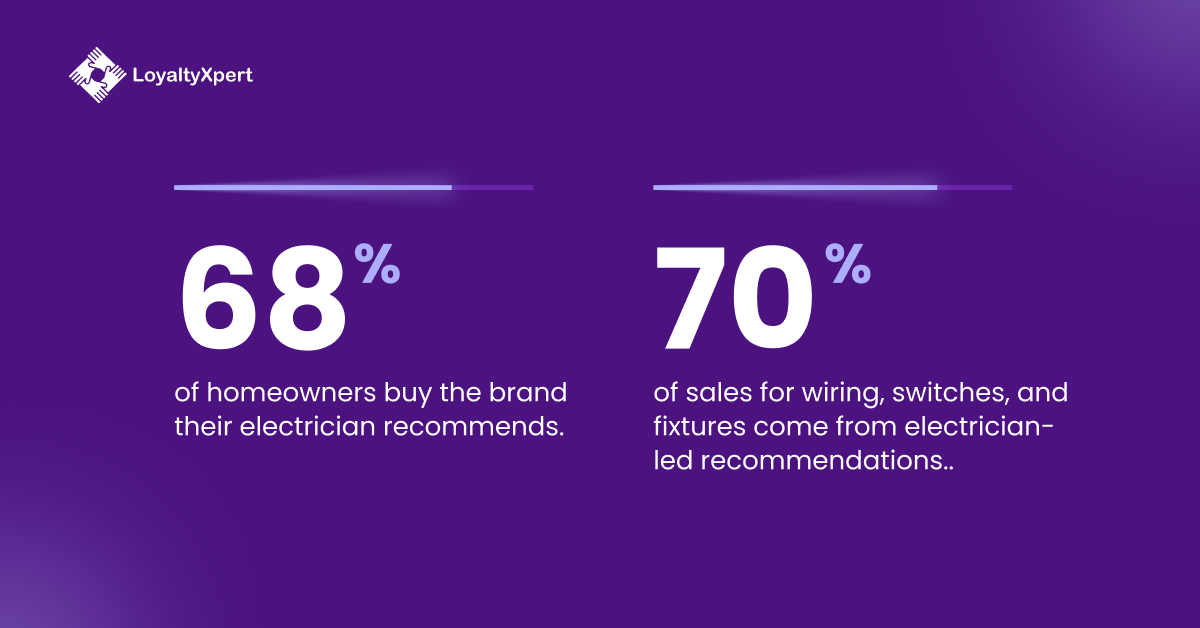
Market insight: Nearly 70% of adhesive recommendations at construction sites come from mason influence, not retailers. This influence extends to automotive industry applications, where trust and demonstration of performance standards in vehicle weight reduction or electric vehicles projects can increase market share.

Final Thoughts

At the heart of every unforgettable adhesive marketing strategy lies iconic marketing created by ideas. It comes from strategic thinking, creative solutions, and unstoppable powerful ideation.

Whether it was Fevicol’s storytelling, community presence, or cultural humor, the real power was always insight, not spending.

No CTA found.

In the adhesives industry, the brands that win are not the ones with the biggest budgets, but the ones with the boldest imagination. Your adhesive brand can achieve the same by understanding your users deeply and showing up consistently. Using creativity instead of costly campaigns, and building trust through real people, real stories, and real performance makes your brand very strong.

Market insights to strengthen your strategy:

  • Global adhesives market is experiencing significant growth in the Middle East, emerging economies, and Asia Pacific region
  • Hot melt adhesives, UV cured adhesives, cyanoacrylate adhesives, and water based adhesives are driving market growth
  • Global adhesives, polyurethane adhesives, and solvent borne adhesives dominate packaging industry and automotive applications
  • Companies face regulatory hurdles, stringent environmental regulations, and volatile organic compounds management, creating opportunities for environmentally friendly solutions
  • Technological innovations and technological advancements are driving market expansion and increasing production volume
  • Global market forecasts show significant growth during the forecast period, highlighting market size, market share, and market report insights

Contact us today to explore how you can strengthen your adhesive brand’s market reach or simply watch our free demo video to see LoyaltyXpert in action.

When your message sticks, your brand grows.

Driving Superior Loyalty Program Results with Deep Dealer Data Insights

Your dealer loyalty program isn’t the problem, your dealer data is.

You may be rewarding hundreds of dealers every month, but if sales aren’t growing, engagement is dropping, or the same few dealers redeem every reward, it’s time to go for a dealer loyalty program

That’s the challenge most manufacturers face today. 

Despite offering attractive rewards and running regular campaigns, their Dealer Loyalty Programs often fail to create a measurable impact. Points get redeemed, but purchases don’t rise. Dealers stay connected only until the next gift card. 

The truth is, manufacturers know what their dealers buy, but not why they buy, when they slow down, or what keeps them loyal. And that gap is exactly where dealer data makes the difference. Leveraging dealer-to-customer data allows you to gain insights into current market preferences and behaviors, enabling you to enhance communication, personalize deals, and sustain engagement for better program outcomes.

The smart manufacturers don’t just reward their dealers; they actually learn from them. When used right, dealer data becomes the foundation of a truly data-driven loyalty program that actually helps you identify trends, spot churn early, and design rewards that genuinely drive performance. With the right partner like LoyaltyXpert, the dealer data helps you turn every transaction, redemption, and interaction into insight, redefining how you measure loyalty success.

Why Dealer Data Matters More Than Ever in Dealer Loyalty Program Software

In manufacturing, success isn’t built on discounts or one-time rewards. It’s actually built on relationships. And relationships thrive on understanding. That’s why dealer data is your most valuable growth asset. It goes beyond sales numbers to reveal how your dealers think, act, and engage. Dealer’s data shows you:

  1. Buying frequency: Which dealers are active and which ones are slowing down.
  2. Product mix preferences: Which products move fastest in specific territories.
  3. Seasonal patterns: When and where demand peaks.
  4. Engagement with loyalty campaigns: Who redeems, refers, or ignores.
  5. Purchase history: Detailed records of what each dealer has bought over time.

From this data, manufacturers can:

  1. Predict sales trends and plan inventory better.
  2. Identify high-value and at-risk dealers to focus retention efforts.
  3. Personalize incentives to drive meaningful engagement.
  4. Optimize their Channel Loyalty Software for better ROI.

In short, the data collected from loyalty schemes is crucial for refining marketing strategies and improving the overall shopping experience. This Dealer data helps you shift from assumption-driven to insight-driven loyalty strategy for manufacturers. But before it can redefine your success, let’s look at the real challenges that keep most loyalty programs from performing to their full potential.

Types of Dealer Loyalty Programs

There are several types of loyalty programs, each offering unique ways to engage and reward dealers based on their preferences and behaviors. Understanding the different types of loyalty programs can help businesses choose the right approach to fit their goals

Points-Based Programs: The most common type, points-based loyalty programs, allow members to earn points for every purchase or qualifying action. These points can be accumulated and redeemed for rewards, discounts, or special offers. Points-based programs are popular because they are easy to understand and provide instant gratification, motivating customers to return and earn more.

Tiered Loyalty Programs: Tiered loyalty programs reward members based on their level of engagement or spending. As they reach higher tiers such as Silver, Gold, or Platinum, they unlock additional benefits and exclusive rewards.

Paid Programs: In paid loyalty programs, customers pay a membership fee to access immediate and ongoing benefits, such as free shipping, exclusive discounts, or members-only events. These programs are effective for businesses looking to offer premium experiences.

Value-Based Programs: Value-based loyalty programs focus on aligning with customers’ values by donating a portion of each purchase to a charity or cause. Instead of direct rewards, customers feel good knowing their loyalty supports something meaningful, which can strengthen emotional connections with the brand.

Common Challenges Manufacturers Face in Dealer Loyalty Programs

Running a Dealer Loyalty Program sounds simple on paper. But in reality, most manufacturers discover that managing loyalty programs across extensive dealer networks and keeping dealers engaged and motivated is far more complex. Here are the most common challenges, including the difficulty of rewarding dealers effectively, that prevent loyalty programs from reaching their full potential:

1. Broken Data Systems

Your sales data lives in one platform, CRM in another, and loyalty metrics somewhere else. Without a unified dealer view, it’s impossible to connect the dots between purchase behavior and reward impact. Result? You’re making decisions based on guesswork, not insight. For example, a tile manufacturer runs an incentive campaign across multiple cities, but can’t track which dealer segment redeemed the most rewards. The data sits in silos, so the brand keeps spending, but can’t tell what’s actually working.

2. One-Size-Fits-All Rewards

When every dealer receives the same incentives, high performers feel undervalued, and mid-tier dealers stay unmotivated. For example, a paint brand offers flat cash rewards for sales volume. Without a differentiated reward points structure where dealers earn points for specific sales and redeem them for tailored benefits, dealers can quickly lose interest.

3. Low Engagement Rates in Dealer Loyalty Program

Most dealer loyalty programs start strong, but interest fades quickly. Dealers forget login credentials, ignore notifications, or stop participating altogether. Engagement doesn’t fade because dealers don’t care, but it fades because the program doesn’t evolve with their behavior.

4. No Measurable ROI

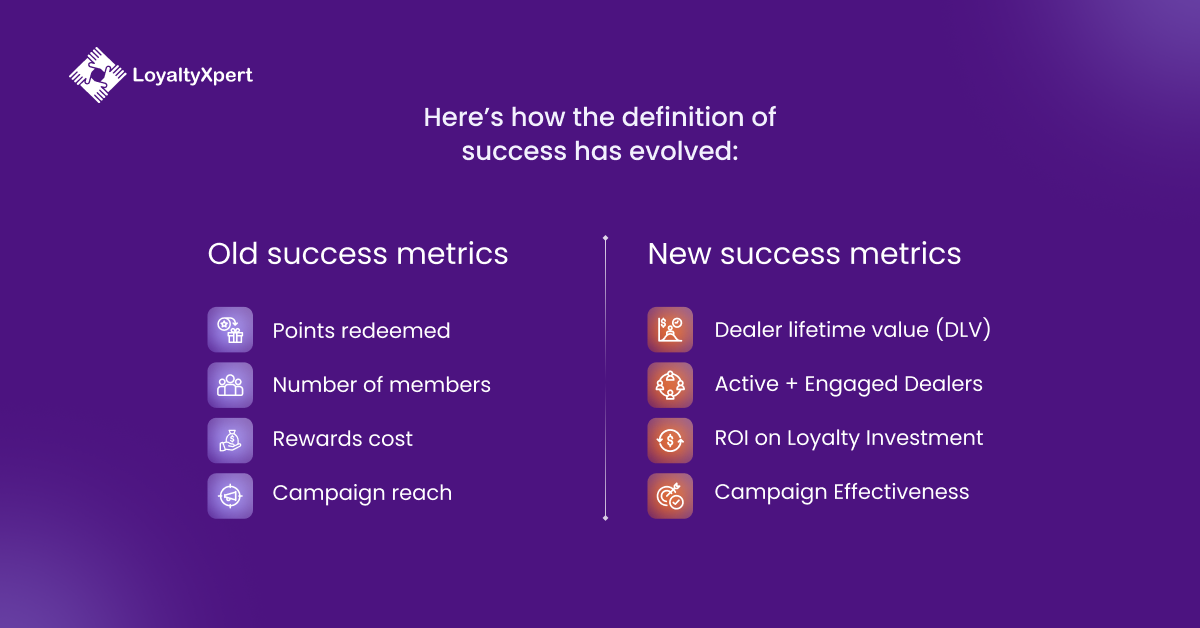
Without a data-driven loyalty program, manufacturers can’t track how rewards influence repeat purchases or dealer retention. They measure activity, not outcomes. Measuring sales performance is crucial to assessing program effectiveness and understanding how incentives drive actual sales results.

For example, A hardware company spends lakhs every quarter on loyalty points and digital vouchers, but has no visibility into which regions or dealer categories deliver real growth.

5. Lack of Personalization in Dealer Loyalty Program Software

A commitment to quality products and services is crucial in maintaining customer loyalty. Dealers today expect the same level of personalization they experience in e-commerce, which is timely, relevant, and meaningful.

For example, Dealers in northern regions prefer festive rewards, while those in metros respond better to digital experiences. Without personalization, both segments tune out.

The truth is, when dealer behavior, preferences, and engagement data are disconnected, even the best campaigns struggle to deliver consistent ROI. Loyalty programs help increase customer retention by encouraging dealerships to promote brand services, which drives repeat business. Personalization, powered by CRM data, enables manufacturers to tailor loyalty initiatives and communications, ultimately increasing customer lifetime value by fostering long-term, profitable relationships.

? Did you know?

Improving customer retention by 5% can increase profits by up to 95%.

How the Right Dealer Loyalty Program Can Help Manufacturers Overcome These Challenges

A modern, data-driven loyalty program doesn’t just manage points, but also performance. From loyalty program companies in India, platforms like LoyaltyXpert allow manufacturers to unify their data, personalize engagement, and measure success in real time. Retail loyalty schemes encourage customers to stick with a specific brand over time. Here’s how the right solution transforms your loyalty ecosystem:

1. Unified Dealer View Through Dealer Loyalty Program App

Integrate your ERP, CRM, and loyalty systems into one dashboard. This unified view helps you track every dealer’s journey from sales to redemptions in real time. No more blind spots. Just clear insights that drive better decisions.

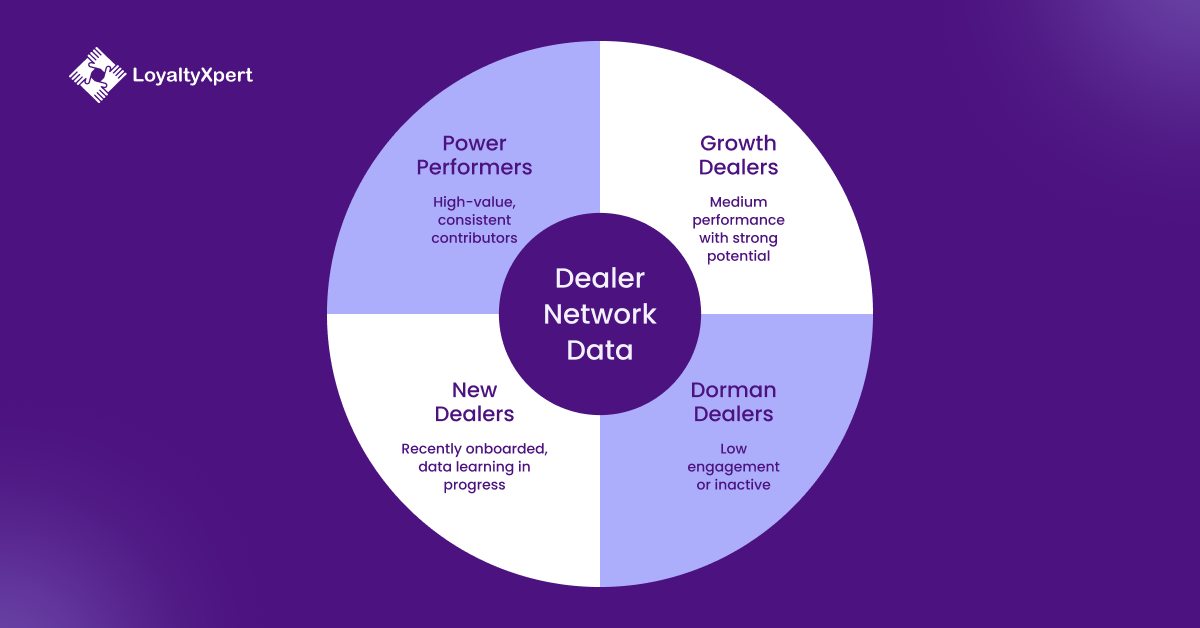
2. Segmentation & Targeting

Segment every dealer based on performance, geography, or engagement level to tailor your dealer engagement strategies accordingly. For example, reward top-tier dealers with exclusive experiences, offer learning-based rewards to mid-level dealers, or re-engage inactive dealers with targeted offers through your app-based loyalty program.

3. Behavior-Based Rewards

Go beyond just sales volume. Recognize actions that strengthen brand partnership, like training participation, workshops, referrals, or cross-category purchases. This approach not only boosts performance but also builds emotional loyalty that drives consistent sales.

4. Automated Insights & Reporting

With advanced analytics, you can measure dealer engagement levels, redemption rates, program ROI, and regional performance patterns. The result: You stop running campaigns on assumptions and start running them on evidence.

5. Personalized Communication

Use behavioral data to send targeted, meaningful messages that resonate. Instead of generic reminders, dealers receive reward updates, goal milestones, and seasonal campaigns tailored to their profile. Creating a sense of community around a brand fosters loyalty and advocacy among customers. This boosts engagement and ensures your Loyalty strategy for manufacturers stays relevant year-round.

The LoyaltyXpert, one of the leading loyalty program companies in India, is one such platform built for scalability that empowers manufacturers to automate, measure, and grow their dealer relationships like never before.

Once these challenges are under control, the next step is where strategy takes over. Designing a loyalty program that not only rewards but truly performs.

Key Components of a Modern Dealer Loyalty Program

Today, dealer Loyalty Program focuses on building lasting relationships backed by data, technology, and trust. A well-structured loyalty program can lead to a substantial increase in sales, with growth potential between 20-30%. Below are a few components every manufacturer should focus on to modernize their loyalty approach:

1. Data-Driven Foundation

Every decision in your loyalty program should be rooted in data. From purchases and referrals to app logins and campaign participation, every touchpoint holds insight. A Data-driven loyalty program helps manufacturers capture, analyze, and act on this data to understand what truly drives dealer motivation.

2. Tiered Reward Structure

Tiered loyalty programs offer enhanced rewards to customers who achieve specific spending thresholds and maintain their tier status. A well-designed tier system encourages dealers to move upward from Bronze to Silver, Gold, and Platinum. Each level brings better rewards, exclusive experiences, and recognition. This gamified approach keeps motivation high and helps brands identify their top performers faster. So basically, it’s not just about rewarding sales, but about rewarding progress.

3. Seamless Technology Integration of Dealer Loyalty Program Software

Modern manufacturers rely on Channel Loyalty Software that connects ERP, CRM, and loyalty systems into a single ecosystem. Integration ensures real-time visibility into dealer performance, sales growth, and engagement metrics – all accessible through an app-based loyalty program for ease and transparency. This seamless integration also supports market expansion by enabling scalable loyalty programs that help businesses reach new customer segments and enter new geographical markets.

4. Personalization Engine

No two dealers are the same, and your rewards shouldn’t be either. Using behavioral and transactional insights, you can deliver personalized incentives that align with each dealer’s goals and performance level. Personalized customer experiences from loyalty programs create a sense of uniqueness and satisfaction among buyers. Personalization is essential for building customer loyalty, as it helps foster long-term relationships and encourages repeat engagement.

5. Transparent Communication

Simple and transparent rules are crucial for keeping loyalty programs easy to understand and engaging for dealers. Dealers perform best when they know exactly where they stand. Use push notifications, dashboards, and WhatsApp updates to share progress toward milestones, earned rewards, and upcoming campaigns. This transparency strengthens trust and keeps your dealer engagement strategies consistent across regions.

6. ROI Measurement Dashboard

Finally, a modern Dealer Loyalty Program must be measurable. With advanced analytics, manufacturers can track:

  1. Dealer retention rate
  2. Repeat purchase frequency
  3. Incremental sales
  4. Redemption-to-sales ratio

These data insights from loyalty programs allow businesses to make informed decisions about product development and inventory management. They help you evaluate which campaigns drive true ROI and where optimization is needed.

? Did you know?

Businesses often find that 75% of customers would switch brands for a better loyalty program.

Strategies to Redefine the Success of Dealer Loyalty Program

Once the foundation is set, the next step is strategy.

When linking rewards to specific behaviors, these strategies not only drive engagement but also improve customer satisfaction by providing meaningful recognition, exclusive access, and tailored rewards that enhance the overall experience. These strategies are designed to strengthen relationships between manufacturers and dealers, ensuring sustainable success and a competitive edge in the market. Here are proven strategies that leading loyalty program companies in India and global manufacturers use to stay ahead:

Dealer Data Network

1. Segment & Prioritize Dealers

Not all dealers contribute equally, and that’s okay. Use sales and engagement data to segment your network into:

  • Power Performers: consistent top contributors
  • Growth Dealers: mid-level performers with high potential
  • Dormant Dealers: inactive accounts that need reactivation

Then, use your Channel Loyalty Software to run targeted campaigns for each group. This segmentation ensures every dealer gets attention, but in the way that matters most.

2. Link Rewards to Behavior and Volume

Traditional programs reward only sales. Modern ones reward behavior. Encourage and incentivize activities like attending product training sessions, participating in new product launches, and referring new customers or dealers. This builds deeper engagement and strengthens brand advocacy. Loyalty program members spend 13-20% more over time compared to non-members. Well-structured loyalty programs can stop companies from competing solely on price by fostering emotional connections with customers.

3. Predict Churn Early

It is five times cheaper to retain existing members than to acquire new ones. A data-driven loyalty program allows you to spot warning signs before it’s too late, like reduced purchase frequency or lower app activity. Use automation to trigger reactivation campaigns with personalized messages or bonus offers, keeping dealers engaged and reducing attrition.

4. Personalize Offers and Communication

Dealer preferences vary by region, season, and business type. Use your app-based loyalty program to send hyper-personalized offers like festive rewards in one region, growth-based bonuses in another. Today, personalization isn’t an extra feature; rather, it’s your competitive edge.

5. Redefine KPIs for Loyalty Success

To truly measure impact, move beyond redemption numbers. Modern manufacturers track:

  • Dealer Lifetime Value (DLV)
  • Engagement Rate
  • Repeat Purchase Ratio
  • Cross-Category Growth

These KPIs give a clear picture of how loyalty drives real revenue, not just participation.

6. Gamify Participation

Gamification is a common strategy in loyalty programs, using elements like leaderboards and challenges to engage participants. Gamification keeps engagement consistent and fun. Introduce digital badges, performance levels, and real-time leaderboards to create healthy competition among dealers. Manufacturers using gamified dealer engagement strategies often see higher participation and faster goal achievement. 

Let’s Have a Look At an Example of Dealer Data in Action

Brand: Tile Master India (Hypothetical Example)

Industry: Building Materials


Challenge: Dealer engagement was high, but sales were flat. Despite running a popular app-based loyalty program, most dealers participated only for rewards, not for business growth.

Action Taken:

Tile Master decided to move from assumption-based rewards to a Data-driven loyalty program.

Here’s what they did step by step:

  1. Segmented Dealers: Using data from their Channel Loyalty Software, they identified three segments – top performers, growth dealers, and dormant dealers.
  2. Personalized Rewards: Exclusive benefits offered in loyalty programs can include early access to new products and special promotions. For example, top dealers received exclusive recognition-based rewards, growth dealers got incentives tied to product mix diversity, and dormant dealers were reactivated through double points and seasonal offers.
  3. Behavioral Campaigns: Dealers who attended training sessions or referred new customers earned bonus points, aligning engagement with business outcomes.
  4. Real-Time Monitoring: Integrated dashboards tracked redemption trends, sales uplift, and engagement rate across all dealer tiers.

Results (Within 3 Months):

  • +25% increase in dealer retention
  • +30% boost in overall engagement
  • +20% sales growth across key product categories

Lesson Learned:

Data revealed what generic rewards couldn’t. By focusing on insights instead of assumptions, Tile Master transformed a stagnant program into a performance-driven growth engine. 

The takeaway for manufacturers: Dealer data isn’t just for reporting, it’s for reinventing how loyalty works.

When paired with the right Loyalty strategy for manufacturers, data becomes the bridge between rewarding loyalty and driving consistent sales growth.

The Business Impact of Dealer Loyalty Program – Creating a Competitive Edge

Today, standing out in a competitive market requires more than just quality products. It demands a dealer loyalty program that delivers unique value and fosters lasting partnerships. A well-crafted loyalty program can be your brand’s secret weapon, providing a competitive edge that attracts and retains top-performing dealers.

To differentiate your business, focus on:

  • Offering rewards and exclusive benefits that truly resonate with your dealer network.
  • Tailored incentives, such as bonus points for achieving sales milestones.
  • Free access to exclusive training sessions and certification programs

These exclusive perks help build long-term partnerships, ensuring your dealers are equipped to drive sales and deliver exceptional customer satisfaction.

Here’s how the definition of success has evolved in dealer data insights

Regular customer engagement is equally important. Keep your dealers informed and inspired with timely updates, promotional materials, and ongoing marketing support. This proactive approach helps your dealers stay ahead of market trends and positions your brand as a valuable business partner.

Ultimately, a robust dealer loyalty program is more than a reward system. It’s a strategic investment in your dealer network that drives customer retention, increases sales, and secures your place as a market leader.

When manufacturers adopt a data-driven loyalty program, success stops being measured by participation alone and starts being defined by business impact.

Here’s how the definition of success has evolved:

  • From Redemption to Retention: It’s not about how many rewards were claimed, but how many dealers stayed loyal and grew their business. Loyalty programs create regular interaction points through service appointments, promotions, and notifications to enhance customer retention.
  • From Activity to Engagement: True engagement is measured by consistent participation, feedback, and referrals, not just logins.
  • From Spend to ROI: Every rupee spent on a Dealer Loyalty Program should translate into measurable growth and improved profitability.
  • From Reach to Relevance: Instead of mass campaigns, focus on micro-segmented strategies that deliver personalized, high-impact engagement.

In One Line:

True success is when dealer data turns your loyalty program from a marketing expense into a growth strategy.

How LoyaltyXpert Empowers Data-Driven Loyalty Success

At LoyaltyXpert, we understand that in manufacturing, loyalty doesn’t just come from giving rewards. That’s why our Dealer Loyalty Program platform is designed to help manufacturers turn dealer data into measurable business impact.

Here’s how we make it happen:

1. Centralized Dealer Data Platform

LoyaltyXpert integrates your ERP, CRM, and loyalty systems into one unified dashboard. This centralized view helps manufacturers access real-time insights into dealer performance, engagement trends, and reward effectiveness, all in one place. No more fragmented reports. Just actionable, unified data that drives growth.

2. Tier-Based and Behavior-Driven Rewards

We go beyond volume-based incentives. LoyaltyXpert enables behavioral and tier-based rewards from recognizing referrals and training completions to rewarding consistent growth and cross-category purchases. This keeps dealers motivated not just to buy, but to engage and grow with your brand.

3. Predictive Insights to Prevent Churn

Successful loyalty programs often utilize AI and data analytics to personalize rewards and improve customer engagement. With AI-powered analytics, you can identify early signs of dealer inactivity and act before it’s too late. Our Data-driven loyalty program detects declining trends and triggers personalized reactivation campaigns, keeping every dealer connected.

4.Real-Time Engagement and ROI Analytics

Our Channel Loyalty Software provides live dashboards to measure participation, redemption, and ROI. This enables brands to see which campaigns perform best and how every rupee spent contributes to dealer retention and revenue growth.

5. Custom-Built Solutions for Manufacturers

As one of the most trusted loyalty program companies in India, LoyaltyXpert offers tailor-made programs for every industry, from FMCG and construction to automotive and electricals.

No CTA found.

Whether it’s an app-based loyalty program or a multi-tier channel incentive model, we help manufacturers implement a Loyalty strategy that fits their goals, markets, and dealer network scale.

The Final Thoughts

Your dealers don’t just want recognition; they want to feel understood. And data makes that possible. When you use dealer insights effectively, every campaign becomes sharper, every interaction becomes smarter, and every dealer becomes more loyal. Companies with loyalty programs grow revenue 2.5 times faster than competitors without them.

The future of Dealer Loyalty Programs isn’t about offering more; it’s about offering meaningfully. It’s about creating intelligent, measurable, and data-led ecosystems where performance and partnership grow hand in hand. 

If you are curious to know how our dealer management software can help you track your sales teams and boost your growth, contact us today and book a free demo.

How to Run a Mason Loyalty Program in the Bathware and Ceramic Industry?

When a homeowner starts building or renovating a bathroom, who does he actually trust? Not the showroom salesperson. Not even the brand. It’s the Mason who actually brings design to life, piece by piece.

Masons play a crucial role in shaping brand choices on-site. Their hands-on experience helps owners and contractors choose products that deliver the best results. From tile adhesives to the faucet fittings, their trusted recommendations often guide the final selection. With every project they touch, masons influence multiple brand decisions, turning their expertise into lasting impact.

Globally, brands are realizing the power of loyalty. According to Statista, Marketers in the United States dedicated roughly 30 percent of their budgets to loyalty programs in 2024, while in China, the share allocated to loyalty was as high as 51 percent. This growing investment reflects how loyalty initiatives are no longer optional, but they’re strategic.

This is where a Mason Loyalty Program becomes a game-changer. By recognizing their expertise, rewarding their consistency, and keeping them connected through a loyalty management platform, brands can turn everyday product users into powerful brand advocates.

A well-structured contractor loyalty program or influencer loyalty program doesn’t just drive engagement, but it builds long-term trust, strengthens relationships, and accelerates repeat sales across markets.

Why Masons Are the Key to Brand Loyalty in the Bathware and Ceramic Industry

1. Masons Influence What Customers Buy

In the bathware and ceramic world, masons are the decision-makers behind the scenes. Homeowners often ask them, “Which brand should I choose?” and that answer carries more weight than any advertisement.

Their daily experience with product quality, finish, and ease of application drives more genuine recommendations. If a mason prefers your tiles, adhesives, or fitting systems, it naturally becomes the homeowner’s choice too.

2. Market Competition Is Rising

Today’s bathware and ceramic market is crowded. Dozens of brands promise similar quality, style, and durability. So what truly sets one apart? The emotional connection built with on-ground influencers, the masons, who trust your product enough to recommend it repeatedly.

That’s why a well-executed loyalty program software like LoyaltyXpert can be your brand’s differentiator. It helps you stay top of mind even when competitors flood the market with offers.

3. Relationship-Driven Marketing Works

In an industry built on craftsmanship and trust, relationship marketing always wins. When you appreciate, reward, and empower masons, you don’t just earn sales, you earn loyalty that multiplies across cities and regions.

Recognizing their role through a Mason Loyalty Program builds emotional connection, boosts participation, and turns every project into a story of brand trust.

? Did you know?

In India, nearly 60% of bathroom fitting choices are made based on mason or contractor recommendations.

Why Manufacturers Should Run a Mason Loyalty Program

Recognizing a mason’s role isn’t just goodwill; it’s a smart business strategy. A well-designed Mason Loyalty Program can unlock multiple layers of growth for bathware and ceramic manufacturers.

Why Manufacturers Should Run a Mason Loyalty Program

1. To Build Emotional Connections

When masons feel appreciated, they don’t just install your products; they actually stand by your brand. Rewarding their skill and consistency through a structured loyalty program creates pride, belonging, and a sense of partnership that no advertisement can replicate. 84% of masons are likely to remain loyal to a company that offers a loyalty program.

2. To Encourage Product Familiarity

Every time a mason chooses your tile adhesive, grout, or fitting system, they become more confident in your quality. A contractor loyalty program encourages regular use and deeper product knowledge. So their recommendation comes from genuine experience, not incentives alone. This familiarity builds organic advocacy that reaches directly to homeowners and contractors.

3. To Boost Repeat Sales

Consistency pays for both masons and manufacturers. When rewards and recognition are linked to continued engagement, repeat customers, like Masons engaged in loyalty programs like LoyaltyXpert, are generally more profitable to businesses. It inspires masons to choose your brand repeatedly. That ongoing trust leads to repeat purchases, word-of-mouth referrals, and stronger dealer relationships, all through one seamless loyalty management platform.

4. To Gain Market Insights

Every scan, every redemption, every region tells a story. With the right mason loyalty program software, brands can analyze which products are moving faster, which cities are growing, and which masons are their true advocates. These insights help fine-tune marketing, optimize inventory, and design smarter sales strategies.

5. To Strengthen the Brand Ecosystem

A successful brand doesn’t just connect with customers, but it connects its entire channel. A Mason Loyalty Program helps businesses understand their customer base better through social insights and bridges masons, dealers, and distributors under one digital roof, creating a transparent and rewarding ecosystem that drives collaboration and loyalty at every level.

Challenges with the Traditional Mason Loyalty Program

Traditional methods fail to keep pace with how modern influencers expect to be recognized.

  1. Manual Tracking & Fraud: Paper coupons and physical invoices often lead to errors, duplication, and misuse. Manual redemptions take time and create confusion, resulting in frustration for both masons and brand teams.
  2. Lack of Personalization: Every mason has a different focus. Some specialize in bathroom fittings, others in tiles or adhesives. Conventional loyalty programs often treat them the same, failing to reward based on actual effort or expertise.
  3. No Direct Communication: Most brands still rely on middlemen like dealers or retailers to share updates. This indirect approach creates gaps.
  4. Low Motivation Due to Delayed Rewards: Delayed or manual processing can erode trust, making even a great program feel like an empty promise.
  5. Zero Data Transparency: Without a digital system, manufacturers lack clarity about who’s performing well, which regions are active, or how rewards are being redeemed. This makes it impossible to measure ROI or improve engagement meaningfully.

How Digital Mason Loyalty Programs Solve These Problems

The days of paper coupons, manual redemptions, and delayed payouts are fading fast. Today, masons use smartphones, WhatsApp, and QR codes daily. That’s why brands that shift to a digital Loyalty Program like LoyaltyXpert that doesn’t just simplify engagement, but actually transform it. A digital-first approach creates transparency and convenience.

1. Real-Time Tracking

No more lost invoices or waiting for manual approval. With a digital loyalty program, masons can simply upload their purchase proof or scan a QR code printed on product packaging to earn instant reward points. For brands, this means real-time visibility into product movement, active users, and redemption trends.

2. Personalized Engagement

Every mason’s journey is unique, so your rewards should be unique as well. A digital program enables tier-based systems (Silver, Gold, Platinum) to celebrate top performers and encourage others to grow. It mirrors the personalization seen in modern contractor loyalty programs, ensuring every mason feels valued and motivated.

3. Direct Brand Communication

With a digital platform, your brand stays just a tap away. Your mason loyalty program may offer access to updates, reward notifications, training materials, and workshops through an app or WhatsApp, ensuring every mason is informed, engaged, and inspired. This direct link builds networking opportunities, stronger brand affinity, and eliminates dependency on intermediaries.

4. Data-Driven Decisions

Behind every scan lies valuable insight. Using loyalty program software, manufacturers can analyze region-wise performance, product demand, and redemption behavior. These insights empower smarter marketing, optimized supply chains, and better forecasting, all through one connected loyalty management platform.

5. Fraud-Free System

Digital tracking ensures every claim, point, and redemption is verified automatically. It eliminates duplication, reduces human error, and brings complete transparency to your loyalty operations. Both masons and brands win with faster processing and greater trust.

Key Components of a Successful Mason Loyalty Program

A great Loyalty Program doesn’t just reward, it connects, educates, and inspires. For manufacturers, building an impactful program means designing an ecosystem where masons feel recognized, informed, and motivated every day. The success of a Mason Loyalty Program actually depends on understanding the target audience and their preferences. Here are the essential components that make a loyalty initiative not just functional, but truly successful.

Key Components of a Successful Mason Loyalty Program

1. Simple Enrollment

Enable quick sign-ups through a mobile app, website, or even WhatsApp, with basic KYC-based verification to ensure authenticity.

2. App-Based Platform with Regional Languages

Your program should be too. An app-based loyalty management platform that supports multiple regional languages empowers masons from every state to engage effortlessly. When they can navigate in their own language, participation rates soar.

3. Reward Mechanism That Works

A strong reward structure keeps momentum high. Blend instant gratification with long-term value, such as cashbacks or e-vouchers for instant motivation; tools, kits, or training workshops to enhance professional skills; and recognition badges and digital trophies to build emotional connection. Make redemption seamless via UPI, digital wallets, or online catalogs. So every mason feels rewarded without hassle.

4. Gamification & Milestones

Keep the excitement alive with friendly challenges and milestones. Provide gamified features such as points, badges, and leaderboards. They bring fun into your influencer loyalty program and ensure masons stay active.

5. Product Education & Training

Knowledge builds confidence. Integrate video tutorials, best-practice guides, and product demos within your Mason loyalty program software. When masons learn new techniques, they see your brand as a true partner in their growth.

6. Continuous Communication

Consistency matters more than one-time engagement. Send updates, reward alerts, festival campaigns, and surveys through push notifications or WhatsApp. 

7. Real-Time Analytics Dashboard

Data is the backbone of a scalable contractor loyalty program. With a real-time analytics dashboard, manufacturers can track participation, monitor regional trends, and measure campaign performance. These insights help optimize marketing strategies and improve ROI.

How to Build and Run a Successful Mason Loyalty Program

Here’s a step-by-step roadmap for manufacturers looking to plan and execute a results-driven loyalty initiative.

1. Define Your Objectives Clearly

Ask yourself, what’s the core purpose of your loyalty program?

Is it to:

  • Increase tile adhesive usage in Tier-2 cities?
  • Promote a new sanitaryware or faucet line?
  • Retain your top-performing masons?

Once the goal is defined, set measurable KPIs like active mason enrollments, repeat purchase rates, or uplift in regional sales.

2. Start Small Pilot Program

Run a pilot with a selected group of masons across diverse regions or cities. This allows you to gather feedback, observe behavior patterns, and optimize your program design before a full rollout.

3. Design a Reward Structure That Motivates

A great reward system offers: 

  • instant rewards like cashback, digital vouchers, or tool kits
  • Seasonal campaigns around festivals or peak construction months
  • Tier upgrades that celebrate consistent performers

4. Integrate Training Modules

Through your loyalty app, include video tutorials, product installation guides, and best practices for waterproofing or tile-laying.  When education becomes part of the reward, masons begin to associate your brand with expertise and reliability, not just incentives.

5. Keep It Simple and Transparent

Avoid complicated point systems or unclear redemption processes. Clearly communicate how rewards are earned, tracked, and redeemed. This transparency actually builds credibility and long-term trust with your community.

6. Collect Feedback and Refine

Use real-time analytics from your mason loyalty program software to monitor participation and redemption patterns. Collect direct feedback from masons and refine your program regularly.

Continuous improvement ensures your initiative stays relevant, engaging, and ROI-driven.

The Role of Technology In the Mason Loyalty Program Platform

In today’s digital world, loyalty isn’t managed on paper; it’s powered by technology. For manufacturers, the difference between a good and a great Mason Loyalty Program software often comes down to how seamlessly it’s executed through digital tools.

1. QR Codes for Instant Validation

No more stacks of invoices or manual claim checks. By printing QR codes on product packaging, brands can enable instant claim validation. A mason simply scans the code, uploads proof, and earns reward points within seconds, making the process effortless and error-free.

2. Mobile App or WhatsApp Bot

A dedicated mobile app or WhatsApp bot where Masons can enroll themselves in the Mason Loyalty Program online or be enlisted by brands from existing data systems. It allows Masons to earn points for actions like making purchases, referring a friend, or completing a survey in the loyalty program. So they can track rewards and redeem points anytime, anywhere. This simple interface bridges the digital gap and ensures even first-time users can participate without confusion.

3. Real-Time Dashboards for Brands

For manufacturers, data visibility is power. Through an integrated loyalty management platform, brands can monitor participation, redemption activity, and regional performance in real time. These insights help sales teams identify top-performing regions, plan campaigns, and measure ROI with precision.

4. Digital Payouts for Instant Gratification

Digital pay-outs through UPI, mobile wallets, or e-vouchers ensure masons receive their benefits instantly. This quick turnaround builds trust and keeps engagement high, something traditional contractor loyalty programs might not achieve.

5. Multilingual Interface

In markets as diverse as India and Southeast Asia, language accessibility is key. A multilingual interface ensures every mason, whether from Tamil Nadu, Gujarat, or Vietnam, can navigate the system comfortably. This actually widens your brand’s reach.

6. From Paper to Performance

With the right loyalty program software like LoyaltyXpert, brands move beyond manual processes into a world of real-time tracking, smart insights, and personalized engagement. With technology, they can measure performances that scale effortlessly across markets.

? Did you know?

Brands using digital influencer loyalty programs report up to 4x faster engagement and 100% transparency in claims and redemptions compared to traditional systems.

Power Your Mason Loyalty Program with LoyaltyXpert

Today, having the right technology partner makes all the difference. LoyaltyXpert helps manufacturers in the bathware and ceramic industry design and manage customized mason loyalty programs that are simple, scalable, and data-driven.

No CTA found.

From QR-based reward tracking and multilingual engagement to real-time analytics dashboards, LoyaltyXpert’s loyalty management platform gives you everything you need.

It empowers brands to:

  • Recognize every mason’s effort
  • Reward consistently through instant digital payouts
  • Retain loyalty with smart automation and insights

Whether you’re building a loyalty program software or a full-scale digital loyalty ecosystem, LoyaltyXpert helps you build trust, boost retention, and grow profitability.

Closing Thoughts

Behind every beautiful bathroom, every perfectly laid tile, and every flawless finish stands a mason. They are the backbone of the bathware and ceramic industry, quietly shaping how homeowners experience your brand. Their trust, skill, and recommendations fuel your sales far more than any marketing campaign ever could.

That’s why a Mason Loyalty Program isn’t just an incentive plan, but it’s a bridge that connects brands with the people. It’s about acknowledging craftsmanship, rewarding consistency, and building a lasting emotional connection. In a market where price and product often look the same, loyalty and recognition are what make your brand stand out. In a market where price and product often look the same, loyalty and recognition are what make your brand stand out contact us today and book a free demo to get started.

How Does Real-time Sales Management Software Help Manufacturing Businesses?

One of the biggest challenges manufacturers face today is managing their in-house sales teams and multiple sales channels efficiently.

Without a proper system, tracking sales performance, monitoring field activities, or consolidating data across dealers and regions becomes chaotic. That’s where real-time sales management software or field sales management software steps in helping manufacturers streamline operations, improve visibility, and make faster, data-backed decisions.

Why Traditional Sales Tracking Methods No Longer Work

Many manufacturing businesses still rely on manual methods — spreadsheets, phone calls, and end-of-day summaries — to monitor their sales teams.

In such setups, there’s usually:
No clear visibility into what’s happening on the ground.
Delays in receiving updates from sales reps or distributors.
Scattered data across different channels and formats.

When manufacturers can’t see real-time sales data, they end up making delayed or inaccurate decisions. Reports are often incomplete, performance issues go unnoticed, and market opportunities are missed.

? Did you know?

The global market size for sales tracking software is projected to grow at a compound annual growth rate of 10.7 percent between 2023 and 2031.

As per the latest Verified Market Research report, the market will grow from USD 2.8 billion in 2023 to USD 7.1 billion by 2031 — reflecting how rapidly businesses are shifting from manual to automated sales tracking solutions.

That’s why more and more manufacturing companies are turning to real-time sales management software and sales tracking software, not just to automate data collection but to bring transparency, accuracy, and control into their entire sales process.

With the rise of sales CRM software and field sales management software over the last few years, it has become easier for manufacturers of all sizes to monitor field teams, track sales performance, and manage multiple territories — all from a single dashboard.

As a result, manufacturers who’ve adopted such systems are already seeing major improvements in sales efficiency, dealer engagement, and overall productivity, while those still relying on manual processes are struggling to keep up.

Challenges Manufacturing Businesses Face Without Real-time Sales Management Software

Even with advanced tools available today, many manufacturing businesses still manage sales manually — through spreadsheets, calls, and WhatsApp updates. While this might work in the short term, it quickly becomes inefficient as teams grow and operations expand.

7 Real Problems Manufacturers Face Without Sales Management Software

Here are some common challenges manufacturers face when they don’t use a real-time sales management system:

1. Lack of Real-time Visibility

Without a real-time sales management tool, sales managers often wait until the end of the week to get updates from their regional teams. Even then, most of these reports are manual and incomplete some figures are forgotten, some are delayed, and others simply don’t match the ground reality. This lack of live visibility means missed opportunities, delayed decisions, and poor accountability.

2. Inefficient Field Sales Operations

For field teams, remembering every sales offer, discount, or festive scheme can be a real struggle.
Without an automated app, reps rely on memory or scattered WhatsApp messages which often leads to mistakes during client interactions. It also becomes hard for the company to communicate region-specific offers on time. This affects the sales pitch and leads to inconsistent messaging in different markets.

A mobile sales management app, on the other hand, ensures every rep always has updated offers, pricing, and product details right in their phone.

3. Poor Customer Relationship Management

When sales data is scattered across emails or Excel sheets, even loyal distributors feel neglected. Without proper CRM integration, sales reps can’t recall previous pricing, deliveries, or complaints.

As a result, customer follow-ups get delayed, delivery issues go unnoticed, and it becomes difficult to track whether products have actually reached the end customer or not.
All of this directly affects customer satisfaction and long-term trust.

4. Inaccurate Forecasting and Planning

When production teams ask for sales projections, manual systems leave little to work with. Without analytics, demand planning becomes guesswork resulting in overproduction, stockouts, or delayed deliveries. It’s also hard to track sales region-wise, which often leads to higher transportation costs and poor supply chain coordination.

5. Limited Scalability

As manufacturers expand into new cities and regions, manual reporting systems collapse under their own weight. Managing hundreds of distributors or reps through spreadsheets becomes confusing and time-consuming.

A real-time sales management platform simplifies scalability helping manufacturers grow faster while maintaining control and consistency.

6. Communication Gaps Between Teams

When sales, production, logistics, and marketing teams operate in silos, coordination becomes a nightmare. If sales projections aren’t accurate, production plans suffer. If production is delayed, logistics can’t deliver on time. And when sales data isn’t shared, marketing teams don’t know which products to promote, discount, or push harder.

A shared, real-time sales management software ensures every team sees the same data and works in sync toward the same goals.

7. High Administrative Burden

Many manufacturers assume that digital sales tools are “expensive.” But in reality, manual management costs more in both time and money.

? Did you know?

A Salesforce study found that a majority of sales teams spend less than 30 percent of their time actually selling.

Sales teams spend hours compiling data, verifying entries, and preparing reports instead of actually selling. With automation, administrative burden drops sharply, reducing human errors and improving decision-making.

Even a small investment in the best sales management software can save much larger costs from miscommunication, missed leads, and poor forecasting while unlocking new sales and marketing opportunities.

Why Should Manufacturers Use Sales Management Software Today?

Manufacturers today work across multiple cities, serve dealers in different states, and manage distributors across hundreds of pin codes. With such a wide network, keeping track of sales, field activities, and regional performance manually is almost impossible.

Here are the main reasons why every manufacturer should start using real-time sales management software now:

1. Managing Geographically Dispersed Sales Teams

Most manufacturing companies today have sales teams spread across multiple regions, cities, and even time zones. Managing these teams through phone calls or spreadsheets makes it hard to track daily activity, product movement, and regional performance.

A field sales management software or mobile sales management app makes it easy for managers to monitor visits, check-ins, and sales progress in real time no matter how widely their teams are spread. It also ensures better visibility into product movement across all areas.

2. To Stay Competitive

Almost every business today uses some form of CRM or ERP software. But these tools usually track leads not actual sales movement, conversions, or field activities.

To stay competitive, manufacturers now need a system that tracks everything from lead to delivery including on-ground sales performance, product movement, and regional demand.

Sales management software helps businesses see what’s selling, where it’s selling, and how to focus efforts where they matter most.

3. Rising Customer Expectations

Today’s customers, whether dealers, distributors, or end buyers expect quick responses, real-time updates, and personalized service. Without automation, it’s difficult to meet these expectations. A sales CRM platform helps manufacturers track orders, manage service requests, and communicate faster.

It also allows personalized support so you can treat every dealer and distributor based on their purchase history and preferences. That’s what creates long-term loyalty in today’s competitive market.

4. Increasing Complexity of Modern Supply Chains

Supply chains today are bigger, digital, and more connected than ever. Manufacturers don’t just sell to distributors anymore they sell through online platforms, regional partners, and logistics aggregators too.

With so many moving parts, even a small delay in sales reporting can disrupt production and delivery.

A real-time sales tracking software connects all touchpoints sales, production, and logistics so departments can make faster, more informed decisions and work in sync.

5. Smarter, Data-driven Decisions

In today’s data-driven world, business decisions can’t rely on assumptions. With real-time dashboards and analytics, manufacturers can track what’s working, forecast demand accurately, and identify underperforming regions or product lines. Better visibility means better decisions from managing production to planning marketing campaigns.

6. Easier Scalability

As manufacturers expand into new regions, cities, and pin codes, manual tracking becomes chaotic. Each new territory adds complexity: more sales reps, more dealers, and more reports to manage.

Automating the process through a mobile sales management app or sales tracking software makes expansion smoother, faster, and more cost-effective. It ensures consistency across all regions without adding unnecessary workload.

7. Improved Efficiency and Cost Reduction

Manual data collection, follow-ups, and reporting consume valuable time and money. Sales reps spend hours creating reports instead of selling, and managers spend days consolidating them. Automation solves this. A sales management system reduces administrative work, prevents errors, and improves team efficiency saving both time and operational costs.

In fact, a small investment in automation often saves far more by cutting delays, preventing miscommunication, and improving forecasting accuracy.

How Can Manufacturers Get the Best Out of Sales Management Software?

The right sales management software can completely transform how manufacturers track sales, manage field teams, and make business decisions. But buying the software is only half the job the real impact comes from how you use it.

5 Strategies to Get the Most Out of Sales Management Software

Here are a few strategies to get the most out of your investment:

1. Set Clear Goals Before Choosing the Software

Don’t just pick the first software you find online. Start by defining what you really want to achieve do you want to improve visibility across regions, reduce reporting time, or track field team performance in real time? Once you know your goals, evaluate whether the sales management software you’re considering helps you achieve them.

Look for sales tracking software features and reports that align directly with your business objectives like product-wise performance, dealer-wise growth, or region-wise sales.

2. Define KPIs and Track the Right Metrics

To get the best results, you need to know what success looks like.

Set clear KPIs (Key Performance Indicators) for your team — such as:

  • Monthly revenue
  • Order turnaround time
  • Sales visits completed
  • Customer satisfaction scores

The best sales management tracking software allows you to customize dashboards to measure exactly what matters to you. Platforms like LoyaltyXpert can help you set up personalized KPI tracking, so you can monitor and improve performance continuously.

3. Ensure Seamless Integration with Existing Systems

If you’re already using an ERP, inventory, logistics, or CRM system, your sales management software should integrate smoothly with it. This ensures all your data stays connected from lead generation to final delivery without jumping between multiple tools.

No CTA found.

For instance, LoyaltyXpert’s ecosystem combines sales tracking, meeting management, warranty management, and loyalty programs in one place, eliminating data leakage and improving overall visibility.

4. Train Your Sales Teams Properly

Implementing a new system is easy getting your team to use it effectively is the real challenge. Before rollout, train your sales team thoroughly on how to use the app, track sales, and submit reports correctly. Address any hesitations early. Show them how automation helps them close more deals and reduces manual work.

Choosing a solution with multi-language support (like LoyaltyXpert’s 10+ regional languages) makes adoption easier for field teams across different regions.

5. Customize It to Fit Your Business Needs

Every manufacturer works differently with unique products, dealer networks, and regional sales models. That’s why a one-size-fits-all tool doesn’t work. Choose a customizable sales management software that adapts to your processes whether it’s tracking city-wise distributors, monitoring product movement, or managing region-specific pricing.

Work with a partner who can tailor workflows, dashboards, and reports to match your business so you’re not adjusting your process to the software, but making the software work for you.

Final Thoughts: Building a Smarter, Stronger Sales Network

For manufacturers, real-time visibility is no longer a luxury it’s a necessity. Without it, tracking sales performance, managing teams, and responding to market shifts becomes guesswork.

A modern sales management software brings everything together your field teams, distributors, and data onto one unified platform. It helps you make faster decisions, improve sales accountability, and stay competitive in a rapidly evolving market. If you’re still managing your sales operations manually, now’s the time to move forward.

A single, well-implemented software can help you reduce costs, improve productivity, and unlock real growth without the chaos of spreadsheets or endless follow-ups. If you are curious to know how our sales management software can help you track your sales teams and streamline your sales processes, contact us today and book a free demo.

The Future of Electrician Loyalty Programs in the Electrical Industry

If you’re a manufacturer of electrical products like switches, wires, sockets, circuit breakers, or lights, you should seriously consider starting an electrician loyalty program.

Why? Because electricians are the ones who truly influence buying decisions. When a homeowner or builder needs electrical fittings or installations, they always turn to an electrician for advice and they trust their recommendation.

That’s why keeping electricians happy and connected with your brand is just as important as selling through your dealers or distributors.

In this blog, we’ll discuss why manufacturers should run electrician loyalty programs, the challenges with traditional approaches, and how digital loyalty programs can make it easier to engage and reward electricians.

We’ll also look at the key components and best practices that can help you build stronger, long-term relationships with your electrician network.

Why Do Manufacturers in the Electrical Industry Need Electrician Loyalty Programs?

In the electrical industry, there are mainly two types of manufacturers.

The first group makes products that customers buy directly — like fans, irons, or induction cookers. The second group manufactures products such as switches, sockets, fuses, wires, and circuit breakers items that are usually purchased or recommended by electricians, not end consumers.

Why You Need a Electricians Loyalty Program

For this second group, electricians play a crucial role in influencing buying decisions. That’s why it’s important for manufacturers to keep them engaged and connected through a loyalty program designed specifically for them.

1. To build stronger relationships with electricians

The biggest benefit of an electrician loyalty program is that it helps build lasting relationships and trust. When electricians feel valued and recognized for their work, they are more likely to prefer your brand and recommend it to others. Over time, this emotional connection turns into genuine brand loyalty.

2. To Reward Electricians for Referrals and Purchases

The competition in the electrical industry — especially for switches, sockets, wires, and cables — is intense. Running a well-structured electrician loyalty program allows manufacturers to reward electricians for every referral or product purchase they influence.

By offering meaningful rewards, you not only motivate electricians to recommend your brand more often but also push slow-moving or newly launched products into the market. This helps brands increase visibility and sales without heavy marketing costs.

3. To Personalize Rewards for Different Electricians

Not every electrician sells the same products or in the same quantity. Some handle recurring items like wires and cables, while others deal in one-time installations like switches or panels.

A customized electrician loyalty program allows manufacturers to personalize rewards based on product type, sales frequency, and electrician activity level. This ensures that every electrician — big or small — feels valued and motivated to keep engaging with your brand.

4. To Encourage Digital Adoption

One of the biggest indirect benefits of electrician loyalty programs is that they help accelerate digital adoption among electricians.

When electricians start earning rewards for uploading bills, updating sales, or sharing referrals through the loyalty app, they naturally begin using digital tools more often. Over time, this digitization benefits manufacturers too — by giving them access to valuable data like:

  • City-wise or region-wise sales reports
  • Product performance insights
  • Dealer and distributor activity analytics

This kind of data transparency was previously impossible with manual or paper-based programs.

5. To Boost Market Share

Whether you’re launching a new product line or entering a competitive market, an electrician loyalty program can be a game-changer.

When electricians feel rewarded and recognized, they’re more likely to recommend your products over competitors’ — and since customers trust electricians’ advice, your market share grows naturally.

A custom-built loyalty program can even target specific goals — like boosting product sales in certain cities, promoting new launches, or increasing sales of particular categories. By aligning rewards with these objectives, manufacturers can strengthen their brand presence and accelerate growth.

Challenges Electrical Manufacturers Face with Traditional Electrician Loyalty Programs

Now that we’ve seen why electrician loyalty programs are important, let’s talk about the other side — the challenges manufacturers face when running traditional loyalty programs.

Challenges Electrical Manufacturers Face with Traditional Electrician Loyalty Programs

Running an old-style, paper-based or manual program today is like using a kerosene lamp when LED lights exist. It may still work, but it’s far from efficient.

Here are some common challenges:

1. Difficulty in Partnering with the Right Electricians

Not all electricians are the same. Some deal with recurring products like wires and cables, while others handle one-time installations like switchboards or panels.

In a traditional setup, it’s difficult to identify who fits where. Without digital tracking, manufacturers can’t categorize electricians based on their work type, region, or purchase behavior.

A digital loyalty program solves this by tracking participation and sales data — helping you reach the right electricians with the right offers.

2. No Direct Communication Channel

In traditional loyalty programs, there’s usually no direct communication between manufacturers and electricians. Messages often pass through dealers or middlemen, and manufacturers rarely receive feedback directly from the electricians who actually use or recommend their products.

A digital electrician loyalty app changes this. It enables two-way communication — brands can share updates or promotions instantly, and electricians can send feedback or suggestions in real time.

3. Lack of Personalization

Traditional programs treat every electrician the same, regardless of what they sell or how often they sell it.

However, personalization is key. A digital loyalty platform can customize experiences — from showing product-specific rewards to offering region-based catalogs or schemes that fit each electrician’s category. This ensures every electrician feels recognized and valued.

4. High Risk of Reward Fraud

Reward fraud is a major issue in manual loyalty programs. Without proper tracking, points or rewards can be misused or duplicated — sometimes even before reaching the actual electrician.

? Did you know?

Globally, loyalty fraud causes $1–3 billion in annual losses across industries, reveals a recent report.

With a digital loyalty program like LoyaltyXpert, every claim, transaction, and redemption can be tracked at every level — dealer, distributor, and electrician. This makes the entire reward chain transparent and trustworthy.

5. Difficulty in Product Training and Education

When launching new products, manufacturers often send brochures or printed catalogs to electricians — but there’s no way to know if they read or understood them.

A digital loyalty platform makes product education much easier. You can share training videos, installation guides, or product demos right inside the app. Electricians can access this content anytime, and you can track who watched or completed each session.

6. Losing Competitive Advantage

Manufacturers without a digital loyalty program are already at a competitive disadvantage.

Brands using digital loyalty platforms get real-time data — including sales trends, region-wise performance, and product movement reports. This helps them make faster, data-driven decisions and stay ahead of competitors still relying on manual tracking.

Key Components of a Successful Electrician Loyalty Program

The success of any electrician loyalty program depends on how well it’s built. Even the best incentives won’t work if the foundation isn’t strong. A truly successful program is simple, transparent, and rewarding — both for the electrician and the brand.

7 Building Blocks of a Successful Electrician Loyalty Program

Here are the key components every electrical manufacturer should include:

1. Seamless Enrollment and Onboarding

One of the biggest hurdles in traditional loyalty programs is getting electricians to sign up. The process should be quick, easy, and verified.

Make enrollment possible through a simple mobile form or app-based registration, with KYC verification to prevent duplicate or fake accounts. When electricians find it easy to join, participation rates go up instantly.

2. App-Based Platform

In today’s digital age, a mobile-based loyalty app is non-negotiable. Electricians should be able to register, upload invoices, check rewards, and redeem points directly from their phone.

Since India is a multilingual country, it’s best to offer the app in multiple regional languages. This makes electricians from every state feel comfortable using it. For example, LoyaltyXpert’s platform supports multiple languages, ensuring electricians can easily engage in their local language.

3. Effective Reward Structure

Rewards are the heart of every electrician loyalty program. The system should be easy to understand, fair, and exciting.

Offer rewards that genuinely motivate electricians — whether that’s cashback, gift vouchers, discounts, or product-based incentives. You can also customize rewards based on region, sales volume, or product category. A smooth and transparent redemption process keeps electricians active and loyal.

4. Personalization and Engagement

Every electrician is different — so your program shouldn’t be one-size-fits-all.

Personalize your loyalty program based on product category, geography, or electrician type. You can also add seasonal offers or festive campaigns (like Diwali, Christmas, or Eid) to keep engagement high.

Adding gamification elements such as badges, milestones, or challenges makes the experience more interactive and keeps electricians coming back.

5. Training and Education Modules

Educating electricians is just as important as rewarding them. Include training modules and product videos within your loyalty app.

This helps electricians understand product features better and explain them confidently to customers. You can also upload installation guides, troubleshooting videos, and brand updates — all in local languages. Well-informed electricians become stronger brand advocates.

6. Data and Analytics

One of the biggest advantages of a digital loyalty program is access to data.

Use real-time sales, product, and geographic reports to identify what’s working and where improvements are needed. The right analytics help manufacturers make better marketing and sales decisions — and continuously improve the loyalty program for long-term success.

7. Reliable Tech and Support Infrastructure

Your loyalty platform should be fast, secure, and always accessible. A strong technical foundation ensures the app runs smoothly 24/7, without crashes or downtime.

Just as important is quick customer support — electricians should be able to reach your team easily for any queries or issues. A responsive two-way communication channel strengthens trust and program participation.

How to Plan and Build a Successful Electrician Loyalty Program

Building a loyalty program isn’t just about setting up an app or offering rewards — it’s about planning it right from the start. Here’s a simple step-by-step approach for manufacturers to design and launch a successful electrician loyalty program.

1. Define Your Goals Clearly

Before launching, be clear about what you want to achieve.
Do you want to increase sales in a particular region? Promote new products? Or strengthen relationships with existing electricians?

Start by analyzing your current sales data, product categories, and network reach. Use this information to set realistic goals and structure your program. As you start getting real-time data from the loyalty app, keep refining and upgrading your strategy.

2. Start Small with a Pilot Program

Don’t launch it for everyone at once. Handpick a small group of electricians — ideally from different regions or product segments — and run a pilot program.

This helps you test the enrollment process, reward system, and communication flow. A smooth onboarding experience at this stage will make it easier to scale the program later.

3. Collect Feedback and Improve Constantly

Once the pilot is live, listen to your electricians. Collect honest feedback on what they liked, what they didn’t, and what could be improved.

Use these insights to fine-tune your reward structure, communication, and app design. A loyalty program that evolves with user feedback always performs better in the long run.

4. Add a Comprehensive Training Module

Include a built-in training module in your loyalty app — not just about the program itself, but also about your products.

No CTA found.

This helps electricians understand product benefits, installation techniques, and new launches — all in one place. It saves time for your team and ensures electricians have easy access to all learning material.

5. Set Clear Milestones and Review Regularly

Define what success means for your loyalty program. It could be reaching a certain number of active electricians, improving repeat sales, or achieving better product visibility in key markets.

Review these milestones regularly, and make updates to your program as you grow. Small, consistent improvements keep your loyalty initiative fresh, relevant, and effective.

Final Thoughts

A well-planned electrician loyalty program helps manufacturers move beyond short-term sales pushes. It builds real connections, strengthens trust, and creates a motivated electrician community that grows with your brand.

If you’re ready to design your own loyalty program, LoyaltyXpert can help you build, customize, and launch it with ease — from onboarding and training to analytics and rewards—connect with us today and book your free demo.

10 Best Sales Tracking Apps for Manufacturers in 2025

Manufacturers, dealers, and distributors often struggle to track field sales activities across multiple territories, sales representatives, and distribution networks. Relying on spreadsheets, delayed reporting, or manual updates can lead to inaccurate sales data, poor visibility, and missed growth opportunities.

This is why businesses are increasingly adopting sales tracking apps to monitor field sales performance in real time, improve reporting accuracy, and streamline sales operations. Modern field sales tracking software helps businesses track orders, monitor dealer and distributor activities, manage sales teams remotely, and gain better visibility into regional performance.

For manufacturing businesses, choosing the right field sales tracking apps can improve decision-making, increase operational efficiency, and support faster sales growth.

In this blog, we compare the best sales tracking apps for 2025 based on features, automation capabilities, reporting tools, ease of use, and suitability for field sales teams.

Why Do Manufacturers Need Field Sales Tracking Apps?

For any manufacturing business, the real strength lies in its dealer and distributor network. When this network functions efficiently, it directly impacts your sales growth and market reach. That’s why today’s manufacturers need the right digital tools to monitor their field sales operations and ensure every effort counts. A field sales tracking app is one such tool that helps you do just that.

Why Manufacturers Need Sales Tracking Apps in 2025

Here’s why manufacturing businesses are adopting field sales tracking software:

1. To save time and improve productivity

Did you know that most sales teams spend less than one-third of their time actually selling? The rest goes into manual reporting and coordination. With the right field sales tracking software, manufacturers can automate daily reporting, reduce manual errors, and let their teams focus more on building dealer relationships and closing orders.

2. To get real-time visibility into field activities

The biggest advantage of a field sales tracker is the ability to see what’s happening in real time. Manufacturers can track distributor and dealer visits, sales routes, and market coverage right from a single dashboard. This level of visibility helps identify gaps early and take quicker, data-backed decisions.

3. To reduce reporting time

For most manufacturers, collecting sales reports from dealers or field teams can be a time-consuming process. A field sales tracking app simplifies this by automating check-ins, attendance, and meeting updates — removing the need for manual follow-ups or spreadsheet entries.

💡 Did you know?

Manufacturers who use field sales tracking software reduce their reporting time by up to 75%, allowing their teams to spend more time on sales activities and less on administrative tasks.

4. To drive higher revenue

Every manufacturer wants to grow sales, but manual processes often slow things down. A field sales tracking app can change that. Many modern sales tracker tools come equipped with AI and automation, helping manufacturers reduce repetitive tasks like report updates, order tracking, and visit scheduling.

According to Salesforce’s State of Sales Report, 66% of businesses using AI and automation tools see higher revenue growth. For manufacturers, this means faster decision-making, better distributor performance, and improved market coverage—all contributing to stronger sales results.

10 Best Field Sales Tracking Apps for 2025

If you’ve ever tried searching online for a good field sales tracking app, you know how confusing it can get. There are hundreds of options that look similar, and it’s not always easy to tell which one truly fits your business needs.

To make things easier, we’ve shortlisted the 10 best field sales tracking apps for 2025—each carefully evaluated for usability, automation, reporting, and real-time performance tracking. These tools are ideal for manufacturers, dealers, and distributors who want to manage sales teams more effectively and boost revenue without adding extra workload.

1. LoyaltyXpert’s Field Sales Tracking App

LoyaltyXpert’s field sales tracking software is designed especially for manufacturers, dealers, and distributors who want complete visibility into their on-ground sales activities. It helps you monitor field performance, track visits, manage routes, and stay updated on every sales movement in real time.

LoyaltyXpert's Sales Tracking App

Top features:

  • Real-time visibility into dealer and distributor activities.
  • GPS-enabled route planning and visit tracking.
  • Easy check-in/check-out and automated reporting.
  • Smart dashboards with sales and performance insights.
  • Seamless integration with CRM, ERP, and loyalty programs for better engagement.

Built for today’s competitive manufacturing landscape, LoyaltyXpert’s solution combines sales tracking and loyalty management, helping you boost productivity, strengthen relationships, and grow revenue from the same platform.

2. BeatRoute

BeatRoute is a powerful field sales and retail execution platform built for brands that rely on distributed sales networks. It’s especially useful for manufacturers who want better visibility into dealer performance, outlet coverage, and on-ground execution quality.

beatrouteio Sales Tracking App

Top features:

  • Route planning and daily beat management for field sales teams.
  • Real-time order capture, stock visibility, and outlet performance tracking.
  • Attendance, check-in, and location tracking with geo-tagging.
  • Mobile app for easy access and reporting from the field.
  • Integration with CRM and ERP systems for unified data management.

BeatRoute stands out for its retail execution capabilities, allowing manufacturers to ensure every visit, display, and order is tracked accurately. It’s a solid choice for brands that want to strengthen channel visibility and improve field productivity.

3. TrackoBit

TrackoBit is one of the most reliable field sales and workforce tracking platforms built for businesses that operate across multiple territories. For manufacturers, it offers the visibility needed to monitor dealer visits, sales activities, and team performance—all from one dashboard.

TrackoBit

Top features:

  • Real-time tracking of field executives with route history and check-ins.
  • Attendance and visit verification through GPS tagging.
  • Automated reporting to eliminate manual updates.
  • Expense and task management for on-ground sales teams.
  • Route deviation alerts and performance analytics for better accountability.

TrackoBit is ideal for manufacturers and distributors who want more than basic tracking, it helps you understand field efficiency, optimize sales routes, and ensure every visit delivers measurable value.

4. SalesJump

SalesJump is a smart field sales tracking and automation software designed for manufacturers and distributors who want to simplify their sales operations. It helps businesses monitor field teams, track orders, and manage customer visits, all in real time from a single dashboard.

SalesJump

Top features:

  • Real-time GPS tracking and attendance management for field staff.
  • Order and collection management with instant data syncing.
  • Dealer visit tracking with check-in and route history.
  • Expense, task, and leave management for field sales teams.
  • Analytics dashboard for sales performance and activity summaries.

For manufacturers looking to move beyond manual reporting, SalesJump provides a simple yet powerful way to manage sales teams and improve productivity across multiple territories.

5. Sales Tracker

Sales Tracker is a comprehensive sales force automation and tracking solution built to help manufacturers, dealers, and distributors gain real-time visibility into field operations. It simplifies everything from sales order tracking to attendance and route planning, making it easier to manage sales activities across different regions.

Sales Tracker

Top features:

  • Real-time tracking of field sales teams with GPS-enabled updates.
  • Order, payment, and collection tracking in one platform.
  • Attendance and check-in/check-out management.
  • Dealer visit planning and daily beat scheduling.
  • Customizable reports and performance analytics dashboards.

For manufacturers managing large field networks, Sales Tracker offers a simple and effective way to track daily sales activities, reduce manual errors, and improve team productivity with real-time insights.

6. Salesforce Sales Cloud

Salesforce Sales Cloud is one of the most trusted sales tracking and CRM platforms globally, known for its scalability and advanced automation features. It’s ideal for large manufacturers and distributors who manage complex sales networks and want deep insights into every stage of their sales pipeline.

Salesforce Sales Cloud

Top features:

  • AI-powered forecasting and performance tracking.
  • Customizable sales pipelines with real-time deal visibility.
  • Automated lead assignment and follow-up reminders.
  • Mobile app for field sales tracking and updates on the go.
  • Integration with ERP, marketing, and customer service platforms.

For manufacturers handling multiple regions or sales teams, Salesforce delivers the flexibility, automation, and analytics needed to boost productivity and forecast growth with accuracy.

7. HubSpot Sales Hub

HubSpot Sales Hub is a simple yet powerful sales tracking and CRM platform built for growing businesses. For manufacturers and distributors, it offers an easy way to manage leads, track deals, and stay connected with partners — all from one centralized system.

HubSpot Sales Hub

Top features:

  • Visual sales pipelines that make deal tracking effortless.
  • Built-in email and call tracking for smoother communication.
  • AI-driven reports that show sales trends and performance insights.
  • Mobile app for on-the-go access and updates.
  • Forecasting tools to help manufacturers plan production and demand more effectively.

If you’re looking for a user-friendly sales tracker that also doubles as a CRM, HubSpot Sales Hub is a great option — especially for manufacturers who want to simplify their sales process without complex setup or heavy customization.

8. Bitrix24

Bitrix24 is an all-in-one CRM and sales management platform that helps manufacturers track sales, manage field teams, and improve communication across departments. It’s ideal for businesses that want more than just tracking — offering tools for collaboration, project management, and customer engagement.

Bitrix24

Top features:

  • Real-time tracking of deals, leads, and field activities.
  • Integrated communication tools (calls, chat, and video).
  • Task and project management features for distributed sales teams.
  • Mobile app for field updates, check-ins, and reporting.
  • Analytics dashboards to monitor team performance and pipeline health.

For manufacturers handling multiple teams or regions, Bitrix24 provides a unified space to manage everything — from tracking field sales to collaborating with distributors and internal teams efficiently.

9. Spotio

Spotio is a leading field sales tracking and territory management platform built for businesses with active on-ground sales teams. For manufacturers, it offers complete visibility into field performance — helping track dealer visits, sales activities, and coverage across different regions.

Spotio

Top features:

  • Real-time GPS tracking and visit history for sales reps.
  • Territory mapping to assign and monitor specific regions.
  • Automated activity logging and performance analytics.
  • Mobile app for on-the-go reporting and task updates.
  • Integration with CRMs and ERPs for unified data access.

With its easy-to-use interface and strong reporting tools, Spotio helps manufacturers streamline field operations, identify performance gaps, and ensure their products are reaching every target location efficiently.

10. Sales Rabbit

SalesRabbit is a feature-rich field sales tracking app designed to improve the productivity and coordination of on-ground sales teams. It’s especially useful for manufacturers and distributors who manage large field networks and want a clear view of daily sales activities.

Sales Rabbit

Top features:

  • GPS-enabled tracking to monitor field visits and coverage areas.
  • Digital lead management for capturing and updating customer data in real time.
  • Offline access for teams working in low-network zones.
  • Performance tracking dashboards to measure team progress.

Built-in communication tools for better coordination between sales reps and managers.

For manufacturers aiming to increase field efficiency and streamline sales execution, SalesRabbit provides an intuitive way to track performance, manage leads, and keep every sales activity organized in one place.

Things to Consider When Choosing the Right Field Sales Tracking App

We’ve covered 10 of the best field sales tracking apps for 2025, each with unique strengths and features. But selecting the right one depends on your specific business setup — especially if you’re a manufacturer, dealer, or distributor managing on-ground sales operations.

No CTA found.

Here are a few key things to keep in mind before making your final choice:

1. Features that fit your needs

Every field sales app offers different capabilities — from GPS tracking to order management and reporting. Focus on what matters most to you: visibility, productivity, and accuracy. The best tool is the one that makes your field operations simpler, not more complicated.

2. Free trial or demo availability

Always go for a solution that offers a demo or free trial. A quick hands-on test will help you see how easy the app is to use, how well it integrates with your systems, and whether it truly solves your tracking challenges.

3. Pricing and scalability

Choose a field sales app that fits your budget and can grow with your business. As your dealer or distributor network expands, your system should scale smoothly — without forcing a costly migration later.

4. Ease of use

The best app is one your team will actually use. Look for simple dashboards, minimal clicks, and clear reports. A user-friendly interface ensures faster adoption and better day-to-day results.

5. Customization options

Every manufacturing business operates differently. Make sure your field sales tracking software can be tailored to your industry  whether that’s adding custom reports, visit types, or territory structures.

6. Integration with your tools

The app should work well with your existing systems — CRM, ERP, or loyalty platform. Seamless integration keeps data unified and prevents duplication or manual errors.

Conclusion

Sales tracking apps have become essential for businesses managing field sales operations, dealer networks, and distributor channels across multiple regions. With real-time visibility, automated reporting, and performance analytics, modern sales tracking software helps businesses improve efficiency, monitor sales activities accurately, and make faster business decisions.

For manufacturers and distribution-driven businesses, choosing the right sales tracking app can improve accountability, optimize field operations, and support long-term sales growth.

As field sales management continues evolving in 2025, businesses investing in intelligent sales tracking solutions will gain better operational control and stronger market visibility.

Looking for a scalable sales tracking solution for your field sales teams, dealers, or distributors? Contact Us to discuss your business requirements or Request a Demo to explore how LoyaltyXpert helps businesses track and optimize field sales performance.

The ROI of Influencer Loyalty Programs: Numbers That Matter

If you are a manufacturer of any product (or if you’re a professional in the manufacturing industry), you must know the power of Influencers in your respective industry. To build strong relationships with them, you must run influencer loyalty programs.

In this context, influencers are skilled professionals who work directly with end-users and whose recommendations carry significant weight in purchasing decisions.

Different industries have different influencers. And manufacturers in different industries must not only run respective influencer rewards programs but also calculate the ROI of loyalty programs to determine their efficacy.

In this blog post, we will explore how influencer loyalty programs work across different industries, how to measure the ROI of influencer loyalty programs, tools that power influencer loyalty programs, and the best practices to generate maximum ROI from influencer loyalty programs. Read on and thank us later.

Influencer Loyalty Programs in Different Industries

As we have already discussed, different industries have different influencers. And running the right influencer loyalty programs or influencer rewards programs is key to maximizing customer loyalty ROI. Here are examples of influencer loyalty programs across major industries.

1. Wood and furniture industry

Carpenters are the main influencers in the wood and furniture industry. When homeowners, contractors, and different types of commercial property owners install plywood, laminates, medium density fiberboards, they usually depend on their carpenters’ advice. Since carpenters are trusted for their technical expertise and hands-on experience, their recommendations strongly influence which brand and material is finally purchased. 

2. Paint industry

Painters are the main influencers in the paint industry. Homeowners, contractors, and commercial property developers often rely on painters’ expertise when selecting paint brands, types, and finishes. This makes painters critical decision-makers in driving brand preference and repeat sales.

? Did you know?

As per a study, about 48% of respondents said that they depend on painters for selecting paint category or type.

3. Electrical and electronics industry

Let’s take a guess, who are the main influencers in the electrical and electronics industry? That’s right! Electricians are. Whether it’s wiring, switches, circuit breakers, lighting fixtures, or even home appliances like air conditioners and water heaters, customers often rely on electricians’ recommendations before making a purchase. Their expertise and trusted advice make them pivotal in driving brand choice at the point of installation.

4. Ceramics, plumbing, and fittings industry

Plumbers are the primary influencers in the ceramics, plumbing, and fittings industry. Homeowners, builders, and commercial property developers often consult plumbers when selecting faucets, pipes, tiles, sanitaryware, and other fittings. Because plumbers are directly involved in installation and maintenance, their recommendations carry significant weight and often determine the brand and type of product purchased.

5. Automotive industry

Mechanics and service center professionals are the main influencers in the automotive industry. Vehicle owners often rely on their trusted mechanics when choosing lubricants, tyres, batteries, spare parts, or even car accessories. Since mechanics are responsible for the performance and safety of vehicles, their recommendations significantly impact brand preference and purchasing decisions.

How to Measure the ROI of Influencer Loyalty Programs

One of the biggest concerns manufacturers face is measuring ROI of loyalty programs. Unlike traditional advertising, influencer loyalty programs directly tie to sales at the ground level. To measure the ROI effectively, manufacturers must go beyond surface-level metrics. Here’s how they can measure the ROI of influencer loyalty programs:

5 Key Reports to Measure Influencer Loyalty Program ROI

They can also track the increase in market share in regions where active influencer loyalty campaigns are running. This not only proves sales uplift but also helps in measuring ROI of loyalty programs with clear, quantifiable data.

2. Engagement metrics

Engagement is the heartbeat of influencer loyalty programs. Manufacturers should measure:

  • Number of influencers enrolled in the influencer rewards program.
  • Frequency of product recommendations logged by carpenters, painters, plumbers, or mechanics.
  • Redemption rates of loyalty points within the app-based loyalty program or loyalty software for business.

High engagement means strong influencer loyalty, which directly improves both loyalty program ROI and customer loyalty ROI.

3. Cost vs. benefit analysis

The simplest way of measuring ROI of loyalty programs is to compare costs and benefits:

  • Total rewards distributed vs. incremental revenue generated from influencer-driven sales.
  • Reduction in churn rate of influencers switching to competitor brands.
  • Long-term impact on customer loyalty ROI, as end customers stay loyal to products recommended by trusted professionals.

This approach gives a realistic picture of the ROI of loyalty programs in any industry.

4. Influencer marketing ROI formula

A precise way to calculate the financial returns of your influencer loyalty program is through the formula:

ROI = (Net Incremental Profit ÷ Program Investment) × 100

This formula makes it easier for manufacturers and loyalty program companies in India to quantify influencer marketing ROI and compare it against other initiatives.

Example: If a paint company invests Rs. 50 lakh in an influencer loyalty program and sees an incremental profit of Rs. two crore from painter-driven sales, the ROI is 300%.

Another formula by which ROI for influencer loyalty programs could be calculated is total revenue minus the expenses divided by the overall costs associated with its implementation.

ROI for influencer loyalty program =  (Influencer loyalty program’s total revenue – expenses) / implementation costs

If the result is a positive number, it means that the program is generating a positive return on investment.

ROI of Influencer Loyalty Programs in Different Sectors

Different influencer loyalty programs in different sectors yield varied ROI. In some sectors, the influencer marketing ROI is higher than others. Let’s take a look at the ROI of influencer loyalty programs in different sectors.

1. The ROI of loyalty programs in wood and furniture industry

Carpenter loyalty programs in the wood and furniture sector have proved to be highly effective. As carpenters are primary decision influencers for a majority of end users, their opinions and recommendations are vital. In many cases, they purchase the raw materials such as plywood, laminates, medium density fibreboards, and more such wood products themselves.

As per a published data, a contemporary furniture company registered a 30% increase in online sales during active influencer promotion periods. That’s impressive! That translates to a high ROI on influencer loyalty programs.

2. Painter loyalty program ROI

When a painter recommends a specific brand, they’re not just suggesting a product. They’re leveraging years of experience and technical knowledge to guide customer decisions. That’s the reason many customers depend on them for selecting paints and coatings.

As per a study, 48% of customers depend on painters for selecting the paint categories. This statistic alone demonstrates the immense influence painters have over market dynamics. This obviously means painter loyalty programs can achieve high ROI, without any doubt.

3. Plumber loyalty program ROI

Plumbers operate in a unique position where their recommendations affect both immediate repairs and long-term installations. This gives them multiple touchpoints for influence.

As per one latest research, 54% of plumbing firms use social media platforms to engage customers and 67% of them succeed in generating high quality leads through targeted campaigns. If manufacturers of ceramic wares, tiles, plumbing equipment and fixtures run plumbing loyalty programs, they can be assured of a positive ROI.

4. Electrician loyalty program ROI

The electrical and electronics industry is an extremely competitive sector and electricians play a huge role in influencing customer decisions. As per a study, 57% of electricians and contractors choose distributors based on loyalty rewards.

With so many varieties of electrical products in the market, customers often trust electricians to recommend the best option for safety, reliability, and performance. This makes influencer loyalty programs in this sector especially powerful. 

Tools That Power Influencer Loyalty Programs

The right technology stack can immensely help in running effective influencer loyalty programs and generating a high ROI from them. The good news is, manufacturers across industries (from paints and wood to plumbing and electricals) can use a wide array of specialized tools such as loyalty software for business to manage influencer relationships effectively. Here are some of those:

1. App-based loyalty programs

As the name suggests, app-based loyalty programs run via mobile apps. They make it extremely easy to track influencer activities such as installations, referrals, purchases, and more. By leveraging app-based loyalty programs, manufacturers can help influencers earn points instantly and redeem rewards digitally. They can create tier-based reward systems to encourage influencers to enhance their performance and climb higher tiers. Many loyalty program companies in India and abroad design app-based loyalty programs for all types of manufacturers.

2. CRM and data analytics tools

Customer relationship management (CRM) software integrated with loyalty software for business helps track influencer engagement levels and performance. This ensures businesses can not only strengthen influencer loyalty but also optimize influencer marketing ROI by personalizing offers and recommendations.

3. Digital wallets and payment gateways

For influencer rewards to feel meaningful, redemption must be seamless. Digital wallets and gateways integrated with loyalty platforms enable instant payouts, cashback, or gift cards. This boosts both customer loyalty ROI and influencer trust, creating a direct impact on the ROI of loyalty programs.

4. Gamification tools

Gamification within influencer loyalty programs adds excitement and competition. By offering badges, levels, leaderboards, and exclusive rewards, manufacturers encourage higher engagement from influencers. Such tools also make influencer rewards programs more transparent, driving stronger results and measurable influencer marketing ROI.

5. ROI tracking dashboards

To ensure success, measuring ROI of loyalty programs is essential. Dashboards built into loyalty program companies in India solutions help track sales uplift, redemption patterns, and influencer-driven conversions. That provides a clear picture of both influencer marketing ROI and customer loyalty ROI.

Best Practices to Generate Maximum ROI from Your Influencer Loyalty Programs

Getting the most out of influencer loyalty programs requires more than just offering rewards. Manufacturers need to strategically plan, execute, and optimize their influencer rewards programs while keeping a sharp eye on loyalty program ROI. By leveraging the right technology and data, companies can significantly improve influencer loyalty and influencer marketing ROI.

Loyalty Programs_ What You See vs What You Gain

1. Set the objective of your influencer loyalty programs

First thing first, set a clear objective of your influencer loyalty programs. What do you want to achieve from your influencer loyalty program? Do you want to enhance sales? Do you intend to strengthen influencers’ loyalty? Do you want to boost revenue through your influencers? Having a well-defined goal allows you to align incentives, communication, and technology.

2. Know your KPIs and keep an eye on the most important ones

Key performance indicators (KPIs) are extremely helpful for measuring ROI of loyalty programs. Some important KPIs are sales (conversions), referrals, influencer engagement levels, redemption rates, program participation growth, and overall customer loyalty ROI.

3. Set aside a reasonable budget

When it comes to influencer loyalty programs, allocating a clear and reasonable budget is critical. A well-defined budget ensures that your influencer rewards program remains sustainable while delivering measurable results. Brands should factor in reward costs, communication expenses, and loyalty software for business fees. This clarity helps in measuring ROI of loyalty programs effectively.

4. Handpick the right influencers

Not all influencers are equal. Even in the same industry, one influencer can be extremely different from another. Let’s say, a carpenter or a painter or a plumber that resides in a metro city is so different from the one who stays in a small town or a village. Similarly, an influencer who has years of experience and a robust track record is different from the one who is new to the trade. By handpicking the right influencers, brands strengthen influencer loyalty and maximize customer loyalty ROI. This step is also crucial for achieving strong influencer marketing ROI.

No CTA found.

5. Handpick the right influencer loyalty software for business

When it comes to running successful influencer loyalty programs, choosing the right loyalty software for business can mean the difference between success and failure. The ideal platform should support app-based loyalty programs, allow easy onboarding for carpenters, painters, plumbers, or mechanics, and provide real-time tracking of rewards.

Taking Everything Into Consideration,

Influencers shape what people buy. Carpenters, painters, plumbers, electricians, and mechanics guide customers every day. When manufacturers run smart influencer loyalty programs, they turn these professionals into brand champions.

A clear goal. The right influencer rewards program. Reliable loyalty software for business. Careful tracking of sales, engagement, and customer loyalty ROI. These steps turn effort into profit.

At LoyaltyXpert, we have helped many manufacturing organizations run a wide range of influencer loyalty programs. Contact us today and book a free demo to see how we can help transform your influencer loyalty strategy.