Deploying Next-Gen Airline Loyalty Programs: A Complete Guide

In 2024, the airline sector faces a significantly altered era due to the global COVID-19 pandemic. According to a recent study by IATA, there has been a significant resurgence in passenger numbers, with an impressive increase of 16.6% in revenue passenger kilometers (RPK) from January 2023 to January 2024​​. This recovery marks a critical milestone, reflecting the industry’s robust rebound as it approaches and even surpasses pre-pandemic levels. For airlines, whose profits suffered during worldwide lockdowns and pandemic restrictions, this is excellent news. To sustain and enhance this growth, industry stakeholders are turning to innovative strategies, as detailed in “Deploying Next-Gen Airline Loyalty Programs: A Complete Guide.”

Despite the changing landscape and the evolving needs of travelers, airlines continue to prioritize loyalty by adapting their programs to be more flexible and resilient. They are enhancing loyalty programs by offering more redemption options, extending elite status, and providing personalized rewards. These efforts demonstrate airlines’ commitment to retaining and engaging members, ensuring loyalty remains a cornerstone even amidst new challenges.

What are Next-Gen Airline loyalty programs?

Airlines use frequent flier programs (FFPs), often known as airline loyalty programs, as an incentive system to reward customers, encourage repeat business, and enhance customer loyalty. The original concept was clear-cut and easy to understand: the more people fly, the more miles or points they accrue, and the more benefits they receive.

Up until recently, the number of miles flown determined how many extra points might be accumulated. To obtain more points, some travelers took advantage of this loophole and took lengthier, even multi-stop flights—which were also typically less expensive—instead of short, direct flights.

This practice led to a significant alteration in the structure of Frequent Flyer Programs (FFPs). Airlines recognized the need to address this issue and transitioned to revenue-based models, effectively putting an end to the exploitation of frequent flier miles. Most airlines adopted this new approach, which not only curbed the cheating but also aligned with their sustainability goals by discouraging unnecessary flights or “mileage runs.”

The majority of FFPs available today are revenue-based, which means that points are earned based on the actual amount spent by members. In this manner, airlines not only stop cheating but also move closer to their sustainability targets by discouraging pointless flights, or “mileage runs,” and giving priority to passengers who purchase first class and fly for business.

Benefits of Airline Loyalty Programs


1. Free Flights and Upgrades: Through airline loyalty program deployment, customers or corporates can accumulate points or miles that can be redeemed for free flights or upgrades to premium cabins, which can improve the overall travel experience and reduce expenses more so, in case of group travels.

2. Priority Services: Members of loyalty programs frequently receive priority services, which lets them get through the airport quickly and spend less time waiting. These services include expedited boarding, check-in, and security clearance.

3. Exclusive Lounge Access: Many airline reward programs include free access to airport lounges, which provide a restful and productive setting before travel. These lounges include facilities like comfortable seats, free snacks, meals and beverages, Wi-Fi, and more.

4. Bonus Offers & Discounts: Members of loyalty programs are eligible for exclusive deals, promotions, and discounted prices that aren’t available to the general public. These offers enable members to save on future travels and optimize the value of their loyalty.

5. Flexibility: Customers can book and manage flights conveniently, and get assistance on web check-in by being a member of an airline loyalty program. In some cases, they can even modify tickets for free and get a complete refund in case of cancellation.

6. Benefits from Partner Programs: A lot of advanced airline loyalty strategies include alliances with hotels, rental car agencies, retail stores, and other airlines. These relationships let customers accrue and use rewards for a wide range of services and goods.

7. Elite Status Perks: By traveling frequently, members can collect more points earn an elite status, and earn extra benefits like free upgrades, bonus miles, attentive customer care, and access to special events and experiences.

Different types of Airline Loyalty programs 


1. Mileage-based programs

One well-known example of a mileage-based reward program is United Airlines MileagePlus. As members fly qualifying routes with United Airlines and its partner airlines, they accrue miles based on the distance flown. You can use these miles to book award flights, hotel stays, vehicle rentals, and other travel-related benefits. Travelers can earn and redeem rewards according to their needs by purchasing extra miles with MileagePlus, which gives them flexibility in topping up their accounts for award redemptions.

2. Revenue-based programs

A popular reward program that is based on revenue is Southwest Airlines Rapid Rewards. Rather than the distance flown, members receive points based on the cost of the ticket and the fare class they purchase. By purchasing more expensive flights, travelers can earn points more quickly and have more freedom when it comes to redeeming them for flights with no seat limits or ban dates. Furthermore, Rapid Rewards members can accelerate their point accrual for award travel by earning points through partner activities like credit card spending, hotel stays, and vehicle rentals.

3. Tiered programs

There are several membership tiers in the British Airways Executive Club’s tiered loyalty program, which include Blue, Bronze, Silver, and Gold. By accumulating Tier Points on the basis of the number of flights taken and the fare class reserved, members move up the tiers. Benefits including priority check-in, lounge access, additional Avios (points), and improved customer service are available at each category in increasing amounts. Executive Club members are rewarded for their devotion with additional benefits and privileges, including access to promotions and offers that are specific to their tier membership.

4. Coalition programs

Star Alliance is the world’s largest airline alliance, with 26 member airlines, including Lufthansa, United Airlines, Singapore Airlines, and Air Canada. Members of the Star Alliance loyalty program can accrue and redeem points on any of the participating airlines, taking advantage of seamless connectivity, perks associated with reciprocal elite status, and access to more than 1,300 airport lounges across the globe. Furthermore, Star Alliance provides Round the World prices, which let passengers easily visit several locations on different continents while accruing and using miles from a variety of member airlines.

5. Co-branded credit card programs

One example of a co-branded credit card program involving transfer partners is the Chase Sapphire Reserve credit card. After making purchases, cardholders can earn Ultimate Rewards points that can be applied to a number of airline reward programs, such as British Airways Executive Club, Southwest Rapid Rewards, and United MileagePlus. Benefits from the card include access to airport lounges, travel credits, and improved travel insurance coverage. Furthermore, cardholders can make the most of their points by using Chase’s travel portal, where points can be redeemed for travel at a 50% premium, offering more flexibility and value when it comes to trip planning.

Wrapping Up

The airline industry in 2024 is testing new waters with a renewed focus on customer loyalty. As airlines recover from the challenges posed by the COVID-19 pandemic, loyalty program technologies have evolved to be more flexible, personalized, and aligned with sustainability goals. According to PWC, passenger numbers are expected to reach 4.7 billion in 2024, surpassing pre-pandemic levels by about 5%.​ By prioritizing loyalty, airlines not only foster customer retention but also build stronger, more resilient relationships with their travelers.

Ready to take your airline loyalty program to the next level? Partner with LoyaltyXpert to create customized, innovative loyalty solutions that keep your customers engaged and coming back for more. Transform your loyalty program today and watch your customer satisfaction soar! Contact us by availing our free trial and demo at LoyaltyXpert to learn more.
 

Loyalty Programs For Retail Clothing Stores in the Fashion Industry

The new generation is not only tech-savvy but also fashion-conscious. The retail fashion industry is going through what we would like to call the golden renaissance with numerous retail clothing stores across the globe. Even in the online space fashion remains one of the most popular categories with clothing (51%), shoes (41%), and accessories (30%) being the top three items most commonly purchased by online shoppers, according to Statista.

The competition is intense given the popularity of fashion and the number of brands and online stores in the fashion retail space. Customer retention and new customer acquisition are something most fashion retailers grapple with. However, an attractive, well-executed, implemented, and easy-to-access fashion loyalty program can help fashion retailers stay ahead of the competition. In this blog, we deep dive into what is a fashion loyalty program and how a tech-led and easily accessible program can ensure your channel partners promote your brand and drive more sales.

Fashion Loyalty Program Decoded

A fashion loyalty program is a strategy that enables fashion brands to win consumer loyalty and retain customers. These programs provide a range of rewards, such as points, rebates, free shipping, access to private events, holidays, and many exciting opportunities. Attractive rewards and incentives motivate retailers and channel partners to promote your brand, put it on the recommendation list of their online storefront, and ensure its visibility.

A well-run channel partner rewards program can boost sales and improve consumer perception of the fashion brand. Not having a reseller rewards program leads to a demotivated retailer who may not push your brand and recommend it enough to others. On the other hand, the benefits are far too many.

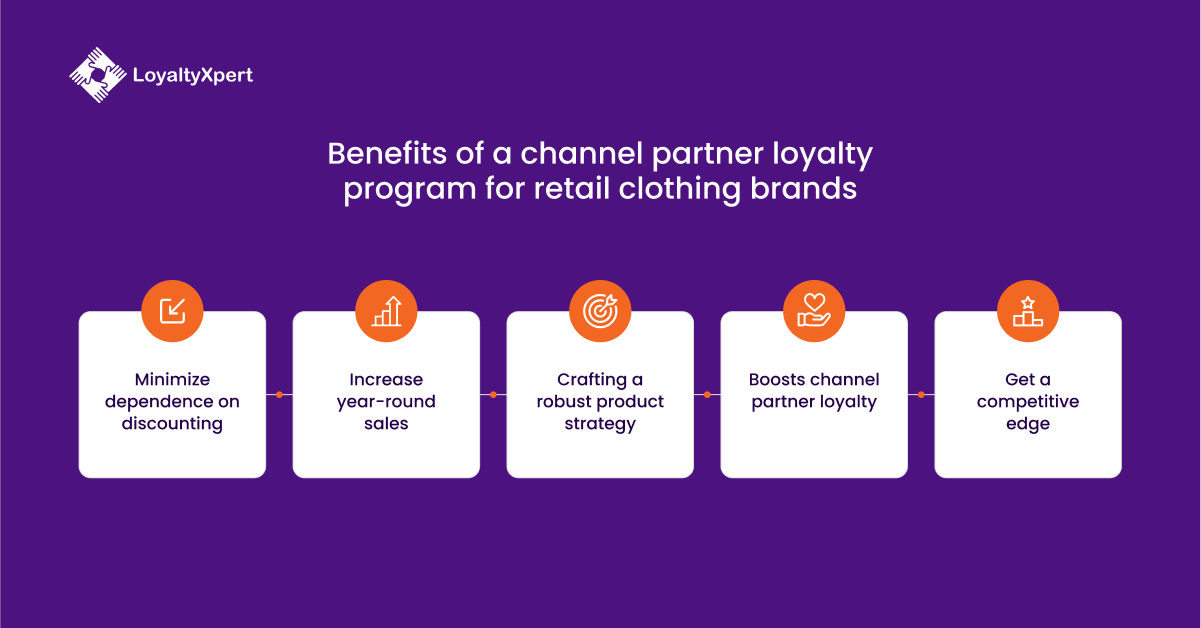
Benefits of a channel partner loyalty program for retail clothing brands by LoyaltyXpert


Benefits of a channel partner loyalty program for retail clothing brands


1. Minimize dependence on discounting

Fashion brands frequently use discounts to increase sales and maintain the interest of their channel partners. This dependency on discounts can be lessened with channel partners that have strong loyalty programs. Without sacrificing profitability, client retention can be encouraged and improved by introducing newer, more workable, and sustainable alternatives.

2. Increase year-round sales

Sales during the lean season (more so in the case of seasonal clothing) are usually low. A  channel partner loyalty program ensures retailers are willing to stock off-season items as well as they may have exclusive access to new season launches ahead of the season. The program may offer deep discounts to retailers when they are willing to stock up on products, allowing them to earn more profits during the season time. Hence, loyalty programs ensure that your channel partners keep purchasing and stocking your products all year round.

3. Crafting a robust product strategy

A loyalty program managed using a tech-led loyalty platform gives the brand access to a goldmine of data, channel partner and retailer order patterns, data like what kind of products sell more in which region, and so on. This data helps in better product planning and predicting future demand. Brands are better equipped to work on a product and marketing strategy that can be personalized across regions. 

4. Boosts channel partner loyalty

Beyond rewards and recognition, many fashion retail reward programs go a step further and involve member dealers in product planning. This instils a sense of belongingness and ownership among retailers and channel partners. It facilitates a strong and long-term association between a fashion brand and a retailer. In many ways, a great fashion loyalty program helps retain partners and win their unflinching loyalty.

5. Get a competitive edge

You may differentiate your brand from rivals by cultivating brand loyalty among channel partners. Establishing long-term alliances is crucial in an industry where there is fierce competition for partners’ attention. In the clothing market, a well-crafted loyalty program may set your brand apart as special and desirable.


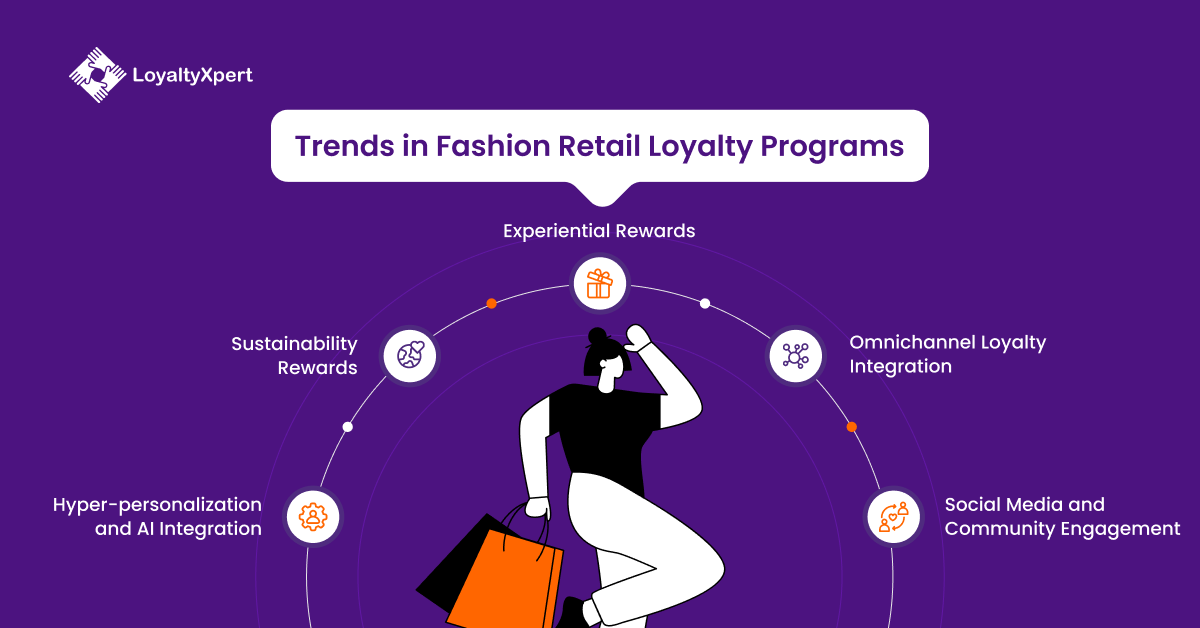
Trends in Fashion Retail Loyalty Programs

Trends in Fashion Retail Loyalty Programs

2024 is pegged to be a year of steady growth in the online fashion retail space. Let’s explore the trends that will dominate the fashion retail loyalty space.

1. Hyper-personalization and AI Integration

To provide hyper-personalized experiences, retail clothing loyalty programs will use artificial intelligence (AI) a lot more in 2024. Customized shopping experiences, personalized offers, and recommendations by leveraging sophisticated AI tools will continue to rule the industry. This will ensure every interaction is special and meaningful, which in turn will raise customer happiness and increase loyalty and engagement. Using AI brands will be better able to predict customer wants and provide relevant, customized rewards promptly.

2. Sustainability Rewards

Retail clothing businesses are incorporating eco-friendly initiatives into their loyalty programs in response to consumers’ growing concern for sustainability. When customers engage in sustainable practices, including recycling used clothing, buying eco-friendly products, or using reusable shopping bags, they can accrue points or incentives. This trend improves the brand’s reputation as one that’s environmentally conscious. It cultivates a devoted clientele that appreciates environmental effects and promotes environmentally conscious shopping practices.

3. Experiential Rewards

Experiential incentives in addition to savings and points are truly emerging as the game-changer in the rewards and loyalty space. Exclusive access to events such as fashion shows, designer meet-and-greets, customized styling sessions, and VIP parties are experiences for a few privileged channel partners who are a part of the loyalty program. These experiential rewards create an aspirational value for the brand and help fortify its emotional bond with retailers. 

4. Omnichannel Loyalty Integration

Loyalty programs are expanding their cross-channel integration as physical and digital purchasing experiences merge. Customers who spend online, in-store, or through mobile apps can easily accrue and redeem points. Maintaining loyalty in a competitive market requires a seamless and convenient consumer experience, which omnichannel integration assures. It enables companies to monitor consumer behavior across several touchpoints and offer rewards and recognition that are consistent.

5. Social Media and Community Engagement

Social networking is being used by retail clothing manufacturers more and more to improve their loyalty programs. Points are awarded to customers who interact with the company on social media by posting, reviewing, and taking part in online challenges and communities. This trend fosters a feeling of community among consumers while increasing brand exposure and engagement. Integrating social media also gets a brand authentic real-life user reviews (user-generated content) which makes a brand more trustworthy.

Challenges of Fashion Loyalty Programs in the Retail Industry


1. Customer Engagement and Retention

The fashion industry is a crowded space with brands launching new collections every season. Retaining and engaging channel partners and retailers is a task. A tech-backed loyalty program can be the key differentiator that keeps retailers loyal to your brand. 

2. Data Privacy and Security

Since loyalty programs rely on consumer data, there are serious privacy and security issues. Building trust requires strong data protection and openness about data usage, but these requirements can be difficult and expensive to provide.

3. Program Differentiation

It’s difficult to stand out in a crowded industry because rewards from loyalty programs tend to be identical. Creativity, invention, and resources are needed to create distinctive, alluring rewards and maintain the program’s novelty.

4. Balancing Costs and Benefits

Achieving the ideal balance between profitable operations and alluring incentives is crucial to managing a loyalty program’s financial components. While generous prizes are expensive and can increase loyalty, insufficient rewards result in low engagement.

5. Technological Integration

Technological challenges include integrating a loyalty program with existing technologies and guaranteeing smooth operation across different channels. Robust infrastructure and maintenance are necessary to deliver a seamless consumer experience.

Examples of Fashion Loyalty programs


1. H&M 

Well-known in the fashion industry, H&M introduced a rewards program that satisfies every requirement for a cutting-edge fashion loyalty scheme. For every $1 spent, customers gain one point, and they can redeem a $5 discount once they have 200 points. As a welcome present, newly registered members get a $10 discount; later on, further special discounts become available. Free online returns, birthday discounts, and insider shopping opportunities are all available to members.

2. Simple Be

Simply Be, with its headquarters located in Manchester, is the preferred online destination for fashion-forward women in sizes 12-32. The loyalty concept is innovative in that it offers tailored benefits based on each customer’s past experiences with the business, rather than having them collect points or scan loyalty cards. After surveying current customers, rewards were carefully chosen with the well-being of the client in mind. Some of the benefits are made possible by Simply Be’s collaborations with fine dining, travel, entertainment, fitness, and beauty brands.

3. Urban Outfitters – UO Rewards

Urban Outfitters is a global lifestyle retailer that caters to young adults by offering a variety of products including wellness, beauty, and fashion apparel for both men and women. There are three tiers in the UO Rewards loyalty program. Purchases, registration, product ratings, and visits to the UO website or app earn loyalty points. Early product access, anniversary discounts, and the opportunity to win prizes in hashtag contests are just a few of the perks available to members.

Ending Note

Loyalty programs are not just a bonus in the fast-paced fashion sector, but also a vital tactic for keeping clients and channel partners happy. To stay ahead in the competitive fashion market, implementing a well-crafted loyalty program is essential. At LoyaltyXpert, we specialize in designing and managing comprehensive loyalty programs tailored to your brand’s unique needs. Get in touch with us today by availing of our free trial and free demo to discover how we can help you build a robust loyalty program that will drive your brand’s success and foster lasting customer and partner relationships.

The Complete Guide to Plumber Loyalty Programs 2025

A plumber loyalty program is a rewards program that honors and compensates plumbers for their steadfast commitment to a specific brand or business. The goal of the program is to reward plumbers for sticking with the company and to encourage them to recommend it to their end customers (dealers/end consumers/fellow plumbers).
Plumber loyalty programs are still pertinent in 2024 for retaining clients, encouraging recommendations, and fostering brand loyalty. They provide a way to set services apart, collect insightful client data, and adjust to changing customer tastes. Loyalty programs allow plumbers a proactive way to maintain business growth and a competitive edge in the market as long as there is a need for dependable plumbing services.

How to Build a Successful Plumber Loyalty Program

A plumber loyalty program needs to be carefully planned and implemented to be successful. The following actions can be taken to create an effective plumber loyalty program:

1. Determine your objectives

First and foremost, determine what your goals are before you can begin developing your loyalty program. Do you wish to see a rise in recurring business? Promote recommendations? Boost client contentment? A program that effectively achieves your goals can be created with your knowledge of them in mind.

2. Create a loyalty program

A plumber’s loyalty program should take into account the advantages of both tiered and point-based structures. A tiered approach encourages customers to meet higher spending requirements, whereas a point-based system offers flexibility in rewarding different degrees of participation. To find the ideal fit, evaluate your company’s objectives and target audience’s preferences. Then, periodically assess and tweak the program to make sure it’s still promoting customer happiness and business expansion.

3. Advertise your loyalty scheme

Promote your loyalty program through your website, social media accounts, and in-store signage to explain the advantages and rewards that are available for the program. Reminders and consistent messaging will motivate plumbers to participate in the program regularly, increasing customer satisfaction and retention. To sustain their interest and allegiance over time, notify them about exclusive deals and rewards.

4. Monitor and evaluate the effectiveness of the program

Utilize data and analytics to track the success of your loyalty program. To improve reward programs and participation, analyze engagement levels and redemption trends. Acknowledge and reward highly motivated plumbers to promote a culture of fidelity and contentment. Your program will certainly continue to drive performance and customer retention through regular evaluation based on data-driven insights.

5. Modify and enhance

Make use of the information acquired to improve and fine-tune your loyalty program. Keep an eye on performance data to spot opportunities for development and implement the required corrections. You can make sure your program continues to be robust and relevant, increasing consumer happiness and engagement, by remaining flexible and responsive. Continual optimization embedded in data-driven insights is essential to keeping a loyalty program strong and profitable.

6. Deliver top-notch client support

In nurturing loyalty among plumbers, placing a premium on outstanding customer service is paramount. Proactively seeking feedback and resolving problems are fundamental practices. Through genuine attentiveness and empathy, enduring bonds are formed, fostering trust and goodwill. Continuously highlighting positive experiences fosters customer loyalty, ensuring a thriving future for the plumbing industry.

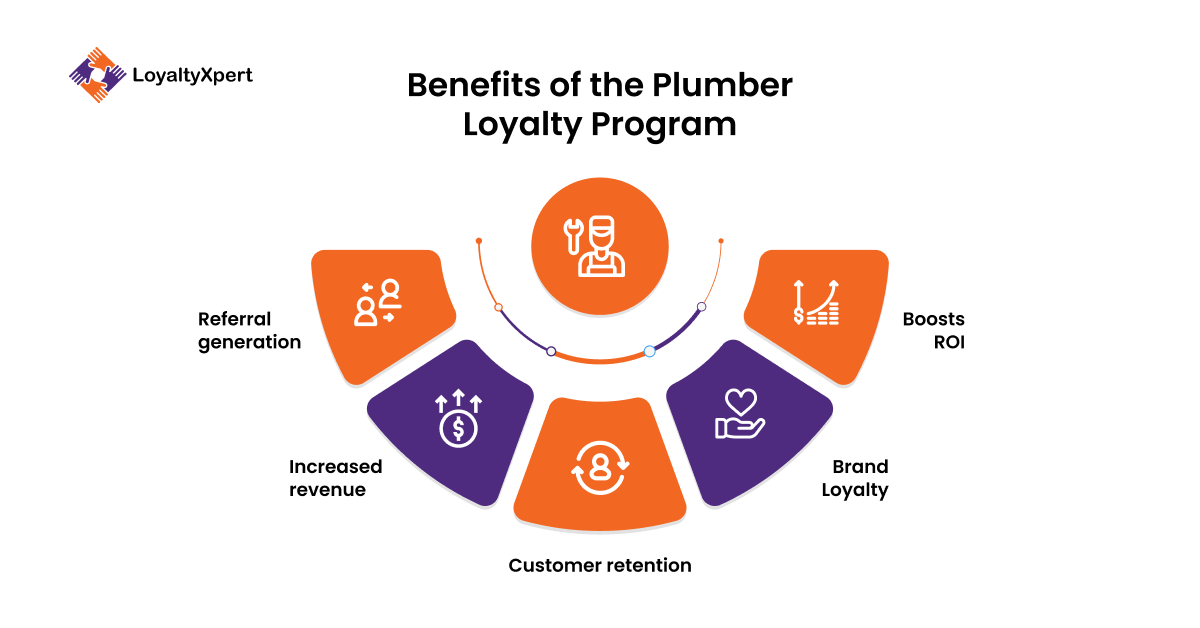
Benefits-of-the-Plumber-Loyalty-Program banner -LoyaltyXpert

Benefits of the Plumber Loyalty Program

1. Referral generation

Loyalty programs can help plumbers increase business through referral-based development. To incentivize happy consumers to recommend others, these schemes provide discounts on services or referral bonuses. Plumbing companies can increase their neighborhood presence and draw in better-quality leads by using their current clientele to advertise their services. Furthermore, rewarding successful referrals with special incentive programs that encourages happy customers to actively market their services to others.

2. Increased revenue

Since they foster recurring business, loyalty programs are essential to plumbing businesses’ ability to maintain profitability. Customers are encouraged to come back with rewards like tiered memberships or point systems. These kinds of initiatives can also increase cross-selling and upselling, raising overall revenue per customer encounter as well as the average transaction value. Furthermore, loyalty programs encourage the retention of customers and the development of enduring bonds, both of which are essential for the plumbing industry’s long-term success.

3. Customer retention

Plumber loyalty programs foster long-lasting connections with clients by encouraging recurring business and providing rewards such as priority scheduling or maintenance savings. Over time, these initiatives boost client loyalty by instilling a sense of worth and gratitude. Building a devoted clientele is essential for long-term success in a trust-driven industry like plumbing, and including feedback loops improve client satisfaction and fortifies the relationship between plumbers and their clients.

4. Brand Loyalty

For plumbers to succeed in a saturated business, brand loyalty is essential. A committed consumer base that appreciates quality and feels a connection to the brand is cultivated with the aid of loyalty programs. Through providing outstanding customer service and significant incentives, plumbers can cultivate a robust emotional connection with their consumers. This relationship lessens the possibility that clients would look for other plumbing service providers.

5. Boosts ROI

For companies that use plumbers, a plumber loyalty program can be a useful tool for boosting return on investment (ROI). Businesses can enhance customer happiness, cut expenses, and boost revenues by building a devoted plumbing clientele. Here are some strategies on how to increase ROI through a plumber loyalty program:

  • Boost the frequency of purchases: Encouraging plumbers to stick with your company is the main objective of a plumber loyalty program. Establishing a loyalty program will help you persuade plumbers to pick your company over rivals.
  • Promote referrals: Word-of-mouth recommendations are one of the best ways to boost revenue and return on investment. Offering incentives to plumbers who recommend other tradespeople to your company will grow your clientele and income.
  • Boost contentment: By giving plumbers a sense of worth and appreciation, a channel loyalty program should raise customer happiness. Plumbers are more likely to stick with your company and refer it to others if they believe that their devotion is valued and acknowledged.
  • Cut marketing expenses: You can cut marketing expenses by building a devoted plumber clientele. Recurring revenue and word-of-mouth referrals from loyal clients lessen the need for costly advertising initiatives.
  • Improve profitability: Lastly, by cutting expenses and raising revenue, a plumber loyalty program can boost profitability. You can increase sales and cut expenses related to bringing on new clients by promoting recurring business, recommendations, and higher levels of client satisfaction.

A plumber loyalty program is a great way to honor and motivate plumbers for their commitment and hard work. Building a strong relationship between the firm and plumbers through incentives for loyalty and recommendations can boost productivity and improve the quality of work. Plumbers hold considerable sway in the plumbing industry, greatly impacting the decisions customers make regarding their purchases. Companies manufacturing plumbing supplies must invest in plumber loyalty programs for better outreach.
A loyalty program for plumbers can assist plumbing fixture brands in forming partnerships and expanding their network. We at LoyaltyXpert can assist you in developing effective loyalty programs for plumbers that will boost sales and retention. Get in touch today by scheduling a demo or availing a free trial.

B2B Loyalty Programs in the Electronics Industry: A Complete Guide

The electronics industry operates through complex networks of distributors, dealers, retailers, installers, and channel partners. With intense competition, frequent product launches, and evolving customer expectations, electronics brands face constant pressure to strengthen channel relationships and maintain market share.

This is where B2B loyalty programs play a critical role. By rewarding dealers, distributors, retailers, and channel partners for purchases, sales performance, product promotion, and brand advocacy, electronics companies can increase engagement, encourage repeat business, and reduce partner switching.

Modern B2B loyalty programs go beyond traditional incentive schemes by leveraging digital platforms, automated rewards, real-time tracking, and performance analytics to create measurable business outcomes.

In this guide, we’ll explore how B2B loyalty programs help electronics brands improve partner loyalty, drive sales growth, and strengthen their distribution ecosystem.

Benefits of loyalty programs in the electronic industry

1. Customer retention:

In the electronic business, loyalty programs play a crucial role in client retention. Take Best Buy’s “My Best Buy” initiative, for example. Customers who participate in this program receive points for every dollar spent, which they can then exchange for savings on additional purchases. With its member-only pricing and point-accumulating incentives, Best Buy gradually builds up its client base by promoting repeat business.

2. Brand loyalty:

Loyalty programs are a common tool used by electronic firms to cultivate strong client brand loyalty. Consider Apple’s “Apple Rewards” initiative. Apple provides several advantages with this program, including exclusive event access, unique financing choices, and point accumulation for purchases. By offering these benefits, Apple fosters a sense of loyalty and attachment among its clients, resulting in ongoing support and advocacy.

3. Data utilization:

Loyalty programs offer important information about the tastes and behavior of customers. Samsung, for example, uses user interactions and purchases to tailor recommendations and prizes through its “Samsung Rewards” program. Samsung improved the overall customer experience by customizing its product offerings and marketing strategies to better match the demands and preferences of its target market by studying this data.

4. Word-of-mouth marketing:

Satisfied members of loyalty programs often become brand advocates and expand their market share through word-of-mouth referrals. The Starbucks Rewards program for instance offered members birthday prizes, personalized offers, and free drinks. These customers would then tell their friends, family, and coworkers about their positive experiences. Through genuine, customer-driven advertising, their enthusiastic recommendations encourage others to sign up for the Starbucks Rewards program, fostering organic development and strengthening the brand presence of Starbucks.

5. Competitive advantage:

Loyalty programs can make a big difference in a cutthroat market like the electronics sector. Consider Amazon Prime, which provides a host of advantages such as free shipping, access to streaming services, and special discounts. By offering these advantages, Amazon differentiates itself from rivals and draws in and keeps consumers who like the extra features of membership.

Ways B2B loyalty programs contribute to achieving remarkable results

1. Increasing Sales for Channel Partners

B2B customer loyalty programs provide incentives such as bonuses, commissions, and awards to electronics dealers, distributors, and retailers, encouraging them to surpass sales goals. This promotes wider product distribution and higher sales volumes, which boost the expansion of the company as a whole.

2. Promoting Cross-Selling and Upselling

Channel partners are encouraged to cross-sell and upsell comparable electronic products through B2B loyalty programs. Manufacturers can promote more purchases and product bundles and boost revenue by offering bonuses or rewards for meeting sales targets.

3. Assisting with after-sale support

Benefits and awards for superior after-sales care given by channel partners may be included in B2B reward programs. This motivates partners to provide priority to warranty services, product upkeep, and customer assistance, which raises customer satisfaction and encourages repeat business.

4. Motivating market growth

B2B loyalty programs encourage channel partners to investigate new markets and grow their clientele. Electronics manufacturers can incentivize partners to enter undeveloped markets by offering unique pricing or territorial exclusivity. This can expand brand awareness and stimulate business growth.

4. Assisting in the launch of products

A key factor in the successful launch of new electrical devices is B2B loyalty programs. Manufacturers can encourage their channel partners to actively market and sell their new products by providing early access, unique promotions, and alluring incentives. This will help drive initial sales momentum and market adoption.

Types of B2B loyalty programs in the electronic industry

1. Volume based discounts

Volume-based loyalty programs offer tiered discounts or awards based on the amount of orders which encourages dealers to buy large quantities in a single order. For instance, Dell’s “Dell Advantage Rewards” program offers any small business making a purchase of INR 35,000 and above a discount on the next purchase. The higher the purchase value more is the discount offered.

2. Tiered loyalty programs

B2B clients are divided into various tiers by tiered rewards programs according to the volume or frequency of their purchases. Lenovo’s “LenovoPRO” program, for instance, provides three membership tiers: Silver, Gold, and Platinum. With each tier unlocked, you can get increasingly valuable benefits like personal account managers, first dibs on goods and services, and first-rate technical assistance. This encourages companies to invest more to advance and gain access to more perks.

3. Co-branded credit programs

B2B customers can use co-branded credit cards to make purchases and receive rewards or cashback through co-branded credit programs. The “Office Depot Business Credit Card” that Office Depot offers is one such. Every dollar spent by businesses earns them rewards points that can be exchanged for gift cards, account credits, or travel benefits.

4. Referral programs

Referral programs encourage existing clients to recommend new clients to your program. Cisco’s “Cisco Referral Program” pays partners to introduce new clients who complete eligible purchases. Partners receive rewards in the form of credits for training and certification courses, rebates, or discounts on further purchases. This improves the relationship between the business and its current partners in addition to helping them attract new clients.

5. Partner programs

Partner programs entail company partnerships to provide packaged product offerings, co-marketing opportunities, or joint promotions. For example, companies can work with Samsung to develop and market integrated solutions for their consumers through the “Samsung Partners” program. Through strategic collaborations, Samsung broadens its market reach while partners can strengthen their services and draw in new customers by utilizing Samsung’s technologies and strong brand.

Final words

B2B loyalty programs have become a powerful tool for electronics brands looking to improve dealer engagement, strengthen distributor relationships, and drive long-term sales growth. By rewarding channel partners for purchases, performance, and brand advocacy, businesses can create stronger loyalty and reduce competitive switching.

As distribution networks become more complex, electronics companies are increasingly adopting digital loyalty platforms to automate rewards, improve visibility, and measure program effectiveness. The right loyalty strategy can help brands build stronger partner ecosystems and achieve sustainable growth.

Looking to launch a B2B loyalty program for dealers, distributors, retailers, or channel partners in the electronics industry? Contact Us to discuss your requirements or Request a Demo to see how LoyaltyXpert helps electronics brands improve engagement and loyalty.

Mastering Hotel Loyalty Programs: Essential Guide for Hoteliers

The hotel industry is highly competitive. Going the extra mile by offering an attractive loyalty program can help hotels retain customers and acquire new ones. Loyalty programs offer reward points, perks, and more ensuring customers keep coming back to the hotel. They play an instrumental role in helping a hotel brand build a loyal customer pool. Some of the most popular hotel loyalty programs are Marriott with 192 million members and Hyatt with 173 million members. These numbers highlight the importance of great hotel loyalty

Understanding Hotel Loyalty Programs

A hotel loyalty program is one where hotels offer structured rewards, perks, and certain extra privileges to guests who frequently stay at their hotels. Hotel loyalty programs are essential for creating long-lasting relationships with visitors, encouraging return business, and raising levels of satisfaction. They encourage customers to select a certain brand by providing a variety of benefits like points, tiers of incentives, and customized experiences.

These customer loyalty programs increase customer lifetime, strengthen brand loyalty, and set hotels apart in a crowded market by providing real benefits and collecting insightful guest data. Hospitality loyalty programs are essential for drawing in new customers and keeping existing ones coming back over time in the era of customized experiences.

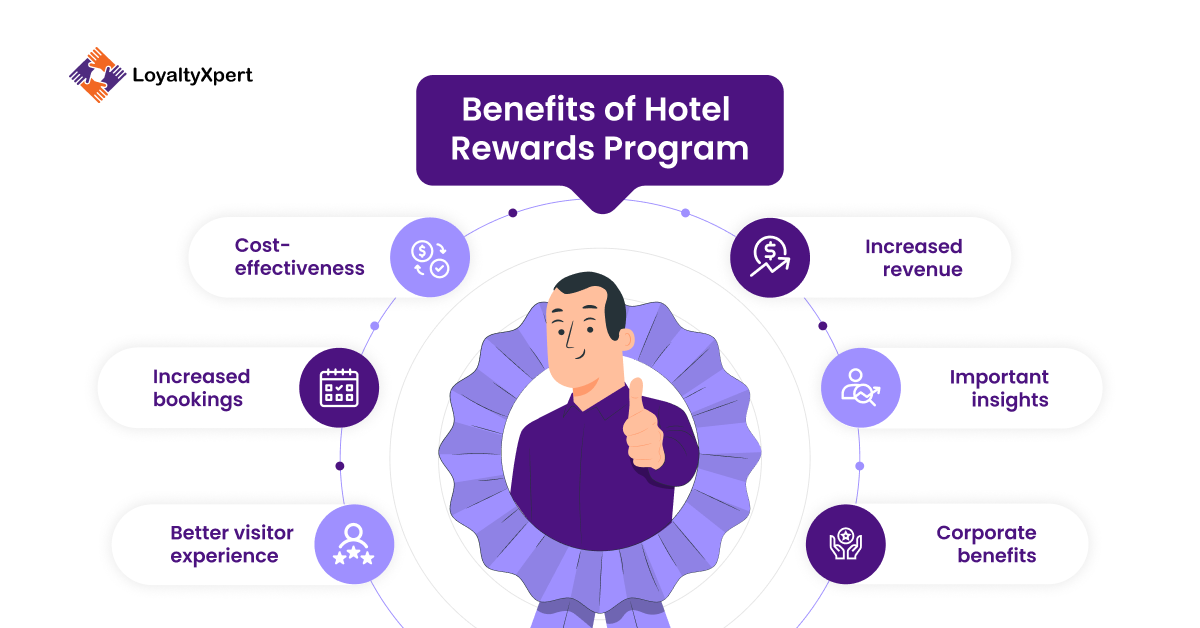
Benefits of Hotel Rewards Program - LoyaltyXpert

Benefits of Hotel Rewards Program

Some of the advantages of hotel loyalty programs are:

1. Better visitor experience:

If you have a loyalty program, you could make sure that regular guests are never forgotten. Acknowledging and catering to their preferences will make their stay seamless and enjoyable.

2. Increased bookings

Frequently, an appeal for incentives or immediate benefits is sufficient to persuade hesitant travelers to book. In this way, a loyalty program serves the dual purpose of drawing in new customers and retaining those you have already acquired.

3. Cost-effectiveness:

Compared to seeking for new customers, pursuing recurring business puts much less stress on your marketing and sales teams. Additionally, there’s a greater chance that devoted, returning customers would make direct hotel reservations as opposed to using an online travel agency, which will save you commission.

4. Increased revenue:

Returning customers are undoubtedly satisfied with the service they receive and are also more inclined to spend money on extras and other perks. If you continually demonstrate your worth, visitors will be content to part with their money.

5. Important insights:

By enrolling visitors in a loyalty program, you may create more profiles than ever before and populate them with a wealth of information. Understanding their tastes, passions, and behavior will help you draw in new visitors who are the ideal fit for your establishment.

6. Corporate benefits:

Since corporations are most likely to return to the same venue frequently, many businesses, travel managers, or event planners will select hotels that provide loyalty programs.

Types of hotel loyalty programs

1. Point-based loyalty program

In a point-based loyalty program, every stay earns points for the visitors, which they can then exchange for different benefits like free nights, upgraded accommodations, or other privileges. By rewarding guests for their loyalty, this strategy not only promotes repeat business but also helps them feel valued and appreciated. Hotel loyalty rewards programs like IHG Rewards Club, Hilton Honors, and Marriott Bonvoy boast sizable member bases and offer diverse redemption choices to accommodate visitor preferences.

Marriott Bonvoy, for example, is one of the top hotel loyalty programs; members can accrue points for stays at any of Marriott’s hotels and resorts across the globe. Points can be used for experiences, travel packages, free nights, and even upgrades in accommodation. Marriott Bonvoy is a point system that rewards loyalty and improves the entire visitor experience by offering more advantages as members advance.

2. Tiered loyalty program

Guests participating in tier-based loyalty programs receive incentives and privileges according to how much they spend and how engaged they are with the business. Upon reaching specific milestones or accruing points, visitors advance through various stages, including Silver, Gold, and Platinum. With progressively alluring benefits and advantages offered at each tier, visitors are encouraged to increase their spending and loyalty. These benefits could include freebies, late check-out, upgraded accommodations, or special access to activities or experiences only available to higher-tier members. Brands can satisfy the wide range of tastes and budgets of their clientele while simultaneously promoting engagement and loyalty by providing tiers of perks.

World of Hyatt offers a tiered loyalty program. Members advance through elite tiers (Discoverist, Explorist, Globalist) under the number of qualifying nights or base points they have accrued. Additional amenities like free breakfast, extra points, lounge access, and hotel upgrades become available with each tier. World of Hyatt successfully rewards devoted customers and motivates them to go for higher status levels by providing tiered prizes, which eventually improves customer happiness and loyalty.

3. Cashback programs

Cashback programs allow customers to collect credits or payback for their stays, giving them monetary rewards that they can utilize for future hotel stays or bookings. Guests can get instant advantages in the form of credits or cashback with this kind of loyalty program, which can improve their overall stay experience. Through flexibility in use, visitors can apply their awards for future stays, room upgrades, dining experiences, or other hotel services, whichever best matches their interests.

Orbitz Rewards is an example of a cashback program; users receive Orbucks for each dollar spent on eligible hotel reservations. Customers can save money on subsequent travels by redeeming these Orbucks for hotel stays or other travel-related expenses. Orbitz Rewards offers cashback rewards to visitors as a way to thank them for their loyalty and encourage them to make repeat reservations.

4. Co-Branded Credit Card Programs

Co-branded credit card programs refer to alliances between credit card firms and hotels that offer branded credit cards with benefits for both regular spending and hotel stays. With these credit cards, you can usually accrue points or prizes that can be redeemed for free nights, upgraded rooms, or other incentives, both inside the hotel and for purchases made outside of it. Hotels can use these co-branded credit cards to offer their customers more value and perks over and beyond what a regular credit card would, as well as to encourage guests to use their brand for lodging and other purchases.

Marriott Bonvoy American Express is a popular co-branded credit card program in the hotel sector. Cardholders can earn Marriott Bonvoy points for their spending at Marriott properties as well as on regular purchases thanks to the relationship between Marriott Bonvoy and American Express. Through the provision of these co-branded credit cards, Marriott Bonvoy enhances its relationship with cardholders, grows its clientele, and fosters brand loyalty.

How to cultivate loyal guests at your hotel

Although it’s not a must for travelers to wish to stay at your hotel again, offering a loyalty program is a pleasant way to show your gratitude for their business.

So, how can you cultivate a loyal consumer base?

1. Play a global role both online and offline

It is more crucial than ever to accommodate the requirements and desires of every possible guest, many of whom may not speak your language in today’s hyper-connected world.

Keep in mind that markets with the greatest growth do not speak English as their first language. Even if the majority of people are fluent in English these days, they still want to feel as though you care about them and are excited to have them over. This means that in addition to being ready to bring on multilingual employees, you should think about optimizing your website by translating it into multiple languages.

Your credibility as a global player will be enhanced by your ability to serve international markets and spot visitor patterns. It will also highlight how prepared you are to incorporate customer needs into your customer experience management plan.

2. Give the client a personalized experience

Visitors enjoy feeling well-cared for. They are likely to remember and return if you reward them with personalized experiences, such as exclusive deals and leisure choices. By studying your guests’ data in your property management system, you can create a profile of them and find out why they came. During check-in, your team has the ideal opportunity to learn more about the reason for your customers’ trip: are they visiting for business or for a romantic weekend getaway? Or are they just spending a laid-back holiday with their entire family? Once you are aware of their objectives, make effective use of that knowledge to your advantage.

For instance, provide honeymooners with a complimentary spa treatment or a room upgrade. Make sure your guests are delighted, not just satisfied.

3. Reward devoted customers

Loyalty programs that provide discounts, freebies, and other benefits to visitors, for instance, can significantly improve their experience and, eventually, your sales graph.

Remember to keep it intimate. Hoteliers can attract and retain consumers by emphasizing personalized and meaningful rewards, offering instant access to rewards, and transforming the guest experience.

Summing up

To sum up, hotel loyalty programs are essential for improving visitor experiences, encouraging reservations, and helping hotel owners make the most money. Hotels can accommodate a wide range of guest preferences and requirements by providing a variety of loyalty program alternatives, such as tiered, cashback, co-branded credit cards, and partnership programs, among others. To build hotel customer loyalty, hotels must prioritize personalized experiences, engage with guests online and offline, and consistently reward their loyalty.

Ready to take your sales channels to new heights? Partner with LoyaltyXpert and go beyond conventional incentives to maximize your potential. Discover the difference today by signing up for a free trial or demo. Don’t miss out on the opportunity to elevate your business!

From Woodwork to Rewards: The Plywood Loyalty Program Story

The word plywood is frequently associated with carpenters, artisans, and do-it-yourself enthusiasts. Reports suggest that the plywood market will be worth USD 73.3 billion by 2027 with a compound annual growth rate of 6.2%. This significant expansion highlights the importance of carpenter loyalty programs in the plywood sector since they are essential to capitalizing on this growing market.

Loyalty Programs in the Plywood Industry

Carpenters are constantly searching for products that provide a little something extra. According to a study, 84% of respondents say they like businesses that provide loyalty programs, and 66% say that rewards influence their purchases.

Plywood loyalty programs use discounts and awards to encourage builders and contractors to make repeat purchases and show brand loyalty. These initiatives help manufacturers better target their products and marketing campaigns by obtaining information about consumer preferences.

Additionally, by encouraging participation and input, contractor loyalty programs support innovation and ongoing development, guaranteeing market competitiveness. Furthermore, B2B loyalty programs promote a feeling of community and trust within the plywood industry ecosystem by fortifying ties between distributors, manufacturers, and customers.

Challenges faced by the industry

Dealing with problems like fluctuating costs and intense competition is difficult in the plywood industry. However, these days, carpenters are benefiting from carpenter loyalty programs. By rewarding their devoted clients and providing them with resources to get new ones, they also assist carpenters in obtaining additional work. Let us look at some of the challenges faced by carpenters today:

1. Cost variation

One of the biggest challenges faced by carpenters is the unpredictability of material pricing, particularly for plywood. By providing exclusive discounts or special pricing on plywood purchases, loyalty programs assist in mitigating this problem. Carpenters can better control their expenses and stay profitable in the face of fluctuating material prices by taking advantage of these savings.

2. Market competition

In the highly competitive plywood carpentry market, making a lasting impression is essential. By encouraging customer loyalty, loyalty programs provide businesses with a way to stand out from the competition. Carpenters can ensure a competitive edge in the market by encouraging customer loyalty and maintaining a consistent flow of work by offering discounts, rewards, or points for repeat business.

3. Client Acquisition

It can be difficult for carpenters in the plywood sector to find new clients and land profitable projects, particularly in countries with fierce competition. Customized loyalty programs for the plywood sector do more for current clients than simply provide incentives; they also give access to resources and helpful marketing support that can greatly accelerate business expansion. These programs frequently give participants access to marketing materials, referral networks, and online venues where carpenters may exhibit their creations, draw in clients, and grow their customer base. Carpenters in the plywood sector may successfully reach new clients, land more jobs, investigate new product options, and eventually succeed in their business ventures by utilizing these marketing techniques.

For a broad spectrum of businesses, LoyaltyXpert develops a wide range of attractive and successful influencer, brand, and channel loyalty programs that will benefit the life of a carpenter and improve the plywood industry.

Significance of loyalty programs in the plywood industry

Loyalty programs enhance customer engagement, retention, and product management making it an indispensable tool for growth in the plywood industry. Given below are a few notable benefits of loyalty programs for the plywood industry.

1. Customer retention

Loyalty programs boost client retention by offering incentives for repeat purchases, fostering appreciation and emotional connection, and providing personalized experiences. This is because clients who are part of a loyalty program are more likely to stick with the firm to accrue rewards. Loyalty programs have the potential to improve client retention rates in the plywood sector, giving carpenters a competitive edge and cultivating enduring customer connections.

2. Customer engagement

Tailored or targeted bonus incentive offers in a loyalty program are linked to desired purchase outcomes, ensuring customers understand your business. This improves appreciation, loyalty, and engagement among your customer base. This personalized approach fosters stronger connections with customers, driving satisfaction and loyalty in the long run. To show that they understand the demands and prioritize their customers, plywood suppliers can tailor bonus incentives to match specific purchase outcomes or consumer preferences.

3. Product management

Customers may easily track product data and activate warranties with the help of loyalty programs. They can readily obtain information such as product specs, installation recommendations, and warranty coverage by registering their plywood purchases through the loyalty program. This guarantees that clients are aware of what they are buying and can promptly address any problems or queries that may come up. Furthermore, loyalty systems frequently give users loyalty points for registering their products, which increases involvement and promotes repurchases.

Tips to follow to get the most out of loyalty programs

Merely having a loyalty program is not enough. You must maximize the effectiveness of your program in order to get the maximum benefits. Here are a few tips to get the most out of your loyalty program:

1. Choose the right program

Loyalty programs are gaining popularity among both consumers (builders, contractors, and carpenters) and corporations (manufacturers, distributors and suppliers). Customers that participate in these programs can take advantage of discounts, freebies, and special access to goods and services, among other incentives. But picking the best loyalty program for you can be difficult with so many available. Consider these while choosing the right program:

  • Determine your needs and preferences
  • Research the options available
  • Consider the program’s terms and conditions
  • Compare the benefits and costs
  • Look for sign-up bonuses and promotions
  • Consider the program’s reputation

2. Understand what matters to carpenters/contractors/architects

These professionals view availability, affordability, dependability, and product quality as critical aspects. They look for plywood suppliers who can meet project needs within budgetary limits by providing affordable price, long-lasting materials, and consistent quality. They also place a high value on prompt delivery, accessibility, and first-rate customer service as factors that enhance their level of happiness and supplier loyalty. Plywood companies can build trusting relationships with carpenters, contractors, and architects by resolving important issues. This ensures their continued support and cooperation in the industry.

3. Evolve rewards according to needs

A good loyalty program must adapt its rewards based on the demands of each member. The success of loyalty programs in the plywood sector depends on tailoring rewards to the unique requirements of carpenters. When it comes to things like preferred materials, budgetary limits, and project scope, carpenters frequently have specific needs and preferences. Rewarding carpenters in a way that best suits their needs, for example, by giving them access to resources, giving them discounts on large purchases, offering flexible payment options,can help plywood manufacturers win their loyalty.

4. Clearly define redemption rates

The degree to which users interact with your loyalty program can have a big impact on redemption rates. Users are more likely to redeem points if they are actively interacting. Nonetheless, the redemption rate is typically lower if the program fails to actively engage participants. Reward and incentive-based communication done well can increase the number of points redeemed. Encourage users to use their points by sending them targeted offers, incentives, and reminders.

Loyalty programs for Plywood industry in 2024

In 2024, creative loyalty schemes will be essential to the plywood sector’s competitiveness. Personalized incentives and cutting-edge analytics power these initiatives, specifically designed for carpenters and suppliers. They aim to foster client loyalty and drive business expansion within the plywood industry. These are the programs that will work for the plywood industry:

1. QR based loyalty program

Through the scanning of codes on products or receipts, carpenters and contractors in the plywood business can receive incentives through a QR-based loyalty program. This system is convenient and makes it simple to track purchases and redeem incentives through mobile apps. QR-based loyalty systems improve customer engagement and loyalty in the plywood industry by offering incentives for repeat purchases.

2. Coalition loyalty program

Within the plywood sector, a coalition loyalty program brings together several suppliers to provide incentives for purchases, thus promoting consumer loyalty throughout the network. Participating in a coalition program allows suppliers to collectively reward customers, expand their base, and strengthen industry partnerships. Customer happiness and retention are increased by this cooperative approach, which makes earning and redeeming rewards easier.

Read More on Coalition Loyalty Programs Here

3. Point-based loyalty program

Carpenters and contractors can earn points for every purchase of plywood items they make through a reward program designed specifically for the plywood sector. They can accrue points that can be exchanged for benefits like special offers, freebies, or discounts. This encourages repurchases, cultivates client loyalty, and raises awareness of the plywood industry.

4. Tiered loyalty program

A tiered loyalty program for plywood allows members to progress through tiers and access additional perks. Members receive prizes and privileges based on their degree of engagement or spending. This system promotes enhanced engagement and loyalty with plywood suppliers.

To sum up

In the plywood industry, loyalty programs are essential because they boost customer happiness, encourage repeat business, and stimulate innovation. By providing real advantages like discounts and prizes, these initiatives increase client loyalty and trust. Loyalty programs guarantee a consistent stream of business for carpenters and plywood suppliers by offering incentives for repeat orders. Additionally, they obtain insightful data from customers that guides marketing plans and product development, encouraging innovation in the sector.

Personalized and creative loyalty programs made to meet the specific requirements of stakeholders will continue to be crucial. They play a vital role in preserving competitiveness and attaining long-term success as the plywood industry changes.

We at LoyaltyXpert have the essential expertise and know-how to create successful channel loyalty plans for plywood and laminate producers of all sizes. Many of our clients have strong relationships and unwavering loyalty from influencers and end users in addition to their channel partners. Get a demo now if you want to manage profitable channel loyalty programs.

What is Employee Advocacy and Recognition: A Detailed Guide

Do you know the difference between ordinary and extraordinary? It is all about going that “extra” mile. When a business is performing well, the employees are the ones who bring in that extra. Think in this way- your employees know the company inside and out which gives them the power to project the best of it in the outside world. To accomplish this, your organization needs the best employee advocacy program in action. 

Tapping into the power of employee advocacy can be a hit game for a company. According to LinkedIn research, on average, employee networks have 10x more connections than a company has followers. So, why not leverage the wider audience of your employees? The same research shows that —the click-through rate (CTR) on a piece of content is 2x higher when shared by an employee versus when shared by the company itself. 

Let’s scratch beyond the surface to understand how employee advocacy drives your business and how it is a win-win for both employees and employers. 

While for some companies, a brand advocacy program is a side hustle, for many organizations it is the best way to increase brand awareness, attract top talent, retain employees, and generate leads. Let’s break this down by first understanding employee advocacy’s meaning and how it is different from employee recognition.

Difference between Employee Advocacy and Recognition

Employee advocacy

Employee advocacy is a powerful strategy/tool to convert your employees into brand advocates. The best employee advocacy programs empower your employees to share the company’s useful, unique, and quality content with their social network. Here are the best practices to build a program that can empower employees to become brand ambassadors of your company.

Best Practices to Build an Employee Advocacy Program

Set a goal and strategy: Set a goal and some ground rules. Your employees may be happy to be your advocates but sometimes they don’t know what to say and what not to say on social media. 

Goals are the primary things to cultivate a successful program.

For example:

  • For Marketing: The goals could be to increase brand awareness and reach new markets. 
  • For sales: The goals could be to nurture prospects and lead generation. 
  • For talent: The goals could be to retain and attract new employees. 

Segment your target audience: Your employees would have a diverse network. Some could have HR professionals and some could have technology professionals. So, here you need to bring segmentation into action to make your program effective. Design your program in such a way that it motivates different employees to share different information about the company.

For example, the HR department can share their experience and the IT department can talk about the services/products. 

Educate employees about value addition: Regular posting and reviews are beneficial for individual social profiles too. It gives employees a chance to expand their network and learn more things. This can amp up their profiles and position themselves as a leader. 

Bring gamification into your strategy: Employee engagement can drastically improve by using gamified employee recognition programs/practices. These gamified practices invoke excitement in employees which leads to better engagement.  

Read more on the Gamification in Loyalty Program.

Measure the program: Measuring the success of a program is important to incentivize your employees. A LoyaltyXpert digital platform can make your tasks easy by measuring employees’ activities and tracking engagement. 

Keep the momentum by rewarding them: Employee recognition and employee engagement are important in running the program effectively. To keep up the momentum, companies need to incorporate rewards and recognition best practices. Using the unique features of a tech-enabled platform, you can identify employees who are actively promoting the company’s products, services, and culture. 

Employee Recognition

Employee recognition is an effective practice to appreciate employees for their contributions and hard work. Organizations implement best practices in employee rewards and recognition to retain employees, attract new talent, and motivate them to achieve higher goals.

Best Practices for Employee Recognition

Best employee recognition programs are the ones that create a sense of connection with your employees. Here are some of the best practices for effective employee recognition.

Invest in the right technology: Investing in technologies such as an employee recognition platform can help you foster employee engagement and loyalty. It allows you to plan, execute, and track employee recognition programs. A robust platform can help you build a program that touches every aspect of employees’ contribution to the organization. It also provides you with a holistic view of employee contribution and ensures they are fairly rewarded and recognized for the same. 

Recognition and Appreciation: Employees are the assets and they deserve appreciation. An employee recognition program can help you identify employees’ efforts and hard work. Companies can motivate them with social, monetary, and peer-to-peer recognition. 

Incentivize: Drive the productivity and efficiency of your employees by incentivizing them with unique rewards. Add fun rewards like free tickets to concerts, passes to their comedian, travel packages, reward points, gift cards, and more.   

Now that we are clear with both terms, let’s deepen our understanding of the benefits of employee advocacy.

Benefits of employee advocacy

For marketing: Do you know if 3% of your employees share the company’s content then those shares are responsible for driving 30% engagement? Isn’t it huge for a company to not leverage employees’ networks and market services/products? It surely is. Advocacy programs encourage employees to spread a positive brand image which can become the simplest and best way to authentically engage with wider audiences. Infosys is one of the best examples that leverage employee advocacy. The employees share their expertise, company culture, and knowledge using hashtags such as #InfyDiaries, #IAmFutureReady,  #ESGIsAnOpportunity,#DigitalSkilling, etc. 

For sales: In today’s world, traditional ways of improving sales are not effective. Employee programs help you think out of the box to improve your sales. About 72% of engaged social media users and 62% of casual users say sharing company posts helps their social selling efforts. The reason is that prospects trust people’s views more than company selling efforts. Employee advocacy humanizes your brand. Don’t you feel confident about your purchase if you read reviews of your friends or family? The same tactic can be used by organizations. Motivate employees to post reviews and share company posts to build trust. It eventually increases sales. 

For Talent: Don’t miss out on the opportunity to attract prospective talents that are hidden in your employees’ network. Employee advocacy is a powerful tool to attract new talent to your organization. According to ET, the prospects are more likely to consider an organization that is recommended by an employee. This implies that prospects are likely to have first-hand experience with the company and its work culture. Empower employees to share their experiences with prospects. 

A Word to Remember:Your employee engagement depends on how engaging and benefiting your employee advocacy program is.”         

In a nutshell

Brand advocacy is a strategy that works for all business sizes, you just need to leverage its power with an impactful tech platform. LoyaltyXpert has helped companies retain, engage, and attract employees with its powerful tech-backed loyalty platform. The exclusively curated programs according to business goals have made it easy for companies to convert employees into ambassadors.

Employees can make or break a business’s success. They are the ones who add to culture and go above and beyond to achieve business goals. It becomes crucial for companies to admire and appreciate their assets. By implementing employee-oriented programs, companies can create a base of a long-lasting and strong organization. Convert your employees into brand ambassadors using a powerful platform

Grow strong with your employees and improve sales, employee engagement, and satisfaction.


The Ultimate Guide to Loyalty Programs

Customer loyalty programs are more crucial than ever in today’s overcrowded and highly competitive marketplace. Providing a quality product or service at a reasonable price alone is just not enough. Businesses need to push the envelope to build a long-standing relationship with their customers and innovative loyalty programs can help them to do so.

What is a Loyalty Program?

loyalty program is a business technique whereby a company offers discounts and prizes to its customers in exchange for their loyalty. It aids companies in boosting product sales and retaining current clients. A brand extends an invitation to join a rewards program to customers who make recurring purchases from them. 

Due to intense competition and a broad range of services available to consumers, the market strategy has changed from being product-centric to being customer-centric. As a result, marketing strategies should place a high priority on building a sustainable business and raising customer satisfaction.

As per a survey by TechJury, 75% of consumers said they would pick a business that offers a loyalty reward program. Customers are happier and more likely to stick with a business that shows them gratitude. They are more likely to spend more money on each transaction and make repeat purchases. They also share their experience among friends and family which could bring in new clients and aid in its expansion. This explains why loyalty programs are an indispensable tool to retain customers.

When you use the proper strategy, you will observe observable improvements in product sales and customer lifetime value. Optimizing client interactions through an appropriately implemented reward program and its associated incentives enables entrepreneurs. An organization gains credibility and transparency as it gains trust.

But how do you design a loyalty program that benefits both you and your customers? Grab a cup of coffee and read through this detailed step-by-step guide on how to build a loyalty program that works.

The Loyalty Payoff: Numbers Unveiling the Hidden Upside

A whopping 61% of businesses claim that repeat business accounts for more than half of their revenue, reinstating the importance of customer retention. Great customer loyalty solutions enable a business to improve customer retention rates, acquire new customers by word of mouth, and increase customer lifetime value (CLV) which collectively help a business grow better and become profitable. According to a brand loyalty survey, a corporation can raise each customer’s CLV by 85% when it achieves a 7% increase in brand loyalty program.

Case study: American Express successfully maximized its customer loyalty through its “Membership Rewards” program for corporates. With personalized offers, bonuses, and recommendations based on data analytics, this all-inclusive program rewards companies for using corporate cards, and promoting card usage and loyalty.

Types of Loyalty Programs

Every business has its own unique goals with regard to customer loyalty programs. A service company or a publication house is looking for more subscriptions, a retailer is looking for repeat sales, and so on. However, every business benefits if they choose the right loyalty program. But how do you choose the best fit? Let’s help you understand the types of loyalty programs you can implement.

Step-by-Step Guide to Implementing a Loyalty ProgramLoyalty program implementation requires creating a strategic structure that recognizes and rewards customers for their continued participation and purchases. Customer retention, brand advocacy, and long-term profitability are all enhanced by effective implementation. Let’s walk through the implementation process step by step:1. Identify a distinct value proposition.The idea behind the customer loyalty program should complement your business’s value proposition by providing the same distinctive features. Here are some mechanics and logic behind loyalty programs that you need to consider:

  • “Follower Approach”: For speedy adoption and tested outcomes, mirror a competitor’s successful loyalty program.
  • “Something Old, Something New Approach”: Increase the efficacy of your program by combining a competitor’s approach with unique inventions.
  • “Prime Mover Approach”: Create an innovative loyalty program from the ground up, establishing new benchmarks and yourself as a leader in the field.

2. Establish SMART (clear and sensible) goals.Your loyalty program needs to align with the objectives of your company. They also need to be realistic. These goals can be classified into three categories: core, primary, and secondary. Note that this is merely one instance of goal distinction. The way you label and deconstruct them is actually up to you.3. Make a budget for your income and expenses.List out all costs and revenues related to the rollout of the loyalty program. You must first take into account the program’s financial sources. You need to have control over the system and make a big financial commitment, thus this budget needs to be new and independent. Think about whether your marketing budget will support the loyalty program or whether you want to set aside a separate budget that will come from additional revenue sources.4. Identify the teamJoining the efforts of various team members is another crucial component of program implementation, as it helps the system function smoothly from the start. To guarantee a seamless implementation and development of your loyalty program, assemble a project team of members from several departments and management tiers.5. Examine your loyalty program’s target audience.A customer loyalty program is only successful when it resonates with the customer. Identify your ICP (ideal customer persona), segment them, and build a program accordingly. Personalize your loyalty rewards program for different customer segments. Use the right tools and technology to identify and collect data about your customers. Simply put, do your homework well.6. Monitor Your Loyalty ProgramOnce you have implemented the program, track  KPIs (key performance indicators) such as participation rates, engagement levels, and redemption rates to determine if the program is achieving the desired results. Try out various incentives, prizes, and program elements to see what appeals to your audience the most and encourages the desired behaviors. Gather customer feedback to identify areas for improvement, and listen to your customers.Common Pitfalls to AvoidSteer clear from the below most common mistakes to ensure the success of your customer loyalty program:

  • Setting unrealistic goals
  • Ineffective program communication
  • Lack of personalization
  • Unrealistic deadlines for reward points redemption
  • Selecting the wrong technology partner

The Future of Customer Loyalty ProgramsPersonalizing customer experience at every stage of the customer journey has been the success mantra for businesses for over a decade now. However, now the shift is towards hyper-personalization by leveraging  AI and machine learning. By utilizing cutting-edge technology brands can now predict customer preferences and make real-time adjustments to loyalty programs. To stay in the game businesses now need to deliver highly-targeted personalized solutions that truly resonate with their audience.Establishing a customer loyalty program is a tried-and-tested strategy for customer retention and growth. In a B2B setting, a loyalty program entails acknowledging its critical role in fostering enduring relationships with company clients, to create a lasting impression. Companies can solidify their position as reliable partners by customizing rewards to fit B2B partners’ unique requirements and preferences while streamlining program structures for accessibility and usability across various channels. Go above and beyond with LoyaltyXpert to maximize the potential of your sales channels rather than settling for conventional incentives. Avail a free trial or a demo now to see the difference for yourself!

Type of Loyalty programs Definition Example
Tiered Loyalty program A tiered loyalty program is an organized approach to customer loyalty in which members of the program earn incentives and perks at different levels according to how much they spend or how engaged they are with the business. A producer of equipment pays its distributors with points that are accrued by their sales performance. Buyers can move up from one tier to the next by accruing more points. Gaining access to the next tier may entail additional incentives, better deals, or both.
Subscription-based loyalty program Loyalty programs centered around subscription models are referred to as subscription-based loyalty. Customers subscribe to a service or product repeatedly through this kind of loyalty program, and as part of their membership, they receive advantages, rewards, or exclusive deals. For instance, the massive IT company, HP, launched a special initiative whereby clients who return their ink and toners receive gift cards or discounts. Reusing the toners was a smart move by  HP which helped them cut costs and create a more enduring business while also drawing in more business.
Value-based loyalty program Value-based loyalty programs provide clients with non-cash incentives, such as charitable donations, allowing you to establish a stronger, more moral bond with them. By collaborating with service providers, a company that supplies raw materials can optimize production. For instance, a tire supplier and a windshield reseller may collaborate to provide car manufacturers with packaged deals. Similarly, a petroleum firm might encourage mechanics to choose its brand when choosing engine oil and other goods for auto repairs by offering bonuses to customers.
Point-based loyalty program The most popular kind of reward program is the point-based loyalty program. In this kind of program, customers can earn points for carrying out particular tasks. These points can then be redeemed for a range of benefits. In the beauty sector, DefenAge is a well-known example of a point-based loyalty program. DefenAge, which is supported by top dermatologists worldwide and is guided by scientifically validated methods, has garnered over nineteen distinguished honors in the cosmetics sector.

How to Improve Loyalty Program During Economic Downturn

During a recession or an economic downturn, both large and small businesses see a plunge in sales leading to slow business growth and low profits. In many cases, businesses have declared bankruptcy as well. The impact of an economic downturn varies from one business to another. However, depending on the nature and scale of the enterprise, certain challenges are foreseeable. Implementing a Loyalty Program can help businesses retain customers and maintain a steady stream of revenue during these tough times.

For example, when clients fail to pay invoices on time, a small consulting firm may run out of funds, while a big company may be able to save money by reducing staff and negotiating better terms with suppliers.

B2B sales can be significantly impacted by economic downturns. Companies must be prepared to handle economic volatility with a plan in place. Recently UK-based retail beauty brand The Body Shop filed for bankruptcy and shut all its outlets in the US. The brand aimed at middle-class consumers cited inflation as the reason for this move.

Retailers may be impacted by economic uncertainty in the following ways:

  • Decreased consumer spending: People tend to spend less when the economy is struggling. Businesses may experience a drop in sales as a result. 
  • Enhanced competitiveness: Shops may see heightened competition from other shops that are providing sales and promotions during economic downturns.
  • Finance accessibility issues: Retailers may have more trouble obtaining finance during recessions. This can make it difficult for retailers to invest in their businesses and grow their sales. 

However, by utilizing a robust customer loyalty program brands can ensure that customers engage and continue to do business with them even in the most unprecedented times. In this blog, we explore how loyalty programs can be an effective tool to help businesses survive and thrive during an economic downturn.

Brand Loyalty Programs and Customer Loyalty

Customer retention via brand loyalty programs is essential for the long-term viability of businesses. These initiatives provide consistency, cost-effectiveness, and higher client lifetime value. Businesses obtain a competitive edge, get word-of-mouth marketing, and acquire important data for customized campaigns by cultivating loyalty. In addition to fostering emotional bonds, customer loyalty programs offer a feedback loop for ongoing development. Essentially, spending money on brand loyalty guarantees a strong and loyal consumer base.

The Power of Loyalty in Recession

Developing a loyal customer base is essential for any company hoping to establish a long-term competitive edge and prosper. In comparison, there are numerous ways to cultivate a loyal customer base, two of the most crucial ones are offering hyper-personalized experiences and top-notch customer support.

Brands encourage customers to engage with them by offering lucrative loyalty programs, which strengthen brand loyalty even in difficult economic times. Loyalty programs help during the recession by making coupons, special offers, point-based prizes, and more easily accessible in one place. A loyalty program in times of crisis is more likely to aid in client retention than to draw in new customers during a recession. Additionally, it can increase client loyalty and the average order value. 

It also enables companies to monitor program users’ behavior, so they are aware of their preferences, past purchases, average ticket price, and personal information. This data can be used to compute lifetime value, produce more precise projections, and develop email campaigns and special offers that are more specifically targeted.

1. Leveraging Rewards Programs to Stay Afloat

Within the business ecosystem, reward programs play a critical role in building strong relationships and encouraging recurring business between companies. Reward programs encourage partners to continue working together by offering incentives like discounts, free services, or special access to resources. These initiatives not only encourage first-time sales but also show gratitude and reciprocity, strengthening the business relationship between cooperating organizations.

In addition, incentive schemes provide businesses with essential information about partner preferences and behavior, which helps them improve the focus of their joint ventures. Companies can identify significant collaborators and tailor their solutions to meet their individual needs by researching the redemption habits and usage patterns of their partners. This data-centric strategy helps firms to optimize their joint goals and foster long-term growth, while also improving the collaboration experience. Introducing a well-designed reward program can be a strategic advantage in today’s cut throat business environment, encouraging partner loyalty.

2. Building Deeper Customer Connections

Building a strong bond with the customers is very important in any business. It is a vital differentiator in today’s cutthroat business environment, particularly in the B2B space. Emotional loyalty, as opposed to traditional, transaction-based loyalty, focuses on developing a closer, more intimate relationship with clients. This connection is about creating a meaningful relationship that resonates with your customer.  It is all about providing that extra value. It goes beyond simply offering satisfactory goods or services. Gaining an understanding of and fostering this kind of loyalty can result in long-lasting connections, increased customer satisfaction, and a unique position in the marketplace.

3. Cost-Effective Acquisition Through Referrals

Referral marketing is an effective marketing strategy that uses the credibility and influence of existing clients to advance your company’s reputation and attract new clients. Importance of customer loyalty not only ensures repeat business but also has the ability to start an effective chain of recommendations. A well-designed referral program can promote viral growth in addition to referring new clients. Make sure that both sides benefit from a well-structured referral program that pays customers for direct recommendations. Customer referrals is an effective way to use devoted clientele to promote brand awareness and business expansion. 

Referrals from customers can also reduce the expense of acquiring new ones. Conventional marketing strategies, like advertising, are frequently costly and yield a poor return on investment. Customer recommendations, on the other hand, are practically free and have the potential to increase conversion rates. Referrals from customers are essential to conversion rate optimization. Businesses may boost development, reduce customer acquisition expenses, and enhance conversions by utilizing word-of-mouth marketing.

4. Optimizing Loyalty Techniques for Growth and Resilience

a. Adapting and Evolving Loyalty Strategies

Maintaining customer loyalty during economic downturns requires being flexible in response to shifting consumer demands and market dynamics. Businesses demonstrate their dedication to fulfilling changing client needs by promptly modifying their offerings in terms of goods, services, and communication tactics, which fosters customer loyalty and trust. Agile solutions that solve financial concerns and improve satisfaction, such as customized services or flexible pricing, promote long-term loyalty during difficult times.

b. Optimizing Loyalty Initiatives for Maximum Impact

There are many loyalty program benefits for the customers, especially in the B2B sector. One such program is the dealer incentive program. Manufacturers utilize dealer incentives, or financial inducements, to encourage dealers to sell a specific product by giving them discounts on it. This corporate sales approach typically entails a dealer paying less to purchase an item from a manufacturer, increasing the dealer’s profit margin on the sale of that item.

It is essential to have a clear understanding of your goals and the metrics you will use to gauge success before you begin testing and refining the technology of your loyalty program. Your measurements and goals should be in line with your loyalty program strategy, consumer needs, and corporate objectives. For instance, you might wish to boost income, satisfaction, loyalty, engagement, or client retention. Enrollment rate, redemption rate, churn rate, retention rate, lifetime value, net promoter score, and customer feedback are a few typical indicators to monitor.

Conclusion

During economic downturns or at a time of crisis, loyalty programs are essential for businesses to not only survive but also prosper. These programs keep customers engaged and satisfied by providing special discounts, customized rewards, and specialized services. Furthermore, the information acquired via loyalty programs helps with well-informed decision-making, allowing companies to quickly adjust to shifting market conditions. In addition to bringing in new clients who are looking for value, this proactive approach keeps its current clientele and fosters growth even during difficult economic times.

In uncertain times, count on LoyaltyXpert as your trusted ally! Our Channel Loyalty Program Platform stands by your side, offering support and guidance to steer your business through economic downturns. Let’s tackle challenges together and emerge stronger! Ready to embark on this journey? Start your free trial or request a demo today!


Effective Ways to Create Bank Loyalty Programs in 2025

To understand what is a brand loyalty program, we need to first understand the importance of customer loyalty in the banking industry. A cornerstone of every banking strategy is cultivating a customer loyalty program for banks. This is essential to retain clients, provide them with superior services, and encourage repeat business. Enhancing client experience remains a top priority for banks today, but numerous technological and cultural obstacles are impeding their progress.

Consumers today both corporates and individuals need easy access to services across several channels, and banks must develop relevant, customized banking experiences to attract, grow, and retain their clientele. Additionally, banks must now adopt an omnichannel bank loyalty program that is secure, clean, and green to have a single perspective of the consumer.

Think of it this way: These best bank loyalty programs are like the glue that holds businesses together. They aim to ensure that businesses trust each other and desire to continue working together.

2024 is regarded as a major turning point for loyalty programs more so with regards to corporate banking. In this blog, we delve into bank loyalty program trends 2024. Let’s explore how loyalty programs are evolving and how they may be the secret to mutually beneficial commercial partnerships. 

What are the challenges faced by clients in financial services?


High level of competition

There is a lot of competition in the B2B banking market. It might be difficult to draw in and retain business clients in the face of competition from multiple financial institutions. In an extremely competitive market, banks must differentiate themselves and become the go-to option.

Increased client expectations

The customer loyalty programs for banks are always changing due to changes in client behavior and technological improvements. To provide seamless digital experiences, individualized services, and practical financial solutions, banks must stay up to date with these changing demands.

Enhanced churn rate

Due to the convenience of switching, consumers are more inclined to move to a different banking provider if they are unhappy with their current one or discover a better deal elsewhere. To lower churn rate and increase client satisfaction, banks should concentrate on developing trusting relationships and offering value-added services.

Regulatory compliance

To safeguard consumers, the banking sector is bound by stringent laws governing marketing techniques. The marketing and legal departments must work closely together to ensure that financial institutions are able to promote their services while adhering to these restrictions effectively.

Loyalty Programs for Banking and Fintech

Point-based loyalty programs

1. Point-based loyalty programs

Point-based loyalty programs are a great way to build long-lasting relationships in the B2B banking industry. Through the structured incentive system these programs offer, businesses can earn points through the bank reward programs, depending on their financial transactions and activities. First of all, companies value the material benefits that come with accumulating points, such as exclusive financial insights, priority customer assistance, or discounts on banking services. Secondly, loyalty programs that are based on points help the bank retain customers. We need to know what are the biggest challenges to customer retention in financial services. Banks can improve their relationship with companies and discourage them from looking for other options in the competitive market by offering bank loyalty program rewards for continuous B2B engagement. Let us look at the successful bank loyalty program examples.

Customers can receive points for qualifying purchases made with a Chase credit card through Chase Bank’s point-based rewards program, Chase Ultimate Rewards. For every transaction, the customer earns points and with these points, they can redeem it with rewards like travel perks, merchandise, gift cards, and so on. 

2. Tiered loyalty program

Different levels or tiers of advantages are offered by tiered loyalty programs according to the expenditure levels or client loyalty. Clients, in the B2B sector, get access to more benefits and privileges as they advance through the tiers. Exclusive loyalty program benefits for banks like priority customer service, favorable interest rates, or access to private events are sometimes offered to higher levels. Tiered loyalty programs provide clients with increasing rewards as they advance through various tiers according to their level of bank customer engagement strategies. In addition to encouraging greater participation and stronger client loyalty, this technique gives banks insightful data-driven bank loyalty program for tailored services and product recommendations.

For instance, Capital One’s SavorOne is a tiered-category card. It provides 3% cash back indefinitely on restaurants, entertainment, popular streaming services, and groceries. The Savor Rewards card offers comparable benefits. 

3. Cashback loyalty program

Clients that participate in cashback loyalty programs receive cash credit benefits in proportion to their purchases. This gives clients a concrete benefit and stimulates spending. Customers receive cashback for using credit cards or banking services, which serves as a concrete and immediate reward for their financial activity. Providing a clear and worthwhile reward linked to their banking transactions, not only raises the client’s pleasure but also promotes ongoing engagement and loyalty. Banks can further increase client loyalty by integrating cashback programs into these payment methods, which has become increasingly common with the advent of Buy Now Pay Later services in B2B. 

An intriguing promotion from Citibank allows qualified credit cardholders to accrue bonus Cashback, Reward Points, or Turbo Points on their eligible online purchases made with the credit card. Cardholders who take advantage of this promotion will receive 10% more in reward points, cashback, miles, or turbo points on all qualifying online purchases.

4. Exclusive privileges and advantages

In banking, loyalty programs can grant members access to exclusive benefits and privileges. These could be special loan rates, concierge services, discounted or waived fees, access to airport lounges, or one-on-one financial counseling. Banks can create a sense of exclusivity and meet the specific demands of their customers by offering these exclusive privileges. Exclusive benefits like customized financial plans, committed relationship managers, and fee waivers are essential in the world of B2B banking. By giving companies specialized assistance, financial savings, and strategic insights, these products and services build long-lasting relationships and help banks stand out in the market.

The HDFC Diners Club Privilege Credit Card provides benefits related to daily living, including discounts on dining, shopping, and entertainment. Users may take advantage of Buy One Get One deals on BookMyShow, quarterly milestone incentives from Decathlon and Marriott, and expedited rewards on well-known brands like Zomato and Swiggy. The card also touches on the premium market significantly thanks to features like 10X rewards on SmartBuy and a low 2% FX markup, making it a good option for those seeking “premium” perks at a reasonable cost. 

5. Coalition loyalty programs

Coalition loyalty programs involve partnerships with other businesses to offer a wider range of benefits and rewards. Numerous cooperating partners offer rewards and points that consumers can redeem. This type of program increases the opportunities for customers to earn and redeem incentives, increasing the attraction of the loyalty program.

For instance, an alliance of businesses and a bank could work together to provide exclusive programs, group savings, or bundled incentives to their mutual clientele. Through the promotion of interactions between B2B clients and other enterprises within the coalition, this innovative approach builds a community-driven loyalty ecosystem that ultimately enhances customer satisfaction and retention in a range of industries. 

First U.S.-based loyalty alliance program, Plenti, was introduced by American Express. Enrolling in the Plenti program is free of cost, and American customers can accrue points and savings by making purchases with any payment method that the participating brands accept, including as cash, prepaid cards, debit, charge, or credit cards.

6. Digital wallets

Digital wallets

The trend of incorporating loyalty programs into digital wallets has grown in popularity as digitalization has increased. Through their digital wallets or mobile banking apps, customers may easily earn and redeem points, improving the convenience and accessibility of the loyalty program. This connection promotes participation in the loyalty program and improves the overall client experience, in the B2B setting. With digital wallets, you may use your device to make payments while shopping, eliminating the need to bring your cards with you. After entering and storing your bank account, credit card, or debit card details, you can use your device to make payments.

For example, Retailers and entrepreneurs can begin collecting digital payments right now by using the Google Pay app and their current account. Your bank account receives the payment straight; there are no fees.

Case Study on Wells Fargo

Wells Fargo

Let us understand the Best Practices and Case Studies of Wells Fargo. While credit and debit cards are a major component of many bank loyalty programs, many are not. In addition to additional benefits like no ATM fees and safety deposit box reductions through their Relationship Discount program, Wells Fargo offers lower rates on auto and student loans.

Relationship discounts are given to active customers who use services like auto-payment and apply to consumer checking accounts with automatic payment activated. In addition to discounts on a number of Wells Fargo services, the same program also provides cash-back reimbursements on items like charges made at other ATMs. Wells Fargo pays a heavy price for this scheme, but consumers are also highly motivated to use the bank more because doing so saves them a ton of money on fees and other charges. Customers who use Wells Fargo’s services are actively rewarded with higher interest rates on accounts and bonuses for possessing more than $25,000 or more than $250,000.

What insights does it offer you? Bank loyalty reward programs don’t have to be restricted to financial transactions; you can just as easily reward service usage, particularly when the services result in revenue generation or cost savings.

Wrapping Up

In 2024, developing successful bank loyalty programs will be essential for banks and companies alike. A variety of advantages are provided by loyalty programs, such as improved customer happiness, higher consumer involvement, an industry competitive advantage, and customized offers. They enable banks to create enduring bonds, obtain insightful data about their clients, and customize their services to suit specific requirements.

The loyalty equation turns into a potent instrument for banks and consumers alike in this rapidly changing digital age, producing a win-win situation that fortifies bonds, promotes growth, and cultivates a satisfying banking experience.

At LoyaltyXpert, we’ve developed numerous successful loyalty programs throughout the course of our many years in business. Look no further if you’re seeking for a loyalty solution partner who will support you at every turn and not only assist you in creating and managing successful bank loyalty programs but also stick by your side at every turn. Get a free trial or schedule a demo with LoyaltyXpert right now to learn about cutting-edge tactics for converting clients into ardent supporters.