Influencer Loyalty Program: Benefits, Strategy & Setup Guide

Influencer marketing has evolved far beyond one-time brand collaborations. Businesses today are increasingly focused on building long-term relationships with influencers who consistently promote their products, influence purchasing decisions, and strengthen brand credibility.

This is where an influencer loyalty program becomes valuable. Instead of continuously recruiting new creators, businesses can reward existing influencers for engagement, content creation, referrals, and performance, turning them into long-term brand advocates.

A well-structured influencer loyalty program helps improve influencer retention, studies show increase in campaign consistency, and maximize return on investment through ongoing engagement.

In this guide, we’ll explain how influencer loyalty programs work, their benefits, key components, and the steps businesses can follow to build a successful program.

The Business Case: What Makes an Influencer Loyalty Program Successful?

A traditional influencer partnership delivers short-term visibility, but a loyalty-driven approach fosters deeper relationships and sustained brand promotion. A successful influencer loyalty program ensures influencers feel valued, motivated, and rewarded for their long-term contribution.

Below are key influencer loyalty program success factors:

  • Structured Incentives: Influencers need clear, compelling reasons to stay engaged.
  • Gamified Engagement: Tiered rewards and competitive elements drive continuous participation.
  • Community Building: Exclusive access strengthens influencers’ emotional connection to the brand.
  • Data-Driven Performance Tracking: Analyzing influencer engagement ensures program optimization.

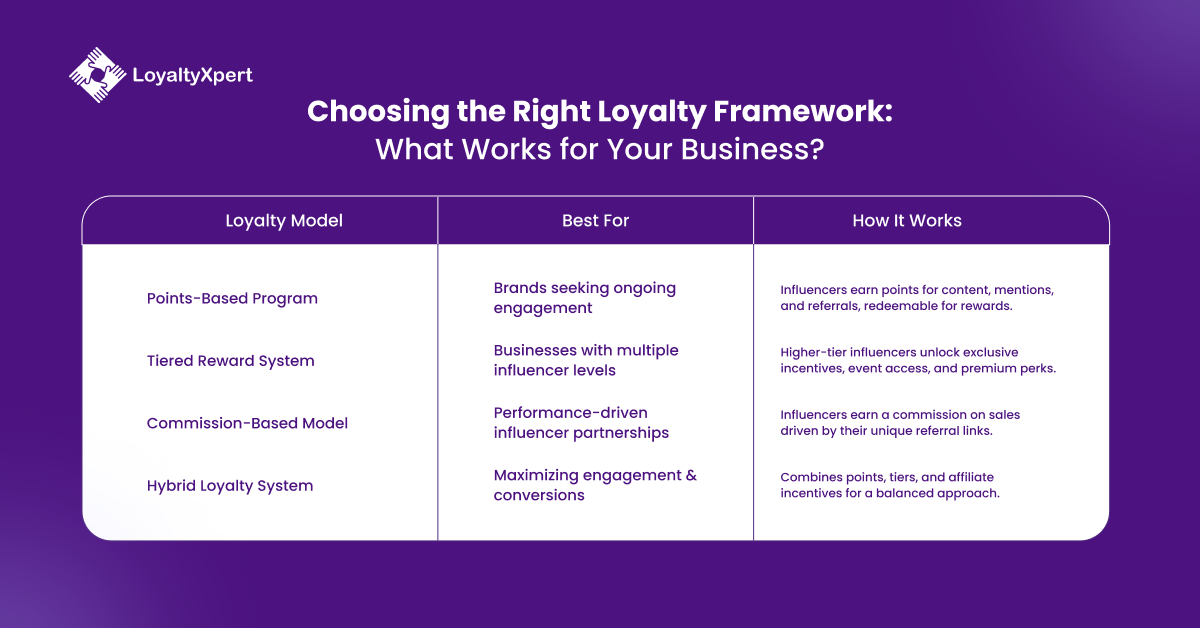
Choosing the Right Loyalty Framework What Works for Your Business as influencer loyalty program Choosing the Right Loyalty Framework: What Works for Your Business?

Influencer loyalty programs require a framework that aligns with business goals and influencer engagement patterns. Solutions like LoyaltyXpert’s influencer loyalty program offer businesses the flexibility to combine multiple models for maximum effectiveness, ensuring influencers remain engaged and motivated. Below is a comparison of the most effective loyalty models:

Loyalty Model Best For How It Works
Points-Based Program Brands seeking ongoing engagement Influencers earn points for content, mentions, and referrals, redeemable for rewards.
Tiered Reward System Businesses with multiple influencer levels Higher-tier influencers unlock exclusive incentives, event access, and premium perks.
Commission-Based Model Performance-driven influencer partnerships Influencers earn a commission on sales driven by their unique referral links.
Hybrid Loyalty System Maximizing engagement & conversions Combines points, tiers, and affiliate incentives for a balanced approach.

Crafting Rewards That Resonate with Influencer loyalty program

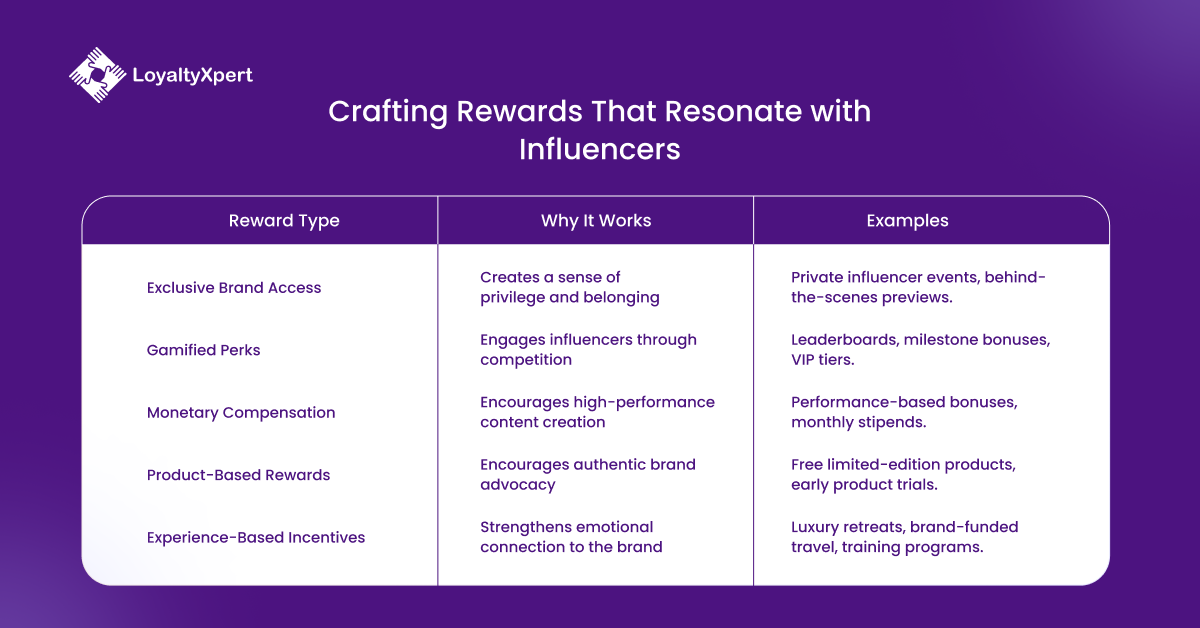
Crafting Rewards That Resonate with Influencers

Effective rewards go beyond financial compensation. Influencers value exclusivity, experiences, and brand partnerships that elevate their status and credibility.

Reward Type Why It Works Examples
Exclusive Brand Access Creates a sense of privilege and belonging Private influencer events, behind-the-scenes previews.
Gamified Perks Engages influencers through competition Leaderboards, milestone bonuses, VIP tiers.
Monetary Compensation Encourages high-performance content creation Performance-based bonuses, monthly stipends.
Product-Based Rewards Encourages authentic brand advocacy Free limited-edition products, early product trials.
Experience-Based Incentives Strengthens emotional connection to the brand Luxury retreats, brand-funded travel, training programs.
Action Tip: Personalized rewards increase influencer retention rates. High-performing influencers should receive tailored rewards based on content impact, audience engagement, and campaign results.

Incentivizing Influencers the Right Way: Rewards That Drive Long-Term Loyalty

For influencers to remain loyal, they need a structured incentive system that recognizes their impact and encourages continued engagement.

Following are some effective incentive strategies:

  • Performance-Based Recognition: Reward influencers for achieving engagement and conversion milestones.
  • Tiered Status Levels: Introduce Bronze, Silver, and Gold influencer tiers with increasing benefits.
  • Recurring Bonuses: Provide consistent incentives rather than one-time rewards to maintain engagement.
  • Exclusivity & Status: Offer top influencers premium access to brand decisions, product development, and VIP events.

Gamification: Turning Influence into a Competitive Loyalty System

Gamification enhances engagement by making participation competitive, interactive, and rewarding. Integrating gamified elements into influencer loyalty programs boosts enthusiasm and brand alignment.

The gamification techniques for influencer loyalty programs are listed below:

  • Leaderboard Challenges: Recognize and reward the top-performing influencers each month.
  • Badges & Achievements: Acknowledge influencers for milestones such as highest engagement or top content creator.

No CTA found.

  • Limited-Time Bonuses: Seasonal challenges drive short-term participation and increased content creation.
  • Referral-Based Levels: Offer incentives for influencers who bring in other high-quality content creators.

Onboarding & Retaining Influencers: Keeping Loyalty High

Onboarding is the foundation of a successful influencer loyalty program. A structured onboarding process increases influencer retention and ensures seamless engagement.

The key steps to onboarding influencers are:

  • Define Clear Expectations: Communicate program goals, incentives, and performance benchmarks.
  • Streamline Registration: Make it easy for influencers to sign up and track their rewards.
  • Provide Onboarding Materials: Offer educational content, best practices, and brand messaging guidelines.
  • Assign a Dedicated Contact Support: Establish a point of contact for influencer support and engagement.
  • Recognize & Celebrate Contributions: Publicly acknowledge influencer impact to reinforce long-term relationships.

Conclusion: Creating a Loyalty Program That Influencers Want to Stay In

Influencer loyalty programs help businesses move beyond short-term influencer campaigns and build lasting relationships with creators who genuinely support their brand. By rewarding engagement, content creation, referrals, and performance, businesses can improve influencer retention, strengthen brand advocacy, and achieve better campaign results.

Whether you’re working with micro-influencers, industry experts, contractors, retailers, or digital creators, a structured loyalty program can help create long-term value for both your business and your influencer network.

Book a demo today and discover how to build a high-impact loyalty program tailored to your brand.

How To Run a Manufacturing Loyalty Program In Manufacturing Industry?

Manufacturing loyalty programs serve as powerful tools for strengthening business relationships across the manufacturing sector. In fact, 75% of customers are more likely to be loyal to a brand offering a loyalty program, and over 80% of consumers say they are more likely to stick with a brand that provides tier-based loyalty rewards. These compelling statistics highlight why manufacturing loyalty programs are increasingly implemented by brands to build stronger connections with distributors, contractors, and other channel partners who influence product selection and purchasing decisions.

The manufacturing industry presents unique challenges for loyalty initiatives due to complex environments with multiple stakeholders, extended sales cycles, and technical purchase decisions. For manufacturers and their partners, an effective loyalty strategy delivers multiple benefits including increased market share, valuable customer insights, and enhanced brand preference through structured rewards and recognition.

Building Foundations for Manufacturing Success

A manufacturing loyalty program represents a structured framework for rewarding and engaging key stakeholders within manufacturing ecosystems. These programs systematically incentivize behaviors that benefit manufacturing businesses—such as increased purchases, product advocacy, and continuous engagement, emphasizing relationship depth and technical value creation.

Manufacturing loyalty differs from B2C programs by addressing organizational buyers making infrequent, high-value purchase decisions rather than individual shoppers making frequent, low-value purchases. The manufacturing sector involves diverse stakeholders including distributors, contractors, engineers, facility managers, and procurement teams, each with different priorities requiring tailored program approaches.
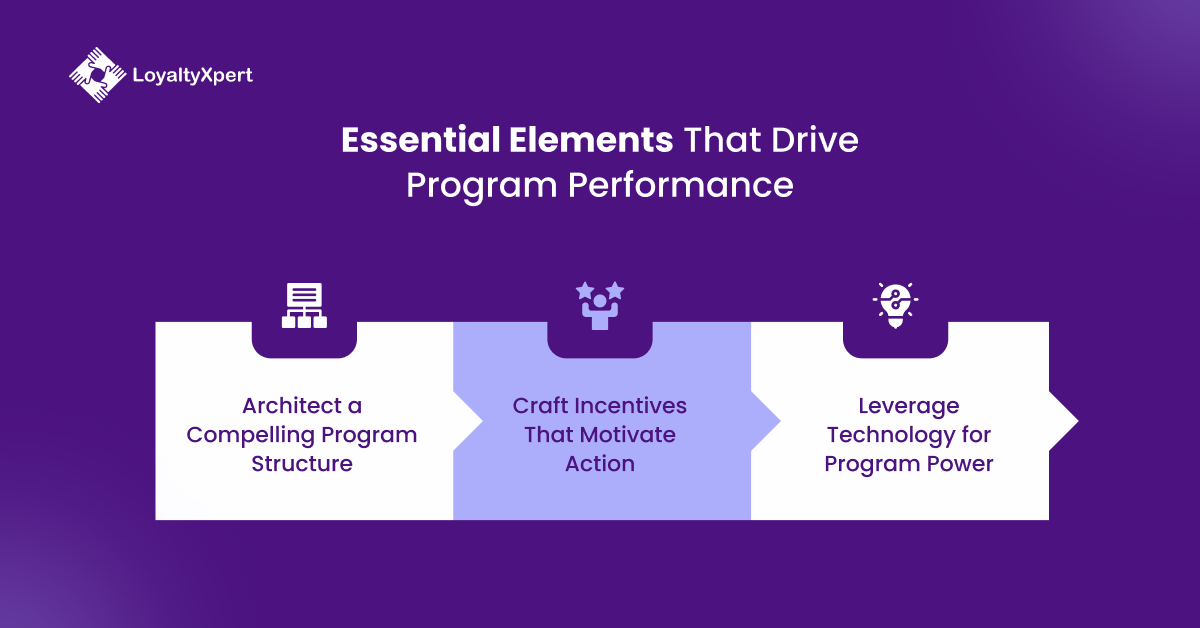
Essential Elements That Drive Program PerformanceEssential Elements That Drive Program Performance

Creating an effective manufacturing loyalty program requires careful attention to three foundational elements that work together to drive engagement and results. Program structure establishes the framework within which partners participate, incentive strategy motivates specific behaviors and creates value, while technology infrastructure enables efficient operation and measurement. Each element must be thoughtfully designed to address the unique characteristics of manufacturing channels while creating sustainable value for both the manufacturer and its partners.

Architect a Compelling Program Structure

The foundation of any manufacturing loyalty program rests on a well-designed structure that creates clear value for participants. Tiered membership models recognize and reward partners appropriately, while points accumulation systems should reflect realistic purchasing patterns in the manufacturing industry. Reward calculation methodologies must balance program value with financial sustainability, supported by clear terms and conditions to manage expectations.

Craft Incentives That Motivate Action

Financial incentives provide tangible benefits through volume-based rebates, early payment discounts, or preferential pricing. Value-added services enhance the partner experience through priority support, expedited shipping, or dedicated account management. Knowledge opportunities provide competitive advantages through specialized product knowledge and certifications, while recognition mechanisms acknowledge top partners through awards and events.

Leverage Technology for Program Power

Modern manufacturing loyalty programs require robust technology platforms for tracking participation, calculating rewards, and delivering benefits. The loyalty management platform should integrate with existing business systems while providing comprehensive reporting and analytics. Data management capabilities provide actionable insights that drive program optimization, all while maintaining strong security to protect proprietary information.

The integration of thoughtful program structure, compelling incentives, and robust technology creates a powerful foundation for manufacturing loyalty success. Manufacturers who excel in program design balance immediate reward value with long-term relationship building, creating sustainable competitive advantage through deeper partner engagement. A comprehensive approach across all three elements ensures the program delivers measurable results while enhancing the manufacturer’s position in the market.
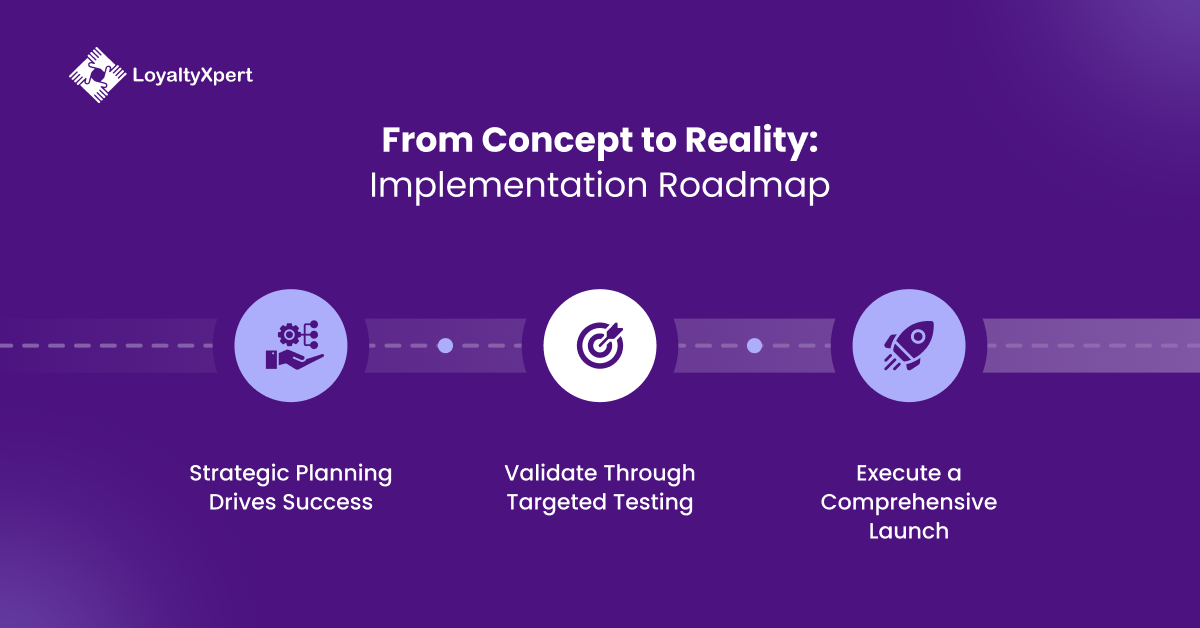
From Concept to Reality_ Implementation RoadmapFrom Concept to Reality: Implementation Roadmap

Translating a manufacturing loyalty program from concept to operational reality requires a structured approach that minimizes risk while maximizing adoption. A three-phase implementation strategy begins with thorough planning that establishes program parameters and objectives, continues with targeted pilot testing that validates key assumptions, and culminates in a comprehensive launch that creates momentum and drives participation. This methodical approach ensures the program delivers intended results while allowing for refinement based on real-world feedback.

Strategic Planning Drives Success

Market assessment establishes the foundation by identifying partner needs and competitive offerings. Program design defines membership structures, earning mechanisms, and reward offerings through cross-functional collaboration. Resource allocation identifies necessary people, technology, and financial resources, while a structured timeline creates clear milestones for implementation.

Validate Through Targeted Testing

A pilot program provides a framework for evaluating performance before widespread implementation, with carefully selected participants who represent different segments of your partner ecosystem. Systematic feedback collection identifies both strengths and improvement opportunities, informing refinement processes that enhance the program before broader deployment.

Execute a Comprehensive Launch

Clear communication ensures all stakeholders understand the program’s value proposition and participation requirements. Streamlined onboarding helps partners begin participating quickly and effectively, supported by robust assistance systems that address questions promptly. Ongoing performance monitoring enables continuous assessment and optimization based on actual usage data.

Successful implementation transforms a theoretical loyalty concept into a valuable business asset that strengthens manufacturing partnerships. The phased approach minimizes risk while maximizing program effectiveness, enabling refinement based on actual participant feedback. Manufacturing companies that invest in thoughtful implementation create programs that not only launch successfully but continue evolving to deliver increasing value over time.

No CTA found.

Quantify Your Program’s Business Impact

Effective manufacturing loyalty programs establish clear metrics for measuring performance and business impact, with ROI calculation methods that consider both direct impacts and indirect benefits. Engagement metrics help manufacturers understand which program elements generate the strongest response, while customer lifetime value assessment examines long-term partner value and retention.

Manufacturing loyalty programs should incorporate both financial and relationship metrics to provide a complete picture of program impact. Consider tracking partner satisfaction scores, competitive win rates, and market share changes alongside traditional sales metrics. These comprehensive measurements help justify program investments while identifying opportunities for enhancement. Leading manufacturing companies conduct regular program reviews with cross-functional teams to ensure alignment with broader business objectives and adapt to changing market conditions.

Tailor Approaches to Manufacturing Segments

Different segments implement loyalty programs tailored to their unique business models. Equipment manufacturers focus on distributors and service providers through technical training and parts discounts. Industrial supply chains strengthen relationships across distribution networks through rebates and specification incentives. Component suppliers target design engineers with technical education and design support, while raw material providers focus on procurement teams with consistency incentives.

The most successful manufacturing loyalty programs recognize industry subsegment differences and tailor program elements accordingly. Automotive component manufacturers might focus on engineering certification programs that help partners meet stringent quality requirements, while building product manufacturers often emphasize contractor education that improves installation quality and reduces warranty claims. Understanding the specific value drivers within your manufacturing segment enables targeted program design that resonates with partners and addresses their most pressing business needs.

Navigate Common Program Obstacles

Partner engagement challenges require regular communication and simplified participation processes. Program differentiation becomes increasingly important as more companies implement loyalty initiatives, requiring unique rewards and industry-specific benefits. Data management challenges arise from complex business relationships, while operational complexity requires clear governance structures and systematic processes.

Effective manufacturing loyalty initiatives anticipate potential obstacles and incorporate preventative measures into program design. Partner segmentation strategies address engagement challenges by ensuring rewards and communications align with specific partner roles and priorities. Regular program refreshes combat differentiation challenges by introducing new benefits and experiences that maintain interest. Manufacturing companies should establish cross-functional governance teams that meet regularly to address emerging challenges and ensure program alignment with changing business priorities.

Program Excellence: Strategies for Success

Successful manufacturing loyalty programs remain relevant through continuous evolution and regular refreshes. Data-driven decision making optimizes performance based on actual participation patterns, while effective communication strategies maintain program visibility across diverse audiences. Technology optimization leverages loyalty program software to enhance program efficiency through mobile accessibility and personalization capabilities.

Manufacturing loyalty leaders differentiate their programs through personalization that recognizes individual partner preferences and behaviors. Advanced loyalty program software enables tailored rewards, communications, and experiences based on partner profiles, purchase history, and engagement patterns. This personalized approach increases program relevance while creating stronger emotional connections between partners and manufacturing brands. Regular benchmarking against both industry peers and loyalty programs in adjacent sectors helps identify innovation opportunities that can further enhance program performance.

LoyaltyXpert’s Manufacturing Solutions

The LoyaltyXpert loyalty management platform provides comprehensive capabilities specifically designed for the manufacturing industry. Our solution enables manufacturing companies to create, manage, and optimize channel loyalty programs through intuitive interfaces, flexible configuration options, and powerful analytics. The platform supports complex B2B relationships with multi-tier structures, approval workflows, and sophisticated reward mechanisms tailored to manufacturing contexts.

Our implementation methodology combines industry expertise with proven project management approaches to ensure successful program deployment. The LoyaltyXpert team works closely with manufacturing clients to understand their specific business objectives, partner ecosystems, and operational requirements. This collaborative approach results in programs that deliver meaningful value for both manufacturers and their partners.

Success stories across the manufacturing sector demonstrate LoyaltyXpert’s ability to drive significant business results through well-designed loyalty initiatives. Manufacturing clients have achieved substantial improvements in channel engagement, market share, and partner satisfaction through programs implemented on our platform. These successful implementations span diverse manufacturing segments including industrial equipment, electronic components, building materials, and specialty chemicals.

Support services ensure ongoing program success through technical assistance, strategic guidance, and continuous optimization. The LoyaltyXpert team provides both platform support and program management expertise, helping manufacturing clients maximize their return on loyalty investments. This ongoing partnership approach ensures programs continue delivering value as business needs evolve.

Scale Your Manufacturing Relationships

A well-designed manufacturing loyalty program delivers significant value for both manufacturers and their partners. These specialized programs strengthen channel relationships, drive increased sales, and provide valuable market insights that inform broader business strategies. Manufacturing businesses that implement effective loyalty initiatives gain competitive advantages through enhanced partner engagement and loyalty.

Looking ahead, manufacturing loyalty programs will continue evolving to address changing market conditions and partner expectations. Contact us today or schedule a personalized demo of our industry-leading loyalty management platform. Our team of manufacturing loyalty experts will show you how our tailored solutions can help strengthen your channel relationships and drive measurable business results.

How to use the Electrician Loyalty Program to Drive More Sales

As we gear up for 2025, now is the perfect time to establish a strong relationship with your customer. In fact, businesses intend to boost their investment in loyalty programs by 41%, demonstrating a strong emphasis on fostering customer loyalty via effective loyalty programs. Professional electricians represent vital influencers in the electrical industry, directly impacting product selection and brand preferences across residential, commercial, and industrial projects. These skilled professionals make or influence purchasing decisions for electrical components, tools, and equipment. A well-designed electrician loyalty program creates strong relationships between manufacturers, suppliers, and these key decision-makers.

The strategic implementation of loyalty programs specifically designed for electricians drives significant sales growth through increased brand preference and product recommendations. These programs transform casual product users into committed brand advocates who consistently choose and recommend specific products and brands.

Understanding Electrician Loyalty Programs

An electrician loyalty program represents a structured approach to rewarding and engaging professional electricians for their continued support and product advocacy. The program combines technology, rewards, and engagement strategies to create lasting relationships between electrical manufacturers and the professionals who use their products.

Consider an electrical components manufacturer who implements a comprehensive loyalty program. Their initiative rewards electricians not only for purchases but also for completing product training, sharing installation feedback, and recommending products to other professionals. This multi-faceted approach strengthens relationships while generating valuable market insights.

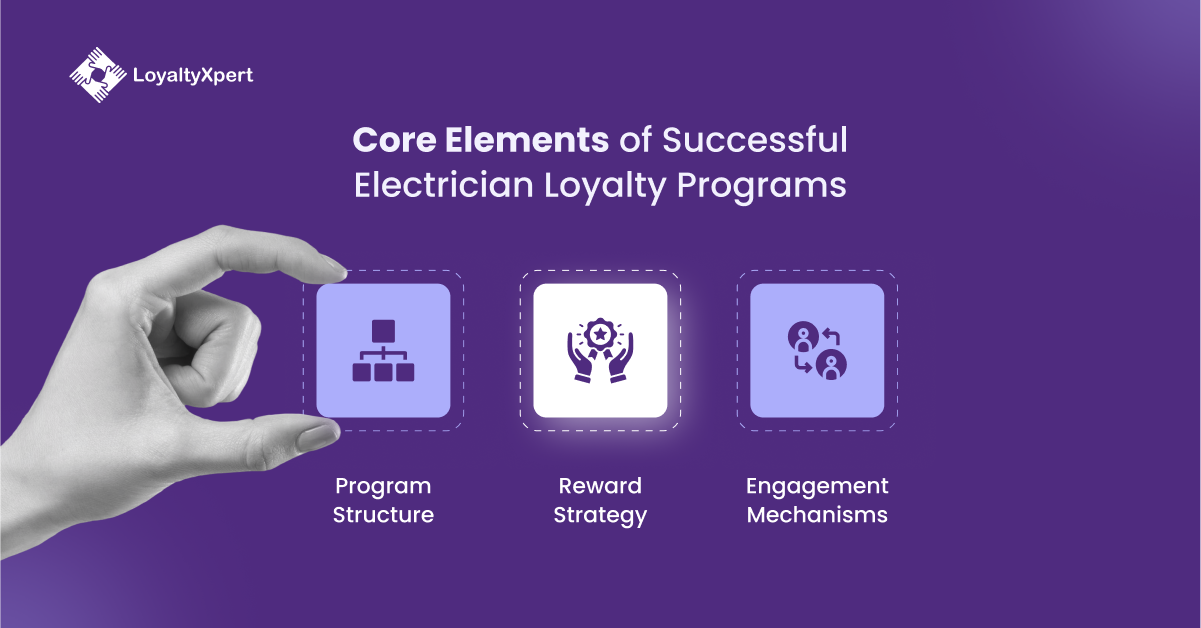
Core Elements of Successful Electrician Loyalty Programs

Core Elements of Successful Electrician Loyalty Programs

Creating an effective electrician loyalty program requires careful attention to fundamental elements that drive participation and results. These core components form the foundation of successful programs, enabling electrical industry organizations to build lasting relationships with professional electricians while driving measurable business outcomes. Understanding and properly implementing these elements ensures program sustainability and effectiveness.

Program Structure 

A successful loyalty program for electricians requires careful attention to fundamental elements that drive participation and engagement. The registration process must be straightforward, allowing busy professionals to join quickly while capturing essential information. Points systems should reflect realistic purchase patterns and professional activities, making reward achievement attainable yet meaningful.

A manufacturer might structure their program with three tiers – Professional, Expert, and Master – each offering increasingly valuable benefits. As electricians progress through tiers, they gain access to exclusive training opportunities, priority technical support, and specialized tools. This structure encourages ongoing participation while recognizing professional development.

Reward Strategy 

The reward structure forms the cornerstone of an effective electrician loyalty program. Professional electricians value rewards that enhance their capabilities and support their business growth. A leading electrical tools manufacturer demonstrates this through a tiered reward system offering professional-grade equipment, advanced certification courses, and priority access to new product launches.

Engagement Mechanisms 

Successful programs maintain consistent engagement through accessible technology platforms and relevant communications. The loyalty management platform must support mobile access, enabling electricians to track points, redeem rewards, and access program benefits from job sites. Regular updates about new products, training opportunities, and reward achievements keep participants actively involved in the program.

The combination of program structure, rewards, and engagement creates a comprehensive loyalty solution that delivers value to both electricians and program sponsors. Organizations must maintain balance between these components while remaining adaptable to changing industry needs and participant expectations. This foundation enables continuous program evolution while maintaining focus on fundamental program objectives.

No CTA found.

Implementation Strategy

Implementing an electrician loyalty program requires systematic planning and careful execution. The implementation process transforms program design into operational reality through structured phases that enable testing, refinement, and optimization. Success depends on careful attention to planning, launch execution, and ongoing management.

Planning Phase 

Implementing an electrician loyalty program requires careful planning and systematic execution. The process begins with thorough market analysis to understand electrician needs and preferences. Program design must reflect these insights while aligning with business objectives and operational capabilities.

Launch Process 

A methodical launch strategy ensures proper program introduction and adoption. Starting with a pilot program allows testing and refinement before full-scale deployment. The marketing approach should emphasize program benefits while making registration simple and rewarding. Support systems must be ready to assist electricians throughout their program participation.

Management 

Ongoing program management requires attention to performance metrics and participant feedback. Regular analysis of participation patterns and reward redemption helps optimize program elements. Continuous communication with electricians ensures the program remains relevant and valuable.

Successful implementation combines careful planning with systematic execution while maintaining flexibility to address emerging needs. Organizations must balance speed with thoroughness, ensuring proper foundation building while maintaining implementation momentum. This approach enables rapid program deployment while establishing sustainable operational processes.

Optimizing Program Performance 

Creating a successful electrician loyalty program requires adherence to proven practices that drive engagement and results. These guidelines emerge from extensive industry experience and help organizations avoid common pitfalls while maximizing program effectiveness.

Effective program design begins with clear objectives and measurable outcomes. Organizations must create value propositions that resonate with electrical professionals while remaining operationally feasible. Regular assessment and adjustment ensure programs remain relevant and effective.

Program communication represents a critical success factor. Organizations must develop systematic approaches to participant engagement that maintain program visibility without overwhelming busy professionals. This includes regular updates about rewards, achievement progress, and program opportunities.

Essential best practices include:

  • Regular program assessment and optimization
  • Structured communication strategies
  • Data-driven decision making
  • Continuous value enhancement
  • Performance monitoring systems
  • Staff development programs

Success in electrician loyalty programs stems from consistent application of these proven practices combined with regular assessment and refinement. Organizations that maintain focus on these fundamental elements while remaining adaptable to changing needs create sustainable programs that deliver lasting value. Moving forward, these practices continue evolving as technology and participant expectations advance.

Navigating Implementation Complexities 

Organizations implementing electrician loyalty programs often encounter specific challenges that can impact program effectiveness. Understanding and preparing for these challenges enables proactive solution development and smoother program operation.

Registration complexity presents an initial barrier to program participation. Complex signup processes discourage busy electrical professionals from joining, while technical issues can frustrate those attempting to engage with the program. Solutions include streamlined mobile registration and dedicated support resources.

Program engagement often declines when participants struggle to understand benefits or track progress. Clear communication about program value and simple progress tracking help maintain active participation. Regular program assessment helps identify and address engagement barriers before they impact program performance.

Common challenges and their solutions:

  • Complex registration —> Simplified mobile processes
  • Technical barriers —> Dedicated support resources
  • Engagement decline —> Enhanced communication
  • Reward tracking —> Automated progress updates
  • Program scaling —> Flexible platform architecture

Understanding and addressing these challenges enables organizations to create more effective loyalty programs for electrical professionals. Success requires proactive planning, appropriate technology selection, and dedicated support resources. Organizations that tackle these challenges systematically while maintaining focus on participant value build stronger, more sustainable programs.

LoyaltyXpert Solutions

Creating effective loyalty programs for electrical professionals demands sophisticated technology combined with industry expertise. LoyaltyXpert delivers comprehensive solutions that address the unique needs of electrical industry loyalty programs through advanced platform capabilities and dedicated support services.

Our platform enables electrical manufacturers and suppliers to create engaging programs that drive meaningful results. Advanced tracking capabilities ensure accurate reward distribution while sophisticated analytics provide insights for continuous program optimization. Mobile-first design ensures convenient access for busy electrical professionals.

Core capabilities include:

  • Customized reward structures
  • Multi-tier program management
  • Real-time engagement tracking
  • Advanced analytics dashboard
  • Mobile-optimized interface
  • Secure data management
  • Integration flexibility
  • Automated communications

Implementation support ensures smooth program deployment while ongoing optimization services help maintain program effectiveness. Our team provides guidance throughout the program lifecycle, from initial planning through continuous improvement.

Elevating Electrical Industry Success

Implementing an effective electrician loyalty program requires strategic vision, appropriate technology, and consistent execution. Organizations using comprehensive solutions report significant improvements in electrician engagement and product sales. Success demands ongoing attention to program elements while maintaining focus on delivering genuine value to electrical professionals.

Transform your relationship with electrical professionals through LoyaltyXpert’s specialized loyalty program solutions. Schedule a personalized demonstration today to discover how we can help drive your sales growth through enhanced electrician engagement.

4 Key Challenges in Customer Loyalty and Ways to Overcome These Challenges

Customer loyalty management continues to evolve as consumer expectations and technology capabilities advance. In fact, 84% of customers are more likely to remain loyal to a brand offering loyalty programs. However, organizations implementing loyalty programs face complex challenges that demand innovative solutions and strategic approaches. These challenges affect program effectiveness and ultimately impact business growth and revenue generation.

Successful customer loyalty programs require careful attention to engagement, data management, differentiation, and technology integration. Understanding and addressing these core challenges enables organizations to create sustainable loyalty initiatives that deliver measurable results.

Understanding Modern Customer Loyalty

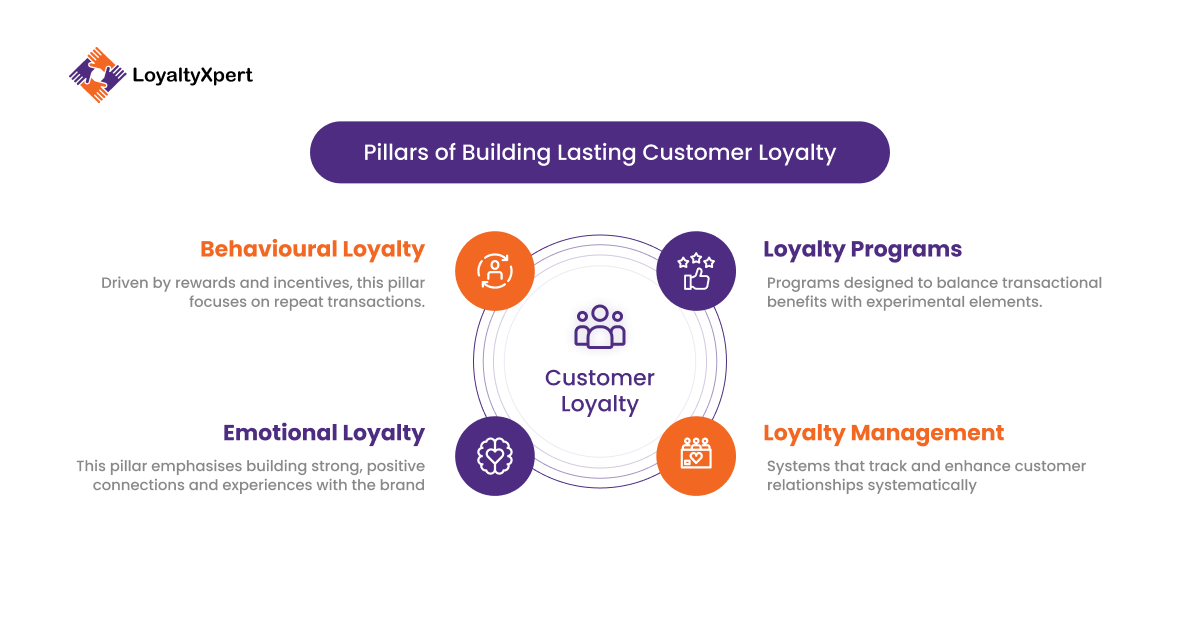
Customer loyalty represents more than repeat purchases – it encompasses emotional connections, brand advocacy, and long-term relationship building. Modern loyalty programs must balance transactional benefits with experiential elements that create lasting engagement. The right loyalty management platform enables organizations to track, measure, and enhance these relationships systematically.

Successful customer loyalty management requires understanding both behavioral and emotional loyalty drivers. While points and rewards drive behavioral loyalty, emotional loyalty stems from consistently positive experiences and meaningful brand connections. Organizations excelling at customer loyalty typically leverage both elements through sophisticated program design and execution.

Pillars of Building Lasting Customer LoyaltyChallenge 1: Declining Program Engagement
Program participation often declines when loyalty initiatives fail to maintain member interest or deliver perceived value. Many organizations struggle with reduced reward redemption rates, lower program activity, and decreased member satisfaction. The causes of engagement decline typically include complex program rules that confuse participants, insufficient reward value that fails to motivate action, and poor communication that leaves members unaware of program benefits.

Consider a retail clothing brand that notices declining participation in their loyalty program despite stable membership numbers. Investigation reveals their multi-tiered program structure includes complicated earning rules and redemption restrictions that overwhelm members. Members struggle to understand how to earn points and what rewards are available, leading to program abandonment.

The solution involves simplifying program structures while maintaining valuable benefits. The brand streamlines their tier structure, clarifies earning rules, and introduces automatic reward notifications. They also implement targeted communication strategies that highlight relevant rewards and program benefits. These changes make the program more accessible and engaging while preserving elements that drive long-term participation.

Challenge 2: Data Management and Privacy Concerns

Data management has become more complex as loyalty programs collect increasingly detailed customer information. Privacy regulations continue to evolve, creating new compliance requirements for organizations managing customer data. Modern loyalty programs must balance the need for personalization with growing privacy concerns and security requirements.

A major hospitality chain illustrates common data management challenges. Their loyalty program collects data across multiple properties, including stay preferences, dining habits, and service interactions. This wealth of information enables personalized experiences but requires robust security measures and clear privacy policies. The organization implements comprehensive data protection protocols, transparent privacy communications, and regular security audits to maintain customer trust while maximizing data value.

The solution requires implementing strong technical safeguards while maintaining program functionality. This includes encryption protocols, access controls, and regular security assessments. Clear communication about data usage builds trust, while systematic compliance monitoring ensures ongoing protection of customer information.

Challenge 3: Program Differentiation

Market saturation has created significant challenges for program differentiation as customers encounter similar offerings across multiple brands. Organizations struggle to create unique value propositions that stand out from competitors while remaining operationally feasible and financially sustainable.

For example, a luxury automotive brand demonstrates effective differentiation through unique program elements. Rather than focusing solely on purchase-based rewards, their program includes exclusive experiences such as private track days, design studio tours, and early access to new models. They complement these distinctive offerings with personalized service elements that create emotional connections with their brand.

Successful differentiation combines unique rewards with personalized experiences that reflect brand values and customer preferences. Organizations must continuously innovate their program offerings while maintaining operational efficiency and measuring program effectiveness through customer feedback and engagement metrics.

Challenge 4: Technology Integration and Optimization

Legacy systems and complex technical requirements often create barriers to effective loyalty program implementation. Organizations must overcome integration challenges while providing enhanced capabilities through modern loyalty program software.

For instance, a multi-brand retail corporation exemplifies technology integration challenges when implementing a unified loyalty program across diverse brands and systems. Their solution involves selecting a flexible loyalty management platform that integrates with existing systems while providing enhanced capabilities for future growth. The platform enables consistent program operation across all brands while maintaining unique elements for each brand identity.

Successful technology integration requires careful platform selection, systematic implementation processes, and ongoing optimization. Organizations must ensure their chosen solution provides necessary capabilities while remaining adaptable to changing business needs and customer expectations.

Building Your Strategic Foundation

Creating effective solutions for loyalty program challenges requires a comprehensive approach that addresses both immediate needs and long-term objectives. Organizations must develop frameworks that enable systematic problem-solving while maintaining program momentum and member engagement.

Strategic Elements:

  • Comprehensive program assessment
  • Challenge prioritization matrix
  • Resource allocation planning
  • Technology roadmap development
  • Implementation timeline
  • Success metrics definition

A financial services organization exemplifies this approach through systematic evaluation and planning. Their framework begins with thorough analysis of program performance, incorporating member feedback and operational capabilities. This assessment informs strategic planning that addresses identified challenges while creating sustainable advantages.

The framework’s success depends on careful orchestration of people, processes, and technology. Organizations must maintain focus on delivering member value while implementing systematic improvements.

No CTA found.

Bring Implementation Excellence to Life

Successful implementation requires careful planning and systematic execution. The implementation process transforms strategic vision into operational reality through structured phases that enable testing and refinement.

Key Implementation Phases:

  • Initial assessment and planning
  • Solution architecture design
  • Pilot program development
  • Phased rollout strategy
  • Performance monitoring
  • Continuous optimization

Organizations should maintain flexibility within structured approaches, enabling adaptation to changing conditions while preserving core objectives. Success requires consistent attention to detail and regular progress assessment.

Transform Loyalty Programs with LoyaltyXpert

Our comprehensive platform addresses loyalty program challenges through advanced technology and dedicated support. We combine sophisticated program management capabilities with streamlined implementation processes that ensure rapid value delivery.

Platform Capabilities:

  • Advanced analytics dashboard
  • Multi-channel integration
  • Automated engagement tools
  • Secure data management
  • Mobile-first design
  • API connectivity

Implementation Support:

  • Strategic planning assistance
  • Technical integration guidance
  • Staff training programs
  • Ongoing optimization support

Our approach emphasizes practical solutions that deliver measurable results while building toward long-term program excellence. Success stories across industries demonstrate our ability to transform loyalty program challenges into opportunities for enhanced engagement and growth.

Mastering the Best Practices

Successful loyalty programs share common elements that drive sustained performance. These practices emerge from extensive industry experience and proven methodologies that enhance program effectiveness.

Essential Practices:

  • Regular program assessment
  • Member feedback integration
  • Data-driven decision making
  • Continuous optimization
  • Staff development
  • Technology adaptation

Programs must balance simplicity with value while maintaining operational efficiency. Regular assessment enables continuous improvement based on performance data and member feedback.

Driving Program Excellence

Addressing loyalty program challenges requires strategic vision, appropriate technology, and consistent execution. Organizations implementing comprehensive solutions report significant improvements in program performance and customer engagement. Success demands ongoing attention to program elements while maintaining focus on delivering genuine value to program participants.

Contact us today to explore how our solutions can transform your loyalty program challenges into opportunities for enhanced customer engagement and business growth. Our team stands ready to help you create and maintain a loyalty program that drives measurable results for your organization. Schedule your demo to discover how we can help address your loyalty program challenges.

How Loyalty Program Can Drive Growth in FinTech?

The fintech industry has been one of the most innovative and fast-growing sectors. According to Cognitive Market Research, the global fintech market size will be USD 251,421.2 million in 2024 and will expand at a compound annual growth rate (CAGR) of 19.20% from 2024 to 2031. This entices more businesses to expand into the fintech loyalty program sector, leading to increased competition. This is where a loyalty program can make a huge difference in business growth. An effective finance loyalty program can help businesses achieve the following:

  • Boosted transactional volume: Encourage more frequent and higher-value transactions through reward incentives, driving growth in your financial services.
  • Enhanced user engagement with financial products: Increase interaction with diverse financial products, such as investments and loans, by offering tailored rewards.
  • Optimized financial behavior: Promote healthier financial habits, like regular savings or responsible credit use, through targeted reward programs.
  • Increased cross-selling opportunities: Use the loyalty program to promote additional financial services and products, enhancing overall customer value and engagement.

The Loyalty Dilemma in FinTech

Being a relatively new sector, the global fintech industry faces some unique challenges. But the good news is it can overcome the challenges by leveraging well-designed loyalty programs. We’ve listed four major challenges faced by the fintech industry and the ways loyalty programs can offset them.

  1. High Customer Acquisition Costs (CAC)

The average customer acquisition cost (CAC) is one of the highest in the fintech sector. A study that analyzed the average B2B CAC of 22 sectors found that the fintech sector had the highest CAC of USD 1,450.

Various studies have found that the cost of acquiring a new customer is five to seven times more expensive than retaining an existing customer. Well-designed loyalty programs will not only enable fintech companies to attract new customers but also help them retain existing ones.

  1. High Customer Churn Rate

The fintech sector, being an extremely competitive space, has a high customer attrition rate as well. A study published in The Economic Times found that almost three-quarters of new Fintech app users churn within seven days. The customer churn rate is also a useful metric to determine customer loyalty. A high churn rate is a sign of low retention.

That’s where fintech loyalty programs can help. By designing and running high-quality rewards programs, fintech companies can engage and retain more customers. That will automatically reduce their customer churn rate.

  1. Rise in Cyber-Attacks, Security Breaches, And Loyalty Fraud 

The fintech sector is more vulnerable to cyberattacks, data security breaches, as well as loyalty fraud than many other sectors. As per a report by GlobeNewswire, payment fraud attacks against fintech companies increased by 70% in 2021. Another report by Arkose Labs revealed that three fourth of total attacks on fintech companies were targeted at customer logins.

In such a scenario, fintech companies must invest in technologies that not only thwart cyberattacks and security breaches but also loyalty fraud. Some loyalty providers specialize in fraud-proof technologies and use highly advanced platforms to prevent loyalty fraud.

  1. Lack of Tech Expertise

In the ever-changing world of finance, fintech companies must keep abreast with the latest trends and tech innovations in the domain. But some companies don’t have the right tech expertise to leverage emerging technologies to gain a competitive advantage. For example, at a time when a few leading fintech companies are leveraging AI and machine learning in their loyalty programs, many others are left behind.

In such a scenario, fintech companies should partner with the right tech solutions and loyalty software providers to have advanced loyalty programs in place. But when it comes to joining hands with the right service provider, fintech companies need to do their research and compare the features and prices of various service providers before making any buying decisions.

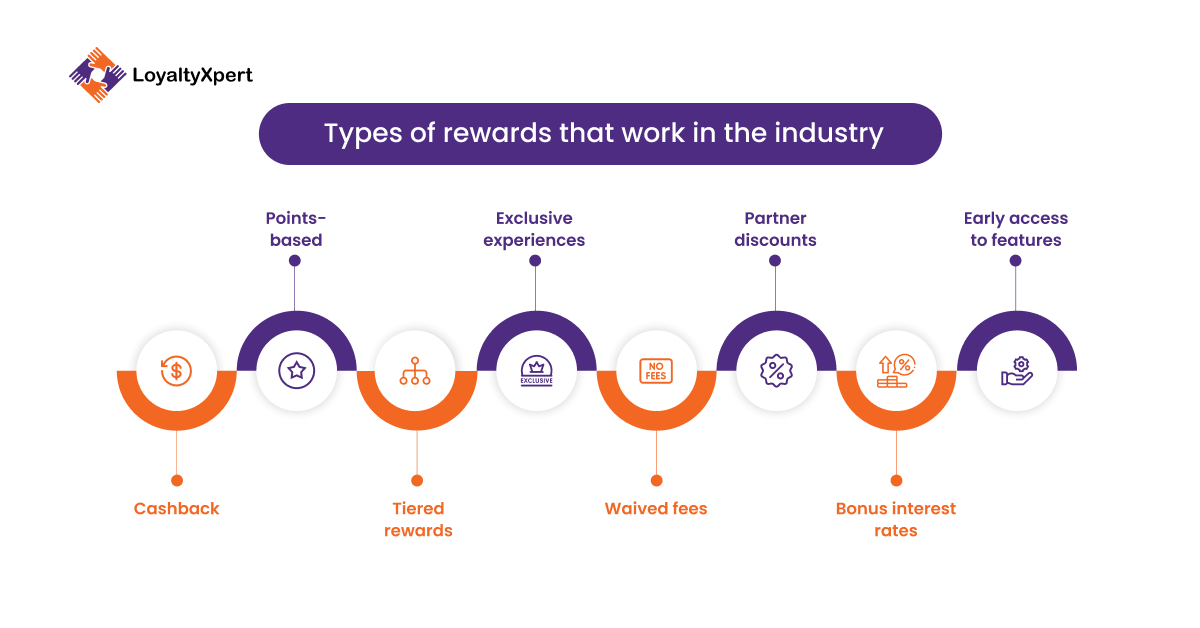
Types of rewards that work in the industryTypes of rewards that work in the industry
Loyalty programs in the FinTech industry can include the following rewards, all of which are aimed at encouraging customer engagement and loyalty through their financial activities:

  • Cashback: A direct percentage of money returned to the customer based on their spending.
  • Points-based: Earning points for every transaction which can be redeemed for various rewards like merchandise, travel, or even cash back.
  • Tiered rewards: Different reward levels based on spending volume, offering increasingly better benefits as customers progress through tiers.
  • Exclusive experiences: Access to special events, personalized financial consultations, or priority customer service.
  • Waived fees: Removing certain transaction fees for loyal customers.
  • Partner discounts: Access to special deals with other businesses through the loyalty program.
  • Bonus interest rates: Higher interest rates on savings accounts for loyal customers.
  • Early access to features: Being able to use new financial products or services before everyone else.

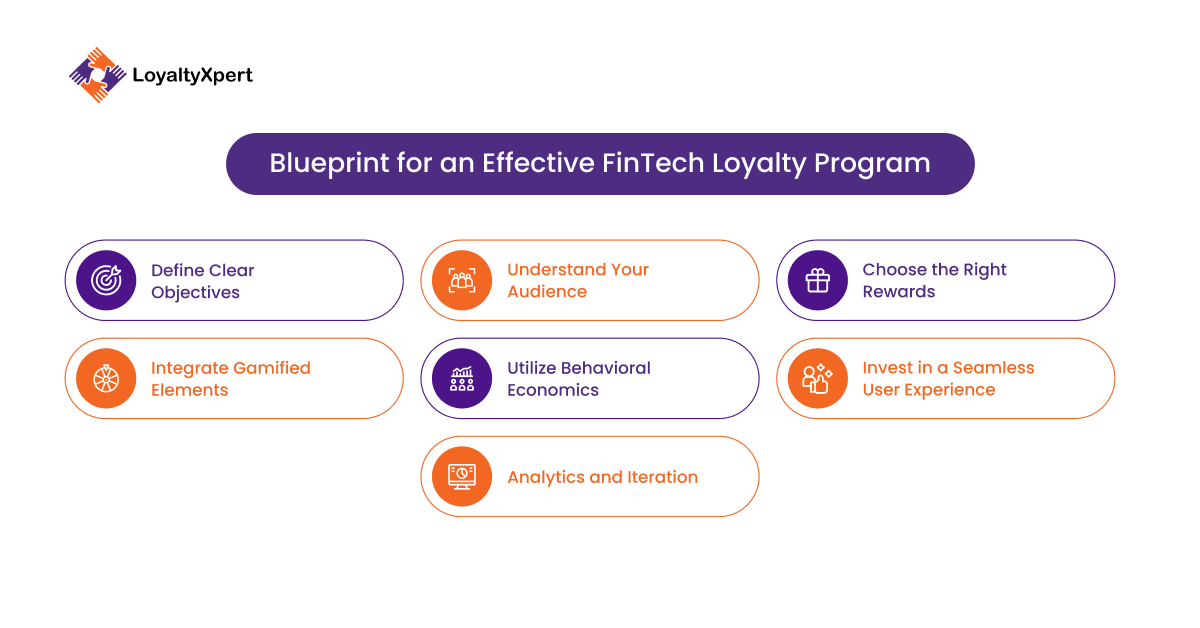
Blueprint for an Effective FinTech Loyalty ProgramBlueprint for an Effective FinTech Loyalty Program 
  1. Define Clear Objectives
    Clearly outline the goals of your loyalty and gamification strategies. Whether it’s increasing user engagement, boosting transaction frequency, or expanding your user base, having defined objectives will guide your implementation. A well-structured vision helps in setting success metrics and choosing the right approach.
  2. Understand Your Audience
    Tailor your loyalty and gamification strategies to your target audience. Consider factors like age, financial goals, and user preferences to create a personalized and engaging experience. Younger audiences, for example, expect interactive and rewarding financial interactions, while other segments may prioritize practical incentives like cashback or financial insights.
  3. Choose the Right Rewards
    Design a reward system that resonates with your users’ interests. This could include cashback offers, exclusive discounts, or non-monetary rewards like badges or status upgrades. The key is to create a sense of achievement and value that aligns with user expectations.
  4. Integrate Gamified Elements
    Identify touchpoints within your platform where gamification can enhance engagement. This could involve setting up challenges, creating leaderboards, or introducing levels users can unlock as they engage more. If gamification is a core element of your platform, the integration will be more seamless. However, adding it to an existing product requires careful planning and flexibility.
  5. Utilize Behavioral Economics
    Leverage behavioral economics principles to encourage desired behaviors. Strategies like scarcity and urgency can drive timely transactions, while social proof can highlight the benefits of engaging with your platform. Psychological nudges can significantly enhance user participation.
  6. Invest in a Seamless User Experience
    Ensure that gamification elements enhance rather than complicate the overall user experience. The integration should be smooth, making rewards and achievements feel natural rather than distracting from essential functions like payments or transactions.
  7. Analytics and Iteration
    Implement robust analytics to track user interactions and measure the effectiveness of your loyalty and gamification strategies. Use data-driven insights to refine and optimize your approach continuously. A well-monitored program evolves based on user behavior and engagement trends.

No CTA found.

Examples of successful loyalty programs

Here are some successful Fintech reward programs that have proven that loyalty programs can increase customer engagement and drive economic growth for companies:

  1. India1 – The  White Label ATM operator implemented India 1 Digital, a customized loyalty program with the help of LoyaltyXpert to promote the use of ATMs in the country’s most remote areas. The idea was to provide rewards and cash back on every transaction made cash or cashless. The program is now fully automated and has users of more than 5M all over the country. Having an easy and accessible app for users in their native languages helped in increasing adoption rates. The rewards incentivized the rural customers to increase engagement with India1 and eventually contributed to customer retention for the brand.
  2. PhonePe – India’s largest digital payments platform continues to grow and engage its existing customers efficiently due to its rewards program. PhonePe’s loyalty program offers cashback, offers, and coupons. You can use these rewards to make payments on PhonePe and other apps and websites. Scratch cards are one of their most popular features. Approximately 74% of PhonePe users self-reported as loyal customers, according to data.

Why use LoyaltyXpert

Our loyalty management platform leverages the latest technologies to minimize your efforts to generate brand loyalty for your FinTech business. We provide customized brand loyalty programs to cater to a wide range of customers effectively. Some key features that set our loyalty program software apart are:

  • Easy Configuration: Hassle-free configuration of loyalty rewards and offers to achieve goals.
  • Customizable Rewards: Transform the customer experience based on various demographics with personalized loyalty rewards.
  • Advanced Analytics: Underline the power of data. Monitor key data points and generate reports of your loyalty programs. 

LoyaltyXpert believes that happy customers translate into endless growth. Reach out today for a free trial and experience the difference for yourself!

How to Create a Loyalty Program That Drives Customer Retention and Growth in 2025

Acquiring a new customer costs five times more than retaining an existing one. Loyal customers not only drive consistent revenue but also act as brand advocates, increasing trust and visibility. A robust loyalty rewards program ensures businesses tap into this potential by enhancing retention and boosting customer lifetime value. According to studies, 56% of customers prefer brands that offer loyalty programs, while 73% of customers expect brands to understand their unique needs.

To thrive in 2025, businesses must focus on designing loyalty systems that deliver measurable outcomes, engage customers, and maintain a competitive edge in an ever-demanding market. Here’s how to craft a loyalty program that stands out and drives sustainable growth.

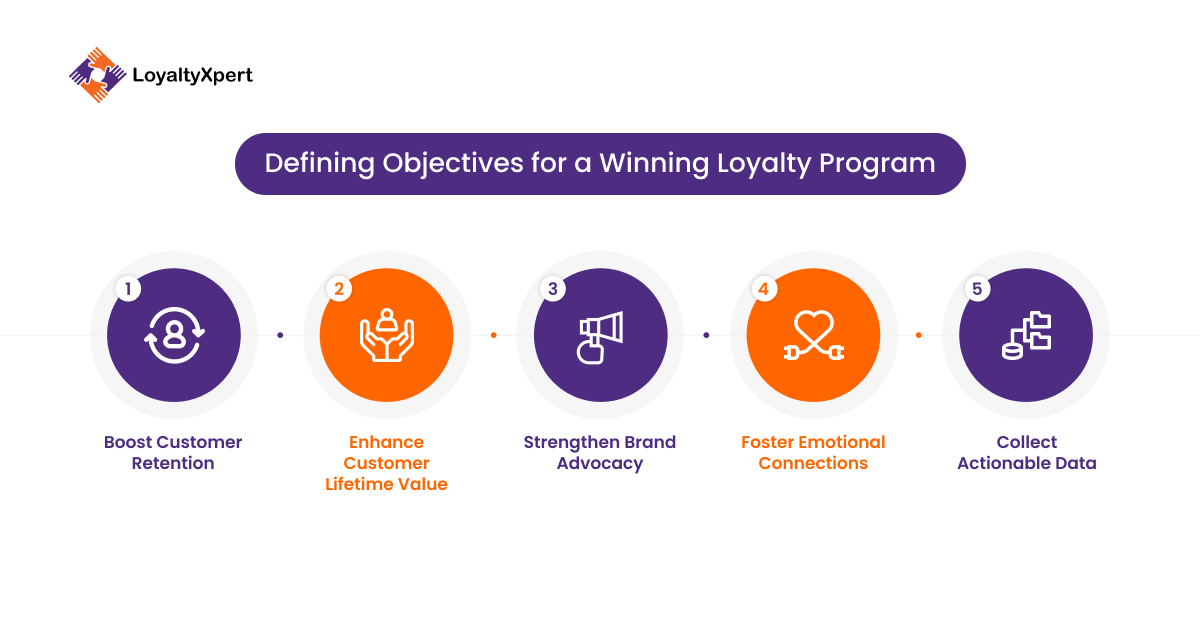
Defining Objectives for a Winning Loyalty ProgramDefining Objectives for a Winning Loyalty Program
Establishing clear objectives ensures your loyalty program aligns with business goals and delivers results. Without a targeted approach, loyalty systems can fail to meet customer expectations or support business growth effectively.

  • Boost Customer Retention: Prioritize strategies that increase repeat purchases and minimize churn, as retaining loyal customers significantly enhances revenue.
  • Enhance Customer Lifetime Value (CLV): Design loyalty schemes that encourage consistent engagement and higher spending over time.
  • Strengthen Brand Advocacy: Satisfied customers are more likely to recommend your business, amplifying its reach through word-of-mouth marketing.
  • Foster Emotional Connections: Build relationships that go beyond transactions by offering experiences that resonate with customers.
  • Collect Actionable Data: Use your loyalty rewards program to gather insights into customer behavior, enabling data-driven decision-making.

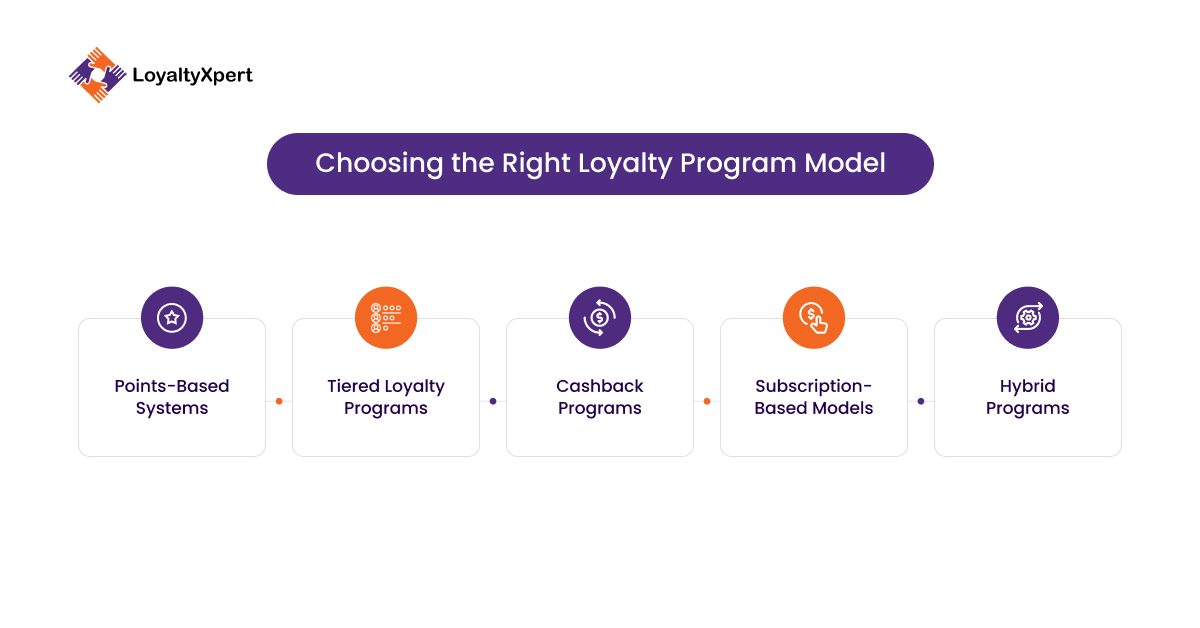
Choosing the Right Loyalty Program ModelChoosing the Right Loyalty Program Model
The choice of a loyalty system significantly impacts its effectiveness. Different models cater to unique customer demographics and business needs, so selecting the right one is essential.

Here are some popular loyalty program models:

  • Points-Based Systems: Customers earn points for purchases or actions, redeemable for rewards like discounts or products. Simple and familiar, this model works well for most businesses.
  • Tiered Loyalty Programs: This model motivates customers to spend more by offering progressively better rewards as they reach higher tiers, creating a sense of exclusivity.
  • Cashback Programs: Offer customers a percentage of their spending as cashback for future purchases, providing immediate and tangible value.
  • Subscription-Based Models: Charge a fee for access to premium perks, exclusive discounts, or early access to services.
  • Hybrid Programs: Combine elements of multiple models, such as points with tiered rewards, to cater to diverse customer preferences.

A loyalty provider like LoyaltyXpert ensures that your chosen model aligns with your business objectives and customer expectations, driving participation and sustained growth.

No CTA found.

Crafting Rewards That Resonate with Customers

Well-crafted rewards are integral to any successful loyalty scheme. Customers value rewards that are relevant, achievable, and deliver tangible benefits.


Reward Type Description Example
Monetary Rewards Discounts, cashback, or exclusive offers. 10% off on the next purchase.
Experiential Rewards Unique events or activities that leave lasting impressions. Free travel or dining experiences.
Access-Based Rewards VIP access to products, services, or events. Early access to sales or exclusive events.
Milestone Rewards Special perks tied to customer milestones. Free gift for 5th purchase anniversary.
Gamified Rewards Incentives earned through challenges or achievements. Points multiplier during promotional periods.


Action Tip: Use a mix of reward types to appeal to different customer segments and ensure higher engagement.

Personalization—The Core of Modern Loyalty Programs

Personalization transforms loyalty programs into unique experiences. It enhances loyalty by ensuring customers feel recognized and valued, strengthening their emotional connection to your brand.

Following are some of the key personalization strategies companies can consider:

  • Segment Customers by Behavior: Group customers based on spending habits, preferences, and frequency of visits to create targeted offers.
  • Use Data for Relevant Rewards: Leverage analytics to align rewards with individual customer interests.
  • Celebrate Milestones: Offer exclusive perks for birthdays, anniversaries, or other personal milestones.
  • Tailor Communication: Customize email, SMS, or app notifications to reflect customer preferences and behaviors.
  • Incorporate Feedback: Continuously refine the program based on customer suggestions and satisfaction surveys.

Measuring the Success of Your Loyalty Program

Evaluating the success of your loyalty program is essential to understand its impact and identify opportunities for improvement. Below are the key metrics and practices to measure program performance effectively.

  • Enrollment Rate:
  • Measures the percentage of eligible customers who join your loyalty program.
  • A low enrollment rate might indicate that your program isn’t appealing or lacks visibility.

How to Improve: Promote the program across all channels, including in-store, email, and social media, and ensure the enrollment process is seamless.

  • Reward Redemption Rate:
  • Tracks the percentage of rewards redeemed compared to those earned.
  • A high redemption rate indicates customers find value in the rewards, while a low rate suggests they might be irrelevant or too difficult to redeem.

How to Improve: Simplify redemption processes, offer flexible options, and ensure rewards align with customer preferences.

  • Customer Retention Rate:
  • Measures the percentage of customers who return and remain engaged over time.
  • Higher retention rates indicate that the loyalty scheme is successful in encouraging repeat purchases.

How to Improve: Use personalized communication and offers to re-engage inactive customers.

Customer Lifetime Value (CLV):

  • Evaluates the total revenue generated by a customer over their lifetime relationship with your brand.
  • An increase in CLV reflects the long-term effectiveness of your loyalty program.

How to Improve: Introduce tiered rewards or exclusive benefits to encourage higher spending and longer engagement.

  • Net Promoter Score (NPS):
  • Gauges customer satisfaction and their likelihood to recommend your brand to others.
  • A high NPS signifies strong loyalty and program effectiveness.

How to Improve: Collect feedback from customers who score low and address their concerns to improve their experience.

  • Incremental Revenue:
  • Measures the additional revenue generated from loyalty program participants compared to non-members.
  • This metric highlights the financial value your loyalty system adds to the business.

How to Improve: Offer limited-time bonuses or exclusive deals for loyalty members to encourage more frequent purchases.

Building Loyalty for Long-Term Success

A well-designed loyalty program is essential for retaining customers, driving revenue, and building strong customer relationships. By defining clear objectives, selecting the right model, crafting meaningful rewards, and leveraging personalization, businesses can create loyalty schemes that resonate with customers and deliver measurable results.

LoyaltyXpert offers expert solutions to help you craft loyalty programs tailored to your business needs. Request a demo or start your free trial to transform your loyalty strategy into a powerful tool for growth and customer retention.

How to Build a Successful Referral Program in 2025?

Did you know, one pleased customer can generate 9 referrals? Referral marketing has transformed from simple word-of-mouth recommendations into sophisticated, technology-driven strategies that drive business growth. Modern referral programs leverage advanced software solutions to create systematic approaches for turning satisfied customers into brand advocates. Organizations implementing well-designed referral strategies report significant improvements in customer acquisition and retention rates.

The effectiveness of referral marketing continues to grow as consumers increasingly trust recommendations from peers over traditional advertising. In fact, leads from referrals have a 30% higher conversion rate. Referral program software enables businesses to track, manage, and optimize these valuable customer relationships while delivering measurable results through automated processes and data-driven insights.

Mastering Modern Referral Strategies

A referral program represents a structured approach to incentivizing and managing customer recommendations. These programs combine technology, rewards, and engagement strategies to create sustainable customer acquisition channels. Modern referral strategies go beyond simple refer-a-friend mechanics to include sophisticated tracking, multi-tiered rewards, and integrated analytics.

Different types of referral programs serve various business objectives. Some focus on customer acquisition through direct referrals, while others build referral partnerships with complementary businesses. The most effective programs align referral incentives with both customer motivations and business goals.

The value of referral programs extends beyond customer acquisition. These programs generate high-quality leads with lower acquisition costs and higher conversion rates compared to traditional marketing channels. Data shows referred customers tend to have higher lifetime values and stronger brand loyalty. This combination of benefits creates compelling ROI for organizations investing in comprehensive referral strategies.

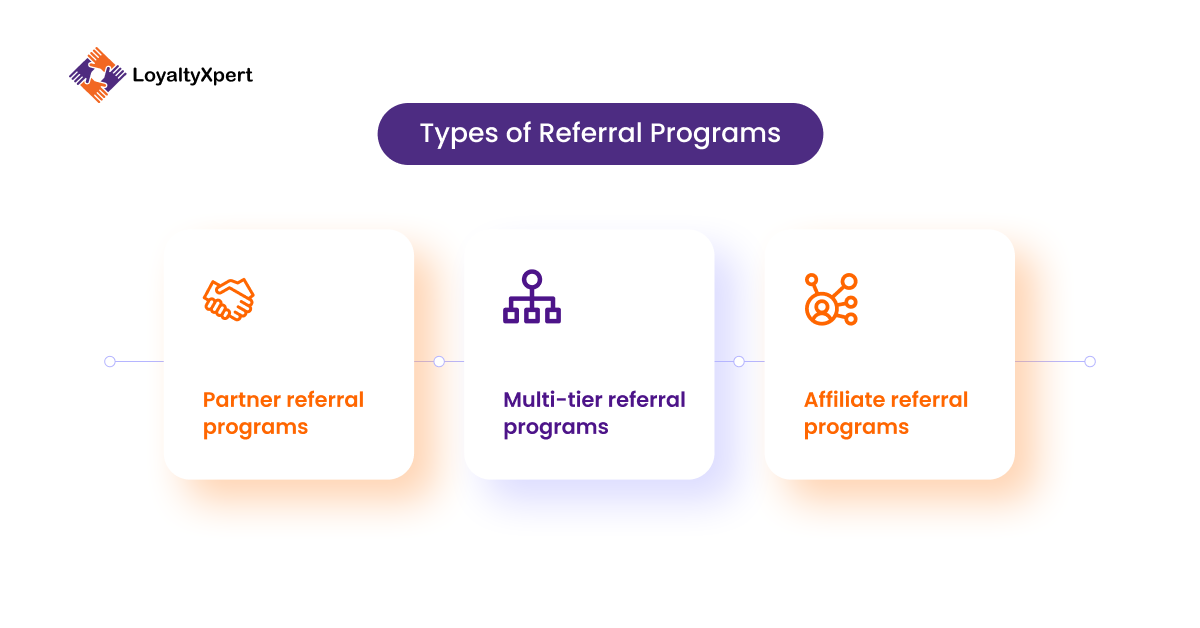
Types of Referral ProgramsTypes of Referral Programs

Different referral program models serve unique business objectives and customer behaviors. Direct referral programs enable existing customers to recommend products or services directly to their network. These programs typically offer immediate rewards for successful referrals, creating clear value for participants.

Partner referral programs

Partner referral programs establish structured relationships between complementary businesses. These programs leverage existing business relationships to create mutually beneficial referral networks, often involving revenue sharing or reciprocal referral arrangements.

Multi-tier referral programs

Multi-tier referral programs reward participants for both direct referrals and subsequent referrals made by their referees. This model encourages sustained program participation while creating organic growth networks through extended relationships.

Affiliate referral programs

Affiliate referral programs provide specialized rewards for high-volume referrers. These programs often target influencers or industry professionals who can generate significant referral volume through their established networks.

Understanding these distinct program types enables organizations to select and implement models that align with their specific business objectives. The right program structure creates sustainable referral channels while delivering measurable results for both the business and program participants.

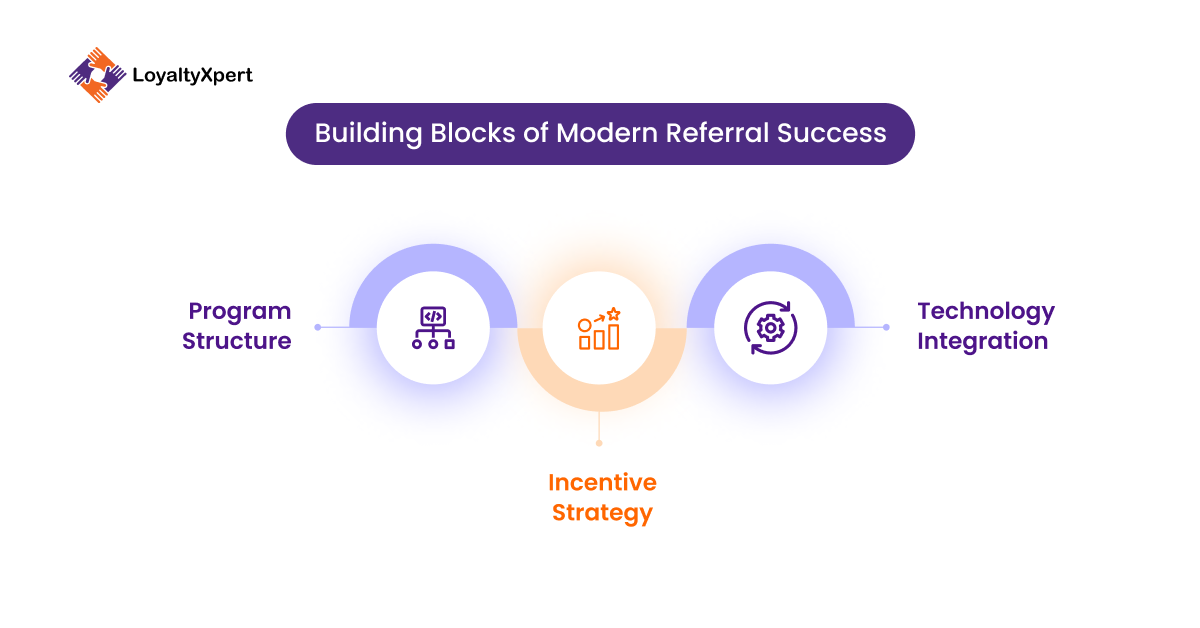
Building Blocks of Modern Referral SuccessBuilding Blocks of Modern Referral Success
The foundation of successful referral marketing rests on three core elements: program structure, incentive strategy, and technology integration. Each component plays a vital role in creating an effective referral program that drives measurable results.

Program Structure 

Registration should be simple and intuitive, removing barriers to participation while collecting necessary information. Reward mechanisms must balance attractiveness with sustainability. Clear program rules prevent misuse while maintaining transparency. Comprehensive tracking enables accurate reward distribution and program optimization.

Incentive Strategy 

Referral rewards should provide meaningful value to participants while remaining cost-effective for the business. Double-sided incentives encourage both referrers and new customers to participate. Timing rewards properly maintains program momentum while preventing fraud. The value proposition must resonate with target participants.

Technology Integration 

Modern loyalty program software provides the technological foundation for successful referral programs. Mobile accessibility ensures convenient participation. Analytics capabilities enable data-driven optimization. Security measures protect program integrity while enabling necessary functionality.

The integration of program structure, incentive strategy, and technology creates a comprehensive referral solution that drives sustainable growth. Success depends on maintaining balance between these components while continuously adapting to changing market conditions and participant needs.

Strategic Execution — From Vision to Reality

Creating an effective referral program requires careful planning and systematic execution. The implementation process covers three key phases: planning, design, and launch.

Planning Phase 

Clear goal setting provides direction and measurable objectives. Target audience identification helps tailor program features and rewards. Resource allocation ensures adequate support throughout implementation. Timeline development creates accountability and momentum.

Program Design 

User experience must prioritize simplicity and convenience. The reward structure should align with participant expectations and business objectives. Communication strategies maintain engagement while avoiding overwhelming participants. Testing procedures verify all program components function correctly.

Launch Process 

A soft launch enables refinement before full deployment. Marketing strategies should emphasize program benefits and ease of participation. Customer education ensures understanding of program features and benefits. Support systems address questions and issues promptly.

Effective implementation requires careful orchestration of planning, design, and launch phases. Each stage builds upon previous work, creating a strong foundation for long-term program performance and scalability.

No CTA found.

Excellence in Action

Successful referral programs require consistent attention to key operational areas. Program promotion should maintain visibility without becoming intrusive. Customer engagement tactics keep participants active and motivated. Fraud prevention measures protect program integrity while enabling legitimate participation.

Regular performance monitoring enables continuous optimization. The loyalty management platform should provide comprehensive analytics for tracking program metrics and identifying improvement opportunities.

Advanced practices for program optimization:

  • Predictive analytics for participant behavior
  • AI-driven reward personalization
  • Real-time performance monitoring
  • Multi-channel engagement strategies
  • Automated optimization protocols

Excellence in referral program management requires constant attention to detail while maintaining focus on strategic objectives.

Navigating Program Complexities

Participation barriers often stem from complex registration processes or unclear benefits. Technical issues demand prompt resolution to maintain program momentum. Reward fulfillment must balance efficiency with accuracy. Program scalability enables growth while maintaining operational excellence.

Key challenge areas and solutions:

Challenges Solutions
Participation friction Streamlined onboarding processes
Technical barriers Integrated platform solutions
Reward distribution Automated fulfillment systems
Program expansion Scalable architecture design
Data management Advanced analytics capabilities

Understanding and preparing for these challenges enables proactive problem-solving and sustainable program growth.

Industry Innovation

Different sectors leverage referral partnerships in unique ways. Retail businesses focus on customer acquisition and retention through tiered referral rewards. B2B companies build long-term relationships through sophisticated referral incentives. Service industries emphasize quality referrals through targeted rewards.

  • Service: Service industries emphasize quality referrals through targeted reward programs that recognize the value of qualified leads.
  • Technology: Technology companies integrate referral mechanisms directly into their products, creating seamless user experiences that drive organic growth.
  • Finance: Financial services firms develop structured referral partnerships that comply with regulatory requirements while delivering measurable results. 
  • Healthcare: Healthcare organizations build referral networks that respect privacy concerns while facilitating necessary connections.

Each sector’s unique approach to referral programs demonstrates the versatility and effectiveness of well-designed referral strategies. Success comes from aligning program elements with industry-specific needs while maintaining focus on core referral principles and best practices.

LoyaltyXpert — Your Partner in Referral Success

LoyaltyXpert delivers comprehensive referral program solutions that drive measurable business results. Our platform combines advanced technology with exceptional support to create successful referral programs across industries.

Core Platform Capabilities:

  • Advanced referral tracking and attribution
  • Multi-tier reward management systems
  • Real-time analytics and reporting
  • Automated fraud prevention
  • Mobile-optimized participant experience
  • Seamless integration capabilities
  • Customizable reward structures
  • Multi-language support

Implementation Support: Our dedicated team guides clients through program setup, launch, and optimization. Services include:

  • Program strategy development
  • Custom implementation planning
  • Technical integration support
  • Staff training programs
  • Ongoing optimization guidance

LoyaltyXpert’s comprehensive platform and dedicated support services enable organizations to create, manage, and optimize referral programs that drive sustainable growth. Our proven track record across industries demonstrates our ability to deliver measurable results through innovative referral solutions.

Empowering Referral Success

A well-designed referral program delivers value to both businesses and participants. Success requires careful attention to program structure, incentive strategy, and technology integration. The right loyalty program software provides the foundation for program operation while enabling continuous optimization.

Organizations seeking to implement or enhance their referral programs should focus on creating meaningful value for participants while maintaining operational efficiency. LoyaltyXpert provides the expertise, technology, and support needed to create and manage successful referral programs. Our platform offers the tools and capabilities essential for modern referral marketing, while our team ensures successful implementation and ongoing optimization. Request a demo or start a free trial today to explore how our referral program solutions can help achieve your business objectives.

How to Run a Painter’s Loyalty Program in the Paint Industry?

Painters represent vital influencers in the paint industry, directly impacting product selection and brand preferences. A well-structured painters loyalty program creates meaningful connections between paint manufacturers and these key stakeholders. In fact, 78% of customers claim that loyalty programs increase their likelihood of continuing with a brand. Through strategic engagement and rewards, these programs drive brand loyalty, increase market share, and generate sustainable revenue growth.

The paint industry relies heavily on painter recommendations to drive product adoption. Professional painters influence purchasing decisions across residential, commercial, and industrial sectors. Loyalty program software enables paint companies to track, reward, and strengthen these valuable relationships through systematic engagement.

Understanding Painter Loyalty Programs

A painters loyalty program represents a strategic initiative designed to engage and reward professional painters for their brand loyalty and advocacy. These programs combine technology, rewards, and engagement mechanisms to create lasting relationships between paint manufacturers and painting professionals.

Impactful programs in the paint industry incorporate multiple elements that address painters’ professional needs while driving business objectives. The value proposition extends beyond simple transactional benefits to include professional development, exclusive access, and recognition opportunities.

The effectiveness of painter loyalty programs stems from their ability to create mutual value. Paint manufacturers benefit from increased brand advocacy and market insights, while painters receive tools and support that enhance their professional capabilities. This symbiotic relationship, when properly nurtured through a well-designed loyalty program, creates lasting partnerships that drive sustained growth for all stakeholders.

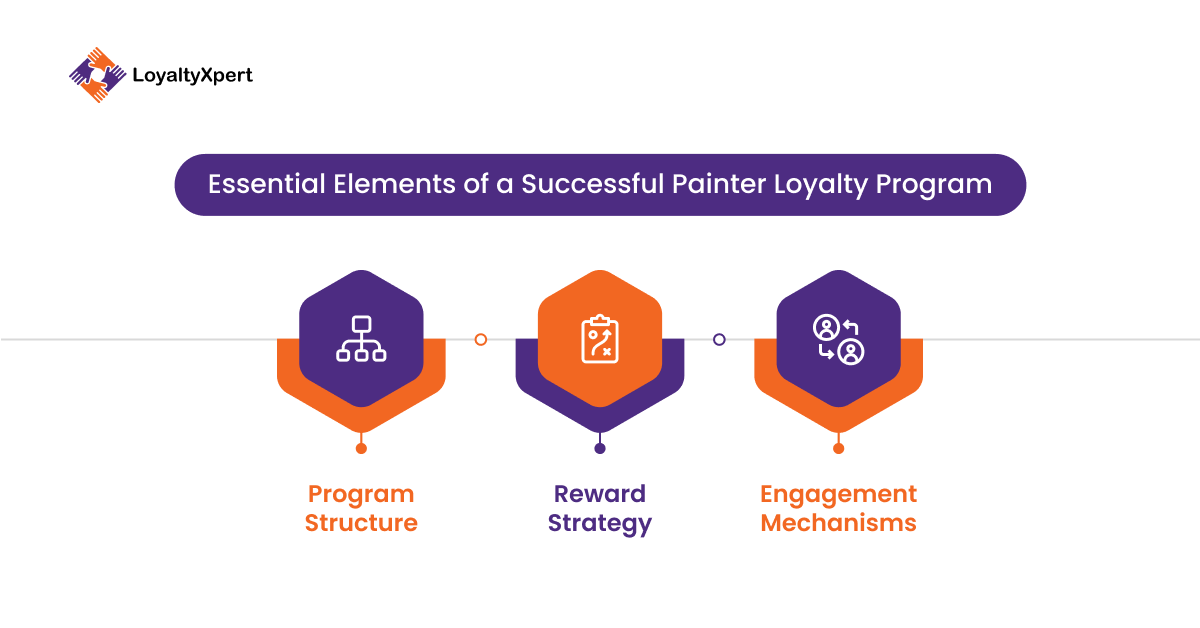
Essential Elements of a Successful Painter Loyalty ProgramEssential Elements of a Successful Painter Loyalty Program
The foundation of an effective painter rewards program consists of three core elements: program structure, reward strategy, and engagement mechanisms. Each component plays a vital role in creating a comprehensive solution that delivers value to both painters and paint manufacturers.

Program Structure 

A clear and accessible registration process forms the foundation of program participation. Point systems should reflect painting professionals’ purchasing patterns and influence potential. Tiered structures create progression opportunities while recognizing different levels of engagement. Reward mechanisms must balance immediacy with long-term value to maintain ongoing participation.

Reward Strategy 

Professional painters value tools and equipment that enhance their capabilities. Product discounts provide immediate benefits while encouraging continued brand usage. Training and certification opportunities support professional development and strengthen brand relationships. Recognition programs acknowledge top performers, creating aspirational targets for program participants.

Engagement Mechanisms 

Digital platforms must provide easy access to program features and benefits. Mobile applications enable real-time engagement and reward tracking. Communication channels should maintain regular contact while avoiding overwhelming participants. Achievement recognition creates motivation for continued participation and progression.

The integration of these core elements – program structure, reward strategy, and engagement mechanisms – creates a comprehensive loyalty solution that resonates with painters while delivering measurable business results. Program effectiveness depends on maintaining balance between these components while continuously adapting to evolving painter needs and market conditions.

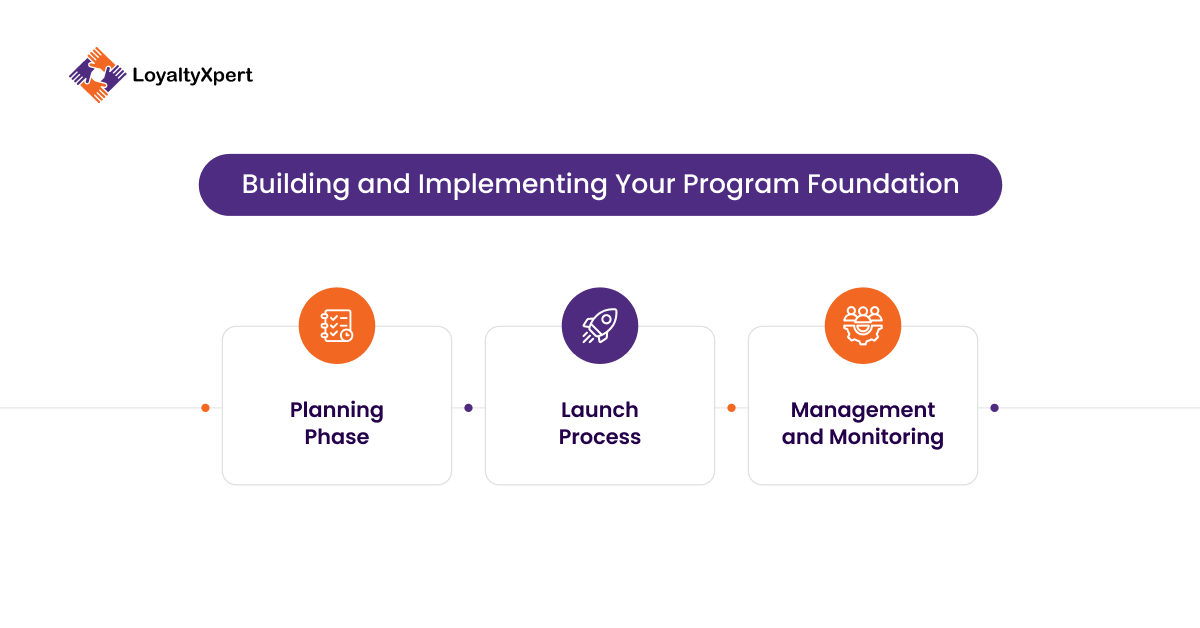
Building and Implementing Your Program Foundation Building and Implementing Your Program Foundation
Launching an effective painters loyalty program requires careful planning and systematic execution. The implementation process covers three key phases: planning, launch, and ongoing management.

Planning Phase 

Market research reveals competitor offerings and painter expectations. Analysis of existing programs identifies opportunities for differentiation. Budget allocation must account for program development, rewards, and ongoing operations. Resource planning ensures adequate support for program management and painter engagement.

Launch Process

A pilot program allows testing and refinement before full-scale deployment. Marketing strategy should emphasize unique program benefits and value proposition. Painter onboarding processes must minimize friction while capturing essential information. Training support ensures painters understand program features and benefits.

Management and Monitoring

Continuous performance tracking enables program optimization. Data analysis reveals engagement patterns and improvement opportunities. Regular feedback collection ensures program evolution aligns with painter needs.

Successful program implementation requires careful orchestration of planning, launch, and management phases. Each stage builds upon the previous, creating a strong foundation for for sustainable program growth. Regular assessment and adjustment ensure the program continues to meet both painter and business objectives effectively.

No CTA found.

Technology as a Competitive Advantage

Modern loyalty management platforms provide the technological foundation for high-performing painter loyalty programs. These solutions combine sophisticated tracking capabilities with user-friendly interfaces to create engaging painter experiences. Integration with existing business systems ensures seamless data flow and program operation.

Security features protect sensitive information while enabling necessary access for program operation. Advanced analytics provide insights into painter behavior and program performance, enabling data-driven optimization. Mobile accessibility ensures painters can engage with the program anywhere, enhancing convenience and participation.

The right technology platform transforms loyalty program potential into measurable results through:

  • Automated reward tracking and distribution
  • Real-time performance monitoring
  • Predictive analytics for program optimization
  • Seamless multi-channel engagement
  • Scalable infrastructure for growth

Technology transforms program potential into measurable results through enhanced capabilities and insights.

Mastering Program Excellence

Effective communication strategies maintain painter engagement without overwhelming participants. Clear reward fulfillment processes ensure timely delivery of program benefits. Regular program evolution keeps offerings fresh and relevant to painter needs.

Support systems should provide quick resolution to painter inquiries and technical issues. Documentation helps painters understand program features and benefits while reducing support requirements.

Key strategies for program excellence:

  • Regular program assessment and updates
  • Proactive painter engagement
  • Data-driven decision making
  • Continuous staff training
  • Strong vendor relationships
  • Performance benchmarking

Excellence in program management requires constant attention to detail while maintaining focus on long-term strategic objectives.

Must Read: Why Paint Brands must know their Painters better?

Navigating Program Complexities

Registration barriers often limit initial program adoption. Streamlined processes and clear value communication help overcome these challenges. Engagement maintenance requires regular communication and compelling benefits. Technical issues demand prompt resolution to maintain painter satisfaction.

Reward distribution must balance cost control with painter satisfaction. Program scalability enables growth while maintaining operational efficiency. Solutions should address both immediate challenges and long-term program sustainability.

Common challenges to address:

  • Resource allocation
  • System integration
  • Data quality management
  • Painter retention
  • Cost control
  • Performance measurement
  • Change management

Understanding and preparing for these challenges enables proactive problem-solving and program longevity.

Shaping Tomorrow’s Loyalty Landscape

Digital integration continues transforming painter loyalty programs through enhanced capabilities and engagement options. Personalization enables tailored experiences based on individual painter preferences and behaviors. Mobile-first approaches reflect changing technology usage patterns among painting professionals.

Advanced analytics provide deeper insights into program performance and painter behavior. Industry innovations create new opportunities for painter engagement and reward delivery.

Emerging trends to watch:

  • AI-powered personalization
  • Blockchain reward tracking
  • IoT integration
  • Virtual training platforms
  • Predictive analytics
  • Social engagement tools
  • Automated optimization

The future of painter loyalty programs will be shaped by technological innovation and evolving painter expectations.

Empowering Paint Industry Success

A well-designed painters loyalty program delivers value to both paint manufacturers and painting professionals. Excellence requires careful attention to program structure, reward strategy, and engagement mechanisms. Technology platforms provide the foundation for program operation while enabling continuous optimization.

Paint companies seeking to implement or enhance their loyalty programs should focus on creating meaningful value for painters while maintaining operational efficiency. LoyaltyXpert offers comprehensive solutions designed specifically for the paint industry, combining powerful features with exceptional support to drive measurable results.

Connect with LoyaltyXpert’s team of experts to explore how our specialized loyalty management platform can help you build stronger relationships with painting professionals. Schedule a demo or start a free trial to learn more about our tailored solutions for the paint industry.

Top 7 Marketing Hacks to Improve Hotel Loyalty Programs

Customer loyalty is critical to the success of the hotel industry, where repeat business significantly impacts revenue. Research indicates that loyalty program members contribute significantly to occupancy rates, accounting for nearly 51% of bookings. Furthermore, retaining an existing customer is up to 25 times more cost-effective than acquiring a new one.

This highlights the importance of creating and refining hotel loyalty programs to attract repeat guests, enhance satisfaction, and ensure sustainable revenue growth. To stay competitive and drive long-term success, hotels must refine their loyalty programs by integrating innovative, data-driven strategies.

Below are seven actionable marketing hacks to enhance your hotel loyalty program and build lasting connections with guests.

Proven Strategies to Elevate Hotel Loyalty Programs

Implementing effective marketing strategies is key to maximizing the potential of hotel loyalty programs. These seven actionable hacks combine creative ideas, advanced technology, and guest-centric approaches to create programs that not only engage but also foster unwavering loyalty.

Hack 1: Offer Thoughtful Perks That Guests Value

Loyalty program perks should go beyond generic benefits to create meaningful and memorable experiences for guests. As highlighted in the CBRE research report, loyalty members contribute to more than half of hotel occupancy, making it clear that well-designed perks are a powerful tool for retention.

  • Offer personalized welcome packages, such as locally inspired treats or exclusive amenities.
  • Provide complimentary upgrades or spa treatments for special occasions.
  • Design unique experiences like wine tastings, cultural workshops, or behind-the-scenes hotel tours.

Hack 2: Deliver Personalized and Memorable Experiences

Personalized experiences create a lasting impression, making guests feel valued and appreciated. Research indicates that 80% of consumers are more likely to do business with a company offering personalized experiences, and 48% of guests are more likely to return to a hotel that tailors their stays.

  • Customize room settings based on guest preferences, such as bed type, room temperature, or preferred beverages.
  • Design itineraries that cater to unique guest interests, whether they’re traveling for business, leisure, or a special occasion.
  • Use pre-arrival communication to understand specific needs, such as dietary preferences or accessibility requirements.

Hack 3: Implement a Flexible Reward Structure

A loyalty program thrives on simplicity and flexibility, allowing guests to earn and redeem points effortlessly. CBRE data shows that the average liability per loyalty member decreased by 1.7% in 2023, indicating an increase in point redemptions and program engagement.

  • Offer multiple ways to earn points, including dining, spa visits, and event bookings.
  • Provide tiered reward levels to incentivize frequent stays and higher spending.
  • Ensure reward redemption is straightforward and accessible via digital platforms.

Hack 4: Focus on Unique Experiential Rewards

Experiences often leave a stronger impact than material rewards, creating cherished memories that guests associate with your brand. Offering experiences tailored to your location and guest demographics can significantly boost loyalty.

  • Host exclusive events such as cooking classes, guided nature tours, or wellness workshops.
  • Offer local experiences that showcase the culture and uniqueness of the destination.
  • Develop themed packages for specific occasions, such as family vacations or solo retreats.

Hack 5: Leverage Digital Platforms to Amplify Reach

Digital platforms are invaluable for promoting loyalty programs and engaging with guests at scale. They offer the perfect avenue to highlight program benefits, share updates, and drive sign-ups.

  • Use social media to showcase real guest stories, testimonials, and program highlights.
  • Implement email campaigns targeting past guests with exclusive offers.
  • Develop a dedicated loyalty program page on your website with clear enrollment options.

Hack 6: Act on Guest Feedback Proactively

Feedback is a treasure trove of insights that can refine your loyalty program and ensure it meets guest expectations. Actively listening to guest opinions demonstrates your commitment to continuous improvement.

  • Conduct regular surveys to understand guest preferences and satisfaction levels.
  • Respond quickly to complaints or suggestions, showing your dedication to improvement.
  • Use feedback to identify trends and adjust program features accordingly.

Hack 7: Adopt Advanced Technology for Seamless Interaction

Technology is crucial for delivering loyalty programs that are efficient and engaging. Mobile apps simplify rewards tracking, AI personalizes offers, and automated communications maintain consistent engagement, creating a seamless experience that drives guest satisfaction and loyalty.

  • Develop a mobile app for easy tracking and redemption of rewards.
  • Use AI-driven insights to personalize offers and improve program relevance.
  • Automate communication to keep guests informed about rewards and special offers.

Driving Success with Digital Loyalty Solutions

A well-designed hotel loyalty program is a powerful tool to drive guest retention, boost revenue, and build meaningful relationships. By offering thoughtful perks, leveraging personalization, and embracing technology, hotels can create programs that stand out and resonate deeply with guests. Listening to feedback and refining the program regularly ensures it remains relevant and impactful.

At LoyaltyXpert, we specialize in building customized loyalty solutions that drive results. Let us help you create a program that turns occasional visitors into devoted advocates, ensuring long-term success for your business. If you have any query about hotel loyalty program, Contact us for the more information.

Digital Loyalty Program: Features, Benefits and Implementation

The digital transformation in customer engagement strategies has made loyalty programs indispensable for modern businesses. With over 6.92 billion smartphone users worldwide—representing more than 86% of the global population— digital loyalty programs have emerged as a seamless way to enhance customer retention and engagement. According to CodeBroker, most consumers prefer managing loyalty interactions through their mobile devices, underscoring the critical need for a robust, mobile-first approach.

This blog delves into the features, benefits, and actionable steps for implementing a digital loyalty program, tailored to provide value to businesses and their customers alike.

Innovative Features That Drive Loyalty for Modern Businesses

Loyalty programs have evolved into comprehensive tools for data collection, personalized engagement, and seamless integration across channels. These features are designed to maximize customer retention and business growth.

  • Comprehensive Data Collection: Digital loyalty programs gather zero-party and first-party data directly from customers. This includes preferences, behaviors, and demographic details voluntarily provided during enrollment. Businesses leverage this information to optimize marketing strategies, improve customer targeting, and achieve revenue growth of up to 3x. 
  • Personalized Rewards: First-party data enables businesses to offer highly targeted rewards, meeting the unique preferences of customer segments. Research shows that 80% of customers willingly share personal data in exchange for better experiences, leading to higher engagement and retention rates. 
  • Omnichannel Integration: Omnichannel strategies enable businesses to retain 89% of customers, nearly triple the rate of single-channel counterparts. Be it through mobile apps, desktop interfaces, or in-store POS systems, these programs integrate effortlessly, offering rewards for diverse activities such as purchases, surveys, and interactive games. 
  • Advanced Analytics and Reporting: Real-time data analysis provides actionable insights into program performance, customer behavior, and ROI. Metrics like redemption rates, customer activity, and engagement trends help businesses refine strategies and maintain alignment with customer expectations. 
  • Enhanced CRM Connectivity: Nearly 90% of CRM-enabled companies consider it vital for achieving customer-centric goals. Integration with digital loyalty systems enhances CRM capabilities, providing a 360-degree view of customer journeys, enabling seamless communication, and fostering enduring relationships.

Transformative Benefits of Digital Loyalty ProgramsTransformative Benefits of Digital Loyalty Programs

Digital loyalty programs are a strategic asset, helping businesses transform transactional interactions into meaningful relationships. These programs empower organizations to gather actionable insights, enhance customer retention, and create personalized experiences that drive measurable growth in revenue and brand loyalty.

Find out the key benefits that make digital loyalty programs a must-have for businesses today:

  • Actionable Customer Insights: Harnessing detailed customer data transforms decision-making. Digital loyalty programs uncover trends and preferences, enabling precise targeting and campaign optimization. For example, advanced analytics reveal high-value customer segments, guiding tailored offers that drive engagement and revenue. 
  • Stronger Brand Commitment: Loyalty programs retain customers by creating value. McKinsey research highlights that 60% of customers increase their spending after joining a loyalty program. Businesses focusing on rewarding positive experiences witness a minimum 10% rise in loyalty metrics, cementing brand advocacy. 
  • Significant Improvement in Lifetime Value (LTV): Improved loyalty correlates directly with financial growth. A 7% increase in brand loyalty can yield an 85% rise in customer LTV. Emotional connections further boost this value—stats reveal emotionally engaged customers exhibit a 306% higher LTV compared to satisfied counterparts. 
  • Increased Accessibility for Customers: The convenience of digital loyalty management platforms ensures that customers can engage anytime, anywhere. With 75% of consumers using smartphones to interact with loyalty programs, accessibility drives repeat engagement and long-term participation.
  • Cost-Effective and Sustainable Operations: Digital loyalty cards eliminate the need for physical resources like printed cards or receipts, reducing costs and environmental impact. Businesses adopting digital systems align with sustainability goals, appealing to eco-conscious customers. 
  • Enhanced Customer Retention and Reduced Churn: Harvard Business Review notes that retaining a customer is 25 times cheaper than acquiring a new one. Loyalty programs strengthen customer relationships, significantly reducing churn rates and driving consistent revenue streams.

Suggested Read: What is a Digital Loyalty Program? How to Implement One?

Steps to Implement an Effective Digital Loyalty Program

Creating a digital loyalty program is more than just introducing rewards; it’s about crafting a system that aligns with your business objectives and resonates with your customers. A thoughtful, well-executed strategy ensures that your digital loyalty program not only meets but exceeds expectations, driving sustainable growth.

Here are actionable steps to ensure your digital loyalty program drives both immediate and long-term success.

  • Step 1: Identify the Ideal Platform

Evaluate potential platforms based on features, scalability, and integration capabilities. Seek solutions offering robust analytics, multi-channel support, and customization options. Review case studies and request demos to validate the provider’s expertise.

  • Step 2: Define the Reward Framework

Select a rewards structure aligned with customer expectations and business goals:

  • Points-Based Rewards: Encourage spending by offering points for purchases.
  • Tiered Systems: Motivate higher spending by unlocking exclusive benefits.
  • Visit-Based Rewards: Incentivize frequent store visits.
  • Cashback Systems: Drive repeat purchases with financial incentives. 
  • Step 3: Craft Meaningful Rewards

Combine financial incentives such as discounts or cashback with experiential rewards like VIP access, event invitations, or personalized offers. Ensure that rewards are relevant to different customer segments to maximize appeal.

  • Step 4: Leverage Strategic Promotion

Promote the program through targeted campaigns across multiple channels. Email newsletters, social media ads, in-app notifications, and referral bonuses can create awareness and drive initial signups. Use loyalty campaigns to sustain customer interest over time.

  • Step 5: Integrate Analytics for Continuous Improvement

Track KPIs such as program enrollment, reward redemption rates, and customer engagement levels. Use real-time data to identify gaps, optimize strategies, and enhance the program’s effectiveness. A feedback loop involving customers ensures the program remains dynamic and relevant.

  • Step 6: Ensure Seamless CRM Integration

Incorporate loyalty features into existing CRM systems to maintain a unified customer database. This ensures personalized communication, streamlined operations, and improved customer satisfaction across all touchpoints.

Driving Success with Digital Loyalty Solutions

Digital loyalty programs have become a pivotal strategy for businesses aiming to deepen customer relationships, boost engagement, and achieve measurable growth. These programs go beyond basic incentives, transforming how companies interact with their audience by providing actionable insights, enhancing retention, and driving sustained growth. By integrating personalized rewards and omnichannel engagement, businesses can unlock unparalleled opportunities to strengthen customer loyalty and stand out in competitive markets.

At LoyaltyXpert, we understand that no two businesses are alike. Our expertise lies in crafting bespoke digital loyalty solutions designed to address your unique challenges and objectives. Contact us today to transform your customer engagement strategy into a powerful growth driver. Let’s build a future of lasting connections and measurable success together.